The Feathered Geniuses: 15 Fascinating Facts About Parrots
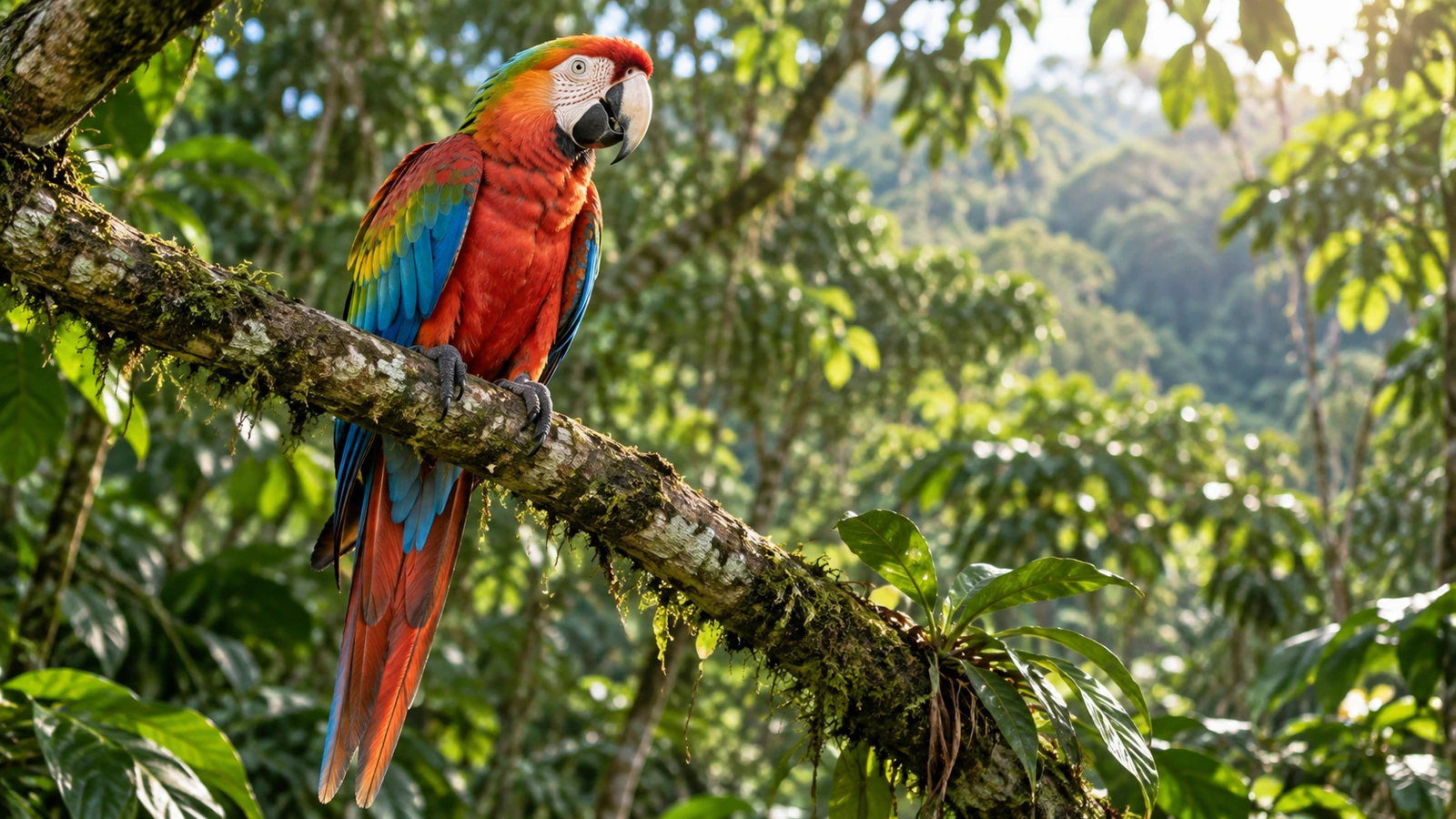
Parrots are far more than colourful birds that mimic human conversation. From naming their nestlings with custom vocal signatures to seeing in ultraviolet light and logic-testing their way through complex puzzles, these avian geniuses possess remarkable evolutionary adaptations. They navigate dense jungle canopies using their feet like human hands and can even ingest fiery chili peppers without flinching. Discover fifteen incredible truths about these brilliant, loud, and deeply social creatures that showcase why they stand among the smartest animals on Earth.
1. Wild Parrots Assign Unique "Names" to Their Offspring
In the wild, parrot parents don't just recognize their chicks by sight; they actually give them distinct vocal signatures that act as names. Researchers studying wild green-rumped parrotlets in Venezuela discovered that parents assign unique contact calls to each nestling shortly after hatching. The chicks adopt these specific sounds, modifying them slightly to create their own lifelong acoustic identity. Other parrots in the flock use these exact sound signatures to call out to specific individuals across dense jungle canopies. This remarkable discovery proved that parrots learn their vocal designations rather than inheriting them genetically. It stands as one of the few confirmed examples of wild animals using learned individual labels to communicate with one another.
2. African Greys Can Grasp Complex Logic and the Concept of Zero
Parrots possess cognitive abilities that routinely surprise neuroscientists, often performing on par with young human children. The famous African Grey parrot named Alex demonstrated an extraordinary grasp of abstract concepts, including numerical values, colors, and even zero. In logical reasoning tests, these birds can successfully deduce the location of hidden rewards using process of elimination. When shown two containers and observing that one is empty, an African Grey will instantly infer that the treat must be in the second container without needing to see it first. This level of inferential logic is rarely seen in non-human animals and places parrots among the most intellectually capable creatures on the planet.
3. Parrots Speak Without Vocal Cords by Manipulating Their Syrinx
Despite their uncanny ability to mimic human languages, sound effects, and musical tunes, parrots do not possess vocal cords. Instead, they produce complex sounds by controlling the muscles surrounding an organ located at the base of their trachea called the syrinx. By carefully adjusting the airflow through two separate respiratory passages, a parrot can produce two distinct frequencies at the exact same time. They manipulate the shape of their throat, tongue, and beak to form vowels and consonants with astonishing clarity. This intricate physiological mechanism allows them to replicate human speech far better than any mammal with vocal cords ever could.
4. Most Parrots Have a Dominant "Handedness"
Just as human beings are predominantly right- or left-handed, parrots display a clear preference for using one foot over the other. Scientists studying parrot behavior discovered that almost every individual bird favors a specific foot for grasping food, manipulating objects, and stepping onto perches. Interestingly, while the majority of humans are right-handed, many parrot species show an overwhelmingly left-footed bias. This lateralization is linked to how the bird's brain processes sensory information and controls motor skills across opposite hemispheres. Watching which foot a parrot uses to pick up a treat reveals its unique neural dominant side.
5. Parrots Are the Only Birds That Use Their Feet to Feed
While many birds use their feet to catch prey or grasp branches, parrots are the only avian species that consistently use their feet to transport food directly to their mouths. Their feet are zygodactylous, meaning two toes point forward and two point backward, creating a powerful, hand-like grip. This specialized foot structure allows them to hold smooth nuts and seeds steady while using their heavy beaks as precise cracking tools. They can even rotate objects in their grasp to examine them from different angles before eating. This dexterous manipulation of food is a major evolutionary advantage in the dense treetop habitats where they forage.
6. Their Feathers Are Protected by a Unique Pigment Found Nowhere Else
The vivid red, yellow, and orange hues in a parrot's plumage are produced by a completely unique group of pigments called psittacofulvins. Unlike other brightly colored birds that derive their pigments from the food they eat, parrots synthesize these compounds internally within their growing feathers. Beyond providing brilliant visual displays for mating and camouflage, psittacofulvins serve a critical biological function as potent antibacterial agents. These specialized pigments make the feathers significantly more resistant to feather-degrading bacteria that thrive in humid tropical environments. Without this unique chemical defense, a parrot's vibrant coat would rapidly deteriorate under microbial attack.
 Birds of the World
From record-breaking aerial plunge-divers to massive flightless icons, the avian world is a marvel of evolutionary engineering. Discover the extraordinary intellects, specialized survival skills, and hidden superpowers of the planet's most fascinating birds.
See All Facts
Birds of the World
From record-breaking aerial plunge-divers to massive flightless icons, the avian world is a marvel of evolutionary engineering. Discover the extraordinary intellects, specialized survival skills, and hidden superpowers of the planet's most fascinating birds.
See All Facts
7. Parrots Are Completely Immune to the Burn of Chili Peppers
Humans often sweat and suffer when biting into fiery hot peppers, but parrots can eat them with complete indifference. The intense burning sensation caused by chili peppers comes from capsaicin, a chemical compound designed by plants to deter mammals from eating their fruit. Parrots lack the specific pain receptors in their mouths and digestive tracts that respond to capsaicin, making them entirely immune to its fiery kick. In fact, wild parrots actively seek out extremely spicy hot peppers as a valuable source of nutrients and vitamins. Because parrots crush seeds with their beaks or pass them unharmed across vast distances, chili plants rely heavily on these birds to disperse their seeds.
8. Flexible Skull Hinges Allow Independent Beak Movement
Unlike mammals, whose upper jaws are fused to their skulls, parrots possess a specialized cranial hinge that allows their upper and lower beaks to move independently. Known as kinetic articulation, this unique anatomical feature gives the upper beak a wide range of vertical motion separate from the rest of the head. This incredible flexibility vastly increases the bird's bite force and allows them to apply immense, calculated pressure to crush tough nut shells. It also gives them exceptional delicacy, allowing a parrot to groom fine feathers or gently manipulate small objects without crushing them.
9. Parrots Experience a Vibrant World of Ultraviolet Light
Human eyes rely on three types of color receptors, but parrots possess a fourth specialized cone receptor that allows them to perceive ultraviolet light. This expanded visual spectrum transforms the way parrots see their environment, making the world appear far richer and more intricate than humans can comprehend. Ultraviolet vision allows wild parrots to easily detect ripe fruit and nutritious seeds that reflect UV rays against dark jungle foliage. It also plays a vital role in social interaction, as parrot plumage features intricate UV patterns that signal health, age, and gender to potential mates. What appears to be a plain green bird to a human viewer might look like a dazzling mosaic to another parrot.
10. The Kakapo Is a Flightless, Nocturnal Giant
Endemic to New Zealand, the critically endangered Kakapo holds the record as the world's heaviest parrot species, with adult males weighing up to four kilograms. Because it evolved in an isolated island environment free of land predators, the Kakapo completely lost the ability to fly over millions of years. Instead, it uses its sturdy legs to walk long distances along the forest floor and climb high into trees, using its wings purely for balance. The Kakapo is also the only strictly nocturnal parrot and features a distinctive, pleasant musty scent that helps birds locate each other in the dark. Today, intensive conservation efforts are working tirelessly to save this extraordinary, moss-green bird from extinction.
11. The Kea Is an Alpine Parrot That Loves Dismantling Cars
Native to the icy, rugged mountain regions of New Zealand, the Kea is recognized as the world's only alpine parrot. Known for their extreme curiosity and formidable intelligence, these birds have earned a reputation as mischievous pranksters among locals and tourists alike. Keas frequently target parked vehicles in ski resorts, using their powerful, curved beaks to strip away rubber window seals, wiper blades, and antenna covers. Researchers believe this destructive behavior is driven by an intense desire to explore novel objects and solve complex problems in their harsh mountain habitat. Their incredible adaptability makes them one of the most adventurous and clever avian species on Earth.
12. Lifelong Pair Bonds Lead to Deep Emotional Grieving
Most parrot species are strictly monogamous, forming pair bonds that endure for decades or even their entire lives. Partners spend nearly every waking moment together, preening each other's feathers, sharing food, and jointly raising their nestlings. These romantic relationships are maintained through continuous soft vocalizations and affectionate physical touches. When a mate dies in the wild or in captivity, the surviving parrot often exhibits clear signs of profound grief and severe depression. Depressed parrots may stop eating, pull out their own feathers, or withdraw completely from social interactions within the flock.
13. A Gathering of Parrots Is Officially Called a "Pandemonium"
While a group of birds is typically called a flock, a gather of wild parrots carries the delightfully chaotic collective noun of a "pandemonium." Anyone who has ever encountered a wild flock of macaws or squawking conures in the canopy will instantly understand why this term was chosen. Parrots are highly vocal, expressive creatures that constantly communicate with one another using loud, shrill calls to coordinate movement and signal danger. When dozens or hundreds of these energetic birds assemble at communal roosts, the resulting clamor and vivid motion create a scene of pure, joyful chaos. This evocative term perfectly captures the boisterous nature of wild parrot societies.
14. Historical Records Detail a Parrot Named Charlie That Lived to 114
Parrots are renowned for their exceptional lifespans, with many large species routinely living into their 60s and 70s in captivity. One of the most famous long-lived birds in history was a blue-and-yellow macaw named Charlie, who reportedly lived to the astounding age of 114 years. According to popular historical accounts, Charlie was purchased in 1926 and allegedly spent time in the home of British Prime Minister Winston Churchill during World War II. While historians debate the exact details of her wartime companionship with Churchill, Charlie became famous for her fiery personality and her tendency to squawk anti-Nazi expletives. Regardless of the legends, her documented longevity stands as a remarkable example of parrot endurance.
15. Parrots Use Their Beaks as a Functional "Third Limb"
When navigating dense foliage or climbing steep branches, parrots do not rely solely on their feet; they actively use their beaks as a functional third limb. Biomechanics researchers studying parrot locomotion discovered that when climbing vertical surfaces, a parrot's beak exerts propulsive forces comparable to those produced by its hind limbs. This unique tripod motion allows them to scale vertical tree trunks, navigate fragile twigs, and clamber upside down with exceptional stability. The beak acts as an anchor point, allowing the bird to support its entire body weight while reaching for the next footing. This remarkable physical adaptation effectively gives parrots three functional limbs for exploring their treetop domain.
Sources & References
This AI-assisted post was rigorously curated and fact-checked for accuracy by:
 Martin Roháček
How fun was this article? 🤔
Tap a star to rate it
🧠 Quiz: How closely were you paying attention?
10 questions — all answers are in the article above!
Enjoyed these facts? There's more! 💌
Fresh fun facts in your inbox. No spam, ever.