The Apex Voyagers: 15 Fascinating Facts About Polar Bears
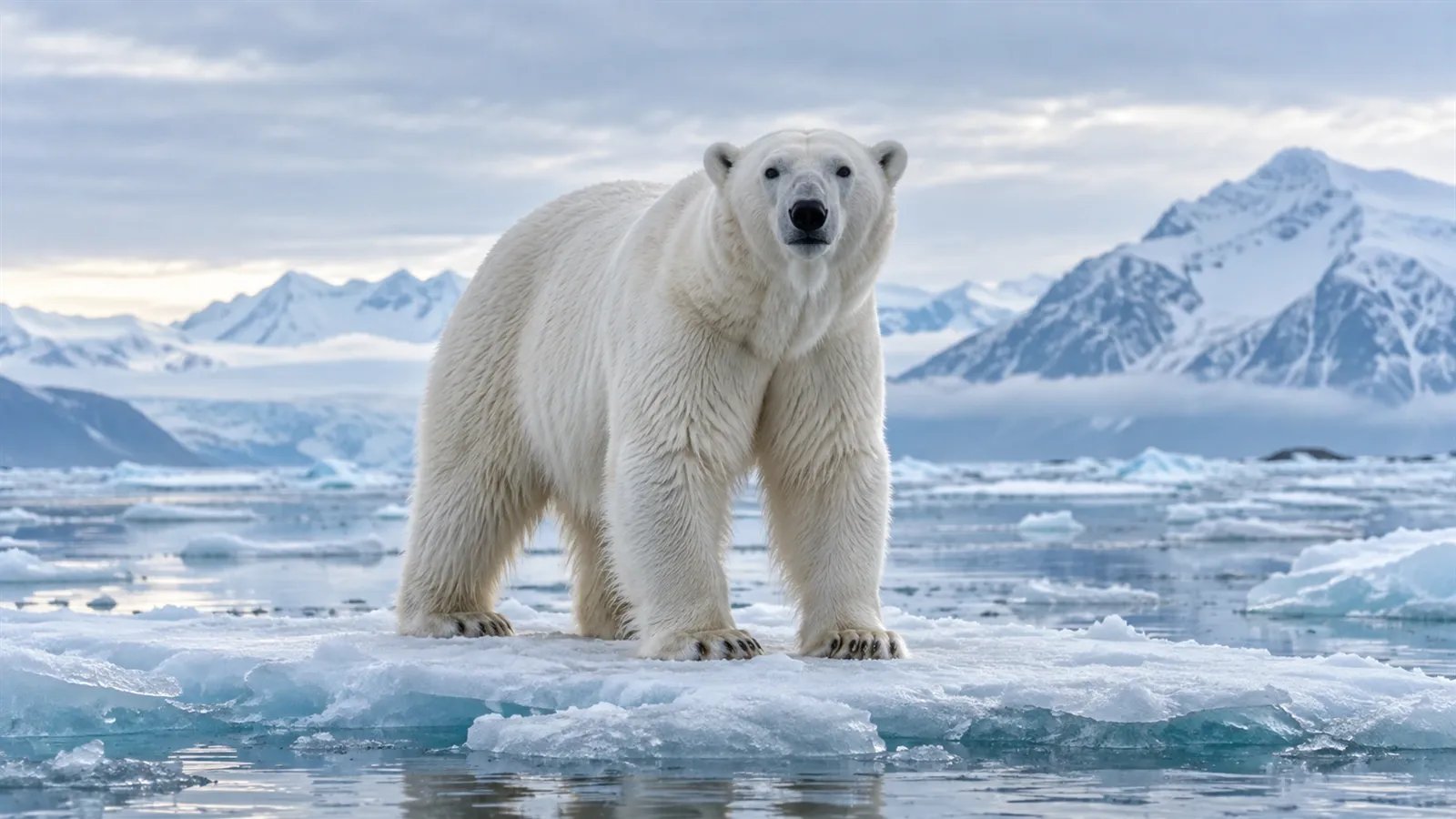
Polar bears are the undisputed apex predators of the frozen North, engineered by evolution to master one of the most extreme environments on Earth. From their jet-black skin hidden beneath clear, hollow hair to their extraordinary capacity for multi-day open-ocean swims, these magnificent carnivores are far more complex than their appearance suggests. Uncover the astonishing anatomy, lethal adaptations, and unexpected survival strategies that make the maritime bear a true wonder of Arctic evolutionary biology.
1. Their Skin Is Jet-Black Beneath Their Fur
Although polar bears appear pure white, their underlying skin is actually as black as coal. This dark pigmentation plays a critical biological role by efficiently absorbing electromagnetic radiation from sunlight to warm the animal's body. The dark skin is especially effective at trapping solar radiation during the sunlit Arctic summer months. In addition, black skin beneath dense underfur prevents thermal loss in one of the planet's harshest environments. This hidden adaptation reveals that polar bears are structurally built to harvest every available ray of heat from their icy surroundings.
2. Their Fur Is Completely Pigment-Free and Hollow
Contrary to popular belief, polar bear fur contains absolutely no white pigment. Each guard hair is actually a clear, pigment-free keratin tube with a hollow core that scatters and reflects light. This optical phenomenon, known as structural color, causes the coat to look white or yellowish to human eyes in much the same way ice and snow do. Furthermore, the hollow core traps pockets of insulating air while redirecting luminescent energy down toward their heat-absorbing black skin. Over time, algae or dirt trapped inside these hollow shafts can even make a polar bear look slightly green or gray.
3. They Are Officially Classified as Marine Mammals
Polar bears are the only bear species on Earth designated as marine mammals. Because they rely almost entirely on sea ice for hunting, mating, and travel, their survival is completely tied to the marine ecosystem. Organizations like the International Union for Conservation of Nature classify them alongside whales, seals, and walruses rather than terrestrial carnivores. Their scientific name, Ursus maritimus, literally translates to "maritime bear" in Latin. Without the frozen expanse of the Arctic Ocean, these magnificent predators cannot access their primary prey.
4. They Can Swim Continually for Multiple Days
Equipped with massive webbed front paws that function like oars, polar bears are remarkable long-distance swimmers. Satellite tracking has documented adult females swimming continuously for nine days straight without resting, covering distances exceeding 400 miles. They maintain a steady pace of around six miles per hour across open ocean waters to navigate between retreating ice floes. These grueling oceanic journeys require tremendous energy reserves stored within their thick subcutaneous blubber. However, as climate change increases the distance between sea ice patches, these forced marathons are becoming increasingly dangerous for younger or weakened bears.
5. Their Paws Act as Snowshoes with Built-in Ice Cleats
Navigating the unpredictable, slick surfaces of the Arctic requires specialized footwear, and polar bears possess paws tailored precisely for the job. Measuring up to 12 inches across, their wide feet distribute their enormous body weight like snowshoes to keep them from breaking through thin ice. The undersides of their footpads are covered in tiny soft bumps called papillae, which create friction against slippery ice. Furthermore, thick stiff fur grows between their toes to offer thermal insulation and additional traction on packed snow. Short, stout claws act like built-in crampons, allowing the bear to dig into ice while running or haul heavy prey out of the water.
6. Grooming Is a Matter of Life and Death
Polar bears are obsessively clean animals, often spending over twenty minutes rolling in fresh snow after feeding. This behavior is not merely cosmetic; dirty, matted, or blood-soaked fur drastically loses its thermal insulation capabilities. When sea water or seal fat coats their fur, it collapses the air pockets within the guard hairs and allows freezing temperatures to reach their skin. By rolling in dry snow, bears scrub away grease, ice crystals, and excess salt while drying their coats. In the frigid Arctic air, maintaining spotless fur is an essential survival strategy to prevent hypothermia.
 Big Cats and Apex Predators
Fourteen hunters that dominate the land: silent big cats, a pack of highly social canids, an armor-skinned mustelid that shrugs off cobra venom, and two bears built on opposite survival strategies.
See All Facts
Big Cats and Apex Predators
Fourteen hunters that dominate the land: silent big cats, a pack of highly social canids, an armor-skinned mustelid that shrugs off cobra venom, and two bears built on opposite survival strategies.
See All Facts
7. Their Sense of Smell Can Penetrate Yards of Ice
The olfactory apparatus of a polar bear is among the most sensitive in the entire animal kingdom. A polar bear can detect the scent of a ringed seal breathing hole from more than a mile away on open ice. Even more impressively, they can smell seals buried under nearly three feet of compacted snow and ice. Their elongated snouts contain an intricate network of turbinate bones lined with millions of sensory receptors. This incredible sense of smell allows them to patiently stalk prey across vast, featureless ice sheets where visibility is severely limited.
8. They Can Hybridize with Grizzly Bears in the Wild
As warming temperatures alter Arctic landscapes, the territories of polar bears and grizzly bears increasingly overlap, leading to rare hybrid offspring. Known as "pizzly bears" or "grolar bears," these wild crossbreeds possess physical and behavioral traits from both parent species. DNA testing confirmed the first documented wild hybrid in 2006 in northern Canada, showing that the two species remain genetically compatible. These hybrids often display off-white fur with brown patches, along with long necks and humped shoulders. Because they inherit a mix of terrestrial and marine instincts, survival for these hybrid bears can be challenging in either environment.
9. They Are Nearly Invisible to Thermal Infrared Cameras
Trying to spot a polar bear with infrared cameras in the dark Arctic winter is almost impossible. Their extraordinary layer of blubber, which can measure up to four inches thick, traps virtually all internal body heat. Combined with dense underfur and light-scattering guard hairs, polar bears emit almost zero thermal radiation into their surroundings. Only their nose, eyes, and breath radiate enough heat to be detected by thermal imaging equipment. This supreme insulation keeps the bears warm in sub-zero winds, but it also makes thermal aerial surveys extremely challenging for researchers.
10. Consuming Their Liver Can Be Fatal to Humans
Arctic indigenous populations and Arctic explorers have long known never to consume the liver of a polar bear. Polar bear livers store astronomical concentrations of Vitamin A, derived from the huge quantities of seal blubber they consume. Eating even a small portion of polar bear liver can trigger acute hypervitaminosis A, leading to liver failure, skin peeling, brain swelling, and death. Historical Arctic expeditions suffered debilitating illness and fatalities after unknowingly consuming bear liver when food ran scarce. While the meat itself is edible when thoroughly cooked, the toxic liver remains strictly off-limits.
11. They Share a Delicate Ecological Alliance with Arctic Foxes
During the harsh winter months, small Arctic foxes frequently shadow polar bears across the sea ice. Rather than fleeing from the apex predator, foxes trail closely behind to scavenge remnants of seal kills left behind by the bears. Polar bears typically eat only the calorie-dense blubber, leaving behind protein-rich meat and viscera that sustain the foxes through lean times. In turn, foxes act as early warning systems, occasionally alerting bears to approaching dangers or changes in the ice. While a hungry bear may occasionally target a fox, this commensal relationship usually provides the scavenging foxes immense benefits.
12. Overheating Is a Greater Threat to Them Than Cold
Because polar bears are so extraordinarily insulated against extreme cold, they face a constant threat of overheating. Their thick blubber layer and dense fur coat retain heat so effectively that even moderate exertion can raise their core body temperature to dangerous levels. Consequently, polar bears typically walk at a slow, deliberate pace of around three miles per hour to avoid heat exhaustion. When air temperatures rise or during intense hunts, they frequently plunge into icy water or sprawl out face-down on snowbanks to shed excess thermal energy.
13. They Possess Built-in "Sunglasses" to Prevent Snow Blindness
Living in a world of intense sunlight reflected off snow and ice puts polar bears at high risk for snow blindness. To protect their eyes, polar bears have evolved a specialized third eyelid known as a nictitating membrane. This thin, translucent layer sweeps horizontally across the eye to filter out blinding ultraviolet light glare while maintaining vision. It also serves to protect the cornea from blowing snow and sharp ice particles during blizzards and deep-sea dives. This optical adaptation enables polar bears to hunt effectively even under the relentless brightness of the summer sun.
14. Twin Births Are the Biological Norm for the Species
Unlike many large mammals that typically give birth to single offspring, female polar bears most commonly give birth to twins. Mothers give birth inside snow dens during mid-winter to tiny, blind, hairless cubs weighing barely over one pound. The mother's rich, fatty milk enables the cubs to grow rapidly before emerging from the den in early spring. Cubs remain dependent on their mother for approximately two and a half years to learn critical hunting techniques and ice navigation skills. This high rate of twin births helps offset the high mortality rate young bears face during their first Arctic winters.
15. Most Polar Bears Do Not Undergo True Winter Hibernation
Contrary to common belief, adult male polar bears and non-pregnant females remain active throughout the winter months to hunt sea ice. Only pregnant females dig snow dens and enter a state similar to hibernation, where they give birth and nurse their newborn cubs without eating or drinking for months. During this period, their metabolism slows significantly, relying entirely on fat reserves stored from summer seal hunts. Non-pregnant bears, however, experience a unique physiological state called "walking hibernation" during summer ice melts, allowing them to conserve energy while searching for food.
Sources & References
This AI-assisted post was rigorously curated and fact-checked for accuracy by:
 Martin Roháček
How fun was this article? 🤔
Tap a star to rate it
🧠 Quiz: How closely were you paying attention?
10 questions — all answers are in the article above!
Enjoyed these facts? There's more! 💌
Fresh fun facts in your inbox. No spam, ever.