The Gothic Powerhouse: 15 Fascinating Facts About the Palace of Westminster
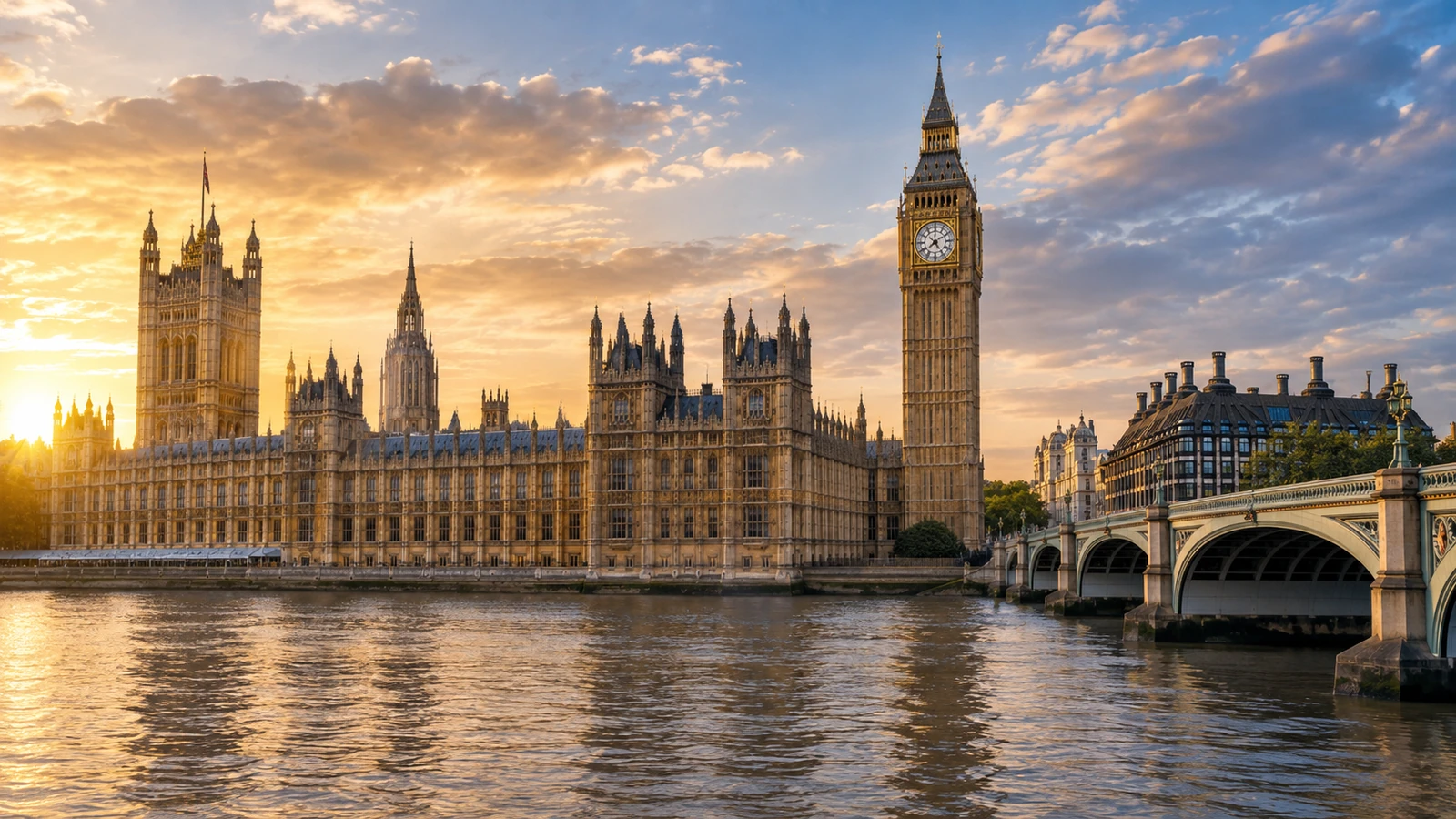
Standing majestically on the banks of the River Thames, the Palace of Westminster serves as the bustling heart of British democracy and political power. Behind its stunning Gothic Revival facade lies a rich tapestry of ancient traditions, secret chambers, and historical quirks that have evolved over nearly a millennium. From century-old sports relics hidden in roof beams to strict rules forged in royal conflict, this iconic seat of Parliament holds endless surprises. Discover fifteen captivating facts about the historic building that shapes modern British government.
1. King Charles I Caused Monarchs to Be Banned from the Commons
Since King Charles I stormed into the House of Commons with armed soldiers in 1642 to arrest five Members of Parliament, no reigning British monarch has been allowed to step foot inside the House of Commons chamber. To this day, during the State Opening of Parliament, the monarch sits on the throne inside the House of Lords. The official known as Black Rod is sent to summon the Commons, where the door is symbolically slammed in Black Rod's face to demonstrate the House's independence. Only after knocking three times with their staff is Black Rod admitted to invite the MPs to the Lords. This dramatic tradition reinforces the absolute separation between the Crown and the elected representatives of the British public.
2. Tudor Tennis Balls Were Discovered in Westminster Hall's Roof
Westminster Hall is the oldest surviving part of the palace complex, having been constructed in 1097 under King William II. During extensive restoration work on the hall's magnificent 14th-century oak hammerbeam roof, workers discovered several ancient leather-bound tennis balls lodged high in the rafters. Historical analysis revealed that these balls dated back to the 16th century during the reign of King Henry VIII. The monarch was a passionate fan of "real tennis" and frequently converted the massive empty hall into his personal indoor court. Left undisturbed for centuries, the stray balls provided physical evidence of royal recreation taking place beneath the famous medieval roof.
3. Dying Inside the Palace Is Not Actually Illegal
A widespread urban legend asserts that it is illegal to die inside the Palace of Westminster because anyone dying in a royal palace is entitled to a state funeral. While legal experts and parliamentary historians confirm that no such written law exists in British statutes, palace staff long followed a pragmatic medical protocol. Whenever someone suffered a catastrophic health emergency within the building, paramedics traditionally made every effort to ensure official pronouncements of death occurred in an ambulance or hospital. This clever administrative tactic effectively eliminated any potential debates surrounding state funeral entitlements or legal jurisdictions. As a result, official records rarely document any deaths occurring directly inside the parliamentary chambers.
4. Free Snuff Is Still Provided at the Commons Entrance
Although smoking was strictly banned within the House of Commons in 1694, the consumption of smokeless tobacco remained entirely permitted. To accommodate this habit, a wooden box fully stocked with fine nasal snuff has been kept at the entrance of the Commons chamber for centuries. Maintained by the Principal Doorkeeper, the box is crafted from wood salvaged from parliamentary ruins destroyed by German bombing during World War II. Every Member of Parliament is legally entitled to take a pinch of snuff free of charge before entering the chamber. Though very few modern politicians make use of the privilege, the box remains carefully refilled each day as a nod to parliamentary heritage.
5. Emily Davison Hid in a Broom Cupboard for the 1911 Census
On the night of the 1911 UK Census, militant suffragette Emily Wilding Davison executed a daring protest by sneaking into the Palace of Westminster. She spent the entire night hiding inside a dark broom cupboard located in the Chapel of St Mary Undercroft beneath the building. Davison intended to list her official place of residence on the census form as the "House of Commons," asserting her equal political rights as a woman. Her plan succeeded when the census enumerator officially recorded her presence within the parliamentary chapel. Today, a brass plaque mounted inside the historic broom cupboard commemorates her bold act in the struggle for women's voting rights.
6. Parliament Rejected Feline Pest Control Despite a Mouse Problem
Beneath the grandeur of the upper chambers, the Palace of Westminster suffers from a massive and persistent mouse infestation across its vast network of cellars and dining areas. Despite frequent suggestions to hire an official "Chief Mouser" cat similar to Downing Street's famous feline staff, parliamentary authorities have repeatedly declined. Management fears that a free-roaming cat might accidentally ingest modern poison bait placed throughout the building. Additionally, officials worry that a cat might wander onto dining tables during high-profile political banquets or interfere with live television broadcasts. Parliament instead relies on specialized night-shift pest control teams to keep the rodent population under control.
7. Guards Search the Cellars with Lanterns Before State Openings
Prior to every State Opening of Parliament, the Yeomen of the Guard perform a traditional search of the palace basements wearing full ceremonial dress. Equipped with antique red hand lanterns, the guards inspect every nook and cranny of the cellars beneath the building. This ritual dates back to November 5, 1605, when Guy Fawkes was discovered guarding barrels of gunpowder hidden under the House of Lords. While modern security forces perform thorough electronic sweeps before the event, the historical search is maintained as a beloved ceremonial tradition. Once the search is completed, a formal message is sent to the monarch confirming that the cellars are safe for their arrival.
8. The Monarch Has a Hidden Bathroom in the Robing Room
Within the Sovereign's Robing Room, where the reigning monarch dons ceremonial robes and the Imperial State Crown, lies a clever architectural secret. Seamlessly integrated into the wall's rich wooden paneling is a concealed flush door that opens into a private en-suite bathroom. Designed specifically for royal use during long State Opening ceremonies, the door features no exterior handles or obvious hinges. When closed, the hidden portal blends perfectly into the surrounding carved woodwork, remaining completely invisible to visitors. This discreet facility allows the monarch to prepare for major constitutional events in total privacy.
9. Nearby Thames Bridges Match the Colors of Parliament's Benches
The color schemes of two major Thames bridges crossing near Parliament deliberately match the interior design of the two legislative houses. Westminster Bridge, located adjacent to the House of Commons side of the palace, is painted a distinct shade of green mirroring the chamber's leather benches. In contrast, Lambeth Bridge downriver is painted a rich crimson red to match the plush red leather seating of the House of Lords. This deliberate color coding creates a visual connection between the public infrastructure of London and the parliamentary chambers. The architectural harmony allows travelers crossing the river to immediately recognize which end of the palace they are approaching.
10. The Palace Was Built on a Vanished Island Named Thorney
Long before modern stone embankments regulated the River Thames, the Palace of Westminster was established on a low-lying gravel island named Thorney Island. Formed by the natural marshland created where the River Tyburn flowed into the Thames, the island provided a defensible location for early settlement. King Edward the Confessor chose this marshy site in the 11th century to build his royal palace and adjacent abbey. Over centuries of urban expansion and civil engineering, the surrounding waterways were diverted or built over, merging the island into central London. Despite these changes, the massive palace still rests atop the soft, sandy soil of the ancient riverbed.
11. Red Lines on the Commons Carpet Kept Debaters Out of Sword Range
Stretching down the green carpet in the center of the House of Commons are two prominent parallel red lines. Parliamentary custom dictates that these lines are set exactly two sword-lengths apart to maintain order during heated debates. In historic times, this spatial division ensured that opposing Members of Parliament could not reach each other with drawn weapons while speaking. Today, MPs are strictly forbidden from stepping over these red lines while addressing the Speaker of the House. Although politicians no longer carry sidearms into the chamber, the rule remains actively enforced to prevent physical confrontation.
12. Professional Abseilers Clean the Four Faces of Big Ben
Cleaning the four gigantic clock faces of the Elizabeth Tower—popularly known as Big Ben—requires specialized physical skills and immense caution. Situated more than 180 feet above the ground, the clock faces cannot be reached using conventional ladders or mobile scaffolding. Instead, a team of professional abseilers rappels down from the top of the tower on heavy industrial ropes to perform the maintenance. Working carefully, the cleaners scrub away soot and grime by hand from all 312 hand-crafted glass panes on each dial. To ensure safety during the operation, the complex clock mechanism is temporarily stopped so the massive hands do not move while technicians are hanging outside.
13. Newly Elected Speakers Are Physically Dragged to Their Chair
When a new Speaker of the House of Commons is elected, fellow Members of Parliament physically drag them to the official Speaker's chair. While modern Speakers pretend to resist as part of a lighthearted ceremonial tradition, the origins of this custom were deeply serious. Between 1394 and 1535, seven Speakers of the House were executed by British monarchs unhappy with legislative decisions or bad news. Taking on the position historically carried a real risk of imprisonment or death if the King disapproved of parliamentary actions. Because candidates were genuinely hesitant to accept such a dangerous role, physical force was often required to compel them into office.
14. Cloakrooms Still Feature Purple Ribbons for Hanging Swords
Inside the Members' cloakroom beneath the House of Commons, every coat peg features a soft loop of purple ribbon. These ribbons were originally introduced centuries ago so that MPs could hang up their swords before entering the debating chamber. Although carrying weapons into the House was officially banned in 1694, the historical ribbons remain attached to every single peg. Modern politicians continue to use these historical fabric loops to secure umbrellas, coat hangers, and extra clothing. This subtle detail serves as one of Parliament's most tangible daily links to its medieval legislative roots.
15. Churchill's Bronze Foot Wore Down from Lucky Rubs
Located in the Members' Lobby, a celebrated bronze statue of wartime Prime Minister Sir Winston Churchill guards the doorway to the House of Commons chamber. For decades, a popular superstition led MPs to touch the statue's left foot for good luck before entering the chamber to deliver major speeches. This frequent rubbing eventually wore away the metal detailing, forcing parliamentary conservators to perform extensive repairs and request an end to the tradition. Meanwhile, to protect the exterior of the ancient building, engineers installed low-voltage electrified wires along upper ledges. These discreet shock wires humanely deter pigeons from perching on the carved stonework and defacing the iconic facade.
Sources & References
This AI-assisted post was rigorously curated and fact-checked for accuracy by:
 Martin Roháček
How fun was this article? 🤔
Tap a star to rate it
🧠 Quiz: How closely were you paying attention?
10 questions — all answers are in the article above!
Enjoyed these facts? There's more! 💌
Fresh fun facts in your inbox. No spam, ever.