The Gothic Masterpiece: 15 Fascinating Facts About Cologne Cathedral
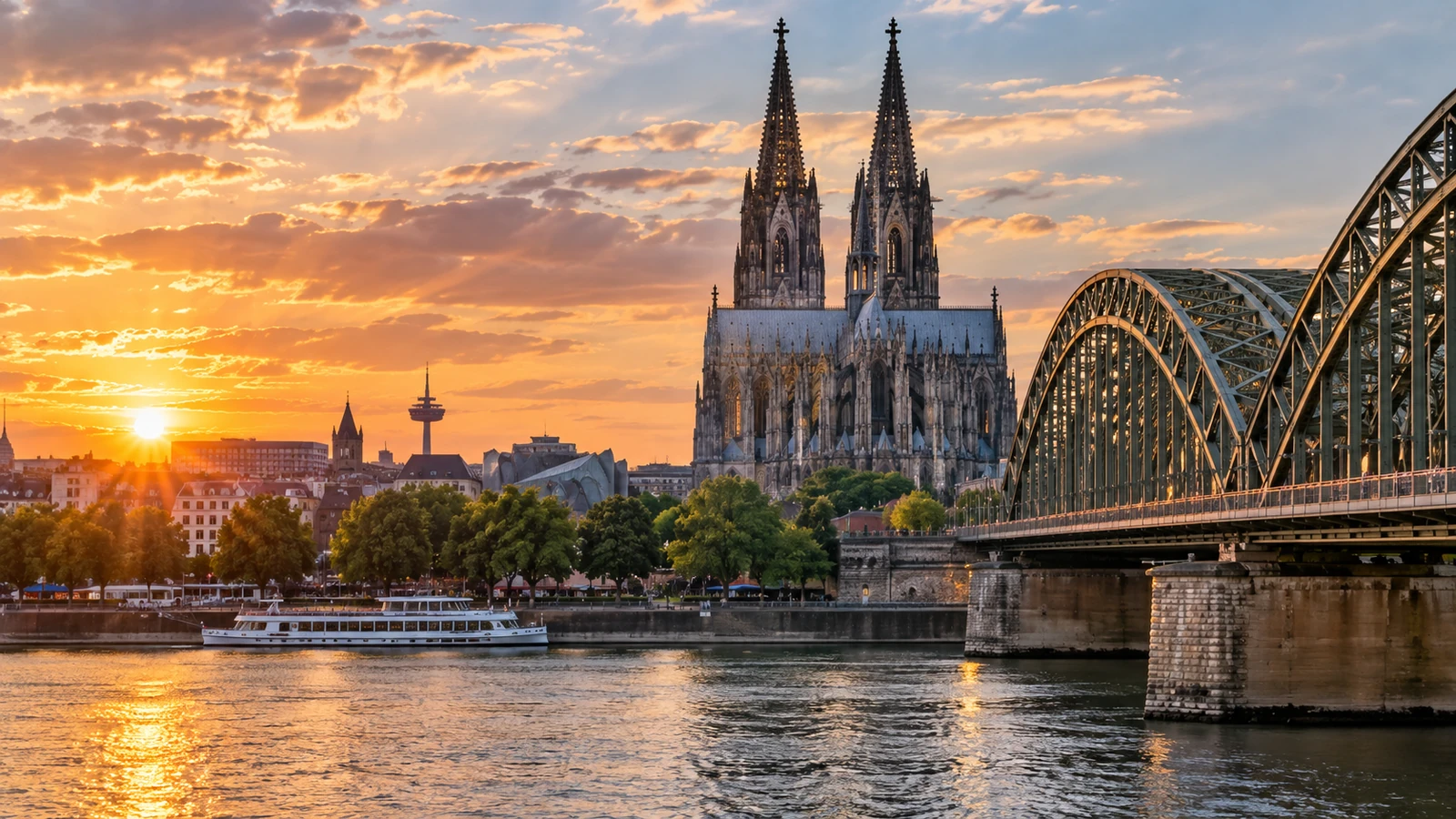
Rising dramatically over the Rhine River, Cologne Cathedral is one of Europe's most spectacular architectural masterpieces and a UNESCO World Heritage site. Construction on this Gothic marvel began in 1248, but it took over six centuries, lost blueprints, and engineering breakthroughs to bring it to completion. From secret devil legends and World War II survival stories to pixelated modern art and high-altitude falcons, the cathedral holds centuries of hidden history within its darkened stone spires. Here are 15 fascinating facts about one of Germany's most iconic landmarks.
1. Construction Took a Staggering 632 Years
Construction on Cologne Cathedral officially began in 1248, but work ground to a complete halt around 1560 with the structure only half-finished. For nearly three centuries, a massive wooden crane dominated the Cologne skyline atop the uncompleted south tower as a testament to stalled ambitions. Driven by 19th-century Romantic enthusiasm and civic pride, work finally resumed in 1842 under the patronage of King Frederick William IV of Prussia. Craftsmen completed the massive twin spires according to medieval plans, bringing the monumental 632-year construction project to an end in 1880. Today, the building blends authentic medieval Gothic masonry with innovative 19th-century structural engineering.
2. It Houses the Relics of the Three Wise Men
In 1164, Archbishop Rainald von Dassel brought the alleged bodily relics of the Biblical Three Wise Men from Milan to Cologne as spoils of war gifted by Holy Roman Emperor Frederick Barbarossa. To house these sacred treasures, local clergy commissioned the Shrine of the Three Kings, a breathtaking gilded triple-sarcophagus created by master goldsmith Nicholas of Verdun. The presence of these famous relics transformed Cologne into one of the most vital Christian pilgrimage sites in medieval Europe. The massive influx of wealthy pilgrims generated the immense revenues required to break ground on the cathedral in 1248.
3. It Miraculously Survived 14 Direct Bomb Hits in WWII
During World War II, Allied air raids flattened almost the entire inner city of Cologne, turning surrounding neighborhoods into mountains of rubble. The cathedral suffered severe damage after taking fourteen direct hits from aerial bombs, which shattered historic stained glass and collapsed several stone vaults. Despite the devastation, the twin spires remained standing high above the destroyed urban landscape. Allied pilots deliberately avoided leveling the structure because its high spires served as an essential visual landmark for navigation over Germany. Restoration work began almost immediately after the war ended, allowing services to resume as early as 1948.
4. Local Legend Claims the Architect Bet His Soul to the Devil
A famous local folktale attributes the cathedral's historic construction delays to a high-stakes gamble with Satan. According to legend, the original master architect, Gerhard von Rile, grew frustrated by the monumental task and agreed to trade his soul if the devil could complete the cathedral before he did. The devil promised to construct an aqueduct from the Eifel mountains faster than Gerhard could build the church towers. Realizing her husband's eternal damnation was near, the architect’s clever wife tricked the devil into revealing his plans and tricked a rooster into crowing early. Foiled by the trick, the enraged devil destroyed his aqueduct, ensuring the cathedral remained unfinished for centuries.
5. Acid Rain Turned the Exterior Stone Permanently Black
Many first-time visitors assume that the dramatic black color of Cologne Cathedral's outer walls is simply an accumulation of dirt and industrial soot. While pollution from coal trains and factories played a historic role, the dark color is primarily the result of a permanent chemical reaction within the stone itself. Acid rain containing atmospheric sulfur dioxide reacts directly with the calcium carbonate in the sandstone and limestone masonry, converting the surface layer into gypsum. This chemical shift creates a thick, dark protective crust over the outer carvings, requiring specialized conservation teams to delicately clean the facade without eroding original medieval details.
6. It Houses the World's Largest Swinging Bell
Cologne Cathedral is home to the largest freely swinging bell in the world, known affectionately by locals as Decker Pitter, or Fat Peter. Formally named St. Peter's Bell, this massive bronze instrument was cast in 1923 by bellfounder Heinrich Ulrich to replace an earlier bell melted down for weapons during World War I. Weighing a staggering 24 metric tons (over 53,000 pounds), it requires a heavy-duty electrical mechanism to swing its 600-kilogram iron clapper. Because of its intense structural resonance, Fat Peter is rung only on major religious holidays and significant national occasions, sending a deep bass hum across the city.
7. A Pixelated Window by Gerhard Richter Sparked Big Controversy
In 2007, the cathedral unveiled a stunning stained-glass installation created by internationally renowned German contemporary artist Gerhard Richter to replace a South Transept window destroyed in World War II. Richter used a specialized computer program to randomly arrange 11,263 square pieces of glass in 72 historic colors drawn from original medieval windows. The non-figurative pixelated design caused major debate among church officials, with some conservative critics arguing that an abstract pattern was unsuited for a medieval cathedral. However, when sun shines through the south wall, it projects a breathtaking kaleidoscope of glowing color across the stone interior, creating a harmony between modern art and sacred architecture.
null9. It Was Briefly the Tallest Building in the World
When workers placed the final stone atop the twin spires in October 1880, Cologne Cathedral officially became the tallest man-made structure on Earth. Rising to an impressive height of 157.3 meters (516 feet), it surpassed both the Great Pyramid of Giza and St. Nicholas' Church in Hamburg. However, its reign at the pinnacle of architectural height was short-lived, lasting only four years until the Washington Monument was completed in the United States in 1884. Despite losing its overall title, Cologne Cathedral remains one of the tallest twin-spired Gothic churches standing today.
10. Daily Maintenance Costs Around €30,000
Preserving a massive Gothic cathedral made of soft stone requires continuous labor and staggering financial resources. The cathedral operates its own dedicated stonemasonry workshop, known as the Dombauhütte, which employs nearly 100 specialized masons, sculptors, glass restorers, and engineers year-round. It costs approximately €30,000 every single day—totaling over €10 million annually—to repair damage caused by wind, moisture, frost, and air pollution. Because stone restoration is an unending process, local residents often joke that whenever construction on the cathedral finally stops completely, the end of the world must be near.
11. Peregrine Falcons Nest High Up in the Spires
The sky-scraping spires of Cologne Cathedral function as a substitute for natural mountain cliffs for local urban wildlife. A pair of wild peregrine falcons has successfully nested high on the northern tower ledges for decades, taking full advantage of the safe, inaccessible location. Wildlife conservation organizations installed a specialized nesting box equipped with live webcams, allowing bird lovers worldwide to monitor the raptors raising their chicks. Perched over 100 meters above the Rhine, these fierce predators dive through the city skies to hunt pigeons and small birds.
12. It Contains the Oldest Surviving Monumental Crucifix North of the Alps
Displayed in the cathedral’s St. Stephen Chapel, the Gero Crucifix (Gero-Kreuz) is one of the most important surviving masterworks of early medieval Western art. Commissioned around 970 AD by Archbishop Gero of Cologne, it is recognized as the oldest surviving large-scale wooden carving of the crucified Christ north of the Alps. Sculpted from solid oak and painted with gold detailing, the artwork represented a major shift in Christian art by portraying Christ in physical suffering rather than as an emotionless king. Scientific tree-ring analysis conducted on the wood confirmed the cross was carved during Archbishop Gero's 10th-century life.
13. Reaching the Observation Platform Requires Climbing 533 Steps
Visitors who want a panoramic view over Cologne and the Rhine River must embark on a challenging physical climb up the South Tower. The ascent involves navigating a tight spiral stone staircase comprising exactly 533 individual steps, leading to an open platform 97 meters (318 feet) off the ground. Because installing an elevator inside the historic masonry would damage the structural integrity of the tower, every tourist must make the journey on foot. Midway through the climb, visitors pass directly alongside the heavy bell chamber, granting an up-close look at the cathedral's historic iron bells.
14. A Full-Scale Concrete Replica of a Spire Finial Sits Outside
Standing on the public square near the cathedral’s main western entrance is a giant concrete replica of a spire finial (Kreuzblume). Constructed in 1991, this ground-level display was designed to demonstrate the immense scale of the ornamental stone crowns that cap the 157-meter twin spires. From ground level, the spires' tips appear delicate and small, but the full-scale replica reveals that each finial stands nearly 10 meters (31 feet) high and 5 meters wide. The monument provides tourists with an impressive sense of the massive engineering effort required to hand-carve Gothic stonework.
15. Lost Medieval Blueprints Were Found in an Attic and a Bean Sack
The successful 19th-century completion of Cologne Cathedral was made possible by the miraculous discovery of the original medieval architectural blueprints, known as Plan F. Drawn around 1300 on large sheets of parchment, the master plans had vanished during the Renaissance when construction ground to a halt. In 1814, architectural historian Georg Moller discovered one half of the gigantic parchment drawing stored in a bean sack in an attic in Darmstadt. Two years later, collector Sulpiz Boisserée found the matching second half of the drawing in Paris, allowing 19th-century builders to finish the spires precisely according to original Gothic designs.
Sources & References
This AI-assisted post was rigorously curated and fact-checked for accuracy by:
 Martin Roháček
How fun was this article? 🤔
Tap a star to rate it
🧠 Quiz: How closely were you paying attention?
10 questions — all answers are in the article above!
Enjoyed these facts? There's more! 💌
Fresh fun facts in your inbox. No spam, ever.