The Futuristic Oasis: 15 Fascinating Facts About Dubai
From hypercars patrolling palm-lined boulevards to indoor ski slopes built inside desert megamalls, Dubai is a metropolis engineered to defy expectations. Once a modest fishing and pearl-diving community along the Persian Gulf, this desert enclave transformed itself into a global hub of modern architecture, finance, and record-breaking innovation. Discover the incredible engineering feats, cultural traditions, and economic shifts that shaped the world's most dramatic urban metamorphosis.
1. The Burj Khalifa Stretches Over Half a Mile Into the Sky
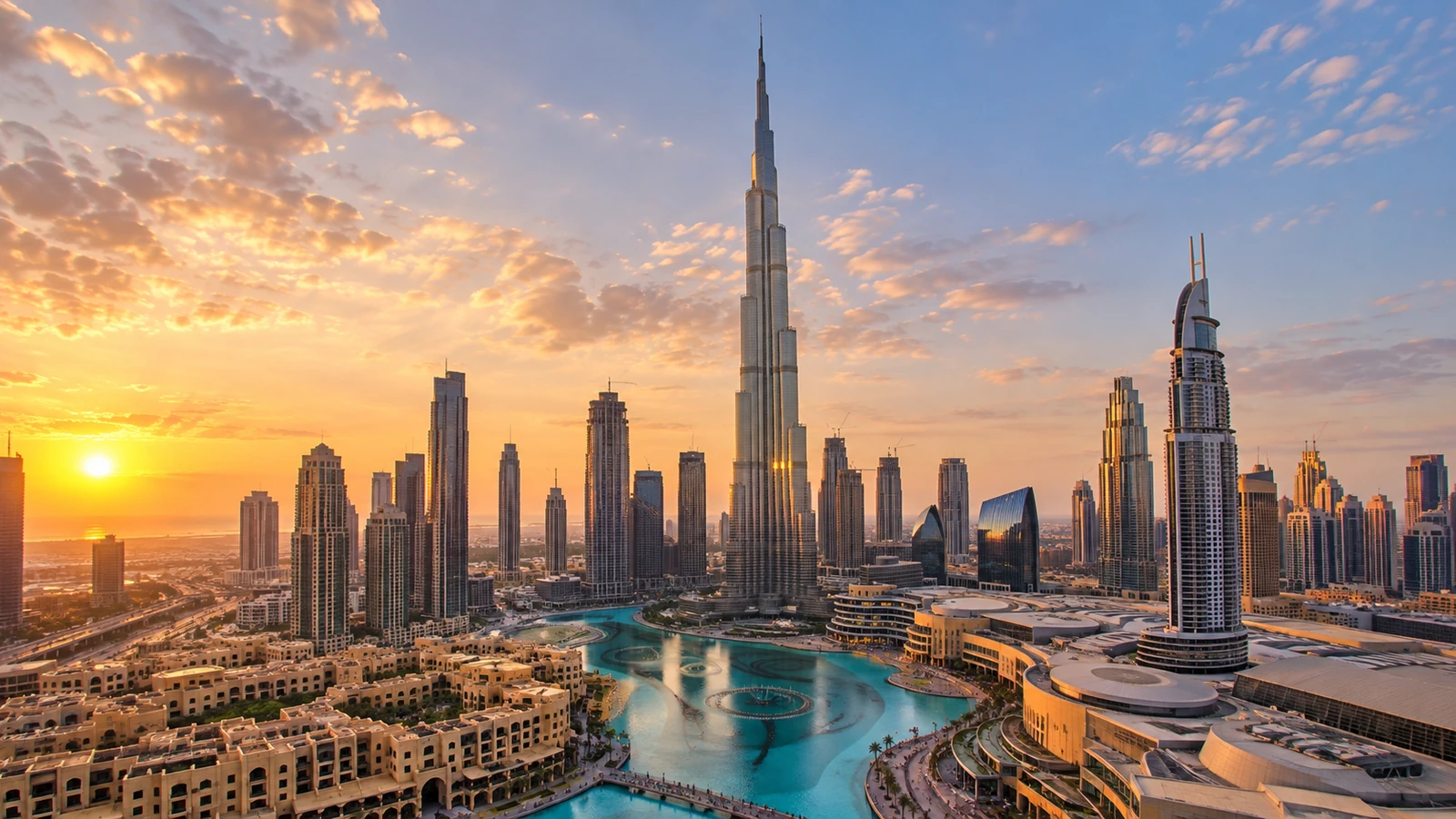
Rising 828 meters (2,717 feet) tall, the Burj Khalifa in Dubai stands as the tallest structure ever constructed by humans. To withstand fierce desert heat and extreme high-altitude winds, engineers modeled its Y-shaped footprint on the regional Hymenocallis desert flower, providing structural stability and maximizing natural light. During peak summer conditions, the outer surface of the tower reaches extreme temperatures, requiring a specialized double-glazed cladding system to insulate the interior. The skyscraper also holds records for the highest occupied floor, the longest elevator travel distance, and the highest outdoor observation deck. Its construction required over 330,000 cubic meters of concrete and 39,000 tonnes of steel rebar.
2. Dubai Law Enforcement Operates a Fleet of Exotic Supercars
The Dubai Police force is world-famous for its high-octane patrol fleet, which includes hypercars like the Bugatti Veyron, Aston Martin One-77, Lamborghini Aventador, and Ferrari FF. While these multi-million-dollar vehicles are technically capable of chasing down speeding luxury cars on the highway, their primary purpose is public relations and community engagement. Officers routinely park these exotic cruisers near major tourist attractions like the Dubai Mall and the Burj Khalifa to interact with visitors and take photos. The Bugatti Veyron in the fleet even earned a Guinness World Record for being the fastest police car in service, reaching top speeds of 253 mph.
3. Automated Vending Machines Dispense Real Gold Bars
In Dubai, purchasing physical gold is as simple as grabbing a snack from a traditional vending machine. The city made international headlines when it installed the world's first "Gold to Go" automated kiosk at luxury hotels and major shopping destinations. Wrapped in leaf gold, these armored, computerized machines dispense items ranging from 24-karat gold coins to solid ten-gram gold bars. To protect buyers from market volatility, an integrated computer system updates prices every ten minutes in real time based on international spot market prices. The machines are outfitted with sophisticated anti-money laundering software and heavy security plating to prevent tampering.
4. Robot Jockeys Have Replaced Human Riders in Camel Racing
Camel racing is a deeply rooted tradition in Arabian culture, but human child jockeys were officially banned in the United Arab Emirates in 2002 due to safety and human rights concerns. To preserve the beloved heritage sport, engineers developed lightweight robotic jockeys mounted directly onto the camels' saddles. Weighing only a few pounds, these mechanical devices feature aluminum frames, heart-rate monitors, GPS tracking, and remote-controlled motorized whips. Owners and trainers drive alongside the track in four-wheel-drive SUVs, shouting encouragement through walkie-talkies connected to speakers on the robots while operating the whip via remote control. This high-tech innovation successfully modernized a traditional sport while prioritizing human welfare.
5. Outdoor Bus Shelters Are Fully Air-Conditioned
Facing extreme summer temperatures that routinely surpass 115°F (46°C), Dubai became the first city in the world to introduce enclosed, air-conditioned bus shelters. Launched to encourage public transit usage among residents, hundreds of these glass-walled shelters are scattered throughout the metropolis. Inside, powerful cooling units maintain a comfortable ambient temperature of around 72°F (22°C) regardless of the sweltering heat outside. Passengers wait for their buses while pressing access buttons to open automatic sliding doors, preventing cool air from escaping into the desert air.
6. Oil Accounts for Less Than One Percent of Dubai’s Economy
Contrary to a common global myth, Dubai is not primarily funded by vast petroleum reserves, unlike its neighboring emirate, Abu Dhabi. While oil discovery in 1966 initially catalyzed the city's modern infrastructure development, leadership quickly recognized that their reserves were limited and began diversifying early. Today, oil and natural gas contribute less than one percent to Dubai’s gross domestic product. The bustling metropolis relies primarily on international trade, real estate, financial services, aviation, and a massive global tourism sector. By transforming itself into a global logistics hub, Dubai built a sustainable post-oil economic model.
 Asian Cities
From hyper-futuristic megacities boasting heated subway seats to ancient imperial capitals hiding subterranean water palaces, Asia's greatest metropolises are defined by astonishing contrasts. Discover the hidden quirks and rich histories of these hubs.
See All Facts
Asian Cities
From hyper-futuristic megacities boasting heated subway seats to ancient imperial capitals hiding subterranean water palaces, Asia's greatest metropolises are defined by astonishing contrasts. Discover the hidden quirks and rich histories of these hubs.
See All Facts
7. The Palm Jumeirah Artificial Island Is Visible From Outer Space
Resembling a stylized palm tree topped with a crescent, the Palm Jumeirah is one of the largest artificial archipelagos ever constructed. Engineers created the massive island without using concrete or steel frameworks, relying entirely on over 120 million cubic meters of sand dredged from the sea floor and millions of tons of natural rock. GPS satellites guided the placement of materials to ensure the precise formation of the palm fronds and surrounding crescent breakwater. The resulting structure added over 300 miles of coastline to Dubai and is so vast that astronauts aboard the International Space Station can spot its distinct shape with the naked eye.
8. Falcons Hold Official Passports and Fly in Airplane Cabins
Falconry holds immense cultural significance in the United Arab Emirates, where falcons are revered as national symbols of bravery and prestige. To prevent illegal trafficking while facilitating competitive travel, the UAE government issues official green passports for individual falcons. Airlines based in the region allow passengers to transport these valuable birds inside the main aircraft cabin rather than the cargo hold. Falcons often travel in business or first-class cabins perched on custom armrest perches while wearing protective leather hoods to keep them calm. Each passport remains valid for three years and details the bird’s origin, microchip number, and owner information.
9. A Massive Garden Displays 150 Million Flowers in the Desert
Spanning over 72,000 square meters in the heart of the desert, the Dubai Miracle Garden is the world's largest natural flower garden. Launched on Valentine's Day in 2013, the park features over 150 million blooming flowers arranged in intricate 3D sculptures, floral castles, and life-sized structures. One of its standout attractions is a full-scale floral replica of an Emirates Airbus A380, which earned a world record for the largest floral installation. To sustain this lush oasis in an arid climate, horticulturists utilize advanced sub-surface drip irrigation powered entirely by recycled municipal wastewater, conserving precious water while keeping the displays vibrant.
10. Single-Digit License Plates Sell for Millions of Dollars
In Dubai, vehicle license plates serve as the ultimate symbol of social status and wealth, with lower numbers commanding staggering prices. The government regularly hosts official charity auctions where affluent collectors bid millions of dollars for rare single-digit and double-digit registration plates. In 2023, the license plate bearing the single number "P 7" sold at a charity auction for a record-breaking 55 million dirhams (roughly $15 million USD), making it the most expensive license plate in human history. Drivers proudly display these minimalist plates on hypercars to signal their elite standing within society.
11. You Can Ski on Real Snow Inside a Desert Mall
Located within the Mall of the Emirates, Ski Dubai is a massive indoor ski resort that maintains sub-zero temperatures while desert heat blazes outside. Spanning 22,500 square meters, the facility features an 85-meter-high indoor mountain with five slopes of varying difficulty, including the world’s first indoor black diamond run. Powerful refrigeration systems spray chilled water mist overnight into freezing air, producing 30 tons of fresh, real snow every single night. The indoor winter park also includes a chairlift, snow park play area, and a colony of king and gentoo penguins that participate in daily public marches.
12. Dubai Transformed From a Fishing Village Built on Pearl Diving
Long before its sky-scraping towers and luxury mega-resorts existed, Dubai was a modest walled settlement centered around the Dubai Creek. For centuries, the local economy relied heavily on fishing, boat building, and pearling, with divers spending months at sea retrieving wild oysters from the Gulf floor. In the early 20th century, thousands of local men engaged in pearl diving during the summer harvest, making the city a renowned trading port for natural pearls. However, the industry collapsed almost overnight during the 1930s following the Japanese invention of cultured pearls and the Great Depression, forcing the village to reinvent itself as a duty-free commercial transit hub.
13. Men Outnumber Women by More Than Two to One
Dubai possesses one of the most unique demographic profiles of any major city in the world due to its massive expatriate population. Foreign nationals make up nearly 90 percent of the emirate's total population, arriving from over 200 countries to work in construction, service industries, finance, and technology. Because the construction and manual labor sectors draw vast numbers of male migrant workers who live without their families in the city, men significantly outnumber women. Demographic census data shows that roughly 69 percent of Dubai's total residents are male, creating a striking gender imbalance across the urban center.
14. Dubai Is Home to Some of the World’s Tallest Residential Skyscrapers
Beyond iconic commercial towers, Dubai dominates the global skyline when it comes to high-density vertical living. The city boasts dozens of residential skyscrapers soaring past 300 meters (984 feet), including the Princess Tower, 23 Marina, and the Marina Torch located in the Dubai Marina district. For several years, the 101-story Princess Tower held the official title of the world's tallest residential building, standing at 413 meters (1,355 feet). Residents living on upper floors experience breathtaking clouds beneath their balconies, along with high-speed elevators, sky lounges, and indoor swimming pools perched hundreds of meters above the coastline.
15. The Government Features an Official Minister of State for Happiness
Demonstrating an unconventional approach to governance, the United Arab Emirates established the Ministry of State for Happiness and Wellbeing in 2016. Headed by a dedicated cabinet minister, this government department aims to align all official state policies, urban planning, and government services with the goal of creating a happier society. The ministry measures social satisfaction through annual surveys, promotes workplace positivity programs, and embeds "happiness officers" across various public institutions. Rather than viewing happiness as a passive emotion, Dubai's leaders treat civic wellbeing as a strategic, measurable goal integrated into the city’s long-term economic vision.
Sources & References
This AI-assisted post was rigorously curated and fact-checked for accuracy by:
 Martin Roháček
How fun was this article? 🤔
Tap a star to rate it
🧠 Quiz: How closely were you paying attention?
10 questions — all answers are in the article above!
Enjoyed these facts? There's more! 💌
Fresh fun facts in your inbox. No spam, ever.