The Impregnable Pearl: 15 Fascinating Facts About Dubrovnik
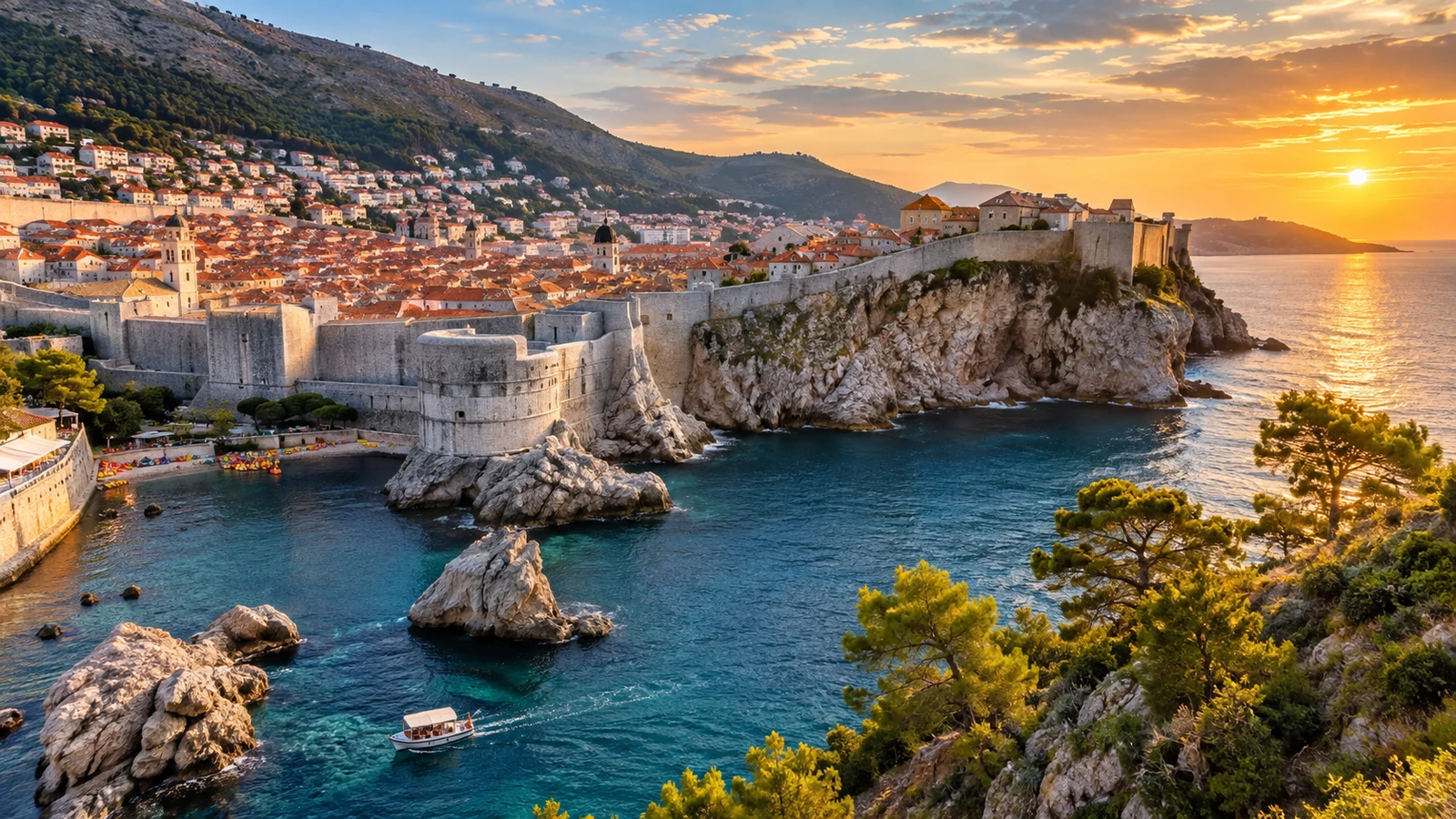
Perched on the shimmering Adriatic coast of Croatia, Dubrovnik is renowned worldwide for its majestic stone fortifications, terracotta roofs, and rich maritime history. Once a wealthy aristocratic republic known as Ragusa, this UNESCO World Heritage site blended cutting-edge civic laws, artistic genius, and savvy diplomacy to maintain its independence for centuries. From establishing the world's first official quarantine laws to starring on screen as King's Landing, Dubrovnik remains one of the world's most captivating historic cities. Here are 15 fascinating facts about the Pearl of the Adriatic.
1. The Republic of Ragusa Outlawed Slavery in 1416
Long before most European nations addressed human rights, the Republic of Ragusa made a groundbreaking legal ruling. On January 27, 1416, the Grand Council of Ragusa voted overwhelmingly to prohibit the slave trade and the transportation of slaves on Ragusan ships. The council famously declared the buying and selling of human beings to be shameful, base, and against all humanity. Human trafficking was punished with severe fines and imprisonment, setting a remarkable moral precedent centuries ahead of its time. This historic decision reflected Ragusa’s foundational ethos that personal freedom was paramount to civic dignity.
2. Dubrovnik Invented the Concept of Modern Quarantine
When the Black Death ravaged medieval Europe, Dubrovnik developed an ingenious public health strategy that saved countless lives. In 1377, the city council instituted a mandatory 30-day isolation period for all incoming sailors and traders coming from plague-infested regions. Arriving travelers were housed on nearby islands like Mrkan and Bobara before being permitted to enter the walled city. This isolation period was later extended to 40 days, giving birth to the term quarantine from the Italian word quaranta, meaning forty. Today, the 17th-century Lazarettos complex outside the city walls stands as a testament to this pioneering epidemiological achievement.
3. The Mighty City Walls Have Never Been Breached
Enclosing the entire historic center, Dubrovnik’s city walls stretch nearly two kilometers in length and reach heights of up to 25 meters. Constructed primarily between the 13th and 17th centuries, the stone ramparts are reinforced by five fortresses, sixteen towers, and two bastions. The landward side of the fortress boasts walls up to six meters thick to repel heavy artillery attacks. Thanks to their formidable engineering, these massive fortifications were never successfully breached by a hostile force during the medieval era. Walking along the top of the ramparts today offers breathtaking, uninterrupted views of the Adriatic Sea and terracotta rooftops.
4. Its Franciscan Monastery Houses One of Europe's Oldest Pharmacies
Deep within the quiet cloisters of the Franciscan Monastery lies a remarkable piece of medical history. Established in 1317 initially to care for sick friars, the monastery pharmacy soon opened its doors to the general public. It has operated continuously for over seven centuries, making it the third-oldest functioning pharmacy in the entire world. Visitors can still purchase traditional ointments and skin creams crafted according to centuries-old monastic recipes. The attached museum showcases ancient alembics, porcelain jars, and historical medical manuscripts used by medieval apothecaries.
5. The City Rector Was Confined to His Palace During His Term
To prevent political corruption and autocratic rule, the Republic of Ragusa implemented an amazingly strict political system. The chief executive, known as the Rector, was elected for a term lasting only one single month. During this thirty-day tenure, the Rector was forbidden from leaving the Rector’s Palace except to attend official state ceremonies. He could not even bring his family along, ensuring that his entire focus remained entirely dedicated to public governance. This unique arrangement successfully discouraged personal ambition and protected the republic’s democratic institutions for centuries.
6. The Stradun Was Paved to Mirror Polished Glass
The main pedestrian thoroughfare of Old Town Dubrovnik, known as the Stradun or Placa, is one of Europe’s most distinctive streets. Measuring 300 meters long, this vibrant street was created by filling in a shallow sea channel that once separated the island settlement from the mainland. Following a catastrophic earthquake in 1667, the street was rebuilt with uniform Baroque stone buildings and lined with white limestone blocks. Over centuries of foot traffic from residents and visitors, the limestone blocks have been worn so smooth that they shine like polished glass. Walking down the Stradun at night offers a magical experience as soft street lanterns reflect across the glossy floor.
7. Fort Lovrijenac Bears an Iconic Motto on Freedom
Perched dramatically on a 37-meter-high cliff top just outside the western city walls, Fort Lovrijenac served as Dubrovnik’s primary defensive shield against Venetian naval aggression. Built in just three months during the early 11th century to preempt Venetian occupation, the fortress features walls facing the sea that are twelve meters thick. Above the fort’s main entrance carved into the stone is the famous Latin inscription: Non Bene Pro Toto Libertas Venditur Auro. Translated as "Freedom is not to be sold for all the gold in the world," this powerful phrase summarized Ragusa's fierce independent spirit. Today, Fort Lovrijenac serves as a dramatic stage for theatrical productions, including iconic performances of Shakespeare’s Hamlet.
8. The Great Onofrio’s Fountain Once Fed an Engineering Marvel
Located near the Pile Gate, the Great Onofrio’s Fountain was built in 1438 as part of a sophisticated municipal water system. Designed by Neapolitan architect Onofrio della Cava, the circular sixteen-sided fountain brought fresh drinking water directly into the city. Water was transported across twelve kilometers of rugged terrain via an intricate aqueduct system connected to natural springs in Šumet. The fountain originally featured elaborate stone carvings and sculptures, though many decorative elements were damaged in subsequent earthquakes. Even today, travelers routinely stop at its sixteen carved stone spouts to fill their water bottles with cool, pure water.
9. The Sponza Palace Miraculously Survived a Devastating Earthquake
On April 6, 1667, a catastrophic earthquake struck Dubrovnik, destroying most of the city’s magnificent structures and killing thousands of citizens. Among the few major landmarks to endure the tremors virtually unscathed was the magnificent Sponza Palace. Built in the early 16th century, this architectural masterpiece seamlessly blends Gothic and Renaissance architectural styles. Historically serving as the city’s customs house, mint, treasury, and armory, Sponza Palace was a hub of international commerce. Today, it safely guards the Dubrovnik State Archives, containing over 100,000 priceless historic documents dating back over a thousand years.
10. The Dominican Monastery Preserves Over 220 Incunabula
Founded in 1271, the Dominican Monastery stands near the eastern entrance of Dubrovnik’s Old Town as both a sanctuary and a citadel. The complex features a stunning 15th-century cloister designed by local master masons alongside foreign artists. Its vast library houses an extraordinary literary treasure trove, including over 220 incunabula—books printed before the year 1501. The monastery’s art museum also showcases breathtaking religious paintings by local masters and renowned Venetian painters like Titian. Its serene inner courtyard offers a quiet haven from the busy streets outside while preserving centuries of intellectual heritage.
11. Dubrovnik Starred as King’s Landing in Game of Thrones
Millions of global television viewers know Dubrovnik as King’s Landing, the capital of the Seven Kingdoms in HBO’s hit series Game of Thrones. The city’s ancient red-roofed townscapes and intact stone ramparts provided the perfect real-world setting for the fantasy drama. Famous filming locations include Fort Lovrijenac, which doubled as the Red Keep, and the Jesuit Staircase, where Cersei Lannister’s famous walk of shame took place. The show’s massive global popularity sparked a huge influx of pop-culture tourism, attracting fans eager to walk in the footsteps of their favorite characters. Beyond fantasy television, Dubrovnik has also served as a backdrop for major films like Star Wars: The Last Jedi.
12. The Republic Created One of Europe's First Maritime Insurance Laws
As a major merchant empire rivaling Venice, the Republic of Ragusa possessed a vast mercantile fleet that traded across the Mediterranean and Atlantic. To protect its prosperous maritime enterprise, Ragusa established advanced legal frameworks far ahead of other seafaring nations. In 1272, the city published the Statute of Dubrovnik, codifying laws governing urban planning, maritime trade, and public safety. By 1568, Ragusa enacted the Ordinanza, one of the earliest official laws governing maritime insurance in human history. These legal innovations provided economic stability and established Ragusa as a trusted center for global trade.
13. The Dubrovnik Summer Festival Has Run Since 1950
Every summer, the stone squares, fortresses, and palaces of Dubrovnik transform into open-air stages for one of Europe's premier cultural events. Established in 1950, the Dubrovnik Summer Festival gathers world-renowned actors, classical musicians, dancers, and theater troupes for forty days of artistic celebration. Dramatic theater plays, symphonic concerts, and ballet performances take place under the open stars in historic venues like the Rector's Palace atrium. Opening night always features a grand ceremony where the city flag of freedom, known as Libertas, is hoisted while fanfares resound. This vibrant event honors the city's rich Renaissance traditions of theater, poetry, and artistic expression.
14. Clever Diplomacy Kept the Tiny Republic Independent for Centuries
Surrounded by aggressive world powers like the Venetian Republic and the Ottoman Empire, tiny Ragusa maintained its independence primarily through diplomacy rather than military might. Ragusan diplomats were legendary throughout Europe for their tact, multi-lingual fluency, and shrewd negotiating skills. The republic maintained a unique status as a tribute-paying vassal to the Ottoman Sultan, paying an annual fee that guaranteed commercial access and protection throughout Ottoman territories. Simultaneously, Ragusa maintained good relations with Catholic Europe and the Pope through skilled envoys. This delicate balancing act allowed the Republic of Ragusa to preserve its sovereignty for over 450 years until Napoleon abolished it in 1808.
15. Ragusa Was Among the First to Recognize American Independence
During the late 18th century, the Republic of Ragusa was keen to expand its transatlantic trade networks with the emerging United States of America. Ragusan merchant vessels were among the earliest foreign ships to trade directly in American ports following the Revolutionary War. Diplomatic correspondence reveals that Ragusa recognized the sovereignty of the United States as early as 1783, establishing formal commercial trade permissions. The Ragusan representative in Paris, Francesco Favi, maintained direct communication with Benjamin Franklin to foster trade agreements between both republics. Today, this historic diplomatic milestone stands as a testament to Dubrovnik's historic global outlook.
Sources & References
This AI-assisted post was rigorously curated and fact-checked for accuracy by:
 Martin Roháček
How fun was this article? 🤔
Tap a star to rate it
🧠 Quiz: How closely were you paying attention?
10 questions — all answers are in the article above!
Enjoyed these facts? There's more! 💌
Fresh fun facts in your inbox. No spam, ever.