The Soaring Legends: 15 Fascinating Facts About Eagles
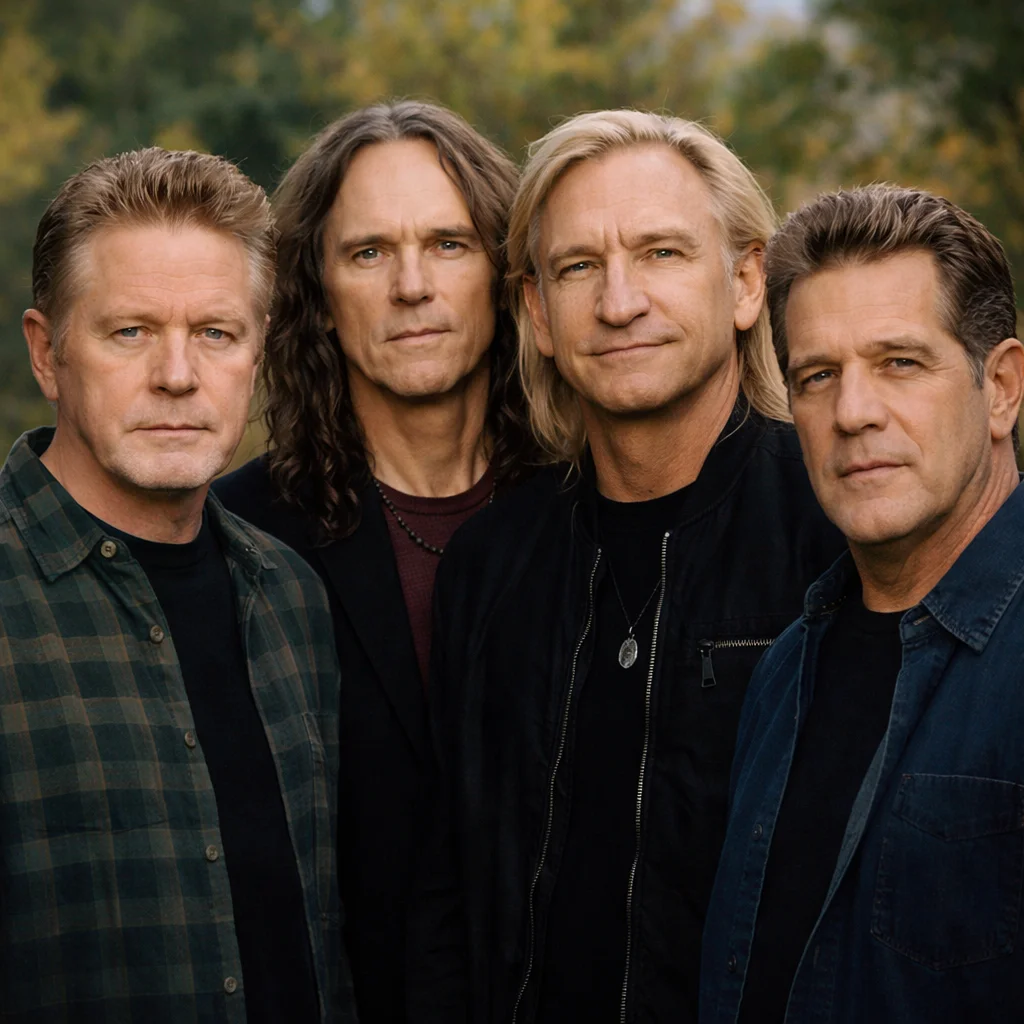
From their humble beginnings as a backing band in Los Angeles to becoming one of the best-selling musical acts in history, Eagles defined the sound of 1970s American rock. Their timeless harmonies and soaring guitar solos hide a volatile story filled with onstage threats, room-trashing antics, and unexpected pop-culture moments. Discover 15 fascinating facts about the legendary country-rock group behind "Hotel California."
1. They Formed While Backing Linda Ronstadt
Before selling tens of millions of records, the founding members of Eagles came together as a backing group for country-rock star Linda Ronstadt. In 1971, producer John Boylan recruited Glenn Frey, Don Henley, Bernie Leadon, and Randy Meisner to tour behind Ronstadt for her self-titled album. Playing together on the road revealed an undeniable vocal chemistry and harmony that surprised even the musicians themselves. Recognizing their immense potential as a standalone act, the four bandmates asked for Ronstadt's blessing to branch out and form their own group. She enthusiastically encouraged them, and the newly formed ensemble quickly signed with David Geffen's Asylum Records.
2. Their Official Name Does Not Include the Word "The"
While millions of casual fans refer to the group as "The Eagles," the band's official moniker is simply "Eagles." Co-founder Glenn Frey insisted on this grammatical choice, wanting the name to sound stripped-down and tough, akin to gang names like "Jets" or "Sharks" in the musical West Side Story. Comedian Steve Martin, who was close with the group during their early Los Angeles days, later recalled that Frey strongly preferred people refer to them strictly as "Eagles." Despite Frey's efforts, radio DJs, journalists, and record executives almost immediately added "the" to their name anyway. Today, the band's official releases and merchandise consistently use the simple, article-free name.
3. "Hotel California" Began as a Demo Called "Mexican Reggae"
The title track of the band's landmark 1976 album began as an instrumental home recording created by guitarist Don Felder. Working on a four-track cassette recorder in a rented beach house, Felder played a distinctive rhythm combining Spanish guitar flourishes with a reggae beat. He dubbed the cassette snippet "Mexican Reggae" and sent a copy to Don Henley and Glenn Frey along with several other song ideas. Henley was immediately intrigued by the surreal, hypnotic groove and began writing the famed lyrics about American greed and excess. The original reggae influence remains subtly detectable in the song's verse rhythm and signature bassline.
4. A Wild Ride with a Drug Dealer Inspired "Life in the Fast Lane"
The title and central concept for the hard-rocking hit "Life in the Fast Lane" came directly from a terrifying real-life car ride. Co-founder Glenn Frey was riding in a Porsche on a Los Angeles freeway with a drug dealer known locally as "The Count." As the dealer sped down the highway at nearly 90 miles per hour, a nervous Frey begged him to slow down before they crashed. The driver merely smiled, accelerated further, and replied, "What do you mean? It's life in the fast lane!" Frey was so struck by the phrase that he immediately jotted it down, later using Joe Walsh's signature guitar riff to build the song around it.
5. On-Stage Threats Led to Their Infamous 1980 Breakup
By 1980, interpersonal tensions among band members had reached a boiling point during a benefit concert in Long Beach, California. Tensions exploded between Glenn Frey and guitarist Don Felder after Felder made a dismissive comment to a politician backstage. Throughout the concert, stage microphones caught the two musicians whispering venomous threats at each other between songs, promising physical violence once the show ended. The gig became notoriously dubbed the "Long Night at Wrong Beach" by insiders and fans alike. Immediately after stepping off stage, Felder sped away in a limousine, and the band splintered apart for fourteen years.
6. Country Singer Travis Tritt Sparked Their 1994 Reunion
After a bitter 14-year hiatus where members famously claimed they would reunite "when hell freezes over," an unexpected catalyst brought them back together. In 1993, country music star Travis Tritt recorded a cover of "Take It Easy" for a tribute album and requested that the 1980-era lineup star in his music video. To everyone's surprise, Henley, Frey, Walsh, Felder, and Schmit all agreed to appear together on set in California. Hanging out socially for the first time in over a decade reminded the band members of their shared history and lingering warmth. Within months, they formally reunited to record new tracks and launch the historic "Hell Freezes Over" tour.
7. Their Greatest Hits Was the First Album Certified Platinum
Released in February 1976, Their Greatest Hits (1971–1975) made music industry history in more ways than one. When the Recording Industry Association of America (RIAA) introduced the "Platinum" certification status in 1976 to acknowledge one million units sold, this compilation was the very first album to receive the award. Over the decades, the record continued to sell millions of copies worldwide, eventually trading places with Michael Jackson's Thriller as the best-selling album of all time in the United States. To date, it has been certified over 38-times Platinum by the RIAA. Its incredible commercial endurance cemented Eagles as one of the most commercially successful bands in music history.
8. Joe Walsh Once Carried a Chainsaw to Custom-Remodel Hotel Rooms
Guitarist Joe Walsh brought a wild, unpredictable energy to the group when he joined in 1975, quickly developing a reputation for legendary rock-and-roll antics. Walsh became famous for trashing hotel rooms, often joining forces with Who drummer Keith Moon during joint tours. On several occasions, Walsh reportedly carried a power saw or chainsaw in his luggage specifically to alter furniture he found unflattering or intrusive in his room layout. He famously cut holes through walls between adjacent suites so he and his friends would not have to walk out into the hallway. Despite the thousands of dollars in property damage, Walsh's chaotic humor eventually became an endearing part of the band's lore.
9. Founding Guitarist Bernie Leadon Left After Pouring Beer on Glenn Frey
Original guitarist Bernie Leadon was the primary force behind the band's early, country-heavy sound and bluegrass instrumentation. However, as Glenn Frey and Don Henley pushed the group toward a harder rock direction, Leadon became increasingly frustrated with the loss of their traditional roots. Tensions escalated during a heated argument in 1975 when Leadon poured a full bottle of beer over Glenn Frey's head. Realizing his time with the group had run its course, Leadon walked out shortly thereafter and was replaced by Joe Walsh. His departure marked a pivotal turning point, shifting the band from country-rock pioneers to stadium-filling rock superstars.
10. The Band Boycotted the Grammys to Accept Their Very First Award
In 1976, Eagles earned their first Grammy Award when "Lyin' Eyes" won Best Pop Performance by a Duo or Group with Vocals. However, the band members declined to attend the live television ceremony in Los Angeles to collect the trophy. The musicians held a strong anti-establishment stance toward industry award shows, viewing artistic competitions as fundamentally flawed and artificial. Instead of walking the red carpet, the band stayed home and watched the television broadcast together from a living room couch. Despite their initial skepticism of award shows, the group would go on to win six Grammy Awards throughout their legendary career.
11. The Desperado Album Cover Included Jackson Browne as a "Dead" Outlaw
For their 1973 concept album Desperado, the band fully embraced a 19th-century Wild West outlaw motif for their artwork and lyrical themes. The album's back cover featured a dramatic staged photo depicting the capture and defeat of the infamous Dalton Gang. To create an authentic historical photo, the band members posed alongside frequent collaborator Jackson Browne and songwriter JD Souther as tied-up "dead" outlaws lying on the ground. A crowd of local friends and music executives dressed in authentic Western gear stood over them playing the roles of lawmen. The elaborate photo shoot took place at a ranch in Malibu and required real horses, vintage firearms, and antique stunt clothes.
12. Don Henley Solved the Rare Musical Challenge of Singing Lead from the Drum Kit
In rock music history, very few musicians have successfully pulled off the double duty of serving as both primary lead vocalist and main drummer. Don Henley became famous for belting out power ballads and rock anthems like "Hotel California" while maintaining precise timing on his drum kit. Because drumming requires intense physical exertion and dynamic breathing control, singing pitch-perfect lead vocals simultaneously is notoriously difficult. During live concerts, Henley used specialized head-mounted and boom microphones designed to minimize drum bleed into the vocal track. His ability to anchor the band's rhythm while performing lead vocals defined the group's signature live dynamic.
13. Joe Walsh Ran a Satirical Presidential Campaign Promising "Free Gas"
In 1980, guitarist Joe Walsh decided to inject humor into the American political scene by launching a mock campaign for President of the United States. Running on a platform that included the promise of "Free Gas for Everyone" and changing the national anthem to his solo hit "Rocky Mountain Way," Walsh captivated college campuses nationwide. Despite being a satirical joke, Walsh was actually eligible by age, turning 35 shortly after the election. His comedic campaign gained so much traction that he received thousands of write-in votes across several states. Walsh resurrected the gag in 1992, running for Vice President alongside musician Frank Zappa.
14. A Cult Movie Scene Created an Enduring Cultural Debate Over Their Music
In the Coen brothers' 1998 cult classic film The Big Lebowski, the main character, Jeffrey "The Dude" Lebowski, famously declares his intense hatred for the band. After getting into a taxi cab playing "Peaceful Easy Feeling," The Dude complains to the driver and utters the legendary line, "I hate the fuckin' Eagles, man!" The driver promptly pulls over and forcibly ejects him onto the street. Glenn Frey reportedly disliked the joke initially, feeling it unfair to their legacy, while Don Henley found it humorous. Ironically, the iconic scene introduced the band's music to a brand-new generation of younger moviegoers and sparked endless pop-culture debates.
15. The Famed "Hotel California" Guitar Solo Was Recreated Note-for-Note from an Old Demo
The iconic dual-guitar solo at the end of "Hotel California," performed by Don Felder and Joe Walsh, is widely considered one of the greatest solos in rock history. However, when the band entered the studio in Miami to record the final tracks, Felder began improvising a completely new guitar solo. Don Henley immediately stopped the session and insisted that Felder play the exact solo he had recorded on his original home demo tape a year earlier. Felder had forgotten his original improvisation, forcing him to place an urgent phone call to his housekeeper in Los Angeles. The housekeeper located the original cassette tape in his closet and played it over the telephone so Felder could relearn his own masterpiece.
Sources & References
This AI-assisted post was rigorously curated and fact-checked for accuracy by:
 Martin Roháček
How fun was this article? 🤔
Tap a star to rate it
🧠 Quiz: How closely were you paying attention?
10 questions — all answers are in the article above!
Enjoyed these facts? There's more! 💌
Fresh fun facts in your inbox. No spam, ever.