
The Graceful Art: 15 Fascinating Facts About Figure Skating
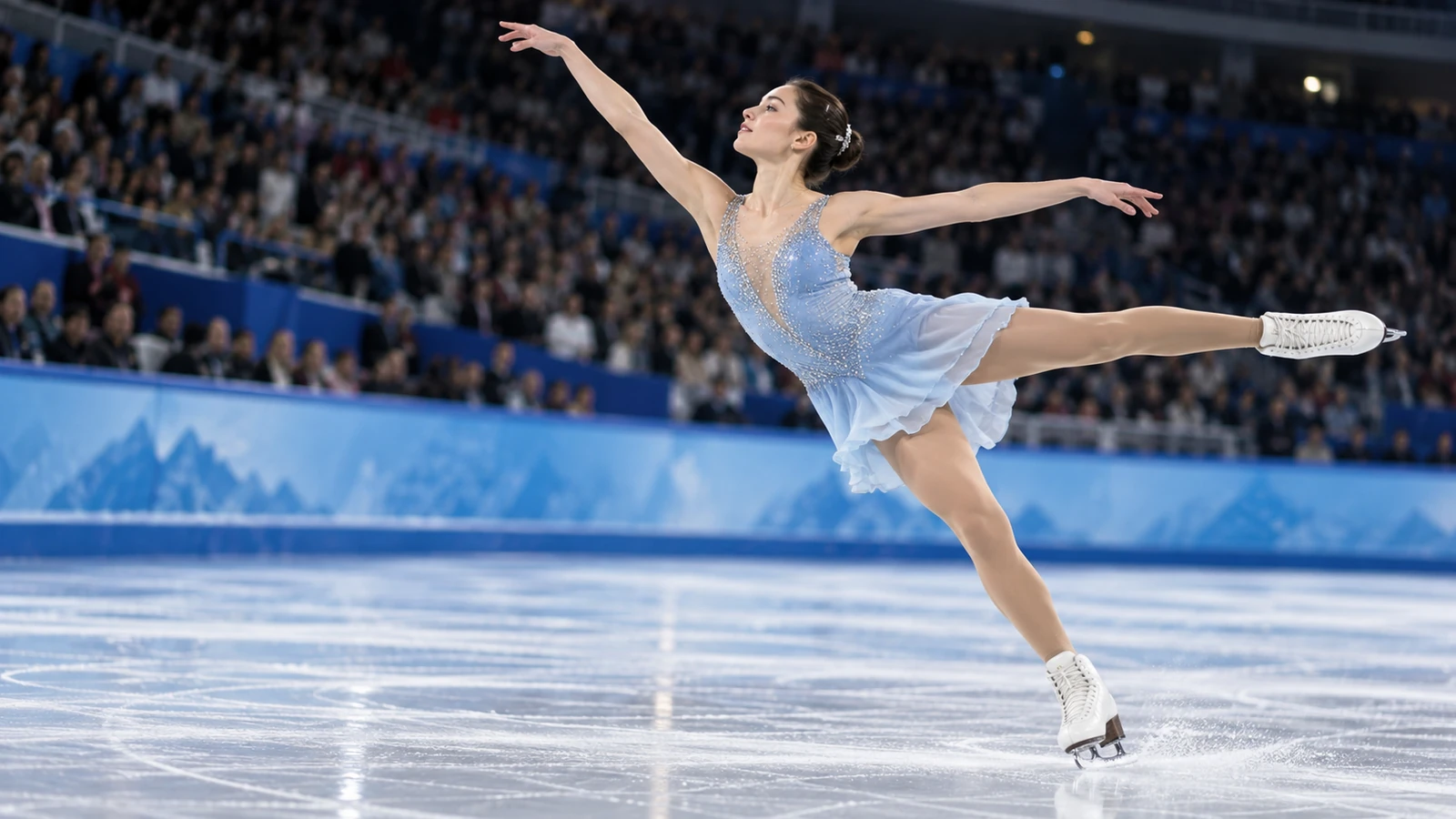
Figure skating combines explosive athletic power with artistic elegance, producing some of the most dramatic moments in Olympic history. From the secret physics of edge control to high-stakes judging scandals and rebellious aerial flips, the sport holds a rich history far beyond what viewers see on television. Learn about the surprising origins, physical strain, and bizarre regulations that shaped ice skating into the global spectacle it is today. Here are 15 fascinating facts about figure skating.
1. Compulsory Figures Gave the Sport Its Literal Name
Long before figure skating featured quad flips and pop music, competitors were judged primarily on their ability to carve geometry into clean ice. Skaters executed intricate patterns known as compulsory figures, such as figure eights and loops, which judges inspected up close to evaluate line precision. This meticulous process of drawing figures on the ice surface gave the sport its official name. Compulsory figures made up a massive percentage of competition scores for decades, often taking hours to judge. The International Skating Union finally eliminated compulsory figures from international competition in 1990 to make the sport more dynamic for television audiences.
2. An American Ballet Dancer Revolutionized the Sport After Being Rejected
In the mid-19th century, figure skating was a rigid, formal exercise focused strictly on geometric precision rather than musicality. American ballet dancer Jackson Haines dramatically changed the discipline during the 1860s by mounting blades directly onto boots and performing expressive dance moves set to music. Traditional American skaters initially ridiculed his artistic approach, forcing Haines to move to Europe to pursue his vision. He became a sensational success in Vienna, where audiences enthusiastically embraced his graceful style. Today, Haines is widely revered as the founder of modern international figure skating.
3. Skaters Never Glide on Flat Blades
To the untrained eye, a figure skate blade appears completely flat along its bottom surface, but it actually features a precision-engineered concave groove called the hollow. This central groove divides the bottom of the blade into two distinct sharp edges: an inside edge and an outside edge. Figure skaters almost never glide on the flat middle section of the blade, as doing so causes a loss of control and speed. Instead, every maneuver, turn, and jump takeoff relies on tilting the skate onto one of these specific edges. Mastering edge control is what gives skaters their extraordinary speed, deep curves, and silent gliding power across the ice.
4. The Axel Is the Only Jump with a Forward Takeoff
Invented by Norwegian skater Axel Paulsen in 1882, the Axel jump is widely considered the most technically demanding jump in figure skating. Unlike all other recognized jumps—such as the Salchow, Loop, Toe Loop, Flip, and Lutz—the Axel is the only jump where the athlete launches while moving forward. Because all figure skating jumps must land moving backward on an outside edge, the Axel requires an extra half-rotation in mid-air. Consequently, a triple Axel actually demands three and a half complete aerial revolutions, while a quadruple Axel requires four and a half. This additional half-turn makes the jump an incredible feat of human physics and rotational speed.
5. Skaters Train Their Brains to Suppress Dizziness
During high-speed spins, figure skaters can rotate at speeds exceeding 300 revolutions per minute, yet they step out of the spin completely balanced. Ballet dancers avoid dizziness by using a technique called "spotting," where they focus their gaze on a single visual reference point during turns. However, figure skaters rotate far too fast for spotting to be physically possible. Instead, years of intense training cause a neurological adaptation in the skater's brain that suppresses the vestibular ocular reflex. This adaptation prevents the involuntary eye twitching known as nystagmus, effectively training the brain to ignore signals that would normally trigger severe dizziness.
6. The "Kiss and Cry" Area Was Named by a Finnish Official
The designated waiting area where skaters sit alongside their coaches to receive their official marks is universally known as the Kiss and Cry. The memorable term was originally coined in the early 1980s by Jane Erkko, an official with the Finnish Figure Skating Association. Erkko noticed that nervous athletes sitting in front of television cameras in that corner were invariably either kissing their coaches in relief or crying over disappointing scores. Television producers quickly adopted the catchy name, and venue organizers began decorating the space with floral backdrops and sponsorship walls. Today, the Kiss and Cry area is an essential fixture of every major international figure skating event.
7. Surya Bonaly Landed an Illegal One-Footed Backflip at the Olympics
Backflips were banned from official figure skating competitions by the International Skating Union in 1976 due to safety concerns and aesthetic rules. However, during the 1998 Winter Olympics in Nagano, French figure skater Surya Bonaly executed an iconic backflip right in the middle of her free skate routine. Knowing she was already out of medal contention due to judging decisions, Bonaly performed the acrobatic stunt as a statement of defiance. To make the moment even more extraordinary, she landed the flip cleanly on a single blade—a variation never achieved by anyone else before or since. Although judges deducted points for the illegal move, the performance cemented her legacy in sports history.
8. The "Katarina Witt Rule" Enforced Modesty in Skate Costumes
At the 1988 European Championships, East German skating legend Katarina Witt caused a major stir by performing in a blue theatrical costume trimmed with feathers that lacked a traditional skirt. Critics and conservative officials argued that the high-cut outfit was overly revealing for an athletic contest. In response, the International Skating Union enacted a strict regulation colloquially known as the "Katarina Witt Rule." The mandate required female skaters to wear skirts that fully covered the hips and midsection, prohibiting theatrical costumes deemed inappropriate for sport. While costume rules have relaxed in recent years to allow pantsuits, costume design remains closely monitored by judges.
9. Skaters Were Banned from Using Music with Lyrics for Decades
For most of figure skating's modern competitive history, athletes were strictly limited to instrumental classical music or movie soundtracks without vocal lyrics. The rule was originally intended to preserve the traditional artistic dignity of the sport and prevent pop songs from distracting judges. However, the rule was finally abolished following the 2014 Winter Olympics to make the sport more engaging for younger audiences. Since the rule change, competitors have embraced a vast range of vocal music, performing routines set to iconic tracks by artists such as Beyoncé, Elton John, and Freddie Mercury. The inclusion of lyrics has added dramatic emotional resonance to modern competitive programs.
10. The Zamboni Transformed Ice Preparation from Hours to Minutes
Before the mid-20th century, restoring smooth ice for figure skaters was an exhausting, labor-intensive chore. A team of workers had to manually scrape the ice with tractor-pulled blades, shovel away slush, and spray warm water by hand, a process taking well over an hour. In 1949, American inventor Frank Zamboni patented the world's first self-propelled ice resurfacing machine in Paramount, California. His revolutionary machine could scrape, clean, and lay down fresh water all in a single pass across the rink. Thanks to Zamboni's innovation, resurfacing an entire sheet of ice now takes less than fifteen minutes, ensuring optimal conditions for elite competitors.
11. A 2002 Judging Scandal Dismantled the Traditional 6.0 System
For generations, the "6.0" scoring system was synonymous with perfection in figure skating, but it was permanently dismantled following a major scandal at the 2002 Winter Olympics in Salt Lake City. Allegations surfaced that a French judge had been pressured to favor the Russian pair over the Canadian pair in exchange for favorable votes in ice dance. The resulting media outrage led the International Olympic Committee to award duplicate gold medals to the Canadian duo of Jamie Salé and David Pelletier. To eliminate subjective deal-making, the International Skating Union completely abandoned the 6.0 scale. They replaced it with the International Judging System (IJS), an objective math-based point model evaluating every maneuver's specific base value and execution quality.
12. Pairs Skating and Ice Dance Have Dramatically Different Rules
While Pairs Skating and Ice Dance both feature a male and female partner skating together, their technical rules and required skills are fundamentally different. Pairs skating emphasizes explosive athleticism, featuring high overhead lifts where the male partner holds his teammate above his head, along with high-flying throw jumps. Conversely, Ice Dance grew out of ballroom dancing and focuses strictly on musical rhythm, deep edge control, and intricate synchronized footwork. Ice Dance rules strictly forbid high overhead lifts, throw jumps, and multi-revolution jumps, requiring partners to remain close together throughout their program. Understanding these distinct regulations helps spectators appreciate the contrasting artistry of both Olympic disciplines.
13. Intense Centrifugal Force Forces Blood into a Skater's Extremities
When an elite figure skater pulls their arms inward to perform a rapid scratch spin, they experience extraordinary physical forces. Centrifugal force during these ultra-fast spins pushes blood outward toward the ends of their limbs with intense pressure. Skaters frequently report feeling heavy, throbbed sensations in their hands and forearms as blood pools into their fingertips. In extreme cases, the force can even cause tiny capillaries in the fingers to burst or make the hands appear noticeably red during the spin. This bizarre physiological reaction illustrates the incredible kinetic energy and physical strain generated during top-tier performances.
14. Breaking in Rigid Skates Causes Severe Pain and Blisters
Unlike standard athletic sneakers, competitive figure skates are crafted from multiple layers of exceptionally stiff, heavy-duty leather and composite materials. This extreme rigidity is vital because the ankle must withstand impact forces equal to several times the skater's body weight upon landing jumps. As a result, breaking in a brand-new pair of boots is notoriously painful, often causing intense bruising, bleeding, and deep blisters for several weeks. Skaters routinely use heat molding, silicone padding, and custom fitting techniques to force the stiff leather to adapt to their feet. Once broken in, skaters often keep the same boots for as long as possible to avoid repeating the excruciating break-in process.
15. The Teddy Bear Toss Tradition Donates Thousands of Toys to Charity
One of figure skating's most heartwarming traditions occurs immediately after a skater finishes a major performance. Grateful fans shower the ice with thousands of wrapped gifts, floral arrangements, and stuffed animals to show appreciation for the athlete's effort. Famous skaters like Japanese legend Yuzuru Hanyu frequently inspire massive "rainstorms" of specific plush toys, such as Winnie-the-Pooh bears, covering the entire rink surface. Teams of young skaters, known as flower kids or "sweepers," quickly collect all the items from the ice between performances. The vast majority of these donated plush toys are subsequently cleaned and distributed to local children's hospitals, orphanages, and charitable organizations worldwide.
Sources & References
This AI-assisted post was rigorously curated and fact-checked for accuracy by:
 Martin Roháček
How fun was this article? 🤔
Tap a star to rate it
🧠 Quiz: How closely were you paying attention?
10 questions — all answers are in the article above!
Enjoyed these facts? There's more! 💌
Fresh fun facts in your inbox. No spam, ever.