The Unstoppable Global Phenomenon: 15 Fascinating Facts About the FIFA World Cup
Every four years, the FIFA World Cup captures the imagination of billions, transforming pitch drama into global history. From missing trophies retrieved by suburban dogs to bizarre refereeing mishaps, the world's most prestigious tournament is steeped in extraordinary lore. Beyond the glittering standard of elite athleticism lies a narrative packed with unbelievable coincidences, heartbreaks, and broken records. Here are 15 fascinating facts about football's ultimate spectacle that reveal the human drama behind the beautiful game.
1. European Nations Boycotted the Debut Over a Sea Voyage
Uruguay hosted the inaugural World Cup in 1930, but many prominent European nations refused to participate. The transatlantic journey required weeks of travel by ocean liner, which was extremely costly and severely disrupted domestic league schedules. Only four European teams—France, Belgium, Romania, and Yugoslavia—agreed to undertake the long trip. Giants like England, Italy, and Germany opted out entirely, making the first edition heavily South American. Despite the absence of top European powers, host nation Uruguay went on to defeat Argentina in the final to lift the trophy.
2. A Mongrel Dog Saved the 1966 Tournament After a Theft
Four months before England hosted the 1966 tournament, the original Jules Rimet trophy was stolen from a public exhibition at Westminster Central Hall. The Metropolitan Police launched a frantic nationwide search, but traditional detective work yielded few clues. Seven days later, a mongrel dog named Pickles was taking a walk with his owner in South London when he sniffed out a package wrapped in old newspaper. Underneath a garden hedge, Pickles discovered the missing golden trophy completely undamaged. Pickles became an overnight celebrity across Britain, earning a lifelong supply of dog food and a starring role in a film comedy.
3. Brazil Holds an Unmatched Attendance and Championship Record
Known globally as the Seleção, the Brazilian national team stands as the most successful squad in World Cup history with five titles. They lifted the trophy in 1958, 1962, 1970, 1994, and 2002, producing legendary figures like Pelé, Garrincha, and Ronaldo. More than just their titles, Brazil holds the astonishing distinction of being the only nation to qualify for every single tournament since 1930. Their distinctive yellow and green shirts have become the defining symbol of international football excellence. No other country has matched their combined legacy of participation and glorious victories.
4. India Did Not Withdraw Over Barefoot Football Myths
A widespread urban legend claims that the Indian national football team withdrew from the 1950 World Cup in Brazil because FIFA banned them from playing barefoot. While India had successfully competed barefoot at the 1948 London Olympics, this was not the true reason for their withdrawal. The All India Football Federation cited severe travel costs, long sea journeys, and a lack of preparation time as major obstacles. Additionally, the federation prioritized the Asian Games over the World Cup, which was not yet viewed as a prestigious event in Asia. Consequently, India missed its only historical opportunity to play on football's grandest stage.
5. Just Fontaine Set an Unbeatable Single-Tournament Goal Record
During the 1958 World Cup in Sweden, French striker Just Fontaine achieved a goalscoring mark that has stood undisturbed for decades. Fontaine netted an incredible 13 goals in just six matches, including a breathtaking four-goal performance against West Germany. Remarkably, he accomplished this monumental feat while wearing borrowed boots after his own pair ripped apart right before the tournament began. Modern strikers rarely score more than six or seven goals in a full tournament run, making Fontaine's explosive tally almost impossible to replicate. His extraordinary feat remains one of football's most immortal records.
6. Miroslav Klose Is the Highest Goalscorer in History
German striker Miroslav Klose spent four consecutive tournaments building the most prolific career in World Cup history. Between 2002 and 2014, Klose accumulated 16 goals across 24 total appearances through astonishing consistency and elite positioning. He officially broke Brazilian striker Ronaldo's previous record of 15 goals during Germany's famous 7–1 victory over host nation Brazil in 2014. Klose capped off his extraordinary international career by lifting the World Cup trophy that same year before retiring. His longevity at the absolute highest level remains a masterclass in professional performance.
7. A Referee Accidentally Issued Three Yellow Cards to One Player
Refereeing mistakes happen, but English official Graham Poll committed an unprecedented blunder during a 2006 group match between Croatia and Australia. Poll issued a yellow card to Croatian defender Josip Šimunić in the 61st minute and a second yellow card in the 90th minute. However, Poll erroneously noted Šimunić's second card under the wrong player number on his sheet and failed to show the mandatory red card. Šimunić continued playing until he committed another foul three minutes later, prompting Poll to issue a third yellow card and finally send him off. Poll subsequently retired from refereeing international matches following the high-profile error.
8. The Shock of the Maracanazo Traumatized a Host Nation
The final match of the 1950 World Cup, remembered as the Maracanazo, remains one of the most heartbreaking moments in Brazilian sports history. Host nation Brazil only needed a draw against Uruguay at the newly constructed Maracanã Stadium in Rio de Janeiro to secure the trophy. Over 199,000 ecstatic fans packed the venue, anticipating a comfortable victory for their dominant home team. Instead, Uruguay mounted a stunning second-half comeback to win 2–1, plunging the record-breaking crowd into deafening, tearful silence. The national trauma was so profound that Brazil permanently abandoned their traditional white kits in favor of yellow.
9. Hakan Şükür Struck Eleven Seconds After Kickoff
In the 2002 World Cup third-place play-off match between Turkey and co-host South Korea, Hakan Şükür shattered the record for the fastest goal ever scored. Directly after South Korea kicked off, Turkish midfielder İlhan Mansız dispossessed a defender and laid the ball off to Şükür. The Turkish striker calmly slotted the ball past the goalkeeper just 10.89 seconds into the match. Turkey went on to win the thrilling contest 3–2, securing their best-ever World Cup finish. Şükür's lightning strike broke a record that had stood unbroken since 1962.
10. Essam El-Hadary Made History at 45 Years Old
When Egyptian goalkeeper Essam El-Hadary took the field against Saudi Arabia in 2018, he became the oldest player in World Cup history. At 45 years and 161 days old, El-Hadary comfortably surpassed the previous age record set by Colombian goalkeeper Faryd Mondragón. Far from being a ceremonial appearance, El-Hadary proved his lingering athletic ability by spectacularly saving a penalty kick during the first half. His legendary longevity inspired millions across the globe and solidified his status as an African football icon. He demonstrated that elite determination knows no physical age limit.
11. Pelé Delivered a Teenage Masterclass in 1958
At the 1958 World Cup in Sweden, a 17-year-old prodigy named Pelé announced himself to the global sporting world. After scoring crucial knockout goals against Wales and France, Pelé delivered a historic performance in the final against the host nation. He netted two magnificent goals during Brazil's 5–2 victory, including a famous flick over a defender followed by a crisp volley. At 17 years and 249 days old, Pelé became the youngest player ever to score in a World Cup final. His teenage brilliance launched a career that would redefine football history forever.
12. The 2022 Tournament Broke Tradition with a Winter Schedule
For nearly a century, the FIFA World Cup was held during the Northern Hemisphere's summer months of June and July. However, the 2022 tournament hosted by Qatar forced a radical schedule change due to the host nation's extreme summer heat, which frequently exceeds 110°F (43°C). FIFA rescheduled the tournament to November and December to ensure the safety of athletes and visiting fans. This unprecedented shift temporarily halted major domestic club leagues across Europe and South America. Despite initial controversy, the winter event produced high drama and culminated in Argentina's dramatic victory.
13. The 2026 Expansion Features Three Host Nations
The 2026 World Cup is set to become the largest and most sprawling tournament in international sports history. FIFA approved an expansion from the long-standing 32-team format to a massive 48-team lineup, allowing more nations to participate. For the first time, three countries—the United States, Canada, and Mexico—will jointly host the games across 16 world-class stadiums. Mexico will also make history as the first nation to host matches in three separate World Cup editions, having previously hosted in 1970 and 1986. This giant event will feature an unprecedented 104 total matches.
14. Billions of Viewers Tune In Worldwide
The FIFA World Cup is undeniably the most-watched sporting event on Earth, comfortably outscoring even the Olympic Games in global reach. Official FIFA data revealed that over 3.57 billion people tuned into the 2018 World Cup in Russia, representing more than half of the global population aged four and older. The dramatic 2022 final between Argentina and France alone drew over 1.5 billion viewers worldwide. Football's unique ability to unite diverse cultures across every continent makes the tournament an unmatched cultural phenomenon. No other recurring sporting event commands such intense international attention.
15. Champions Never Keep the Solid Gold Original Trophy
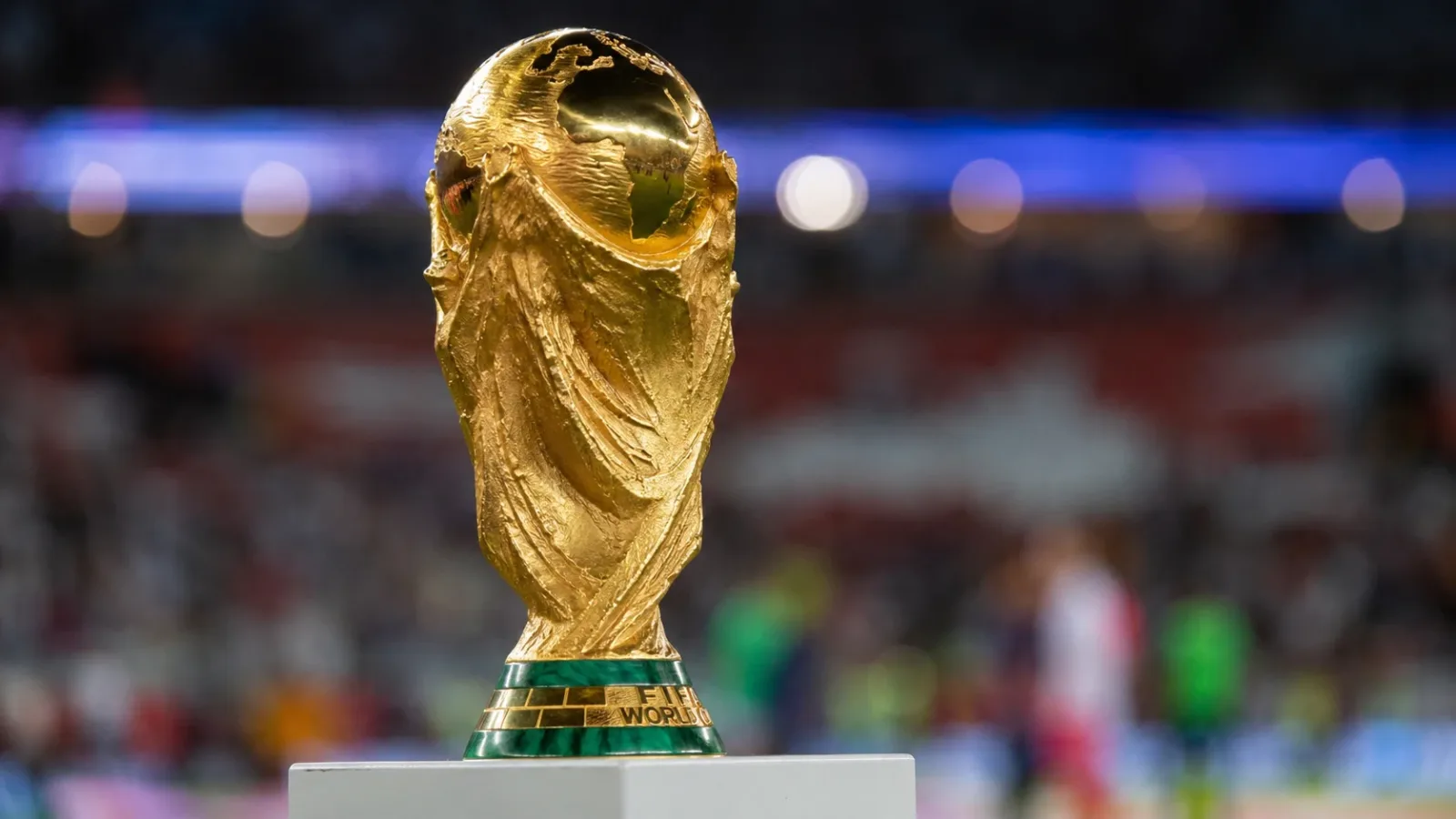
The current FIFA World Cup Trophy, introduced in 1974, is crafted from 18-karat solid gold and features a base made of malachite semi-precious stone. However, winning nations do not actually get to take this priceless, 13-pound masterpiece home permanently. Following the post-match trophy presentation, the solid gold original is returned to FIFA's headquarters in Zurich, Switzerland, where it remains securely stored. In its place, the champion country receives a gold-plated bronze replica, known as the FIFA World Cup Winners' Trophy, to keep forever. The original trophy only leaves Switzerland for official promotional tours and the opening match of each tournament.
Sources & References
This AI-assisted post was rigorously curated and fact-checked for accuracy by:
 Martin Roháček
How fun was this article? 🤔
Tap a star to rate it
🧠 Quiz: How closely were you paying attention?
10 questions — all answers are in the article above!
Enjoyed these facts? There's more! 💌
Fresh fun facts in your inbox. No spam, ever.