1. The Undisputed Kaiser of Downhill
While the world of alpine skiing is filled with incredible athletes, Franz Klammer earned a highly exclusive royal nickname. Universally known by fans and the media as “Kaiser Franz” (Emperor Franz) or the “Klammer Express,” he completely dominated the highly dangerous downhill discipline throughout the 1970s. His incredibly aggressive, high-speed style fundamentally revolutionized how the sport was approached by future generations.
2. He Grew Up Without Ski Lifts
Long before he was standing on massive international podiums, Klammer lived a highly isolated, rugged childhood. Born into a rural farming family in the tiny village of Mooswald, Austria, he was forced to develop immense physical stamina. Because his local village completely lacked any mechanical ski lifts, the young Klammer had to physically hike up the steep, snow-covered pastures behind his family farm every single time he wanted to ski down.
3. The 1976 Olympic Miracle Run
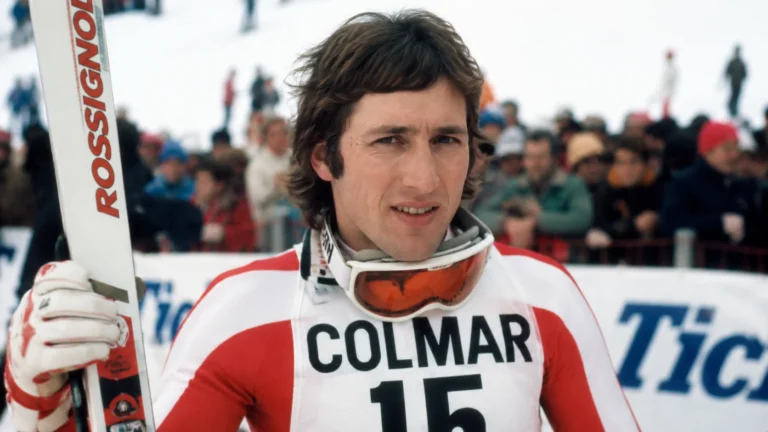
The absolute defining moment of Klammer’s entire career occurred at the 1976 Winter Olympics in Innsbruck, Austria. Carrying the massive, crushing expectations of his entire home nation, he started the downhill race with bib number 15. The course was already heavily battered by previous racers. Trailing at the first two intermediate splits, Klammer threw caution entirely to the wind, skiing completely on the absolute ragged edge of disaster to secure the gold medal by a razor-thin margin of 0.33 seconds.
4. He Holds the Men’s Downhill Win Record
Klammer wasn’t just a one-hit Olympic wonder; he was a model of terrifying consistency in the most dangerous event in winter sports. Throughout his massive career on the FIS World Cup circuit, he secured an absolutely staggering 25 individual downhill victories. To this day, he officially holds the absolute record for the most men’s World Cup downhill wins in the entire history of the sport.
5. A Pioneer of the Carving Technique
Before Klammer dominated the circuit, many downhill racers heavily relied on sliding sideways to control their speed and navigate tight gates. Klammer helped completely revolutionize racing physics by being one of the absolute first downhill skiers to successfully “carve” his turns from start to finish. By expertly using the sharp metal edges of his skis to aggressively slice through the ice without sliding, he maintained significantly higher speeds through the steepest pitches.
6. The Master of the Hahnenkamm
The Streif course on the Hahnenkamm mountain in Kitzbühel, Austria, is universally considered the absolute most dangerous, terrifying, and prestigious downhill race in the world. Klammer completely mastered this brutal, icy track. He won the legendary Hahnenkamm downhill race a massive four times during his career, which included a deeply impressive streak of three consecutive victories in 1975, 1976, and 1977.
7. The Iconic Yellow Suit
In an era before massive, highly standardized corporate branding dominated every inch of an athlete’s gear, Klammer became instantly visually recognizable to millions of television viewers. He frequently raced wearing a highly distinct, vibrant yellow racing suit perfectly paired with a bright yellow helmet. This massive splash of color turned him into a speeding, iconic blur on standard-definition televisions across the globe.
8. A Devastating Family Tragedy
In 1977, Klammer’s massive momentum was tragically halted by profound personal heartbreak. His younger brother, Klaus Klammer—who was an incredibly promising 18-year-old junior ski champion—suffered a horrific, devastating crash during a downhill race in Lienz, Austria. The accident left Klaus permanently paralyzed. This massive emotional blow deeply affected Franz, heavily contributing to a significant drop in his aggressive racing confidence for several years.
9. Founder of the Klammer Foundation
Rather than letting his brother’s devastating tragedy paralyze his own spirit, Franz Klammer turned the deep heartbreak into a massive force for good. Because his brother lacked proper insurance at the time of the crash, Franz actively established the Franz Klammer Foundation. This highly dedicated charity organization raises massive funds to completely support and care for severely injured athletes who desperately need medical and financial assistance.
10. The Pressure of the Entire Nation
During the 1976 Innsbruck Olympics, the societal pressure placed entirely on the 22-year-old skier was almost unfathomable. Austrian schools officially let children out early, and the bustling streets of Vienna completely emptied as millions of citizens rushed to their televisions. It was widely reported that had he lost the race on his home soil to his Swiss rival Bernhard Russi, it would have been viewed as a massive, unforgivable national tragedy.
11. He Switched Skis at the Last Second
The intense drama of the 1976 Olympic run actually began before Klammer ever pushed out of the starting gate. Under massive promotional pressure from his ski manufacturer, a heavy dispute occurred over exactly which skis he should use for the battered track. At the absolute last minute, Klammer made the highly stressful, crucial decision to switch his equipment to a different pair of Fischer C4 skis, a massive gamble that ultimately paid off with a gold medal.
12. A Brilliant Late-Career Comeback
Following his brother’s tragedy and a difficult transition to a new ski brand, Klammer suffered a massive multi-year slump where he completely failed to win a single World Cup crystal globe from 1979 to 1982. Many sports critics heavily assumed his legendary career was entirely over. Proving his intense psychological resilience, Klammer mounted an incredible, highly celebrated comeback in the 1982/1983 season, winning his fifth and final World Cup Downhill title at the age of 29.
13. He Became a Professional Race Car Driver
When Klammer finally retired from professional alpine skiing in the spring of 1985, his deep addiction to high-speed adrenaline was far from over. He completely transitioned his athletic focus into the world of professional motorsports. He successfully raced touring cars and even secured a massive victory at the legendary Nürburgring circuit during the European Touring Car Championship while driving a Mercedes 190.
14. His Story Inspired a Feature Film
The behind-the-scenes chaos and massive psychological pressure surrounding his legendary Olympic victory were so incredibly cinematic that they were recently adapted for the big screen. In 2021, Austrian filmmaker Andreas Schmied released Chasing the Line (released locally as Klammer). The heavily researched feature film deeply explores the intense days leading up to his historic 1976 run and his deep reliance on his future wife, Eva, to maintain his sanity while carrying the hopes of a nation.
15. Thirty-Two Seconds Faster Than History
To completely understand the massive technological and technical leap that Klammer represented for the sport of skiing, one only needs to look at the stopwatch. The 1964 Olympic downhill was held on the exact same Patscherkofel mountain in Innsbruck, won with a time of 2:18.16. Just twelve years later, on the exact same mountain, Klammer completely shattered the bounds of physics, winning gold with a time of 1:45.73—finishing over 32 seconds faster than the previous generation.