The Enduring Giants: 15 Fascinating Facts About Galápagos Tortoises
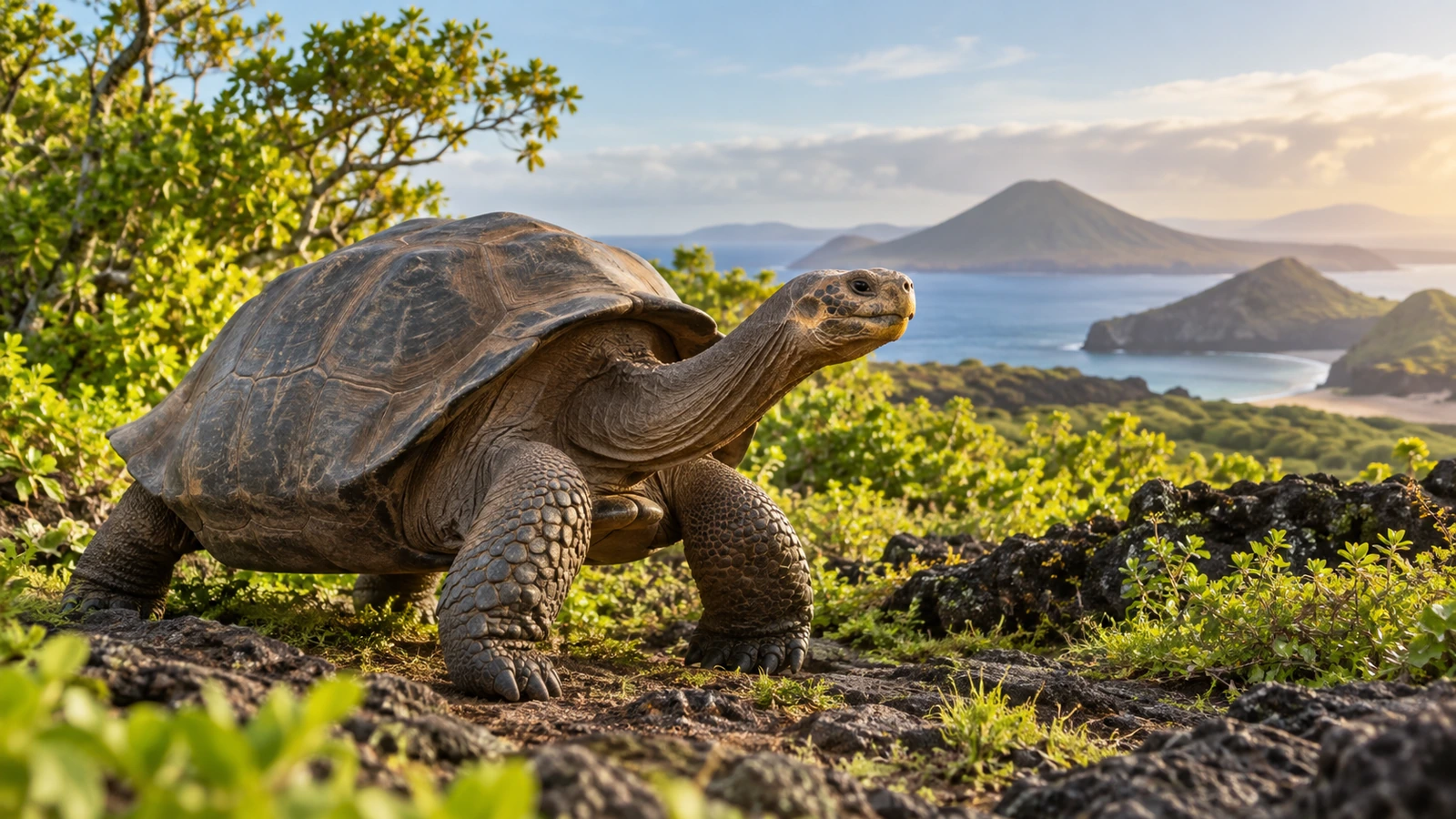
The Galápagos tortoise is one of the most iconic creatures on Earth, famous for its massive scale, extreme longevity, and historic role in Charles Darwin's theory of evolution. Native to the volcanic islands of the Galápagos archipelago, these gentle giants can weigh over 900 pounds and live for nearly two centuries. From unique shell adaptations to remarkable survival strategies in harsh terrain, their evolutionary journey is full of surprises. Discover 15 fascinating facts about the biology, history, and conservation of these magnificent reptiles.
1. The Islands Were Named After the Tortoises
When 16th-century Spanish explorers first stumbled upon the isolated archipelago in the Pacific Ocean, they were struck by the sheer abundance of massive tortoises roaming the landscape. The Spanish word galápago referred to a type of riding saddle that mirrored the curved shape of the tortoises' shells. Early cartographers began labeling the region as Insulae de los Galopegos on nautical maps. Over time, the name stuck to the entire archipelago, making it one of the few global landmasses named after a resident reptile. Today, the name remains synonymous with unique island biodiversity and evolutionary history.
2. Shell Shapes Inspired the Theory of Evolution
During his famous 1835 visit aboard HMS Beagle, Charles Darwin made crucial observations regarding local tortoise populations. The vice-governor of the islands, Nicholas Lawson, informed Darwin that he could identify which island a tortoise came from simply by looking at its shell. Tortoises on lush, humid islands developed high-domed shells and short necks because vegetation grew low to the ground. Conversely, tortoises on arid islands evolved high saddleback shells and long necks that allowed them to reach elevated cactus pads. This clear anatomical adaptation to distinct local environments became a foundational pillar in Darwin's formulation of natural selection.
3. They Are the Largest Living Tortoises on Earth
Galápagos tortoises (Chelonoidis niger) hold the undisputed title of the largest living tortoise species in the world. Fully grown male tortoises can weigh up to 417 kilograms (919 pounds) and reach overall shell lengths exceeding 1.8 meters (6 feet). Females are noticeably smaller but still reach impressive weights between 100 and 150 kilograms. Their robust, pillar-like legs support massive carapaces composed of thick bone fused directly to their ribcage and spine. Despite their heavy builds, they can move with surprising determination when searching for seasonal water pools.
4. Individuals Can Live for Over 175 Years
Galápagos tortoises are among the longest-lived vertebrates on Earth, frequently living past a full century in the wild. One famous captive specimen named Harriet lived to an estimated age of 175 years before passing away at Australia Zoo in 2006. Scientists attribute their extreme longevity to a slow metabolic rate, effective cellular repair mechanisms, and a stress-resistant genetic structure. Their cellular processes age at a remarkably low rate compared to mammals of similar mass. This long lifespan means a single tortoise can observe nearly two centuries of changing environmental conditions.
5. They Can Survive a Full Year Without Food or Water
Because of their exceptionally low metabolic rate, Galápagos tortoises can survive without any food or liquid intake for up to 12 months. They store large reserves of internal body fat and retain significant quantities of water in their bladders, which can be reabsorbed during severe droughts. When clean water is available, a thirsty tortoise can drink massive amounts of liquid in a single session. They also extract substantial hydration from succulent plants like prickly pear cacti. This physiological resilience allowed their ancestral species to survive long transatlantic sea drifts millions of years ago.
6. Whalers Once Harvested Over 100,000 Tortoises as Live Provisions
During the 18th and 19th centuries, whaling ships, pirate vessels, and trade fleets heavily targeted Galápagos tortoise populations. Mariners realized that tortoises could survive stored upside down in ship holds for months without food or care, providing fresh meat during long ocean voyages. Historical logs reveal that sailors removed an estimated 100,000 to 200,000 tortoises from the islands over a two-hundred-year span. This unsustainable exploitation drove several island populations to near-total extinction. Modern conservation efforts are still actively working to restore populations harmed during that era.
7. Nest Temperature Determines the Sex of Their Offspring
Like many reptile species, Galápagos tortoises exhibit environmental sex determination during embryonic development. Eggs incubated at cooler temperatures below 28°C (82.4°F) yield almost exclusively male hatchlings. In contrast, warmer nest temperatures exceeding 29.5°C (85.1°F) produce predominantly female offspring. The mother's choice of nesting site—whether in open sun or partial shade—directly influences the demographic balance of the clutch. Rising global temperatures represent a modern challenge by potentially skewing future hatchling demographics heavily toward females.
8. Hatchlings Must Wait for Rain to Escape Their Underground Nests
Female tortoises deposit clutches of 2 to 20 round eggs into excavated soil pits and cover them with a mixture of dirt and urine. This protective mixture hardens into a dense mud cap that protects the developing eggs from predators for 4 to 8 months. When the young tortoises break out of their shells, they face a difficult obstacle trapped beneath the sun-baked soil. If the mud cap is too hard, hatchlings must wait underground until heavy rainfall softens the ground enough for them to dig out safely. This high barrier to entry makes early survival closely tied to weather cycles.
9. Dominance Fights Are Settled by Neck Length Rather Than Force
When male Galápagos tortoises compete for feeding territories or mating access, they rarely engage in physical combat. Instead, rival males face each other, stretch their long necks straight upward, and gape their mouths open. The tortoise capable of reaching the highest vertical elevation is declared the winner, and the lower male yields. Actual physical fighting involving biting or shell-ramming only occurs if neither contestant backs down during the neck-stretching display. This ritualized behavior prevents dangerous injuries among slow-healing, heavy animals.
10. They Function as Ecosystem Engineers Across the Archipelago
Galápagos tortoises play a vital role in maintaining the structure and biodiversity of their native island habitats. As they travel along seasonal migration routes, their heavy bodies crush dense vegetation, creating pathways that benefit smaller animals. They act as major seed dispersers by consuming high volumes of native vegetation and dropping viable seeds miles away in nutrient-dense manure. Botanists have confirmed that several endemic plant species show significantly improved germination rates after passing through a tortoise's digestive tract. Without these large herbivores, the balance of native plant communities would disintegrate.
11. They Form Symbiotic Grooming Relationships with Local Finches
Galápagos tortoises share a remarkable mutualistic partnership with local bird species, most notably Darwin's finches. When a tortoise needs to shed ticks and parasites, it rises high on all four legs and extends its neck completely straight. Local finches recognize this open posture and land directly on the tortoise's leathery skin and shell to pick off parasites. This arrangement offers an easy meal for the birds while freeing the tortoise from annoying pests in hard-to-reach skin folds. It stands as one of the most recognizable examples of interspecies cooperation in the region.
12. Lonesome George Became an International Icon of Conservation
Lonesome George was a male Pinta Island tortoise (Chelonoidis niger abingdonii) discovered in 1971 when his subspecies was believed extinct. He was moved to the Charles Darwin Research Station on Santa Cruz Island, where researchers spent decades searching for a suitable mate. Despite various pairing attempts with closely related subspecies, George never produced viable eggs. His death in June 2012 marked the total extinction of the Pinta Island subspecies and generated worldwide reflection on species loss. Today, his taxidermied specimen remains a powerful symbol of global wildlife preservation efforts.
13. A Single Tortoise Named Diego Fathered Over 800 Offspring
In contrast to the tragic ending of Lonesome George, another male named Diego achieved a historic conservation success. By the mid-20th century, the Española Island tortoise population (Chelonoidis hoodensis) had dropped to just 2 males and 12 females. Diego was brought from the San Diego Zoo to join a specialized captive breeding program on Santa Cruz Island in 1976. Over four decades, the highly active Diego fathered more than 800 hatchlings, helping raise the island's wild population past 2,000 individuals. Diego was officially returned to his native wild island in 2020 at over 100 years old.
14. A Subspecies Thought Extinct for a Century Was Recently Rediscovered
For more than 100 years, the Fernandina Island tortoise (Chelonoidis phantasticus) was listed as extinct due to intense volcanic activity on the island. However, in 2019, a joint research expedition located a single female tortoise braving the harsh lava beds of Fernandina. Genetic sampling taken from the individual confirmed that she was indeed a pure member of the lost Fernandina lineage. Named Fernanda, she was moved to a specialized breeding facility while scientists continue searching for a male companion on the island. Her survival proved that ancient lineages can persist in hidden pockets of hostile environments.
15. They Spend Up to 16 Hours a Day Soaking in Mud Wallows
As ectothermic animals, Galápagos tortoises depend on their surrounding environment to regulate internal body temperature. To retain heat during cool nights and escape scorching noon heat, they spend up to 16 hours a day submerged in muddy wallows or shallow pools. Soaking in damp mud also hydrates their thick skin and protects them from insect bites. In the morning hours, they crawl out onto sunny volcanic rocks to warm up before spending the afternoon grazing. This steady routine keeps their physiological systems balanced throughout the year.
Sources & References
This AI-assisted post was rigorously curated and fact-checked for accuracy by:
 Martin Roháček
How fun was this article? 🤔
Tap a star to rate it
🧠 Quiz: How closely were you paying attention?
10 questions — all answers are in the article above!
Enjoyed these facts? There's more! 💌
Fresh fun facts in your inbox. No spam, ever.