The Wild Card Champion: 15 Fascinating Facts About Goran Ivanišević
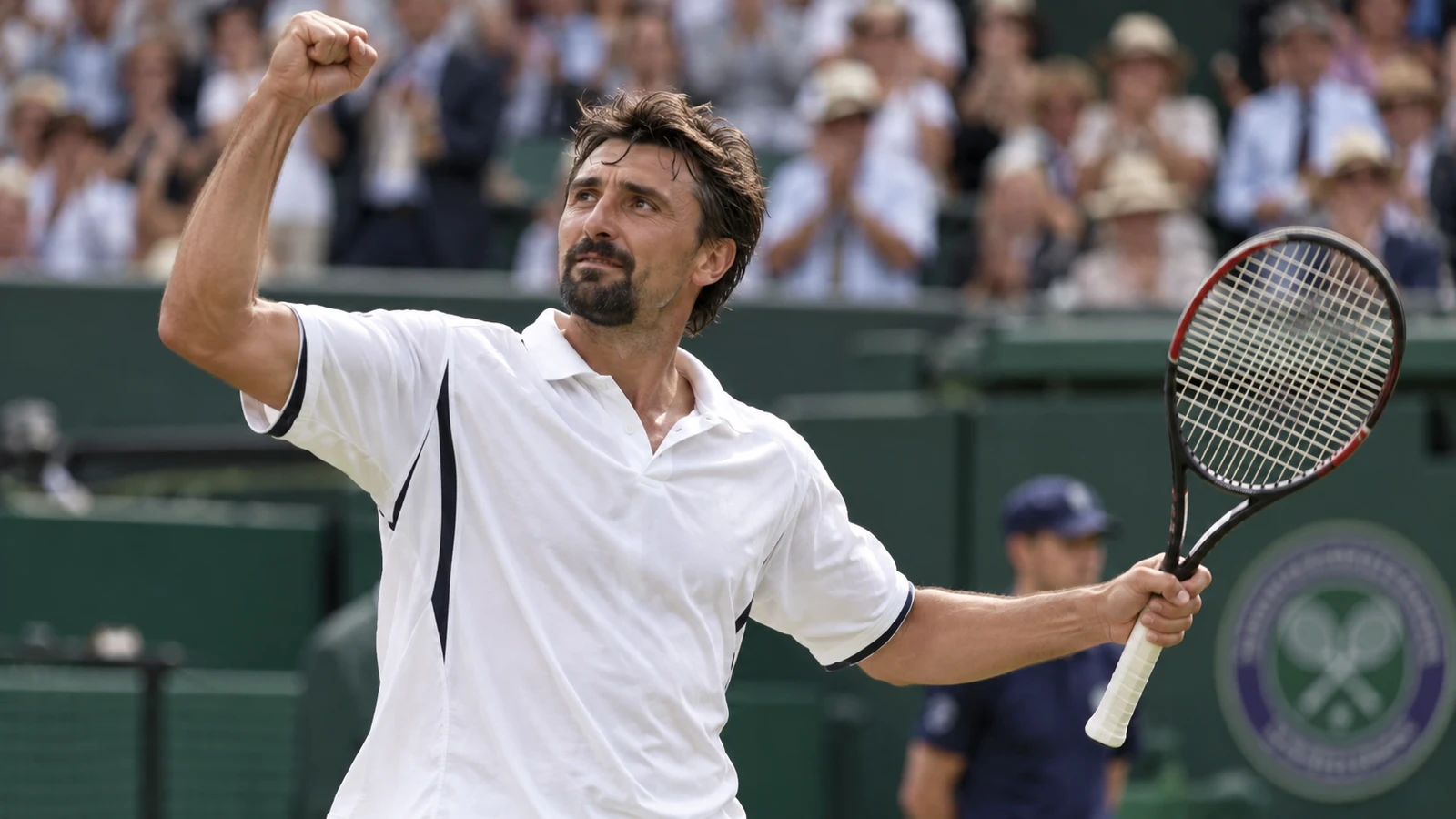
Goran Ivanišević remains one of tennis history's most fiery, unpredictable, and beloved figures. Known for his devastating left-handed serve and highly emotional court demeanor, the Croatian icon famously achieved what no other player has: winning the Wimbledon singles title as a wild card entrant ranked 125th in the world. After retiring from play, he extended his legacy by coaching top stars like Marin Čilić and Novak Djokovic to Grand Slam victories. From smashing racquets to carrying his nation's flag at the Olympics, here are 15 fascinating facts about Goran Ivanišević.
1. The Ultimate Wild Card Miracle at Wimbledon
Goran Ivanišević made tennis history at the 2001 Wimbledon Championships by becoming the first and only player to win a Grand Slam singles title as a wild card entrant. Entering the tournament ranked 125th in the world due to a debilitating shoulder injury, he was granted entry by organizers based on his past finals appearances. Against all odds, the 29-year-old Croatian powered through seven grueling rounds to reach the final. His storybook victory over Pat Rafter capped off one of the most emotional title runs in sporting history. To this day, no other unseeded wild card player has achieved such a feat at the All England Club.
2. Defeated Patrick Rafter in the Iconic "People's Monday" Final
The 2001 Wimbledon men's singles final is widely remembered as one of the most electric matches ever played. Rain delays pushed the final to "People's Monday," allowing thousands of passionate fans without traditional debenture tickets to buy unreserved seats. The atmosphere was reminiscent of a football match, with fans waving Croatian and Australian flags and cheering wildly between points. Ivanišević locked horns with Australian star Pat Rafter in a dramatic five-set thriller that stretched to 9-7 in the final set. When Rafter hit his final return into the net, Ivanišević fell to his knees in tears, ending years of personal heartache.
3. Heartbreak Before Glory: Three-Time Wimbledon Runner-Up
Before his miraculous 2001 victory, Ivanišević was known as the ultimate Wimbledon heartbreaker, having lost three prior finals. He first reached the final in 1992, losing a heartbreaking five-set match to Andre Agassi despite serving 37 aces. He returned to the final in 1994 and 1998, only to be denied both times by his great rival, Pete Sampras. Those bitter disappointments earned him a reputation as the greatest modern player who might never win a Grand Slam title. His perseverance through three devastating losses made his eventual 2001 triumph all the more resonant with fans around the world.
4. A Record-Breaking Ace Machine
Ivanišević possessed one of the most lethal and unpredictable left-handed serves in tennis history. In 1996, he set a single-season record by hammering an incredible 1,477 aces across tour matches, a benchmark that stood for nearly two decades. During his fairytale 2001 Wimbledon run alone, he unleashed 212 aces, setting a tournament record for the most aces hit in a single Grand Slam event. Over his entire career at Wimbledon, he fired 1,377 aces, establishing a mark that remained unmatched until Roger Federer later surpassed it. His lightning-quick serve was virtually unreturnable on fast grass courts when his rhythm was clicking.
5. Defaulted a Match for Running Out of Racquets
Ivanišević's tempestuous temper led to one of the most bizarre disqualifications in professional tennis history. During a match against Stefan Koubek at the 2000 Samsung Open in Brighton, England, Ivanišević grew increasingly frustrated with his play. In a series of angry outbursts, he systematically smashed all three of his available racquets beyond use on the hard court surface. Having no spare racquets left in his bag, he asked the match supervisor if he could borrow one, but tour rules prohibited it. With no functioning equipment remaining, the referee had no choice but to default him for lack of equipment.
6. Carrying the Flag and Winning Medals for Newly Independent Croatia
Ivanišević served as a massive symbol of national pride during Croatia's emergence as an independent state in the early 1990s. At the 1992 Summer Olympics in Barcelona, he had the honor of carrying the Croatian flag during the opening ceremony, marking the country's first appearance as an independent nation at the Summer Games. Driven by immense patriotism, Ivanišević performed exceptionally well, winning two bronze medals in both the men's singles and doubles events alongside partner Goran Prpić. He played those matches under intense emotional weight, actively raising global awareness about the war in his homeland. His dual bronze medal performance solidified his status as a national hero.
7. Reached World No. 2 Behind Pete Sampras
Throughout his playing career, Ivanišević captured 22 ATP singles titles and reached a career-high ranking of World No. 2 in July 1994. He reached the quarterfinal stage or better at all four Grand Slam tournaments, showing that his game extended beyond grass courts. During the mid-1990s, he maintained a constant presence in the top 10, challenging the dominant era of American legends like Pete Sampras and Andre Agassi. While the top ranking eluded him due to Sampras's historic reign, Ivanišević's explosive playstyle made him one of the most dangerous opponents on any surface. He also helped lead Croatia to notable team successes in the Davis Cup and World Team Cup.
8. The Internal Battle of the "Three Gorans"
Ivanišević was famous for his volatile on-court demeanor, which he humorously explained by claiming he had three distinct personalities. According to Goran, his mind contained "Good Goran," who played brilliantly and stayed calm, "Bad Goran," who argued with line judges and smashed equipment, and "Emergency Goran," who stepped in when things fell completely apart. He frequently talked to himself during matches, engaging in animated internal debates between these alter egos. Fans and commentators were captivated by his raw honesty and visible emotional struggles on the court. Managing these internal conflicts was a central theme throughout his thrilling career.
9. Hero's Welcome with 200,000 Fans in Split
When Ivanišević returned home to Split, Croatia, after his 2001 Wimbledon victory, he was greeted by one of the largest public celebrations in the nation's history. An estimated 200,000 enthusiastic fans packed into the city's harbor and streets to welcome their hero home. The massive crowd set off flares, sang traditional Croatian songs, and cheered as Goran stripped down to his swim trunks to jump into the Adriatic Sea. The emotional homecoming demonstrated how deeply his triumph resonated far beyond the sport of tennis. For the people of Croatia, his victory was a moment of supreme national pride.
10. Mentored Marin Čilić to Grand Slam Glory
After retiring from professional play in 2004, Ivanišević transitioned into high-level coaching, proving to be an exceptionally perceptive mentor. He took over as the coach of fellow Croatian player Marin Čilić in late 2013, focusing on building Čilić's aggressive serve and mental fortitude. Under Ivanišević's guidance, Čilić achieved a monumental breakthrough by winning the 2014 US Open, dominating Kei Nishikori in the final. Ivanišević helped mold Čilić into a Grand Slam champion, demonstrating that his deep understanding of serve mechanics and match psychology translated perfectly into coaching. Their partnership established Ivanišević as one of the game's top tactical minds.
11. Masterminded Novak Djokovic's Historic Run
In June 2019, Ivanišević joined the coaching staff of world No. 1 Novak Djokovic, forming one of the most successful player-coach partnerships in modern tennis history. Together, the duo navigated pressure-packed seasons, with Ivanišević significantly refining Djokovic's serve technique and strategic aggression. During their five-year partnership from 2019 to 2024, Djokovic captured nine Grand Slam singles titles, including historic victories at Australia, Wimbledon, and Roland Garros. Ivanišević provided invaluable psychological support and technical fine-tuning during Djokovic's record-setting pursuit of Grand Slam titles. The pair mutually ended their highly successful coaching partnership in early 2024 on warm terms.
12. Four Olympic Games Across Two Nations
Ivanišević holds the rare distinction of competing in four separate Olympic Games across two different national banners. He made his Olympic debut at the 1988 Seoul Games while representing Yugoslavia as a teenager. Following the breakup of Yugoslavia, he proudly represented Croatia at the 1992 Barcelona Games, the 1996 Atlanta Games, and the 2000 Sydney Games. His four Olympic appearances spanned 12 years of shifting geopolitical history in Southeastern Europe. His dedication to representing his homeland on the Olympic stage earned him lasting admiration throughout the international sporting community.
13. Inducted into the International Tennis Hall of Fame
In recognition of his legendary career and unique contributions to the sport, Ivanišević was elected to the International Tennis Hall of Fame. Originally voted into the Class of 2020 alongside Conchita Martínez, his formal induction ceremony was delayed to July 2021 due to the global COVID-19 pandemic. During his induction speech in Newport, Rhode Island, he delivered a touching and funny address thanking his former rival John McEnroe and reflecting on his unpredictable career path. Being enshrined in Newport cemented his status among tennis royalty. It honored both his historic 2001 Wimbledon title and his enduring influence on tennis culture.
14. Played a Match to Help Fund Sister's Cancer Treatment
Ivanišević's early tennis journey was driven by a profound personal sacrifice made by his family during a severe health crisis. When Goran was just 17 years old, his older sister Srđana was diagnosed with Hodgkin's lymphoma while pregnant. To pay for her costly medical treatments in Germany, his father Srđan sold the family home and put all available resources into Goran's burgeoning tennis career. Young Goran took on immense financial pressure, knowing that winning prize money directly funded his sister's life-saving cancer treatment. This intense family bond and adversity forged the fierce resilience that defined his entire career.
15. Philanthropy Through "Help Children in Need"
Beyond his achievements on the court, Ivanišević has dedicated substantial time and resources to charitable causes in Croatia. He established the "Help Children in Need" foundation, an organization focused on providing medical support, financial aid, and educational opportunities to underprivileged children. Through exhibition matches, personal donations, and public fundraising campaigns, he has raised millions of dollars for pediatric hospitals and youth initiatives. His charitable work reflects a deep commitment to giving back to the community that supported him throughout his career. Ivanišević remains an active philanthropist and beloved ambassador for Croatian sport.
Sources & References
This AI-assisted post was rigorously curated and fact-checked for accuracy by:
 Martin Roháček
How fun was this article? 🤔
Tap a star to rate it
🧠 Quiz: How closely were you paying attention?
10 questions — all answers are in the article above!
Enjoyed these facts? There's more! 💌
Fresh fun facts in your inbox. No spam, ever.