The Historic Capital: 15 Fascinating Facts About Havana
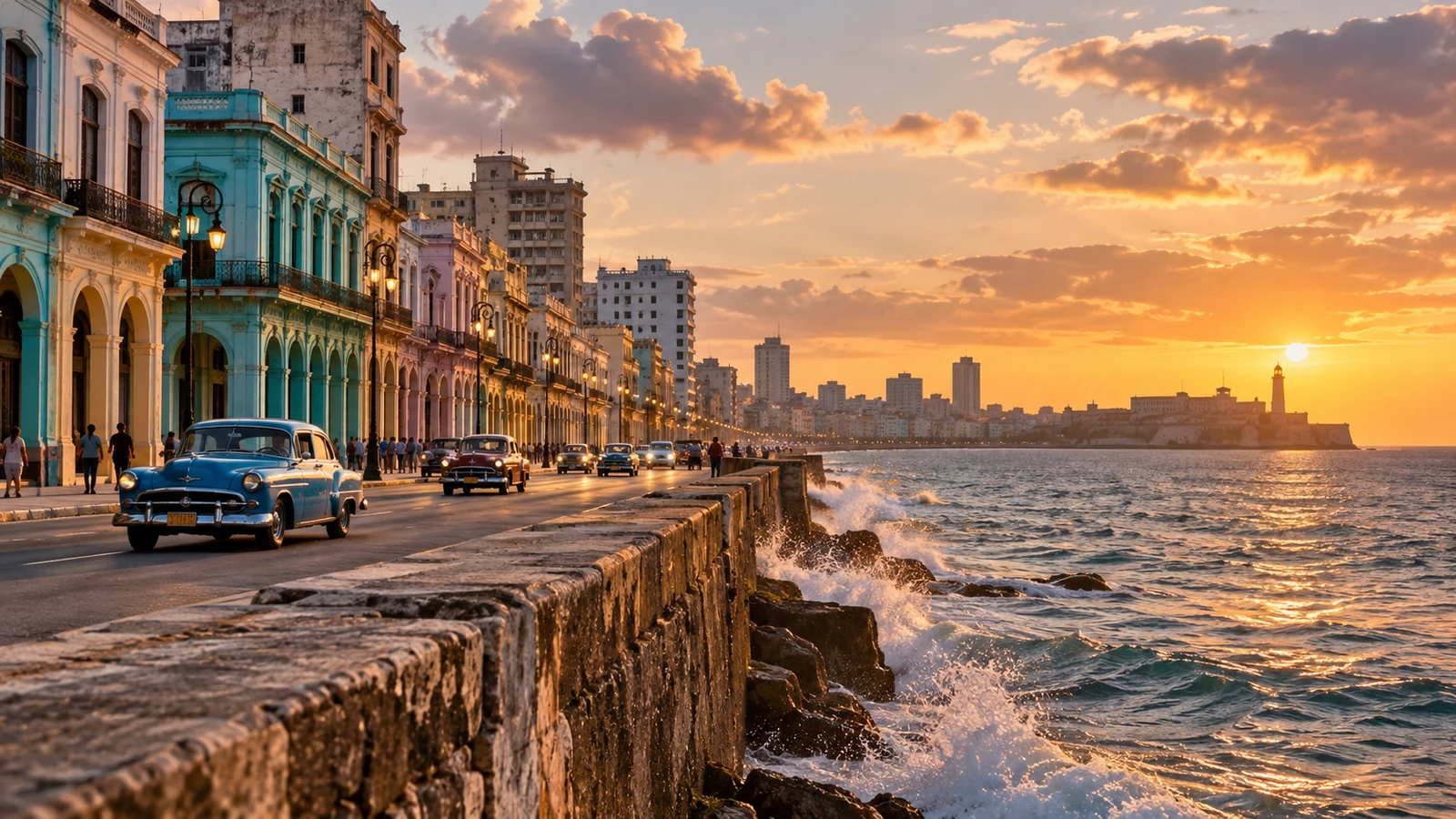
Founded over five centuries ago as Spain's crucial strategic port in the Caribbean, Havana stands today as one of the world's most captivating capital cities. From its sun-drenched coastal seawall and colonial cobblestone plazas to the rumble of vintage 1950s American classic cars, Havana seamlessly blends dramatic history with vibrant tropical culture. Beyond its postcard-worthy views lie surprising stories of territorial trades, literary legends, and artistic monuments carved into marble. Here are 15 fascinating facts about Cuba's iconic, resilient capital.
1. Founded as the Strategic "Key to the New World"
Founded in 1519 by Spanish conquistador Diego Velázquez de Cuéllar, Havana quickly transformed into one of the most vital seaports in the Americas. Its deepwater natural harbor offered a safe anchorage for Spanish galleons assembling into massive treasure fleets bound for Spain. Loaded with silver from Peru and gold from Mexico, these ships required intense protection, leading the Spanish Crown to officially designate Havana as the "Key to the New World and Rampart of the West Indies." The city's strategic geography made it the primary gateway between Europe and the vast resources of the American continent. Today, that maritime heritage remains etched into the city's ancient stone fortifications and waterfront streetscapes.
2. Britain Once Traded Havana to Spain in Exchange for Florida
During the Seven Years' War in 1762, British forces launched a surprise amphibious assault and captured Havana after a grueling two-month siege. The loss of the city was a devastating blow to the Spanish Empire, as Havana controlled the primary trade routes of the Caribbean. However, British occupation lasted less than a year, ending with the signing of the Treaty of Paris in 1763. To regain control of Havana and its lucrative trade network, Spain agreed to cede its entire territory of La Florida to the British Crown. This high-stakes territorial swap drastically altered the political map of North America and allowed Spain to fortify Havana even further against future invasions.
3. The Malecón Serves as the City's Five-Mile Living Room
Stretching five miles along the Atlantic coast, the famous seawall known as the Malecón is far more than a simple coastal barrier. Construction began in 1901 under U.S. military administration and took decades to complete, gradually developing into Havana's ultimate open-air social venue. On warm evenings, thousands of locals, musicians, lovers, and street vendors gather along the stone ledge to socialize, play guitar, and catch ocean breezes. Waves frequently crash over the wall during winter storms, spraying passing vintage cars and pedestrians alike. Often described as the world's longest sofa, the Malecón offers an unfiltered cross-section of Cuban urban life against the backdrop of the sea.
4. El Capitolio Features a Replica 25-Carat Diamond in Its Floor
Completed in 1929, Havana's majestic Capitolio building strikingly resembles the U.S. Capitol in Washington, D.C., though its design was also heavily inspired by the Panthéon in Paris. Commissioned under President Gerardo Machado, the building served as the seat of Cuba's Congress until the 1959 Cuban Revolution. Embedded in the marble floor directly beneath the central dome lies a replica of a famous 25-carat diamond that officially marks Kilometer Zero for all highways in Cuba. The original diamond, which once belonged to Tsar Nicholas II of Russia, was famously stolen in 1946 and mysteriously returned to the President's desk a year later. Inside, visitors can also admire the Statue of the Republic, the third-largest indoor statue in the world.
5. Old Havana Preserves Over 900 Historic Buildings in a UNESCO Site
Old Havana, locally known as Habana Vieja, was designated a UNESCO World Heritage Site in 1982 due to its unparalleled collection of Spanish colonial architecture. The neighborhood centers around five major historic plazas, including the Plaza de Armas, which served as the administrative and military heart of colonial Cuba since the 1520s. Restoration efforts led by the Office of the City Historian have painstakingly saved hundreds of centuries-old structures from structural decay. Walking through its narrow cobblestone streets reveals an eclectic mix of Baroque cathedrals, Neoclassical mansions, and pastel-painted arcades. Despite decades of economic hardship, the area remains a living neighborhood vibrant with street art, cafes, and residential courtyard life.
6. Decades of Embargo Created a Rolling Museum of 1950s American Cars
Navigating the streets of Havana feels like stepping back into the mid-20th century, largely due to the thousands of classic American automobiles cruising the avenues. Following the 1959 revolution and the subsequent U.S. trade embargo, Cuba banned the import of American cars and replacement parts. Local mechanics became master innovators, keeping roughly 60,000 pre-1960 Chevrolets, Fords, and Buicks running using custom-machined components and adapted Soviet diesel engines. Locally called almendrones due to their almond-like shape, many of these vehicles now operate as shared taxis or colorful tourist cruisers. These vintage cars have become one of Havana's most iconic symbols, reflecting the resilience and ingenuity of Cuban drivers.
7. A Nightly Cannonade Still Signals a Centuries-Old Tradition
Every single night at 9:00 PM sharp, a thunderous explosion echoes across Havana Bay from the massive fortress of La Cabaña. Known as El Cañonazo de las Nueve, this ritual dates back to the colonial era when a cannon shot alerted citizens that the city walls were closing for the night and the harbor chain was being drawn. Soldiers dressed in authentic 18th-century Spanish military uniforms conduct a ceremonial parade before firing a vintage artillery piece over the water. Although the city walls were pulled down in the late 19th century, the nightly boom remains a cherished tradition that residents across the city use to set their watches. It stands as one of the oldest continuously maintained military ceremonies in the Western Hemisphere.
8. Ernest Hemingway Spent Two Decades Living and Writing in Havana
Nobel Prize-winning author Ernest Hemingway fell in love with Havana during the 1930s and eventually made it his primary home for over twenty years. He lived at Finca Vigía, an estate located just outside the city center, where he penned masterpiece novels including For Whom the Bell Tolls and The Old Man and the Sea. When not writing, Hemingway frequented local Havana watering holes like El Floridita, famous for its daiquiris, and La Bodeguita del Medio, renowned for its mojitos. His former estate has been preserved as a museum, left almost exactly as he left it in 1960, complete with his personal library and fishing boat, Pilar. Hemingway's deep connection to local fishermen in nearby Cojímar inspired some of his most celebrated literary work.
9. Havana Is the Global Birthplace of Afro-Cuban Jazz and Son
Havana's rich musical heritage is a captivating fusion of West African rhythms and Spanish melodic traditions that developed over centuries. The city gave birth to foundational genres such as son cubano, mambo, cha-cha-chá, and Afro-Cuban jazz, which fundamentally reshaped global popular music. In the mid-20th century, Havana's legendary nightlife spots provided a stage where international jazz icons like Dizzy Gillespie collaborated with Cuban masters like Chano Pozo. Today, that musical legacy lives on in atmospheric venues, spontaneous street performances, and prestigious events like the Havana Jazz Festival. The world-famous Buena Vista Social Club project further introduced traditional Havana sounds to a whole new global audience in the late 1990s.
10. The City Remains the World Capital of Premium Hand-Rolled Cigars
Havana has long been synonymous with the finest cigars on the planet, often considered the gold standard of luxury tobacco products. Historic factories such as Real Fábrica de Tabacos Partagás have crafted famous brands like Cohiba, Montecristo, and Romeo y Julieta for generations. Highly skilled artisans known as torcedores spend years mastering the art of hand-rolling leaves harvested from Cuba's fertile Vuelta Abajo region. During the grueling workday, factory readers called lectores traditionally read books, newspapers, and classic literature aloud to keep the workers entertained and educated. Today, cigar connoisseurs from around the globe travel to Havana annually for the renowned Festival del Habano to sample rare releases.
11. A Massive Marble Statue of Christ Guarding Havana Was Carved by a Woman
High on a hilltop overlooking Havana Harbor stands the Cristo de La Habana, a towering 65-foot statue of Jesus Christ crafted from white Carrara marble. Commissioned in the 1950s, it was sculpted in Italy by the pioneering Cuban artist Jilma Madera, making it one of the largest religious monuments ever carved by a woman. Composed of 67 individual marble blocks blessed by Pope Pius XII, the statue was inaugurated on Christmas Eve in 1958. Curiously, just fifteen days after its unveiling, Fidel Castro and his revolutionary forces entered Havana, transforming the political landscape around the monument. Today, the statue remains a commanding landmark, visible from across the bay and offering sweeping panoramic views of the capital.
12. Colón Cemetery Is One of the Most Artistically Rich Necropolises on Earth
Spanning over 140 acres in Havana's Vedado neighborhood, the Necrópolis Cristóbal Colón is one of the world's most impressive historic cemeteries. Established in 1876, the cemetery contains more than 800,000 graves and over 500 major mausoleums crafted in intricate Neo-Gothic, Renaissance, and Art Deco styles. It is renowned for its stunning marble sculptures, elaborate family crypts, and fascinating local legends, such as the tomb of La Milagrosa, a woman believed to grant miracles to visitors. The sheer scale and architectural splendor of Colón Cemetery draw historians and art lovers from around the world. It serves as a striking silent record of Cuba's opulent late-19th and early-20th-century history.
13. The City's Historic Shield Features Three Castles and a Golden Key
Havana's official coat of arms, granted by King Philip II of Spain in 1592, visually encapsulates the city's vital historical function. The shield prominently features three silver castles representing the primary fortresses defending the harbor: Fuerza, Morro, and Punta. Beneath the castles sits a prominent golden key, symbolic of Havana's role as the commercial and defensive gateway to the entire New World. Above the shield rests a royal crown, underlining the immense value the Spanish Empire placed on securing the port city. This historic imagery remains visible across Havana today, appearing on official municipal buildings, public monuments, and local government heraldry.
14. Tropicana Club Has Hosted Outdoor Spectaculars Since 1939
Tucked away in Havana's lush Marianao district, the world-famous Tropicana Club has been delivering dazzling cabaret performances under the stars since 1939. During Havana's mid-century golden era of entertainment, the open-air nightclub attracted Hollywood stars, international high-society figures, and notorious mobsters like Meyer Lansky. Known as the "Paradise Under the Stars," the venue features elaborate multi-tiered stages surrounded by tropical foliage where hundreds of dancers perform in vibrant costumes. Icons such as Nat King Cole, Carmen Miranda, and Celia Cruz performed on its stage during the club's heyday. Despite political changes over the decades, Tropicana continues to operate nightly, offering visitors an extravagant glimpse into pre-revolutionary glamour.
15. Havana Once Boasted Latin America's Largest Chinatown
In the mid-19th century, tens of thousands of Chinese indentured laborers arrived in Cuba to work on sugar plantations and contract jobs, eventually settling in Havana. By the early 20th century, Havana's Barrio Chino had grown into the largest and most vibrant Chinatown in all of Latin America, covering dozens of city blocks. The district boasted its own Chinese-language newspapers, theaters, banking institutions, and specialized trade guilds. Although most Chinese-Cubans emigrated following the 1959 revolution, the architectural footprint of the neighborhood remains remarkably preserved. Today, marked by a majestic traditional Chinese dragon archway (Paifang), the neighborhood is experiencing a cultural renaissance featuring authentic Asian fusion eateries and community restoration projects.
Sources & References
This AI-assisted post was rigorously curated and fact-checked for accuracy by:
 Martin Roháček
How fun was this article? 🤔
Tap a star to rate it
🧠 Quiz: How closely were you paying attention?
10 questions — all answers are in the article above!
Enjoyed these facts? There's more! 💌
Fresh fun facts in your inbox. No spam, ever.