The Indestructible Herminator: 15 Fascinating Facts About Hermann Maier
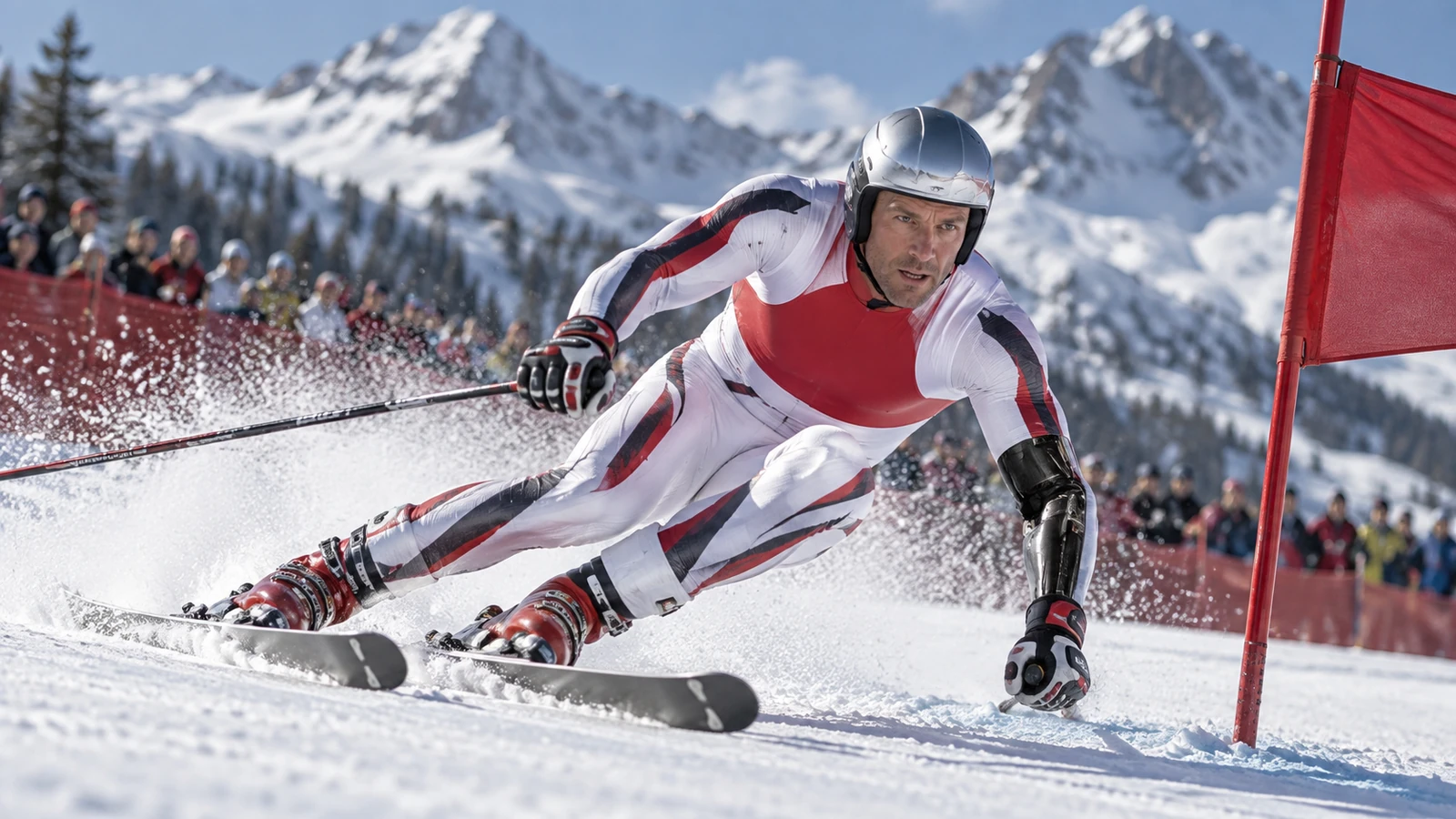
Hermann Maier is one of the most resilient and dominant alpine ski racers in sports history. Known globally as 'The Herminator,' the former bricklayer overcame physical rejection, an iconic 65-mph Olympic crash, and a near-fatal motorcycle accident to achieve 54 World Cup victories and two Olympic gold medals. From setting an unprecedented 2,000-point World Cup record to trekking across Antarctica, Maier's extraordinary journey is a masterclass in sheer grit. Discover the unbelievable true story behind Austria's legendary ski champion.
1. Rejected as Too Small and Spent Years as a Bricklayer
Before becoming one of the most dominant ski racers in history, Hermann Maier was deemed physically unfit for the sport. At age fifteen, coaches at the prestigious Schladming ski academy rejected him because he was considered too small, frail, and light to succeed on elite slopes. Defiantly, Maier spent his winters teaching recreational tourists how to ski while spending his summers working as a bricklayer on hot construction sites. The intense manual labor triggered a massive physical transformation, allowing him to grow significantly and pack on dense muscle mass. That former skinny teenager eventually returned to competitive skiing transformed into a physical powerhouse capable of dominating the steep alpine courses.
2. Discovered While Working as an Unofficial Forerunner
Maier did not follow the traditional fast-track path to the Austrian national ski team. In January 1996, at twenty-three years old, he was serving merely as a "forerunner"—an unranked test skier who runs the course to check conditions before official competitors start. During a Giant Slalom event on his home slope in Flachau, Maier posted an unofficial time that would have placed him twelfth in the actual World Cup race. His astounding performance shocked national coaches and made it impossible to ignore his raw talent. Realizing they had overlooked a world-class athlete laying bricks, the Austrian ski federation immediately granted him a spot on the World Cup roster.
3. Survived a Horrific 65-mph Crash at the 1998 Nagano Olympics
At the 1998 Winter Olympics in Nagano, Japan, Maier provided one of the most horrifying and famous moments in Olympic history. During the men's downhill race, he clipped a knoll while hurtling down the mountain at sixty-five miles per hour, launching him horizontally through the air for over one hundred feet. He flew nearly three stories above the slope before crashing headfirst into the snow, tumbling violently through two outer safety fences. Television audiences around the globe watched in sheer terror, assuming the spectacular crash was fatal or career-ending. Miraculously, Maier stood up under his own power and walked off the mountain with only minor bruises and shoulder strain.
4. Won Two Gold Medals Just Days After the Violent Wreck
Rather than withdrawing from the Olympic Games to recover, Maier returned to competition just three days after his terrifying crash. Displaying unimaginable physical resilience and mental toughness, he suited up for the Super-G event while nursing a severely bruised shoulder and knee. He skied an exceptionally aggressive line down the icy mountain to claim the gold medal, beating his nearest competitor by a decisive margin. A few days later, Maier proved his miraculous recovery was no fluke by conquering the Giant Slalom to take home his second gold medal of the Games. This incredible quick turnaround solidified his reputation as an almost superhuman athlete who was virtually indestructible.
5. Earned the Nickname 'The Herminator' and Met Arnold Schwarzenegger
Following his heroic Olympic performance and relentless driving style, the international press bestowed upon him the ultimate iconic nickname: "The Herminator." The nickname drew a direct comparison to fellow Austrian powerhouse Arnold Schwarzenegger and his famous Terminator movie persona. Maier embraced the moniker, which reflected his fearless demeanor and refusal to show weakness on the slopes. The pop culture phenomenon culminated in an appearance on The Tonight Show with Jay Leno, where Schwarzenegger personally congratulated Maier on national television. Together, the two Austrian icons celebrated Maier's extraordinary resilience and global stardom.
6. Set an Unprecedented 2,000-Point World Cup Record
During the 1999–2000 World Cup season, Maier produced what many experts consider the most dominant campaign in alpine skiing history. Over the course of the season, he accumulated a staggering 2,000 World Cup points by sweeping victories across multiple racing disciplines. To reach that milestone, he scored points in nearly every race he entered, demonstrating remarkable consistency and versatility. His single-season record stood unbroken for thirteen years until Swiss legend Marco Odermatt finally topped it in 2023. Maier's 2,000-point benchmark set a new gold standard for absolute dominance in winter sports.
7. Narrowly Escaped Leg Amputation After a 2001 Motorcycle Crash
In August 2001, at the absolute peak of his skiing career, tragedy struck Maier away from the ski slopes. While riding his motorcycle home from a grueling training session, he was struck by a car in a devastating collision. The accident left his right leg severely shattered, causing massive soft-tissue damage and compound fractures that threatened his life. Surgeons at the hospital spent seven arduous hours rebuilding his limb and seriously deliberated amputating his leg below the knee. Ultimately, doctors saved the leg by inserting a massive fourteen-inch titanium rod directly through his tibia.
8. Learned to Walk Again and Missed the 2002 Olympics
The catastrophic injuries required an excruciating rehabilitation process that forced Maier to start over from absolute zero. Nerve damage and severe muscle loss meant he had to relearn basic motor skills, including how to walk without assistance. Consequently, he was unable to defend his Olympic titles at the 2002 Salt Lake City Winter Games, watching the events from his couch in Austria. Many medical specialists and sports analysts predicted that he would never race professionally again, let alone contend for World Cup podiums. Undeterred by the doubt, Maier maintained a brutal physical therapy regimen aimed entirely at mounting an impossible comeback.
9. Staged One of Sports' Greatest Comebacks at Kitzbühel
Just seventeen months after almost losing his leg, Maier shocked the sporting universe by returning to the World Cup circuit in January 2003. In only his fifth race back from injury, he entered the prestigious and terrifying Super-G race at Kitzbühel, Austria. Defying all medical expectations, Maier executed a flawless run down the famous Streif mountain to claim first place. The victory triggered emotional celebrations across Austria and is widely heralded as one of the greatest comebacks in sports history. He proved that even a shattered body could not diminish his unmatched instinct for speed.
10. Claimed a Fourth Overall World Cup Title Post-Injury
Maier proved that his emotional comeback in Kitzbühel was far more than a single stroke of luck. During the 2003–2004 season—his first full season following the horrific motorcycle crash—he produced another astounding campaign. He claimed his fourth career Overall World Cup crystal globe, demonstrating that he was once again the most complete skier on the planet. Winning the sport's highest honor with a heavily scarred, metal-reinforced leg cemented his legacy as a titan of perseverance. This historic title crowned a story of redemption that few athletes in any sport have ever matched.
11. Debuted Unusually Late to Win 54 World Cup Races
Unlike most alpine champions who break into elite international competition in their late teens, Maier had an unusually late start. Because of his early physical setback and bricklaying career, he did not make his official World Cup debut until he was twenty-three years old. Despite giving away several years of youth and experience to his top rivals, he amassed fifty-four World Cup victories during his storied career. That impressive tally places him third on the all-time men's victory list, behind only Ingemar Stenmark and Marcel Hirscher. His high win percentage over a compressed timeframe makes his statistical accomplishments even more extraordinary.
12. Revolutionized Athletic Conditioning in Alpine Skiing
Before Maier entered the circuit, alpine skiing conditioning often focused primarily on technical finesse and flexibility. Maier forever altered the physical paradigm of ski racing by introducing hyper-intense, high-volume strength training. He lifted massive weights and built an imposing muscular physique that allowed him to absorb violent terrain features at top speeds. His relentless work ethic and scientific approach to power output forced his competitors to adopt intense gym regimens to stay competitive. Today, the ultra-athletic nature of modern ski racing directly traces back to the physical standards pioneered by Maier.
13. Skied 250 Miles Across Antarctica to the South Pole
Even after retiring from professional ski racing, Maier's thirst for extreme physical endurance never faded. In December 2010, he participated in Wettlauf zum Südpol (Race to the South Pole), a televised endurance expedition across Antarctica. Maier captained a four-person Austrian team competing directly against a rival German squad across brutal sub-zero terrain. Carrying heavy sleds loaded with supplies, he skied over 250 miles across freezing polar ice sheets to reach the geographical South Pole. His team finished the grueling trek in under two weeks, proving his incredible mental and physical stamina remained intact long after retirement.
14. Broke Down in Tears During His Emotional Retirement Speech
Throughout his career, Maier maintained a stoic, icy, and emotionally unshakeable public image that earned him his machine-like reputation. However, that fierce facade completely melted away in October 2009 when he called a sudden press conference to announce his retirement. The thirty-six-year-old sports legend openly sobbed as he explained that his body could no longer maintain the extreme standard he demanded of himself. Seeing the fearless "Herminator" break down in front of live cameras provided fans with a rare and touching glimpse of his deep passion. The emotional farewell resonated deeply with fans who had watched him overcome insurmountable odds for over a decade.
15. Became a Dedicated Conservation Ambassador for the Alps
In his life after professional sports, Maier turned his formidable energy toward environmental protection and ecological advocacy. Having spent his entire life in the mountains, he became an official ambassador for Austrian nature conservation initiatives and national parks. He regularly hosts acclaimed natural history documentaries, such as Austria's long-running series Universum, showcasing alpine ecosystems and wildlife. Maier uses his immense global fame to educate the public about climate change, glacial retreat, and habitat preservation in the Alps. The champion who once conquered the world's most dangerous ski mountains now dedicates his life to protecting them.
Sources & References
This AI-assisted post was rigorously curated and fact-checked for accuracy by:
 Martin Roháček
How fun was this article? 🤔
Tap a star to rate it
🧠 Quiz: How closely were you paying attention?
10 questions — all answers are in the article above!
Enjoyed these facts? There's more! 💌
Fresh fun facts in your inbox. No spam, ever.