The King of the Mile: 15 Fascinating Facts About Hicham El Guerrouj
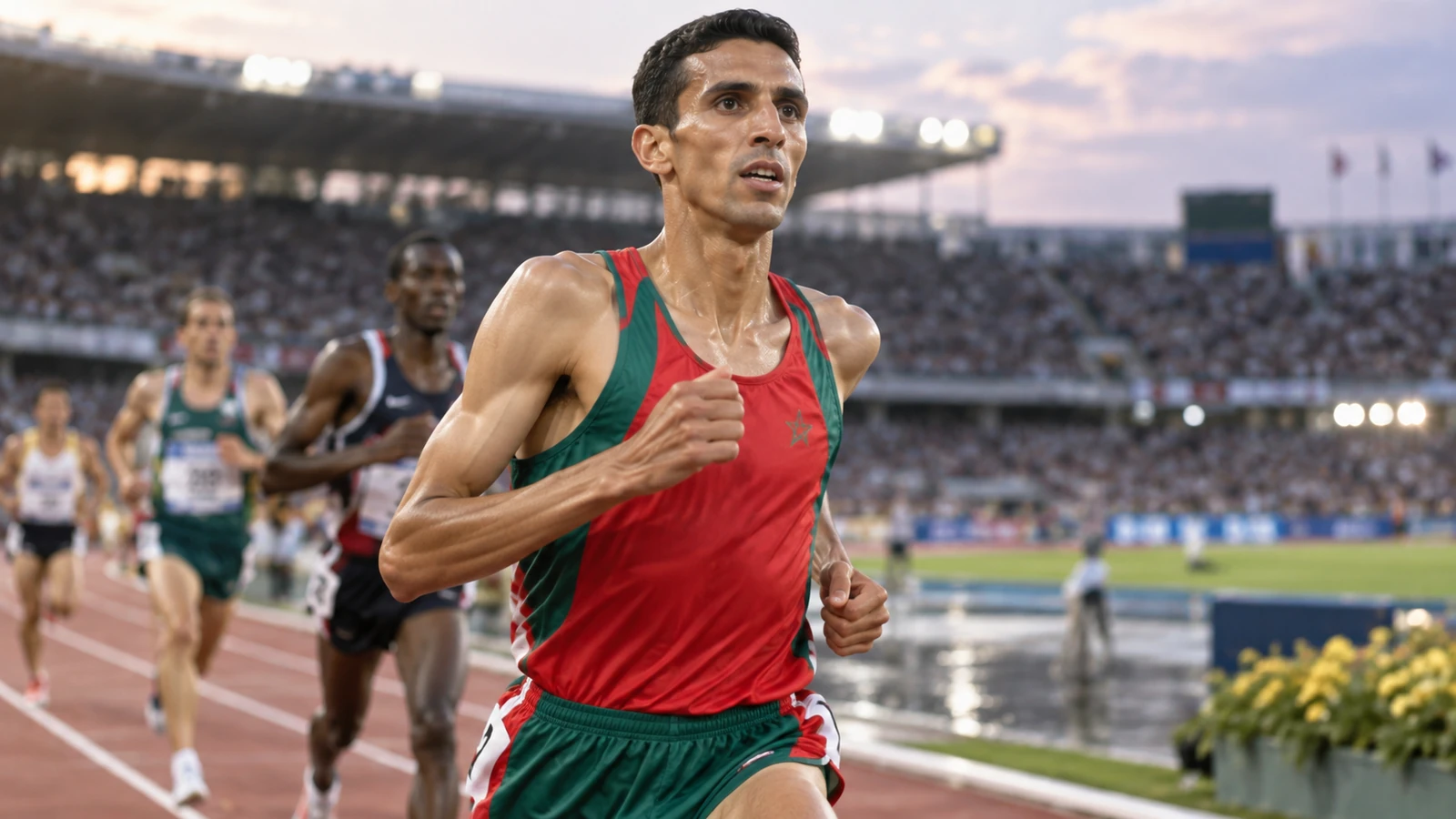
Hicham El Guerrouj is widely celebrated as the greatest middle-distance runner in athletic history. Known as the 'King of the Mile,' the Moroccan legend dominated middle-distance track events for nearly a decade, setting world records in the 1500m and the mile that remain untouched to this day. From enduring heartbreaking Olympic setbacks to pulling off an extraordinary double-gold performance at the 2004 Athens Games, his journey is a masterclass in resilience and tactical perfection. Here are 15 fascinating facts about one of track and field's most dominant icons.
1. He Holds the Longest-Standing 1500m and Mile World Records
Hicham El Guerrouj set the world record for the 1500 meters on July 14, 1998, in Rome with a staggering time of 3:26.00. Just one year later, on July 7, 1999, at the same Olympic Stadium in Rome, he shattered the world record for the mile, clocking in at 3:43.13. Both of these benchmarks have stood for over a quarter of a century, making them the longest-reigning records in the history of middle-distance running. Many sports scientists consider his mile time one of the most formidable athletic achievements ever logged on a track. Despite advances in footwear technology and track surface engineering, no athlete has managed to eclipse either mark.
2. Heartbreak in Atlanta Ended His First Olympic Golden Dream
Entering the 1996 Atlanta Olympic Games as the gold medal favorite, a 21-year-old El Guerrouj suffered a devastating catastrophe. As the 1500m final reached its crucial bell lap, his shoe accidentally collided with the heel of his chief rival, Algeria's Noureddine Morceli. El Guerrouj crashed hard onto the track while the rest of the field surged past him. Devastated, he finished in last place and broke down in tears in the stadium tunnel. The tragic moment became one of the most famous heartbreaks in track and field history, fueling his intense motivation for the next eight years.
3. A Royal Phone Call Saved Him from Quitting Athletics
In the emotional aftermath of his fall at the 1996 Atlanta Games, El Guerrouj was ready to pack his bags and quit the sport entirely. While weeping uncontrollably in his dressing room, he received an unexpected long-distance telephone call from King Hassan II of Morocco. The Moroccan monarch personally consoled the young athlete, telling him that the entire nation recognized his extraordinary talent and regarded him as a true champion regardless of the fall. The royal words transformed El Guerrouj's perspective, restoring his confidence and convincing him to return to training the very next day. He would later be awarded the Commander of the Order of the Throne by King Mohammed VI.
4. He Underwent a Shocking Upset at the 2000 Sydney Olympics
By the time the 2000 Sydney Olympics arrived, El Guerrouj was completely dominant, having lost only one race since his fall in Atlanta. He sailed through the preliminary rounds of the 1500m and led for almost the entire final. However, in the last 50 meters, Noah Ngeny of Kenya mounted a breathtaking stretch run to pass El Guerrouj and claim the gold medal. El Guerrouj took the silver medal in deep disappointment, leaving fans around the globe stunned by the upset. The victory by Ngeny marked the only time El Guerrouj lost a 1500m race between 1997 and 2003.
5. He Replicated an 80-Year-Old Olympic Record in Athens
At the 2004 Athens Olympics, El Guerrouj finally achieved his ultimate career dream, but he did not stop with just one title. After narrowly defeating Kenya's Bernard Lagat to win his long-awaited gold in the 1500m, he decided to enter the 5000m event just four days later. In a tactical masterpiece, he out-sprinted world record holder Kenenisa Bekele of Ethiopia to claim his second gold medal of the Games. This historic double victory made him the first man since Finland's "Flying Finn" Paavo Nurmi in 1924 to win both the 1500m and 5000m at the same Olympic Games. The achievement cemented his status as perhaps the greatest middle-distance runner of all time.
6. He Won Four Consecutive World Championship Titles
While Olympic gold proved elusive in his early career, El Guerrouj dominated the World Athletics Championships like no other middle-distance runner in history. He claimed four consecutive gold medals in the 1500m at the World Championships in 1997 (Athens), 1999 (Seville), 2001 (Edmonton), and 2003 (Paris). In addition to his four 1500m golds, he also earned a silver medal in the 5000m at the 2003 Paris World Championships. His four-peat in the 1500m remains an unprecedented record of consistency and superiority on the global stage. No other middle-distance athlete has matched this streak of World Championship titles.
7. He Broke the Barrier of 3:27 in the 1500m Five Times
Breaking the 3-minute and 27-second mark in the 1500m is considered one of the hardest barriers in track athletics. Prior to El Guerrouj, only Noureddine Morceli had ever run under 3:27, doing so once in 1992. El Guerrouj did not merely break the barrier once; he accomplished the extraordinary feat five distinct times throughout his career. His five sub-3:27 performances stand as a testament to his unique ability to run at world-record pace consistently. To this day, no other runner in history has logged multiple sub-3:27 finishes in the 1500m.
8. He Held the 2000m World Record for 24 Years
On September 7, 1999, in Berlin, El Guerrouj set out to attack the world record for the rarely run 2000-meter distance. He blazed around the track to cross the finish line in 3:48.00, stripping more than a second off Noureddine Morceli's previous record. That mark proved extraordinarily durable, remaining unbroken for nearly a quarter of a century. It was finally surpassed in September 2023 by Norwegian superstar Jakob Ingebrigtsen. During his career, El Guerrouj simultaneously held the world records for the 1500m, the mile, and the 2000m.
9. He Compiled an Astonishing 84-Wins-Out-of-89-Races Streak
El Guerrouj's overall dominance in middle-distance running between 1996 and 2004 is almost statistically absurd. Across nine seasons, he competed in 89 major races at 1500m and the mile, winning an unbelievable 84 of them. Two of his five rare losses were due to mid-race falls, and another was his silver-medal finish at the 2000 Olympics. This winning rate of over 94 percent against world-class competition is unmatched in modern middle-distance history. Opponents frequently admitted that they entered races knowing they were competing strictly for second place.
10. He Trained at Extreme High Altitudes in the Atlas Mountains
The foundation of El Guerrouj's unmatched cardiovascular endurance was laid in the high-altitude climate of Morocco. Raised in the northeastern city of Berkane, he conducted most of his grueling, elite-level training camps in Ifrane, a town located high in the Atlas Mountains at over 5,400 feet above sea level. Under the rigorous coaching of Abdelkader Kada, El Guerrouj logged intense weekly mileage paired with precise track sessions. His body adapted to process oxygen with elite efficiency, giving him a massive physiological advantage during late-stage race accelerations. His intense discipline in Ifrane became legendary among his international rivals.
11. He Pioneered a Devastating Front-Running Race Strategy
Unlike many middle-distance runners who save their energy for a tactical sprint in the final 100 meters, El Guerrouj revolutionized racing with a relentless front-running tactic. Supported by hired pacemakers in Grand Prix events, he would push an extremely punishing pace right from the opening gun. This brutal tempo burned off kickers who relied on late bursts of speed, effectively exhausting his competitors before the final lap even began. By combining a blistering early tempo with his own strong finishing kick, he left opponents with no tactical defense. His signature high-stride frequency allowed him to maintain sub-55-second lap paces with incredible fluidity.
12. He Was Named World Athlete of the Year Three Times in a Row
In recognition of his unprecedented reign over middle-distance running, World Athletics (then known as the IAAF) named El Guerrouj the World Athlete of the Year for three consecutive years: 2001, 2002, and 2003. He was the first male athlete in history to win the prestigious award three times in a row, a record later equaled by sprint icon Usain Bolt. His recognition in 2003 came after he won the 1500m World Championship title and secured silver in the 5000m. These awards reflected not just his victory totals, but his dramatic style of breaking records and elevating the sport globally.
13. He Was Inducted into the Inaugural Class of the IAAF Hall of Fame
In November 2014, World Athletics officially recognized El Guerrouj's enduring legacy by inducting him into the IAAF Hall of Fame. He was included among an elite group of track and field legends, honoring his unmatched dominance, multiple world records, and historic double-gold achievement in Athens. During the ceremony in Monaco, he expressed deep gratitude to his family, his coach, and his home nation of Morocco. His induction solidifies his standing as one of the iconic sporting figures of the late 20th and early 21st centuries. His contest gear and spike shoes are preserved in international athletic museums.
14. He Dedicates His Post-Athletic Career to UNICEF and the IOC
Following his departure from professional competition, El Guerrouj pivoted his focus toward international diplomacy, youth development, and philanthropy. He was appointed as an International Goodwill Ambassador for UNICEF, championing educational initiatives, healthcare access, and sports programs for disadvantaged children across Morocco. Additionally, he was elected to serve on the International Olympic Committee Athletes' Commission, representing the interests of Olympic competitors worldwide. His humanitarian efforts have earned him numerous international honors outside the realm of athletics.
15. He Retired Unexpectedly at Age 31 After Achieving His Ultimate Goal
On May 22, 2006, El Guerrouj formally announced his retirement from competitive track and field at a press conference in Casablanca at age 31. He had not competed since his double gold triumph at the 2004 Athens Olympics due to persistent back injuries and respiratory illness. He openly admitted that after reaching the pinnacle of Olympic glory, he no longer possessed the fierce drive required to endure grueling high-altitude training. He left the sport at the absolute summit of track and field, holding world records that remain untouched decades later.
Sources & References
This AI-assisted post was rigorously curated and fact-checked for accuracy by:
 Martin Roháček
How fun was this article? 🤔
Tap a star to rate it
🧠 Quiz: How closely were you paying attention?
10 questions — all answers are in the article above!
Enjoyed these facts? There's more! 💌
Fresh fun facts in your inbox. No spam, ever.