The Skyward Legend: 15 Fascinating Facts About Sergey Bubka
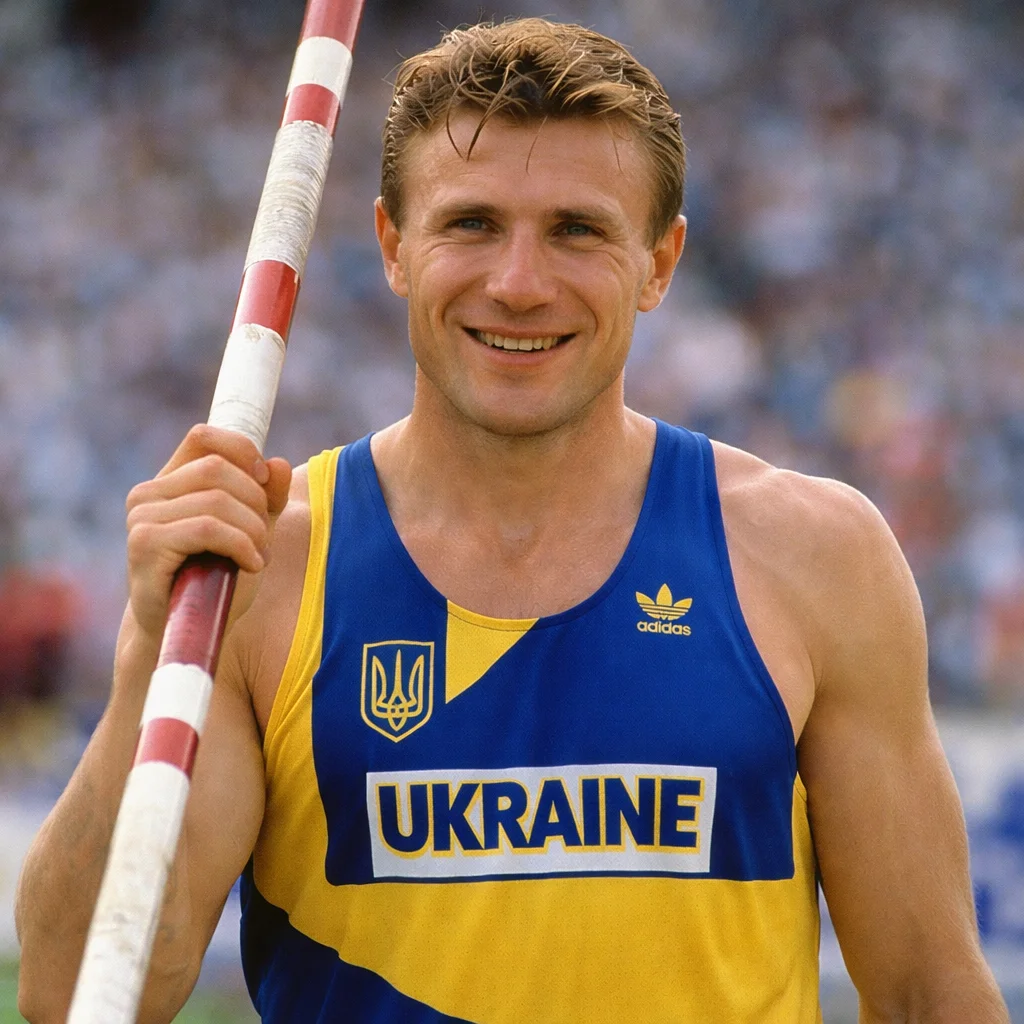
Sergey Bubka revolutionized pole vaulting by redefining the boundaries of human athletics and elevating the sport to unprecedented heights. Beyond his staggering tally of 35 world records, Bubka was a master strategist, an elite sprinter on the runway, and a iconic sports figure who dominated his discipline for nearly two decades. From his business-savvy approach to record-breaking to his post-athletic careers in parliament and global sports administration, his legacy is unmatched. Here are 15 fascinating facts about the vaulting legend who made the impossible look routine.
1. He Broke the World Record a Staggering 35 Times
Sergey Bubka turned record-breaking into a routine personal enterprise throughout the 1980s and 1990s. Over the course of his extraordinary career, he officially broke the pole vault world record 35 separate times, splitting his achievements across 17 outdoor and 18 indoor events. Rather than peaking once or twice, Bubka systematically systematically raised the bar every few months to keep fans and competitors in awe. This remarkable consistency established him as one of the most dominant individual athletes in track and field history. His total number of world records remains one of the most resilient stats in modern sports performance.
2. He Strategically Incremented Records by Just One Centimeter
Bubka did not just vault with physical power; he navigated his career with exceptional financial foresight. Both the Soviet sports federation and corporate sponsors like Nike offered lucrative cash bonuses every time he established a new world record. To maximize his financial earnings, Bubka calculatedly raised the official height by only a single centimeter per competition, even when capable of jumping much higher. This incremental tactic allowed him to collect dozens of payout bonuses while continuously thrilling stadium crowds worldwide. His savvy financial management made him one of the wealthiest track athletes of his era.
3. He Was the First Human to Clear the 6-Meter Barrier
For decades, sport biomechanists believed that clearing six meters on a pole vault was physically impossible for the human body. Bubka shattered that psychological and physical boundary on July 13, 1985, during a high-profile meet in Paris. By clearing exactly 6.00 meters, he instantly ushered the sport into a brand-new historical epoch. He later pushed past the 6.10-meter mark as well, proving that his historic Paris performance was no fluke. His breakthrough completely altered how coaches and vaulting experts evaluated human vertical potential.
4. He possessed the Runway Speed of a Professional Sprinter
One of the primary engines driving Bubka's staggering height capability was his elite horizontal speed on the approach runway. Sprint coaches consistently clocked Bubka running the 100-meter dash in approximately 10.3 seconds, a speed competitive with elite national sprinters. This explosive velocity generated enormous kinetic energy, which Bubka translated into upward vertical lift upon planting his pole. Combined with extraordinary core strength and flexibility, his sprinting speed created an unmatched catapult effect. Most of his competitors simply could not match the sheer momentum he carried into the vaulting box.
5. He Co-Developed the Famous Petrov/Bubka Technique
Bubka's dominance relied heavily on a groundbreaking biomechanical style developed alongside his long-time mentor, coach Vitaly Petrov. Known widely as the Petrov/Bubka model, this vaulting technique emphasized continuous upward movement during the pole plant rather than absorbing the pole's impact. The style required the athlete to swing their legs and torso upside down rapidly before the pole fully flexed, outrunning gravity's downward pull. By staying active on the pole rather than hanging passive, Bubka achieved unprecedented energy transfer efficiency. Today, virtually every elite pole vaulter on Earth studies and mimics this precise mechanical framework.
6. He Won Only One Olympic Gold Medal
Despite ruling pole vaulting uncontested for nearly two decades, Bubka experienced a surprisingly spotty relationship with the Olympic Games. He missed his first realistic chance at Olympic glory in 1984 due to the Soviet-led boycott of the Los Angeles Games. Four years later, he captured his solitary Olympic gold medal at the 1988 Seoul Olympics by clearing 5.90 meters on a tense final attempt. Injuries and unexpected missteps hindered his efforts in subsequent Olympic appearances, leaving his single gold as a fascinating anomaly in an otherwise flawless résumé. For all his 35 world records, he never captured a second Olympic title.
7. His 1992 Barcelona Appearance Ended in Shocking Tragedy
Entering the 1992 Barcelona Olympics as the overwhelming favorite, Bubka suffered one of the most notorious upsets in athletic history. He failed to clear his opening height of 5.70 meters on his first two attempts, then missed his final attempt at 5.75 meters in windy stadium conditions. Failing to register any height whatsoever, he exited the competition without a medal, completely stunning commentators and spectators around the globe. The track world dubbed the disaster the "Bubka Tragedy," proving that even the most invincible sports figures remain susceptible to high-stakes pressure and bad weather. He left Barcelona without scoring a single point for his team.
8. A Severe Heel Injury Robbed Him of the 1996 Atlanta Games
Bubka aimed to redeem his Olympic legacy at the 1996 Games in Atlanta, arriving in top form after reclaiming major international titles. However, just days before the qualifying rounds began, he suffered severe inflammation in his right Achilles tendon that made planting his foot excruciating. Despite heavy medical intervention, the extreme physical pain made it completely impossible for him to sprint or push off the runway. Forced to withdraw from the competition before making a single jump, he watched from the sidelines as redemptive gold slipped away once more. It marked another heartbreaking chapter in his complicated Olympic journey.
9. He Won Six Consecutive Outdoor World Championship Titles
While Olympic gold frequently eluded him, Bubka maintained a flawless, godlike record at the World Athletics Outdoor Championships. Beginning with the inaugural tournament in Helsinki in 1983, he won gold in every single edition of the event for fourteen straight years. He claimed six consecutive World Championship titles (1983, 1987, 1991, 1993, 1995, and 1997), a streak of continuous dominance practically unheard of in modern track and field. This remarkable championship record proved his unmatched staying power and ability to deliver under pressure on the global stage.
10. His Outdoor World Record Stood Unbroken for 20 Years
In July 1994, Bubka cleared 6.14 meters in the thin mountain air of Sestriere, Italy, setting an outdoor record that seemed permanently out of reach. That mark stood untouched by any human being for over two decades, outlasting generations of elite vaulting talent. It was not until the rise of modern vaulting prodigies that his outdoor mark was finally surpassed in international competition. The two-decade reign of his 6.14-meter jump stands as enduring proof of how far ahead of his contemporaries Bubka truly was.
11. His Hometown Erected a Statue of Him While He Was Still Active
Municipalities typically wait until an iconic athlete retires or passes away before erecting permanent public monuments in their honor. However, the city of Donetsk, Ukraine, broke traditional protocol in August 1999 by unveiling a life-sized bronze statue of Bubka while he was still an active competitor. The impressive monument depicts him holding his vaulting pole and preparing for his run near the regional sports complex. The gesture showcased the monumental pride his home nation held for his unprecedented athletic contributions. It remains a popular landmark and tourist attraction in the region today.
12. He Holds a Doctorate in Physical Education
Bubka never relied solely on raw talent and physical gifts; he systematically mastered the academic science behind athletic performance. He pursued higher education diligently during and after his athletic career, culminating in a Ph.D. equivalent doctorate in Physical Education. His doctoral dissertation focused on pedagogical methods for identifying, training, and developing young sports talent. By combining real-world championship experience with rigorous scientific theory, Bubka established himself as an intellectual authority on human performance. His academic background guided many of his later youth sports initiatives.
13. He Served as an Elected Member of the Ukrainian Parliament
Following his official retirement from competitive athletics in 2001, Bubka transitioned his competitive energy into high-level civic governance. From 2002 to 2006, he served as an elected member of the Verkhovna Rada, the national parliament of Ukraine. During his political tenure, he focused heavily on legislative matters involving youth affairs, physical culture, and national sports programs. He utilized his international renown to lobby for modernizing municipal sports infrastructure across Ukraine. His political career cemented his status as a dedicated public servant beyond his sports achievements.
14. His Son Became a Professional ATP Tennis Player
Athletic excellence runs deep in the Bubka family, though his son opted for a completely different sport. Sergey Bubka Jr. chose a tennis racquet over a vaulting pole, embarking on a professional career on the ATP tour. The younger Bubka achieved a career-high world ranking inside the top 150 singles players and competed in Grand Slam tournaments. The elder Bubka was frequently spotted in player boxes around the world, quietly supporting his son during high-stakes tennis matches. The family's multi-sport success highlights a remarkable legacy of elite athletic discipline.
15. He Rose to Senior Executive Positions in International Sports
After hanging up his vaulting poles, Bubka became one of the most influential political figures in world sports administration. He served as the Senior Vice President of World Athletics (formerly the IAAF) and spent decades as an active member of the International Olympic Committee (IOC). Additionally, he served as the President of the National Olympic Committee of Ukraine for seventeen years, leading national delegations to multiple Olympic Games. His executive leadership helped shape modern anti-doping protocols, event formatting, and youth development policies worldwide.
Sources & References
This AI-assisted post was rigorously curated and fact-checked for accuracy by:
 Martin Roháček
How fun was this article? 🤔
Tap a star to rate it
🧠 Quiz: How closely were you paying attention?
10 questions — all answers are in the article above!
Enjoyed these facts? There's more! 💌
Fresh fun facts in your inbox. No spam, ever.