Sticks and Glory: 15 Interesting Facts About the Hockey World Cup
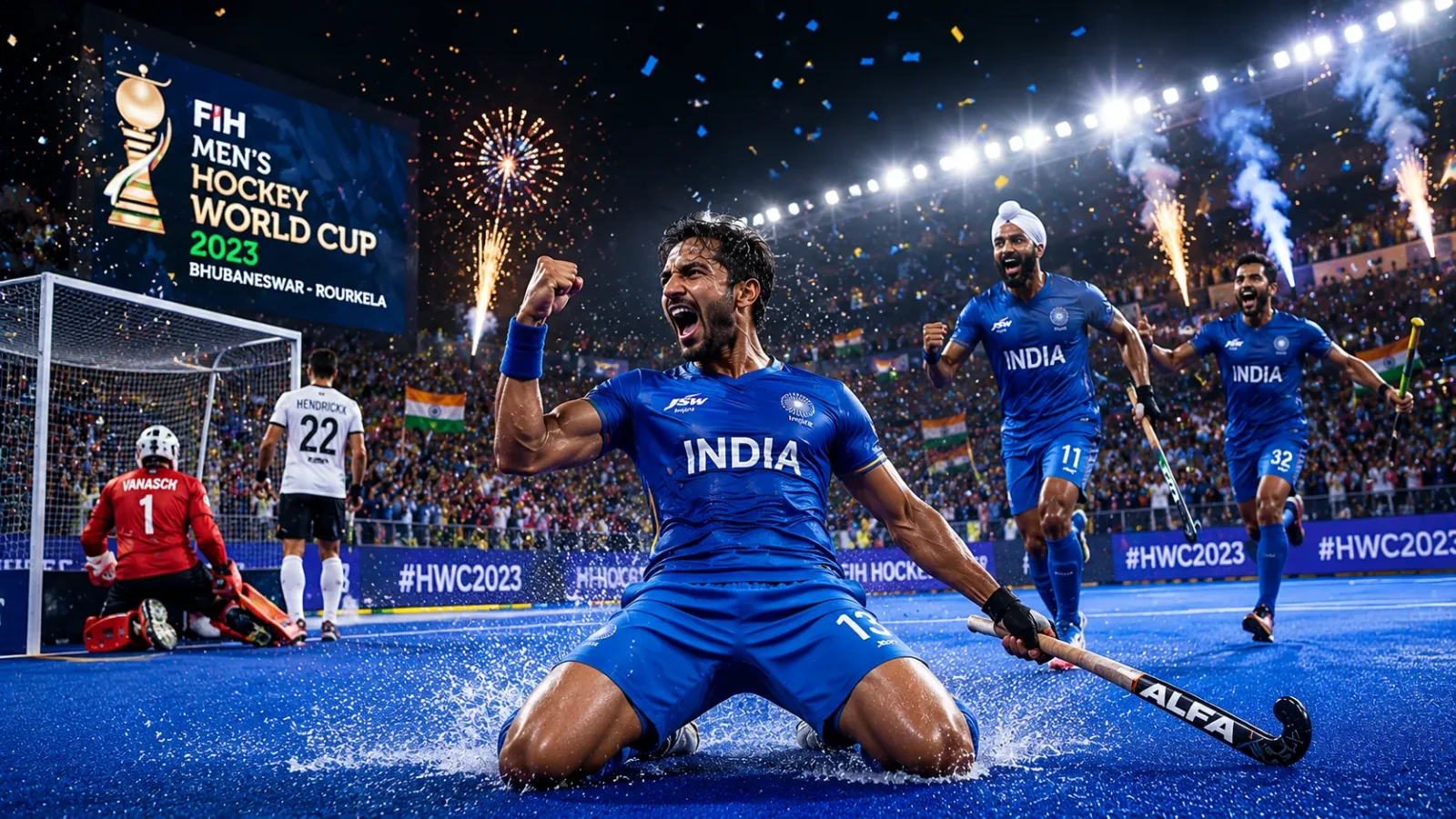
While sports fans globally tune in for the FIFA World Cup or the Olympics, the FIH Men’s Hockey World Cup remains one of the most fiercely contested and physically demanding tournaments on earth. Played on a pitch that demands incredible stamina, hand-eye coordination, and tactical brilliance, international field hockey has a history filled with geopolitical drama and legendary dynasties. Here are 15 lesser-known facts about this spectacular sporting event.
1. A Vision Born in Pakistan
The idea for a standalone Hockey World Cup did not originate in Europe, but rather in Pakistan. In 1969, Air Marshal Nur Khan, the head of the Pakistan Hockey Federation, pitched the idea of a global tournament to the International Hockey Federation (FIH). His vision was approved, forever changing the landscape of the sport.
2. The Inaugural Relocation
The very first Men’s Hockey World Cup was scheduled to be held in Pakistan in 1971. However, intense political tension and the outbreak of the Bangladesh Liberation War made hosting the tournament in the region too dangerous. At the last minute, the FIH relocated the inaugural event to Barcelona, Spain.
3. The Masterpiece Trophy
The Hockey World Cup trophy is a stunning piece of art. Designed by Bashir Moojid and crafted by the Pakistani army, it consists of a silver globe mounted on a base of teak wood and ivory, entirely inlaid with gold and silver. Pakistan graciously donated the trophy to the FIH for the very first tournament.
4. Pakistan’s Unmatched Reign
Despite recent struggles in the modern era of the sport, Pakistan remains the most successful nation in the history of the Men’s Hockey World Cup. They have lifted the magnificent trophy a record four times (1971, 1978, 1982, and 1994), establishing a golden era of dominance that no other country has yet surpassed.
5. An Exclusive Winners’ Circle
Unlike many global sports where underdog stories frequently rewrite history, the Men’s Hockey World Cup is dominated by an incredibly exclusive club. Since its inception in 1971, only six nations have ever won the tournament: Pakistan, the Netherlands, Australia, Germany, India, and Belgium.
6. The Astroturf Revolution
In 1986, the World Cup held in London marked a permanent turning point for the sport: the widespread adoption of artificial turf. Moving away from natural grass completely revolutionized field hockey, making the ball travel at blistering speeds and heavily favoring European and Australian teams over the traditional Asian powerhouses who thrived on natural grass.
7. India’s Sole Triumph
Despite being the absolute titans of Olympic field hockey (winning eight Olympic gold medals), the Indian men’s national team has historically struggled at the World Cup. Their one and only World Cup victory came in 1975 in Kuala Lumpur, Malaysia, where they defeated their fierce rivals Pakistan 2-1 in a legendary final.
8. The Dutch Double
Winning a World Cup is incredibly difficult, but the Netherlands achieved something truly spectacular in 2014. Hosting the tournaments in The Hague, the Dutch women’s national team won gold, while the Dutch men’s team secured the silver medal. The Netherlands remains the most dominant force in Women’s Hockey World Cup history, holding a staggering number of titles.
9. Australia’s Back-to-Back Era
The Australian men’s team, famously known as the Kookaburras, went on a terrifying run of dominance in the early 2010s. They won the World Cup in 2010 in New Delhi and successfully defended their title in 2014 in The Hague, showcasing a highly physical and aggressive style of play that the rest of the world simply could not handle.
10. The Giant Rourkela Stadium
For the 2023 Men’s Hockey World Cup, India constructed a monumental venue in the state of Odisha. The Birsa Munda International Hockey Stadium in Rourkela was built specifically for the tournament and officially holds the Guinness World Record for the largest fully seated field hockey stadium in the world, with a capacity of over 20,000 passionate fans.
11. Belgium’s Historic Rise
For decades, Belgium was considered a mid-tier team in international hockey. However, massive investments in their youth infrastructure paid off tremendously. In 2018, the “Red Lions” captured their very first Men’s Hockey World Cup, proving that strategic, long-term athletic development can break the stranglehold of the sport’s traditional giants.
12. Germany’s 2023 Miracle Run
The 2023 World Cup in India saw one of the most incredible displays of resilience in sports history. The German national team won the tournament by pulling off stunning comeback victories in the quarter-finals, semi-finals, and the grand final. In all three crucial knockout matches, Germany fell behind by two goals before battling back to win.
13. A Continental Divide
The Men’s Hockey World Cup highlights a massive geographic divide in the sport’s competitive balance. In the history of the tournament, no team from the Americas (Pan-American) or Africa has ever won the men’s title. The championship has exclusively bounced between teams from Asia, Europe, and Oceania.
14. The Swift Arrival of the Women’s Tournament
While many global sports took decades to introduce equivalent female tournaments, field hockey moved relatively quickly. Following the men’s inaugural tournament in 1971, the very first Women’s Hockey World Cup was held just three years later in 1974 in Mandelieu, France, where the Netherlands took home the first gold.
15. The Penalty Shootout Drama
Modern field hockey abandoned traditional penalty strokes for deciding tied matches, replacing them with the thrilling “shootout” format where a player has eight seconds to score in a one-on-one situation against the goalkeeper. Both the 2018 and 2023 Men’s World Cup finals were decided by these agonizing, high-stakes shootouts.
Sources & References
This AI-assisted post was rigorously curated and fact-checked for accuracy by:
 Martin Roháček
How fun was this article? 🤔
Tap a star to rate it
🧠 Quiz: How closely were you paying attention?
10 questions — all answers are in the article above!
Enjoyed these facts? There's more! 💌
Fresh fun facts in your inbox. No spam, ever.