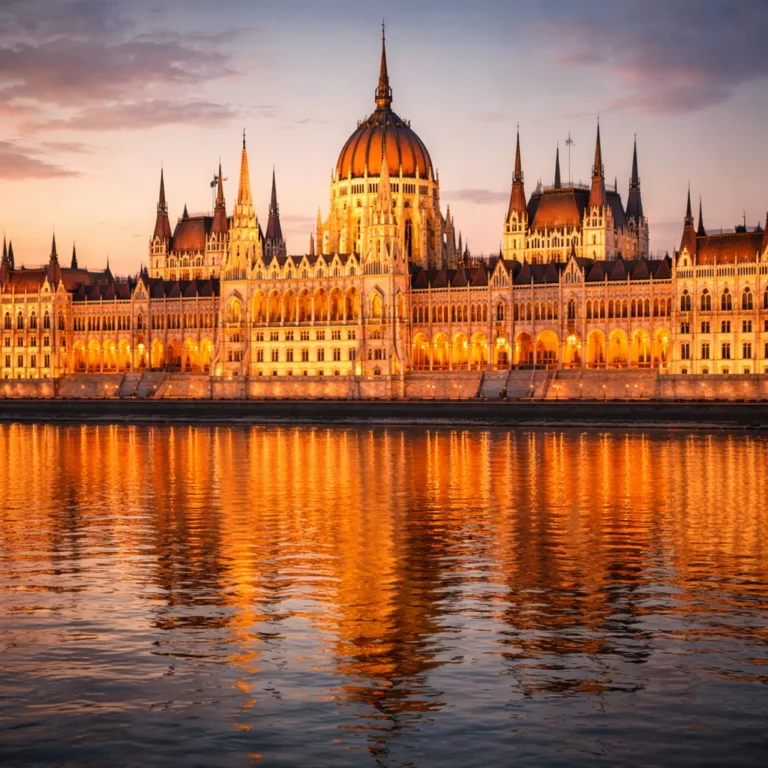
The Hungarian Parliament Building dominates the Budapest skyline with its neo-Gothic spires and massive dome. While tourists snap photos of it from the Danube river cruises, the interior holds secrets that reflect the turbulent history of the nation. For instance, the architect who designed this masterpiece went blind before he could ever see the finished building. Furthermore, politicians used to leave their burning cigars in special numbered holders outside the debating chamber. Prepare to enter the Országház.
Hungarian Parliament
The architect of Hungarian Parliament never saw his masterpiece completed. Imre Steindl poured his life into designing the building, but he tragically went blind during the final stages of construction. He passed away just a few weeks before the builders finished the project in 1904.
A massive red star sat on the dome for forty years. During the Communist era, the government placed a three-ton red star on top of the spire to symbolize Soviet power. Consequently, workers had to remove this hated symbol with a helicopter after the regime fell in 1990.
Engineers designed a basic air conditioning system using ice. They built two fountains in the square outside that connected to underground tunnels leading to the chamber. Servants filled these tunnels with blocks of ice, and fans blew the cool air into the building to keep the politicians comfortable.
The number ninety-six appears everywhere in the design. The central dome rises exactly ninety-six meters high to honor the year 896, when the Magyars settled in the Carpathian Basin. Additionally, the main staircase features ninety-six steps to reinforce this patriotic symbolism.
MPs had numbered brass cigar holders. In the hallways outside the debating chamber, you can still see numbered brass slots on the window sills. Politicians would leave their burning cigars there when the bell rang for a vote, and they would return to finish them later.
It houses the Holy Crown of St. Stephen. This ancient crown features a distinctly crooked cross on top, which likely happened during a mishap in the 17th century. Guards protect this relic twenty-four hours a day, and they possess the authority to use their swords if necessary.
Builders of Hungarian Parliament used forty kilograms of real gold. To create the glittering interior, decorators applied nearly ninety pounds of 22 to 23-carat gold leaf to the ceilings and walls. This lavish decoration ensures the building shines brightly even on cloudy days.
The building faces the “wrong” way. Although the magnificent facade faces the Danube River, the official main entrance actually sits on the opposite side facing Kossuth Square. Therefore, most tourists only ever see the back of the building from the boat tours.
Hungarian Parliament contains the only foreign materials in the entire structure. The law required builders to use exclusively Hungarian materials, but they made one exception for eight giant marble monoliths. They had to import these massive pillars from Sweden because Hungary lacked marble of that size.
You can still see bullet holes from the 1956 Revolution. During the uprising against Soviet rule, tanks fired upon protesters in the square. The government deliberately preserved some of the damage on the walls and statues as a memorial to the victims.
Hungarian Parliament ranks as the third-largest parliament building in the world. Only the Pentagon and the Palace of the Parliament in Romania exceed it in sheer size. It contains nearly seven hundred rooms and twenty kilometers of stairs.
A “dummy” parliament exists inside. The architect designed two identical symmetrical wings, but the government only uses one for actual politics. Consequently, they use the other wing for guided tours, allowing visitors to see the exact layout without disturbing the MPs.
Cleaning the facade is a never-ending job. The soft limestone walls absorb pollution from the city air and turn black over time. Therefore, specialized restoration teams work constantly, moving from one section to another in a perpetual cycle of cleaning.
A secret tunnel connects it to a museum. In recent years, engineers dug a tunnel under the square to connect the visitor center to the main building. This allows thousands of tourists to enter the secure facility without blocking the official government entrance.
Finally, the carpet is one of the largest in Europe. The hand-knotted carpet in the Upper House lounge spans nearly three thousand square feet. Weavers had to make it in a single piece, which required special machinery and months of labor.
How useful was this post?
Click on a star to rate it!
This AI-assisted post was rigorously curated and fact-checked for accuracy by: