The Frozen Fury: 15 Fascinating Facts About Ice Hockey
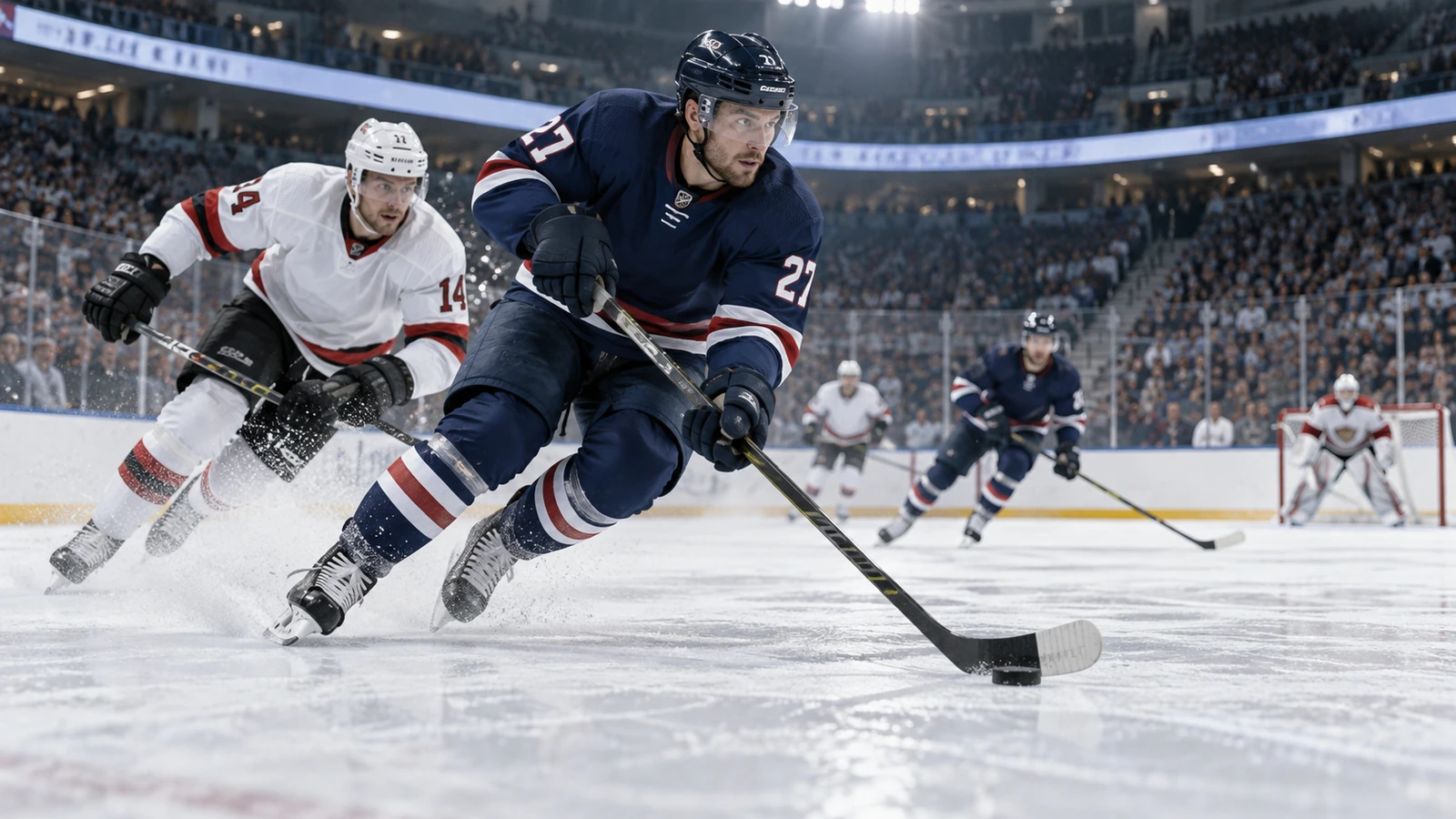
Ice hockey is one of the fastest, most intense team sports on Earth, blending breakneck skating speeds with tactical finesse and heavy physical contact. From the frigid ponds of 19th-century Canada to multi-million-dollar modern arenas, the game has evolved alongside a colorful tapestry of bizarre traditions and remarkable innovations. Behind the flying pucks and bone-crushing hits lie surprising historical quirks, accidental equipment breakthroughs, and incredible true stories. Here are 15 fascinating facts about ice hockey that highlight the sport's unique history and culture.
1. Pucks Are Kept Frozen to Control Bouncing
Before every professional hockey game, official game pucks are stored in a temperature-controlled freezer to alter their physical properties. Made of vulcanized rubber, a warm or room-temperature puck tends to bounce unpredictably off the ice and hockey sticks, disrupting play. Freezing the rubber hardens it, drastically reducing bounce and allowing the disk to glide smoothly across the slick ice surface. During an NHL game, officials swap out the puck every few minutes because friction and room temperature warm the rubber up. Typically, up to 30 to 40 frozen pucks are prepared for use in a single match to keep gameplay fast and predictable.
2. Early Impromptu Pucks Included Frozen Dung
Before mass-manufactured vulcanized rubber became standard in the late 19th century, early hockey enthusiasts had to improvise with whatever was on hand. On rural Canadian ponds and frozen lakes, players frequently used carved wooden blocks, sliced lacrosse balls, or even frozen cow dung. These organic alternatives held their shape surprisingly well in sub-zero temperatures and glided across natural ice surfaces. However, as the manure thawed during intense play, matches grew noticeably unpleasant for both players and spectators. The shift to square wooden pucks and eventually round rubber discs in Montreal saved the sport from an unfortunate odor problem.
3. Jacques Plante Popularized the Goalie Mask After Severe Injury
For decades, ice hockey goalies stood in front of flying rubber pucks completely bare-faced, accepting facial fractures and missing teeth as routine hazards. That changed on November 1, 1959, when Montreal Canadiens goalie Jacques Plante was struck in the face by a shot from Andy Bathgate, breaking his nose and lacerating his cheek. After receiving stitches, Plante refused to return to the ice unless head coach Toe Blake allowed him to wear a custom fiberglass mask he had been testing in practice. Blake relented, and despite skepticism from traditionalists who thought it showed weakness, Plante led the team to victory. His insistence revolutionized player safety, making face protection standard across the entire sport.
4. The Legendary Stanley Cup Is Filled with Permanent Typos
Unlike most sports trophies that are replaced or replicated every season, the original Stanley Cup is continuously updated with hand-punched engravings of winning teams and players. Because the names are hammered directly into the metal band by hand, engravers have made several famous mistakes over the decades that remain permanently etched on the silver. For instance, the 1971-72 Boston Bruins were misspelled as "BQSTQN BRUINS," while the Toronto Maple Leafs were once entered as "LEAFMS." Legendary goaltender Jacques Plante had his name spelled five different ways across his multiple championship wins. Rather than smoothing out the metal and re-engraving, officials have chosen to leave these human errors intact as part of the trophy's rich character.
5. Detroit Fans Toss Octopuses onto the Ice for Good Luck
One of the most bizarre traditions in modern sports occurs in Detroit, where fans hurl real, dead octopuses onto the ice during playoff games. The tradition originated on April 15, 1952, when brothers Pete and Jerry Cusimano threw an octopus onto the ice at the Red Wings' Olympia Stadium. At the time, winning the Stanley Cup required eight postseason victories, so the eight tentacles of the marine creature symbolized the total wins needed for a championship. The Red Wings swept both series that year, winning the cup in eight straight games, which cemented the superstition forever. Today, despite strict arena guidelines, fans still sneak cephalopods past security to celebrate postseason success.
6. A Future Stanley Cup Champion Was Traded for One Dollar
In 1993, the Winnipeg Jets traded a young forward named Kris Draper to the Detroit Red Wings for the absolute minimum considerations allowable: a single dollar bill. The transaction was so minor that Detroit executives literally wrote a check for $1 to finalize the deal with Winnipeg management. Far from being a throwaway asset, Draper became a cornerstone of the Red Wings for seventeen seasons, forming part of the famous "Grind Line." He went on to play over 1,100 games for Detroit, winning four Stanley Cup championships and the Selke Trophy as the league's top defensive forward. The transaction remains widely regarded as one of the greatest bargains in professional sports history.
7. The Curved Hockey Stick Was Born from a Practice Mishap
Until the 1960s, hockey sticks featured completely flat wooden blades, meaning players could only shoot straight or with minimal spin. That changed when Hall of Famer Stan Mikita of the Chicago Blackhawks accidentally bent his stick blade during a practice session. Rather than getting a fresh stick, Mikita took a shot with the warped blade and noticed the puck curved wildly through the air, completely baffling the goalie. Intrigued, Mikita and teammate Bobby Hull began deliberately heating and bending their wooden blades in hot water to accentuate the curve. The resulting "banana blade" revolutionized shooting technique and slapshots, forcing the league to eventually limit the maximum allowable curve for safety.
8. Mario Lemieux Celebrated by Submerging the Stanley Cup
The Stanley Cup is famous for being handed off to players for personal celebration tours, leading to incredible adventures around the globe. Following the Pittsburgh Penguins' championship victory in 1991, team captain Mario Lemieux hosted an extravagant victory party at his home in Pennsylvania. At one point during the festivities, the cup was tossed directly into Lemieux's outdoor swimming pool, sinking to the bottom before floating back toward the surface. Partygoers quickly dove in to retrieve the precious trophy, which suffered no permanent damage from its unexpected dip. The incident sparked a tradition of players taking the cup to pools, lakes, and oceans during their official days with the trophy.
9. Dentists Perform Emergency Repairs Directly Inside Hockey Arenas
High-speed skating, flying pucks, and stray sticks make facial trauma and lost teeth an almost inevitable rite of passage for professional hockey players. In fact, dental injuries are so frequent in the sport that NHL regulations require host teams to provide a qualified dentist at every game. These medical professionals operate out of dedicated dental stations located just steps from the locker rooms or players' benches. Armed with local anesthetics, wire, and repair kits, on-site dentists frequently stitch gums, stabilize loose teeth, or extract shattered fragments so players can return to the ice within minutes. Many players defer full cosmetic dental reconstruction until after their playing careers conclude.
10. Gordie Howe Only Achieved His Namesake "Hat Trick" Twice
In hockey lore, a "Gordie Howe Hat Trick" is accomplished when a single player records a goal, an assist, and a fight in the same game. Named after the legendary "Mr. Hockey," who was renowned for both his elite scoring ability and intimidating physical toughness, the phrase embodies rugged play. Remarkably, however, Gordie Howe himself only recorded two such games during his entire 2,186-game professional career. The leader in all-time Gordie Howe Hat Tricks is actually Rick Tocchet, who accomplished the feat 18 times during his career. Despite its rarity for Howe himself, the term remains one of hockey's most iconic statistical achievements.
11. Frank Zamboni Revolutionized Ice Resurfacing in 1949
Before the mid-20th century, resurfacing an indoor ice rink was an arduous, labor-intensive task that required a crew of workers over an hour to complete. Men had to manually scrape the ice, sweep away debris, wash the surface with hoses, and squeegee excess water. In 1949, Frank Zamboni built a tractor-driven machine in California that scraped ice, collected shavings, and laid down a smooth layer of warm water all in one pass. His revolutionary invention reduced the entire resurfacing process down to just fifteen minutes, allowing rinks to host back-to-back games and practice sessions. Today, the brand name "Zamboni" is globally synonymous with ice resurfacing vehicles in arenas worldwide.
12. On-Ice Collisions Generate Extreme Physical Force
Professional ice hockey skaters can routinely reach speeds exceeding 20 to 25 miles per hour on low-friction steel blades. When two heavy athletes charging at full speed collide near the boards, the kinetic energy involved is staggering. Biomechanical studies show that open-ice hits can generate forces exceeding 15 to 20 Gs, comparable to a low-speed automobile collision. The low friction of the ice prevents feet from absorbing kinetic energy through resistance, transferring nearly the entire force of impact into the body. This immense physical demand explains why modern equipment is rigorously engineered with heavy padding and impact-absorbing materials.
13. Everyday Amateurs Can Play in NHL Games as Emergency Goalies
Unlike other major sports leagues, the NHL maintains a unique rule requiring a neutral Emergency Backup Goaltender (EBUG) to attend home games in every arena. If both active goalies for either team become injured during a game, this designated local amateur steps onto the ice to play. These emergency backups are often local recreational players, coaches, or accountants who happen to live near the arena. In 2020, 42-year-old Zamboni driver David Ayres entered a game for the Carolina Hurricanes and secured a victory against the Toronto Maple Leafs, becoming an instant national hero.
14. Modern Ice Hockey Formally Began at a Montreal Rink
While primitive forms of ice skating games existed for centuries across Europe and North America, organized modern hockey officially debuted indoors on March 3, 1875. Canadian engineer James Creighton organized the first indoor game at the Victoria Skating Rink in Montreal, Quebec. To prevent the ball from flying out of the rink and injuring spectators, Creighton replaced the traditional rubber ball with a flat wooden disc—the precursor to the modern hockey puck. The game featured nine players per side and used rules adapted largely from field hockey and rugby. This historic match established the groundwork for formal team rosters, structured rink dimensions, and official refereeing.
15. The Buffalo Sabres Drafted a Non-Existent Japanese Player
During the 1974 NHL Entry Draft, Buffalo Sabres general manager Punch Imlach grew frustrated by the tedious, secretive multi-round drafting process conducted over the phone. To protest the bureaucratic delay, Imlach decided to draft a completely imaginary player in the 11th round. He selected "Taro Tsujimoto" from the non-existent "Tokyo Katanas" of the Japanese Ice Hockey League. League officials accepted the pick without verification, and local media enthusiastically reported on Buffalo's exotic new prospect. It was not until training camp approached months later that Imlach admitted the player was an elaborate hoax, forcing the NHL to officially strike the pick from record books.
Sources & References
This AI-assisted post was rigorously curated and fact-checked for accuracy by:
 Martin Roháček
How fun was this article? 🤔
Tap a star to rate it
🧠 Quiz: How closely were you paying attention?
10 questions — all answers are in the article above!
Enjoyed these facts? There's more! 💌
Fresh fun facts in your inbox. No spam, ever.