The Subversive Wordsmith: 15 Fascinating Facts About Jane Austen
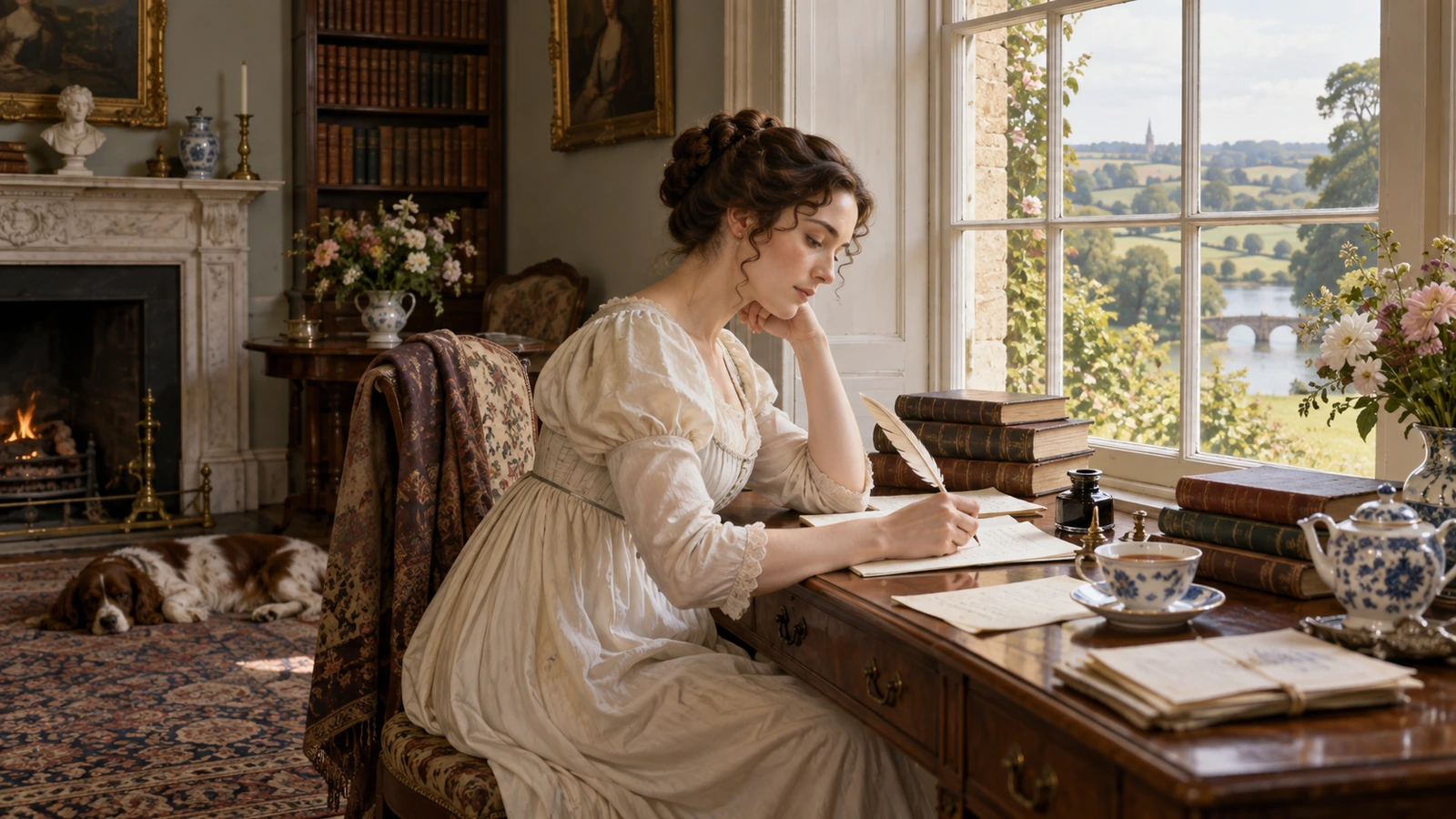
Jane Austen is celebrated worldwide as a master of English literature, renowned for her sharp wit, keen social observation, and timeless romances. Yet behind the quiet domestic facade of her Regency life sat a fiercely independent, secretive author who defied societal norms to build a literary empire. From brewing home beer and hiding her manuscripts under blotting paper to rejecting wealthy suitors overnight, her private life was as compelling as her fiction. Here are 15 fascinating facts about the genius who reshaped modern literature without ever seeing her own name on a printed cover during her lifetime.
1. She Published Her First Novel Anonymously as "By a Lady"
During the Regency era, publishing fiction was considered an improper profession for gentlewomen, leading Jane Austen to conceal her identity. When Sense and Sensibility debuted in 1811, the title page simply attributed the work to "By a Lady" rather than displaying her real name. Her subsequent novel, Pride and Prejudice, was credited merely to "The Author of Sense and Sensibility" to maintain this crucial cloak of anonymity. This secret was kept strictly within her immediate family and close social circle for years. Anonymity allowed Austen to offer scathing social critiques without risking her social standing or family honor. It was only after her death that the reading public finally learned the name of the genius behind these beloved stories.
2. She Accepted a Marriage Proposal for Less Than 24 Hours
Despite remaining single for her entire life, Jane Austen came remarkably close to marriage in December 1802. While visiting friends, she received a proposal from Harris Bigg-Wither, a wealthy 21-year-old heir to a substantial Hampshire estate. Recognizing that marrying him would secure financial stability for herself and her family, the 26-year-old author initially accepted. However, after a restless night of deep reflection, she realized she could not marry a man she did not love. The very next morning, she awkwardly revoked her acceptance and promptly fled the house with her sister Cassandra. This agonizing decision preserved her freedom, allowing her to focus entirely on her literary career.
3. She Was an Accomplished Home Brewer of Spruce Beer
In Regency England, drinking water was frequently unsafe and contaminated with dangerous pathogens, prompting households to brew their own mild alcoholic beverages. Jane Austen was an enthusiastic home brewer who routinely crafted specialty spruce beer for her family. She made this unique drink using a mixture of molasses, water, and fresh spruce tree branches. Her letters frequently mentioned her brewing endeavors, including her satisfaction when a batch turned out particularly well. Spruce beer provided a refreshing, safe, and vitamin-rich alternative to unhygienic water sources. This practical domestic skill offers a charming look into the everyday household duties that filled her daily life.
4. She Wrote a Hilariously Bias-Filled History Textbook as a Teenager
Long before publishing her famous novels, a 15-year-old Austen penned a brilliant historical satire titled The History of England. In this youthful work, she cheekily styled herself as a "partial, prejudiced, and ignorant historian" with little regard for objective truth. She openly mocked British monarchs she disliked, while fiercely defending figures like Mary, Queen of Scots, simply out of personal affection. The manuscript was colorfully illustrated by her sister Cassandra, adding to its whimsical, rebellious charm. This juvenile text showcased her sharp irony, keen wit, and willingness to mock authority from an early age.
5. Her Sister Burned the Vast Majority of Her Personal Correspondence
Much of Jane Austen's inner life remains an intriguing mystery because her sister Cassandra burned most of her letters after Jane's death. Cassandra destroyed hundreds of personal notes and heavily censored others to protect the family's privacy and maintain Jane's gentle reputation. Out of an estimated 3,000 letters written during her lifetime, fewer than 160 survive today. While this act of protection preserved family secrets, it destroyed invaluable biographical details and candid personal reflections. Literary historians continue to mourn the lost letters, which would have offered unprecedented insight into her creative genius.
6. She Never Saw Her Real Name Printed on Any Book Cover
Throughout her entire lifetime, Jane Austen never experienced the satisfaction of seeing her real name printed on a published book. All four novels released during her living years—Sense and Sensibility, Pride and Prejudice, Mansfield Park, and Emma—were published anonymously. It was not until four months after her tragic death in 1817 that her brother Henry revealed her identity to the public. He authored a biographical note included in the posthumous release of Northanger Abbey and Persuasion, formally crediting Jane. Consequently, Austen achieved international literary immortality without ever enjoying public recognition while alive.
 Writers and Literary Greats
Discover the astonishing true stories, eccentric habits, and thrilling adventures of history's greatest writers. From firing squads and pirate captivity to military hoaxes, their real lives rivaled their greatest fictions.
See All Facts
Writers and Literary Greats
Discover the astonishing true stories, eccentric habits, and thrilling adventures of history's greatest writers. From firing squads and pirate captivity to military hoaxes, their real lives rivaled their greatest fictions.
See All Facts
7. She Was Forced to Dedicate a Novel to a Royal She Despised
Jane Austen held a deep personal distaste for the Prince Regent, the future King George IV, viewing him as a selfish, extravagant womanizer. However, in 1815, the Prince's librarian invited her to tour the royal library and strongly implied that she should dedicate her upcoming novel to the royal. In Regency society, a royal suggestion was effectively an unalterable command that could not be refused without grave offense. Reluctantly, Austen included a formal, dutiful dedication to the Prince Regent on the frontispiece of Emma. Behind the scenes, she fumed to friends about being coerced into flattering a man she genuinely disdained.
8. The First Manuscript of Pride and Prejudice Was Promptly Rejected Unread
In 1797, Jane's father, George Austen, wrote to a prominent London publisher named Thomas Cadell to offer a manuscript titled First Impressions. George asked if the publisher would be interested in reviewing the novel, which was an early draft of what would become Pride and Prejudice. Cadell rejected the proposal by return post, famously marking the letter with the words "Declined by Return." The publisher did not even bother to request or read a single page of the story. Austen spent the next decade revising the text before it was finally published to immense acclaim in 1813.
9. She Wrote on Tiny Slips of Paper to Keep Her Work Secret
Living in a crowded household, Austen had no private study and wrote in the sitting room, where family members, visitors, and servants frequently passed through. To keep her professional writing secret from outsiders, she wrote on tiny, easily hideable slips of paper. Whenever someone approached, she would quickly slide her manuscripts beneath a piece of blotting paper or hide them in a desk drawer. She famously refused to fix a creaking door in her house because its noisy hinges gave her advance warning of approaching guests. This clever system ensured her literary pursuits remained entirely undetected by unsuspecting visitors.
10. She Had to Buy Back the Rights to Northanger Abbey After a Decade of Delay
In 1803, Austen sold the manuscript for Northanger Abbey—then titled Susan—to a London publisher named Benjamin Crosby for the sum of ten pounds. Crosby promised speedy publication, but the book sat forgotten on a shelf for over thirteen years. Frustrated by the delay, Jane wrote to the publisher under a pseudonym in 1809, offering to resend the text or demand its return. Crosby coldly threatened legal action if she tried to publish it elsewhere without buying back the copyright. Years later, her brother Henry bought back the manuscript for the original ten pounds, never disclosing that the author was now famous.
11. Only One Unfinished Portrait Sketch of Her Is Known to Exist
Despite her world-renowned status, there are no fully finished, verified oil paintings of Jane Austen produced during her lifetime. The only authentic portrait confirmed by scholars is a small, watercolor and pencil sketch created by her sister Cassandra around 1810. In this modest sketch, Jane appears seated with her arms crossed, looking slightly off-camera with a stern expression. Family members later remarked that the drawing did not fully capture her true warmth or likeness. Consequently, modern book covers and monuments rely heavily on romanticized Victorian revisions rather than accurate historical portraits.
12. Her Six Masterpiece Novels Contain Only Fourteen Kisses
Despite being celebrated as one of history's greatest romantic authors, Jane Austen wrote remarkably chaste stories. Across all six of her major completed novels, there are only fourteen explicit references to physical kissing. Instead of relying on overt physical passion or melodrama, Austen built emotional intensity through razor-sharp dialogue, character development, and subtle glances. Her masterpieces demonstrate that romantic tension is far more compelling when fueled by intellectual chemistry and social barriers. Readers remain captivated by her couples precisely because every rare physical touch carries immense narrative weight.
13. Growing Up with Six Brothers Gave Her Unique Insight into Men
Jane Austen was raised in a bustling household with seven siblings, including six brothers: James, George, Edward, Henry, Francis, and Charles. Living alongside so many men provided her with firsthand observation of male behavior, ambitions, and conversational styles. Her brothers pursued diverse careers, ranging from naval officers and clergymen to wealthy landowners and bankers. These varied life paths directly inspired iconic male figures like Mr. Darcy, Captain Wentworth, and Edward Ferrars. Her keen observation of her brothers enabled her to write realistic, multi-dimensional male characters that surpassed the tropes of her era.
14. She Chose Lifelong Singlehood to Dedicate Her Life to Writing
In an era when marriage was virtually the only pathway to financial security for women, Jane Austen chose to remain unmarried. Instead, she chose to live alongside her mother and sister Cassandra, depending on modest family support and her own literary earnings. Remaining single was a brave choice that allowed her complete intellectual freedom and time to perfect her craft. Had she married, the heavy burdens of running a large household and raising children would have likely extinguished her writing. By rejecting traditional expectations, she chose her art over societal security, securing her legacy in world literature.
15. She Died at Age 41 from a Mysterious and Undiagnosed Illness
On July 18, 1817, Jane Austen passed away at the young age of 41 in Winchester, England, after suffering from a debilitating illness. During her final months, she experienced severe fatigue, skin discoloration, digestive distress, and agonizing joint pain. Medical knowledge in the early 19th century was unable to diagnose or treat her condition, leaving her cause of death a mystery. Modern medical historians suspect she suffered from Addison's disease, an autoimmune failure of the adrenal glands, or possibly Hodgkin's lymphoma. Despite her physical suffering, she continued writing almost until her final days.
Sources & References
This AI-assisted post was rigorously curated and fact-checked for accuracy by:
 Martin Roháček
How fun was this article? 🤔
Tap a star to rate it
🧠 Quiz: How closely were you paying attention?
10 questions — all answers are in the article above!
Enjoyed these facts? There's more! 💌
Fresh fun facts in your inbox. No spam, ever.