1. His Real Name Translated to “Gooseflesh”
He was born Johannes Gensfleisch zur Laden zum Gutenberg. In the local German dialect, “Gensfleisch” translates quite literally to “goose flesh.” Later in life, he chose to adopt the name “Gutenberg,” which was the name of the house where his patrician family lived in Mainz, Germany.
2. He Didn’t Invent Movable Type
While Gutenberg is famous for the printing press, he did not invent movable type. The Chinese artisan Bi Sheng invented movable type using baked clay around 1040 CE, and the first metal movable type was developed in Korea in the 13th century. Gutenberg’s genius was inventing a complete, mechanized system—combining type, ink, and a press—that made mass production economically viable in Europe.
3. He Was Originally a Goldsmith
Before diving into printing, Gutenberg worked as a highly skilled goldsmith and gem cutter. This metallurgical expertise was the secret to his success. It allowed him to design the hand mould and precisely cast thousands of identical metal letters with intricate detail, a feat impossible for a standard woodworker.
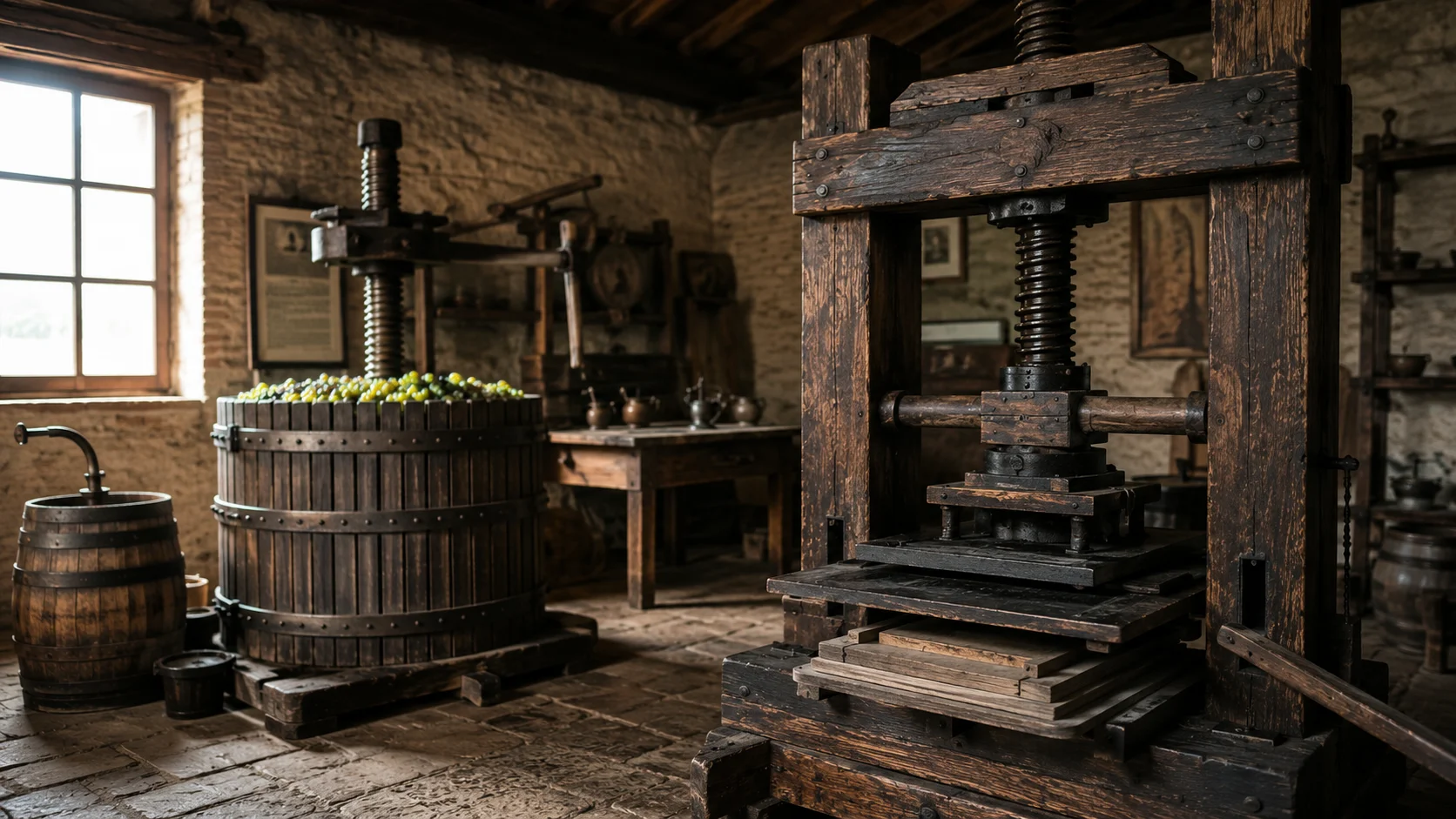
4. He Modified Wine Presses to Print Books
Gutenberg didn’t build his press from scratch. He looked at the heavy, wooden screw presses used locally in the Rhine Valley for crushing grapes into wine and pressing olives into oil, and he adapted their mechanical design to press paper evenly against his metal type.
5. He Invented a Perfect, Revolutionary Alloy
Standard metals like lead or tin wouldn’t work for printing—they were either too soft or shrank unevenly when cooled. Gutenberg formulated a precise, durable alloy of lead, tin, and antimony. This unique mixture melted easily but actually expanded slightly as it cooled in the mould, ensuring the cast letters had incredibly sharp, crisp edges.
6. His Ink Was Oil-Based, Not Water-Based
Existing inks used for woodblock printing were water-based, which would just bead up and roll off Gutenberg’s new metal type. He spent years formulating a new, oil-based ink using linseed oil, walnut oil, and soot. This thick, viscous ink adhered perfectly to the metal and transferred cleanly to paper.
7. He Printed Indulgences to Make Quick Cash
Before he could finish his massive Bible project, Gutenberg needed money to keep his shop running. He took on commercial jobs, including printing thousands of “indulgences” for the Catholic Church. These were slips of paper sold to believers, promising a reduction in their time in Purgatory.
8. The Gutenberg Bible Took Years to Produce
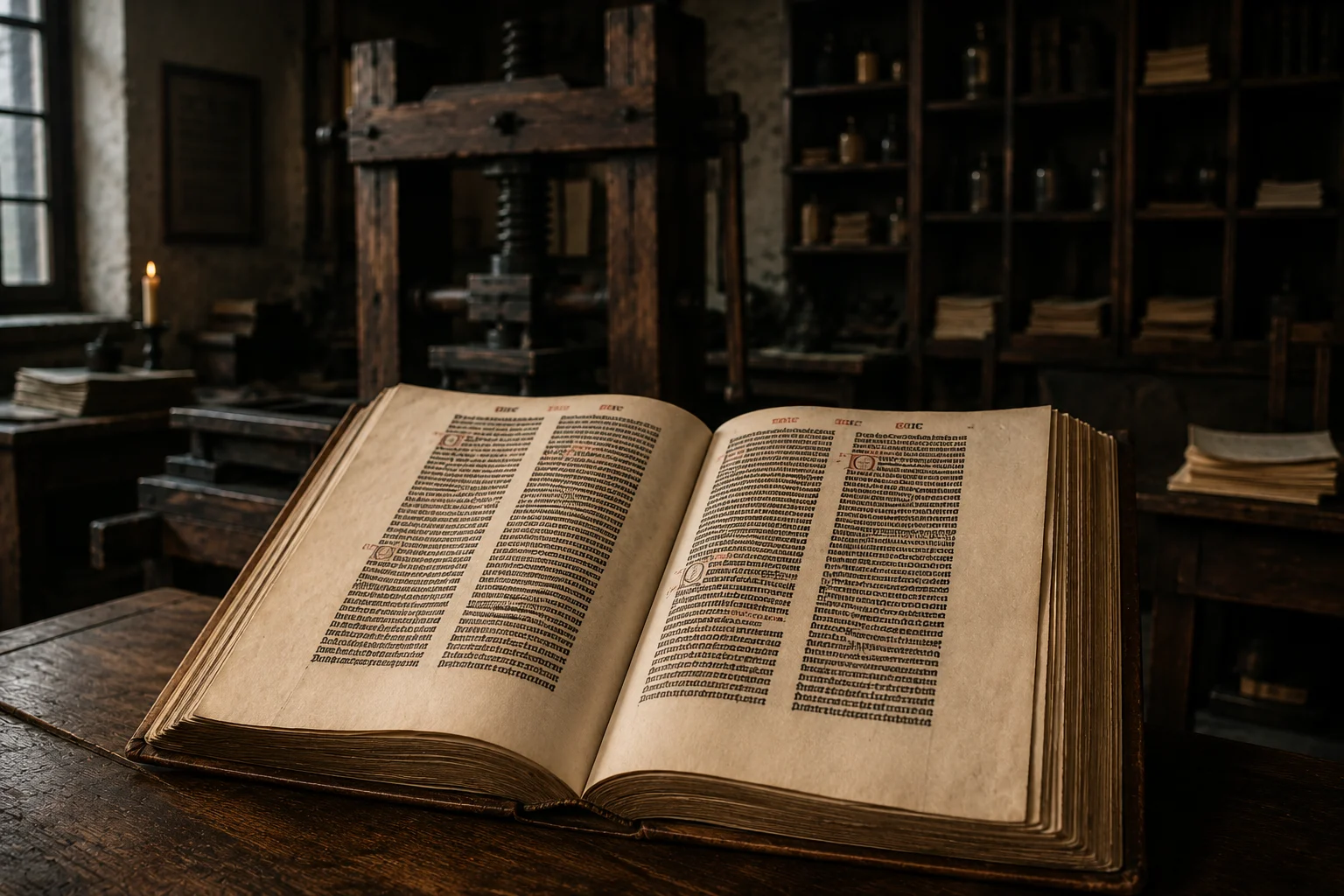
His magnum opus, the “42-line Bible” (named for the number of lines per page), was a massive undertaking. Printed around 1455, it was published in two volumes totaling nearly 1,300 pages. It took his workshop about three to five years to produce roughly 180 copies—a speed that seems slow today but was astonishing at a time when a scribe took a year to copy a single Bible.
9. He Lost His Business Right Before His Masterpiece Was Finished
Gutenberg borrowed a massive sum of money from a wealthy investor named Johann Fust to fund the Bible project. In 1455, right as the Bibles were being completed and ready for sale, Fust sued him for the debt. Fust won the lawsuit, seizing Gutenberg’s printing equipment and half of the newly printed Bibles, effectively cutting the inventor out of the profits.
10. The Bibles Were Designed to Look Handwritten
Gutenberg didn’t want his printed books to look like cheap mechanical reproductions; he wanted them to rival the finest illuminated manuscripts. He left wide margins and blank spaces so that buyers could hire scribes to hand-paint large, colorful initials and intricate red headings (rubrication) after the book was purchased.
11. Only 49 Gutenberg Bibles Survive Today
Of the estimated 180 original copies produced, only 49 are known to exist today, and only 21 of those are perfectly complete. Because of their historical significance, they are among the most valuable books in the world, with a single complete copy valued at over $30 million.
12. We Don’t Know What He Looked Like
Despite being one of history’s most famous figures, there are no surviving contemporary portraits of Johannes Gutenberg. Every statue, painting, or engraving of the man—usually depicting him with a long, flowing beard and a fur hat—was created well after his death and is entirely the product of the artist’s imagination.
13. He Was Exiled Twice
Gutenberg’s life was heavily disrupted by the chaotic politics of the Holy Roman Empire. He was exiled from his hometown of Mainz twice—once in the 1420s due to a clash between the city’s patricians and the trade guilds, and again in 1462 when two rival archbishops went to war over control of the city.

14. He Produced a German Dictionary
While the Bible is his most famous work, scholars believe Gutenberg’s press was used to print the Catholicon in 1460, a massive Latin dictionary and grammar book. Printing reference books proved that the press wasn’t just for holy texts; it was a tool for broad academic education.
15. He Died a “Gentleman of the Court”
Though he lost his primary business and went through periods of severe financial hardship, his later years were relatively comfortable. In 1465, the Archbishop of Mainz recognized his achievements and granted him the title of Hofmann (gentleman of the court). This title came with a generous annual stipend of grain, wine, and clothing, ensuring the aging inventor didn’t die in poverty.