The Misunderstood Marsupial: 15 Fascinating Facts About Koalas
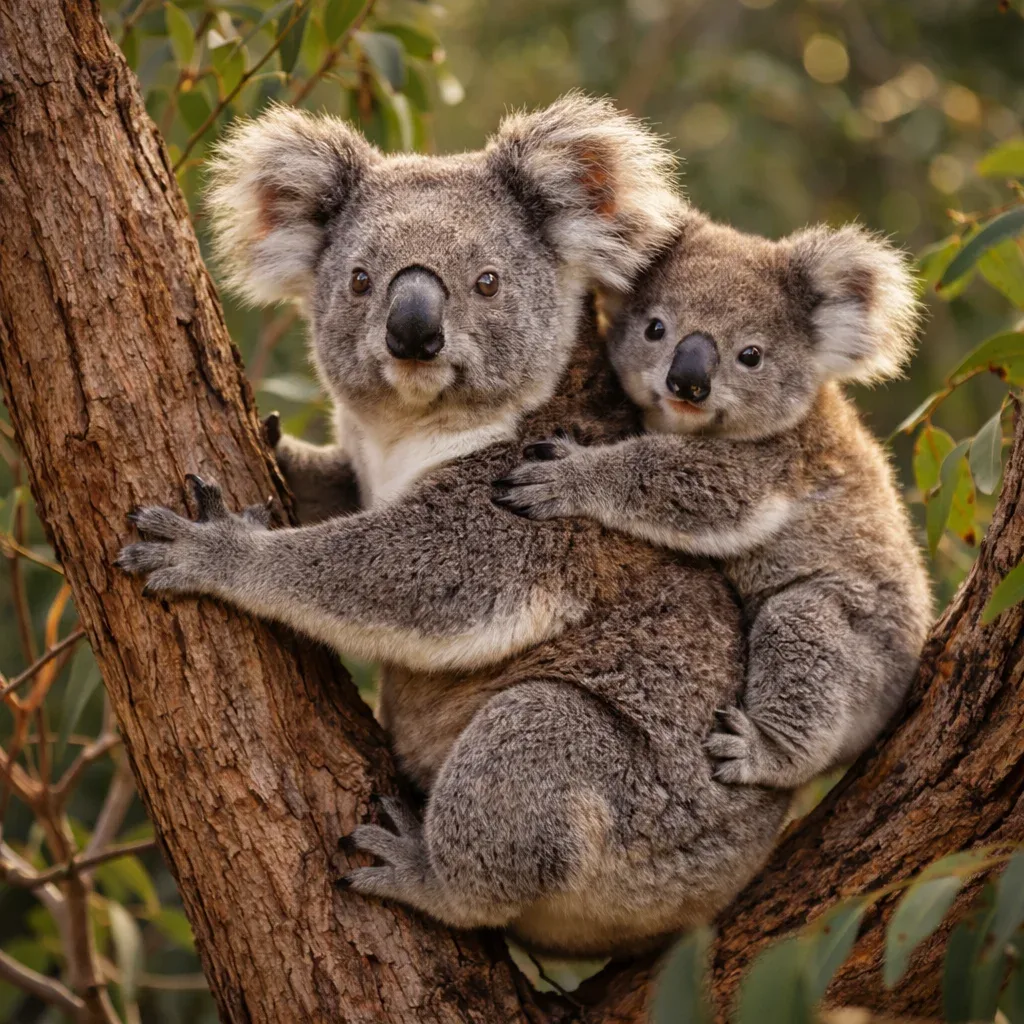
Despite their adorable appearance and widespread reputation as bears, koalas are actually unique marsupials with some of the most extraordinary biological adaptations in the animal kingdom. From surviving on a diet of toxic eucalyptus foliage to possessing human-like fingerprints, these iconic Australian tree-dwellers lead far more fascinating lives than most people realize. Discover the truth behind their extreme sleep schedules, surprising vocal abilities, and ancient prehistoric origins.
1. Koalas Are Marsupials, Not Bears
Despite their common nickname, koalas are not bears at all. They are marsupials belonging to the order Diprotodontia, making them far more closely related to wombats and kangaroos than to grizzly bears. Early European settlers misnamed them "koala bears" simply because of their round ears and bear-like facial features. Like other marsupials, female koalas give birth to underdeveloped young and raise them inside a specialized pouch. Today, they stand as the only surviving members of the family Phascolarctidae.
2. They Possess Human-Like Fingerprints
One of the most astonishing evolutionary features of the koala is its unique set of fingerprints. The friction ridges on a koala's paw pads are virtually indistinguishable from human fingerprints, even when examined under a high-powered electron microscope. Evolutionary biologists view this as a classic example of convergent evolution, where two unrelated species independently develop identical traits to adapt to similar physical tasks. For koalas, these dermal ridges provide the necessary friction to grip slick tree bark and feel the texture of foliage. This uncanny resemblance is so exact that Australian forensic experts once joked about koalas accidentally contaminating crime scenes.
3. Extremely Low Energy Demands Force Massive Sleep Schedules
A typical adult koala sleeps anywhere from 18 to 22 hours every single day. This extreme lifestyle is not a sign of laziness, but rather an essential biological survival strategy. Eucalyptus leaves contain very few calories and nutrients, providing an extremely inefficient energy source for a warm-blooded mammal. To compensate for this massive calorie deficit, koalas lower their metabolic rate and remain immobile for the vast majority of their lives. When they are awake, almost all of their energy is spent feeding or slowly climbing to a new branch.
4. They Eat Foliage That Would Poison Most Other Mammals
Eucalyptus leaves are packed with harsh aromatic oils and dangerous phenolic compounds designed to deter herbivores from eating them. However, koalas possess specialized liver enzymes, including an abundance of cytochrome P450 proteins, that actively break down these deadly chemical toxins. These proteins allow the animal to safely neutralize the poisons before they enter the bloodstream. Additionally, koalas use their keen sense of smell to select specific eucalyptus species and mature leaves that carry lower concentrations of toxins. Out of hundreds of eucalyptus species across Australia, koalas regularly eat from only about thirty.
5. Their Name Derives from an Indigenous Phrase Meaning No Drink
The word "koala" is derived from the Dharug language spoken by the Indigenous Australian people of the Sydney area. Traditional linguistic interpretations suggest the name roughly translates to "no drink" or "does not drink." This name stems from the observation that koalas rarely visit ground water sources to drink liquid directly. Instead, they derive up to 90 percent of their required moisture directly from the water content stored within eucalyptus foliage. However, during severe droughts or extreme heatwaves, koalas will occasionally descend from the trees in search of standing water.
6. Joeys Eat a Special Maternal Substance Called Pap
When a young koala, known as a joey, transitions from milk to a solid diet of eucalyptus leaves, it faces a major biological hurdle. Newborn koalas are born without the necessary gut microflora required to break down toxic and fibrous plant material. To solve this, the mother produces a specialized form of liquid feces called "pap" during the weaning process. The joey feeds directly on this pap for several weeks to inoculate its digestive tract with essential live bacteria. Without this crucial maternal step, young koalas would be entirely incapable of digesting eucalyptus leaves as adults.
7. They Have Opposable Thumbs on Front Paws
To navigate the dizzying heights of the Australian forest canopy, koalas possess specialized front paws featuring two opposable digits. Unlike humans, who have a single thumb, a koala's front paw has two separate thumbs offset from the remaining three fingers. This dual-thumb configuration gives them a powerful, vice-like grip capable of clamping firmly around thick branches and tree trunks. Their hind paws feature a single opposable thumb alongside fused toes used primarily for grooming their dense fur. This unique anatomical adaptation ensures they remain locked onto branches even while sleeping deeply during high winds.
8. Their Pouches Open Backward Toward Their Hind Legs
Unlike the forward-facing pouch of a kangaroo, a female koala's pouch opens backward toward her hind legs. This structural orientation is an evolutionary trait shared with their subterranean relatives, the wombats. For digging wombats, a rear-facing pouch prevents dirt from filling the pocket while excavating burrows. For climbing koalas, the downward opening prevents falling bark, twigs, and leaf debris from entering the pouch while scaling rough tree trunks. A strong muscular sphincter keeps the pouch tightly closed to protect the growing joey inside.
9. Males Produce Deep Motor-Like Bellows
Despite their cute and peaceful appearance, male koalas generate an astonishingly loud, guttural bellow during the breeding season. The sound is often described as a cross between a snoring pig, a roaring lion, and a revving motorcycle engine. To achieve such low-pitched, deep frequencies, male koalas utilize a unique vocal organ located outside the larynx in the soft palate. These extra-laryngeal vocal folds allow a small koala to produce sounds typical of an animal the size of an elephant. These booming calls serve to advertise the male's size to rivals and attract females across dense eucalyptus forests.
10. They Possess One of the Smallest Relative Brain Sizes Among Mammals
The koala holds the distinction of having one of the lowest brain-to-body weight ratios of any mammal, with the brain occupying roughly 0.2 percent of its body weight. Furthermore, their brains are unusually smooth, lacking the complex folds, sulci, and gyri seen in higher intelligent mammals. The brain is so small that it does not even fill the entire cranial cavity, floating instead in a cushioning pool of cerebrospinal fluid. This reduced brain mass is an evolutionary trade-off to conserve precious energy on a low-calorie diet. Because of this simplified brain, koalas rely heavily on rigid instincts; for instance, if given picked eucalyptus leaves on a flat plate, they often fail to recognize them as food.
11. They Hug Cool Tree Trunks to Combat Extreme Heat
During scorching Australian heatwaves, koalas have a clever physical strategy to prevent heatstroke without sweating or panting excessively. Researchers using thermal imaging discovered that koalas actively hug the lower trunks of trees like acacias during hot weather. Tree trunks remain significantly cooler than the surrounding air temperature because trees pull groundwater up from deep beneath the surface. By pressing their bellies firmly against these cool bark surfaces, koalas transfer excess body heat directly into the tree via conduction. This clever behavior allows them to cool down while conserving vital water reserves.
12. Newborns Are the Size of a Jellybean
When a koala joey is born after a brief gestation period of just 35 days, it is amazingly tiny and undeveloped. A newborn joey measures roughly two centimeters in length and weighs less than one gram, making it roughly the size and weight of a single jellybean. At birth, the joey is hairless, blind, and completely earless, yet it possesses well-developed forelimbs with tiny claws. Guided solely by instinct, smell, and tactile cues, the tiny joey crawls unassisted up its mother's belly fur to reach the safety of the pouch. Once inside, it attaches to a teat and remains enclosed for six months before taking its first peek at the outside world.
13. A Widespread Bacterial Disease Threatens Wild Populations
Wild koala populations across Australia are currently facing a devastating health crisis caused by the bacterium Chlamydia. This bacterial infection affects a massive proportion of wild individuals, leading to severe clinical symptoms including painful urinary tract infections, blindness, and reproductive tract damage resulting in permanent infertility. The disease spreads rapidly through sexual contact and maternal transmission during birth. Conservationists and veterinarians are actively developing specialized vaccines and targeted antibiotic treatments to curb the epidemic. Without these interventions, many localized koala populations face imminent risk of extinction.
14. Their Digestion Relies on an Immense Organ Called a Caecum
Digesting fibrous eucalyptus leaves requires a remarkable internal anatomical adaptation known as the caecum. In humans, the appendix is a tiny vestigial remnant of the caecum, but in koalas, it is an enormous organ measuring up to two meters (6.5 feet) in length. This long, blind-ended pouch acts as a natural fermentation chamber inside the koala's abdominal cavity. Millions of symbiotic bacteria inside the caecum break down complex cellulose, lignin, and tough plant fibers that would otherwise be entirely indigestible. This slow fermentation process enables koalas to extract every possible micro-nutrient from their fibrous diet.
15. Ancient Fossil Relatives Were Much Larger Than Modern Koalas
Millions of years ago during the Pleistocene epoch, Australia was home to giant prehistoric megafauna, including giant ancestors of the modern koala. Paleontologists have uncovered fossilized remains of extinct species such as Phascolarctos stirtoni, often referred to as the giant koala. This prehistoric marsupial shared a similar arboreal lifestyle and tree-dwelling anatomy, but it weighed over 30 kilograms (66 pounds), making it roughly one-third larger than the largest living koala today. These giant koalas coexisted with modern koala species before mysteriously dying out around 50,000 years ago during a period of widespread climate change and megafaunal extinction.
Sources & References
This AI-assisted post was rigorously curated and fact-checked for accuracy by:
 Martin Roháček
How fun was this article? 🤔
Tap a star to rate it
🧠 Quiz: How closely were you paying attention?
10 questions — all answers are in the article above!
Enjoyed these facts? There's more! 💌
Fresh fun facts in your inbox. No spam, ever.