The Unyielding Champion: 15 Fascinating Facts About Niki Lauda
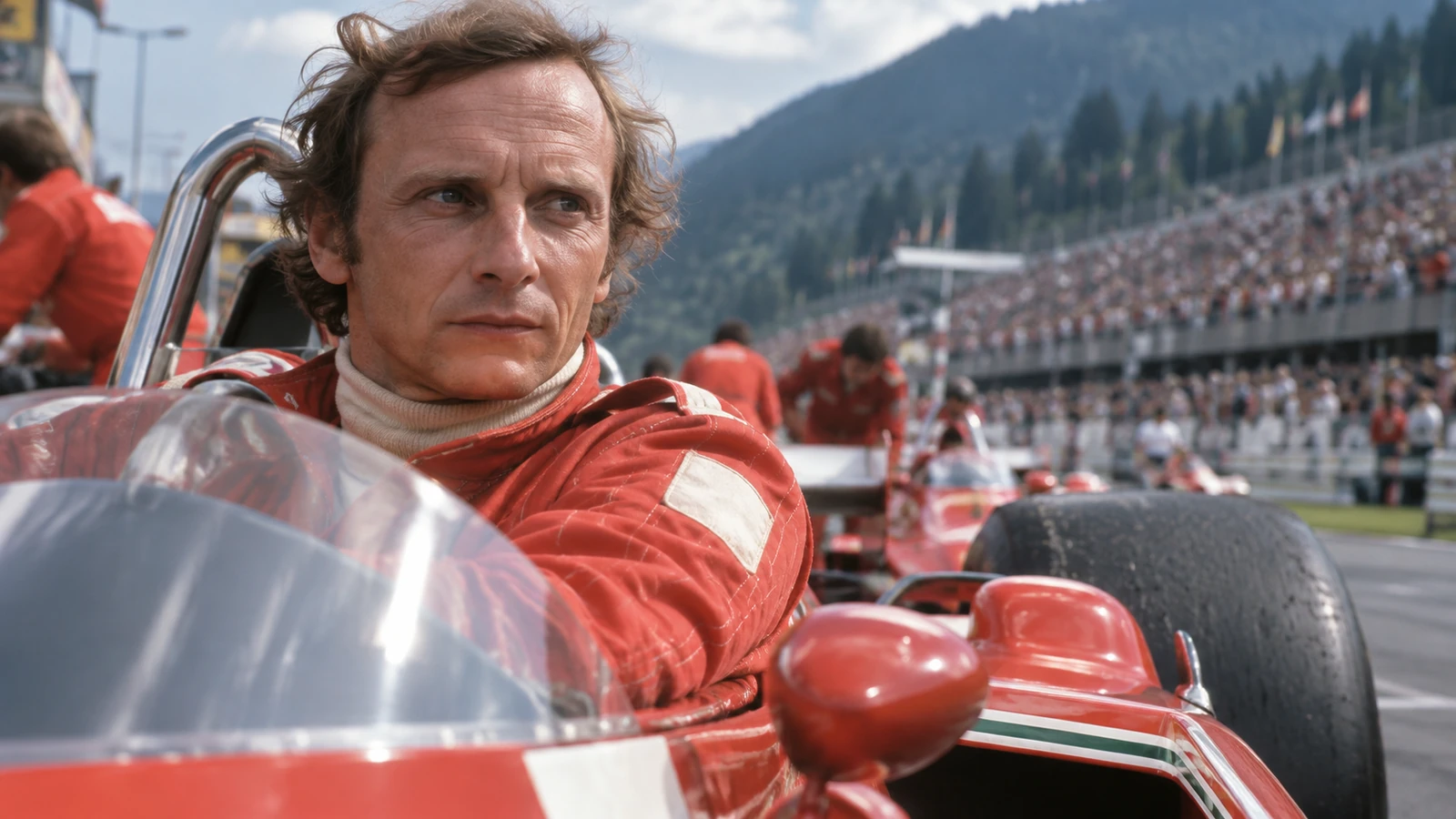
Niki Lauda remains one of the most uncompromising, resilient, and analytical figures in motorsport history. Beyond his three Formula One World Championships, the Austrian legend lived a life defined by extraordinary pragmatism and fierce determination. From surviving a horrific, fiery crash at the Nürburgring to personally confronting aviation executives after a tragic plane crash, Lauda routinely defied expectations both on and off the track. Here are 15 fascinating facts about the icon who traded trophies for car washes and reshaped modern racing.
1. He Took Out a Massive Bank Loan to Buy His Way Into Formula One
To kickstart his top-tier racing career, Niki Lauda took out a massive bank loan to buy a driver's seat at March Engineering in 1971. His wealthy Austrian family strongly opposed his racing ambitions and refused to support him financially. Undeterred by their resistance, Lauda took out a life insurance policy as collateral to secure the funds from a Viennese bank. This immense financial gamble placed tremendous pressure on the young driver to perform immediately. Had his early Formula One career stalled, he would have faced total bankruptcy. The desperate gamble paid off, eventually securing him a drive with BRM and later Ferrari.
2. He Embraced the Unflattering Nickname "The Rat"
Early in his career, British motorsport journalists dubbed Lauda "The Rat" due to his prominent front teeth and compact facial structure. While sponsor executives originally shunned him over his unpolished appearance, Lauda refused to let aesthetics dictate his identity. Rather than taking offense, he fully embraced the moniker and leaned into his reputation as a clinical, ruthless operator on the track. Over time, fans and colleagues came to view the nickname not as an insult, but as a badge of sharp tenacity. Lauda let his supreme engineering intelligence and precise driving style do the talking. Eventually, the mocking moniker became one of the most respected handles in Formula One history.
3. A Priest Administering His Last Rites Infuriated Him Into Surviving
During the 1976 German Grand Prix at the notoriously dangerous Nürburgring, Lauda suffered a horrific high-speed crash that engulfed his Ferrari in flames. Trapped in the burning wreckage, he inhaled scorching toxic gases and suffered severe third-degree burns across his face and scalp. While fighting for his life in a hospital room, a Catholic priest was brought in to administer the last rites. Hearing the priest pray for his soul infuriated Lauda, sparking an intense rage that motivated him to survive. He later credited that overwhelming anger with giving him the mental fortitude to keep fighting through the agony.
4. He Returned to Racing Just 42 Days After Burning Nearly to Death
In one of the most incredible comebacks in athletic history, Lauda returned to the cockpit just 42 days after his fiery accident. He lined up for the Italian Grand Prix at Monza with his severe wounds still unhealed and bleeding into his helmet padding. To keep him in the race, doctors had to fashion custom bandages and reconstruct temporary eyelids so he could blink. Despite excruciating physical agony and intense fear, Lauda finished in a remarkable fourth place. His astonishing resilience stunned the racing world and solidified his legacy as a warrior of the sport.
5. He Traded His Racing Trophies for Free Car Washes
Unlike many celebrated athletes who meticulously preserve their silverware, Lauda had no romantic sentiment for racing trophies. He viewed shiny metal cups as useless dust-gatherers that took up unnecessary space in his home. To get practical value out of his victories, he struck a deal with a local garage owner in Austria. Lauda handed over his official Formula One trophies in exchange for lifetime free car washes for his personal road cars. Years later, when the garage owner passed away, Lauda's trophies were retrieved and placed on display in a museum.
6. He Withdrew From a Championship-Deciding Race Due to Safety Concerns
The legendary 1976 World Championship came down to the final race of the season at the Fuji Speedway in Japan under torrential rain. Massive sheets of water covered the track, creating near-zero visibility and extremely hazardous conditions for the drivers. After completing just two laps, Lauda voluntarily drove into the pit lane and retired his car, declaring his life was worth more than a title. His rival James Hunt finished third in the treacherous conditions, snatching the championship by a single point. Lauda never regretted the decision, insisting that self-preservation far outweighed athletic glory.
7. He Refused Reconstructive Plastic Surgery on His Ear
The intense heat of the 1976 Nürburgring fire severely destroyed most of Lauda's right ear. Plastic surgeons later offered to perform extensive reconstructive procedures to rebuild the damaged ear tissue. Lauda, blunt-spoken as ever, firmly rejected the cosmetic surgeries after asking a simple practical question. Upon learning that the reconstructive operations would not actually improve his hearing, he saw no point in enduring unnecessary medical pain. He proudly wore his scars for the rest of his life as an unbothered badge of survival.
8. He Walked Away From Racing Mid-Practice to Start an Airline
By 1979, Lauda had grown deeply disillusioned with the endless cycle of professional motor racing. During a practice session for the Canadian Grand Prix in Montreal, he parked his Brabham car in the pits and walked out on his team. He abruptly announced his immediate retirement, famously stating that he was tired of "driving around in circles." Without looking back, he immediately shifted his focus toward building his commercial aviation empire. It would take a record-breaking contract offer from McLaren three years later to coax him back into Formula One.
9. He Was a Licensed Commercial Pilot Who Flew His Own Airline's Jets
Lauda's passion for aviation extended far beyond boardroom management; he was a fully licensed commercial airline captain. Over his lifetime, he founded three separate air carriers: Lauda Air, Niki, and Laudamotion. He regularly piloted scheduled commercial flights, flying passenger jets like the Boeing 767 across long-haul routes. Surprised travelers frequently heard their company chairman personally welcome them over the aircraft intercom system. Lauda maintained his rigorous pilot licensing requirements throughout his executive tenure in motorsport and business.
10. He Personally Forced Boeing to Admit Fault in a Fatal Plane Crash
When Lauda Air Flight 004 crashed in Thailand in 1991, killing all 223 people aboard, Lauda refused to let official bureaucracy obscure the truth. He flew directly to the crash site in the jungle to personally help investigate the wreckage alongside aviation experts. When evidence suggested a mechanical fault caused an in-flight thrust reverser deployment, Boeing initially resisted taking responsibility. Lauda flew to Boeing's headquarters and publicly challenged their executives to fly the scenario in a flight simulator themselves. His relentless pressure forced Boeing to admit the defect and issue critical safety modifications worldwide.
11. His Famous Red Cap Was Born Out of Necessity and Became a Million-Dollar Billboard
Following his 1976 accident, Lauda began wearing a bright red baseball cap to keep surgical bandages in place and cover his extensive scalp scars. What began as a practical medical necessity quickly turned into one of the most valuable marketing spaces in sports. Corporate sponsors recognized the extreme visibility of the cap during televised interviews and press conferences. Companies like Parmalat and Novomatic paid millions of dollars over the decades to feature their logos on the front of his headwear. The red cap became Lauda's permanent personal trademark until his death in 2019.
12. He Received Life-Saving Kidney Transplants From His Brother and Wife
Lauda faced severe health challenges decades after his racing career ended, primarily due to organ damage stemming from his 1976 crash. In 1997, his kidneys began failing, prompting his brother Florian to step forward and donate one of his kidneys. When that transplant began to fail eight years later, Lauda required another life-saving organ donation. His future wife, Birgit Wetzinger, who was a flight attendant for his airline at the time, successfully donated her kidney to him in 2005. The second transplant was a complete success, allowing Lauda to live another vibrant fourteen years.
13. He Remains the Only Driver to Win Championships With Both Ferrari and McLaren
Lauda holds the unique distinction of being the only driver in Formula One history to win World Championships for both Ferrari and McLaren. He captured his first two titles with Ferrari in 1975 and 1977, establishing the Italian team's dominance in the mid-1970s. After coming out of retirement, he secured his third World Championship with McLaren in 1984 by half a point over teammate Alain Prost. Winning titles with these two fierce historical rivals solidifies Lauda's status as one of motorsport's greatest modern legends. No other driver has managed to replicate this dual-team championship milestone.
14. He Personally Convinced Lewis Hamilton to Join Mercedes
As non-executive chairman of the Mercedes F1 team in 2012, Lauda played a pivotal role in engineering one of the greatest team moves in sports history. He set out to convince Lewis Hamilton to leave McLaren, a winning team, to join the nascent Mercedes project. Lauda spent hours talking with Hamilton, convincing him of Mercedes' long-term engineering vision and engine capabilities. His persuasive pitch proved decisive, leading Hamilton to sign with Mercedes for the 2013 season. This move triggered an unprecedented era of dominance, yielding seven consecutive driver championships for Mercedes.
15. He Approved of the Movie Rush but Clarified His Rivalry With James Hunt
The acclaimed 2013 Ron Howard film Rush dramatized the intense 1976 championship battle between Lauda and British rival James Hunt. Lauda openly praised the movie for its impressive authenticity and commended actor Daniel Brühl's spot-on portrayal of his mannerisms. However, Lauda did clarify one major historical exaggeration for the audience. While the movie portrayed their relationship as an icy, aggressive rivalry, the two drivers were actually close personal friends off the track. They frequently shared apartments during their early racing years and harbored deep mutual respect for one another.
Sources & References
This AI-assisted post was rigorously curated and fact-checked for accuracy by:
 Martin Roháček
How fun was this article? 🤔
Tap a star to rate it
🧠 Quiz: How closely were you paying attention?
10 questions — all answers are in the article above!
Enjoyed these facts? There's more! 💌
Fresh fun facts in your inbox. No spam, ever.