
The High-Flying Sport: 15 Fascinating Facts About Olympic Snowboarding
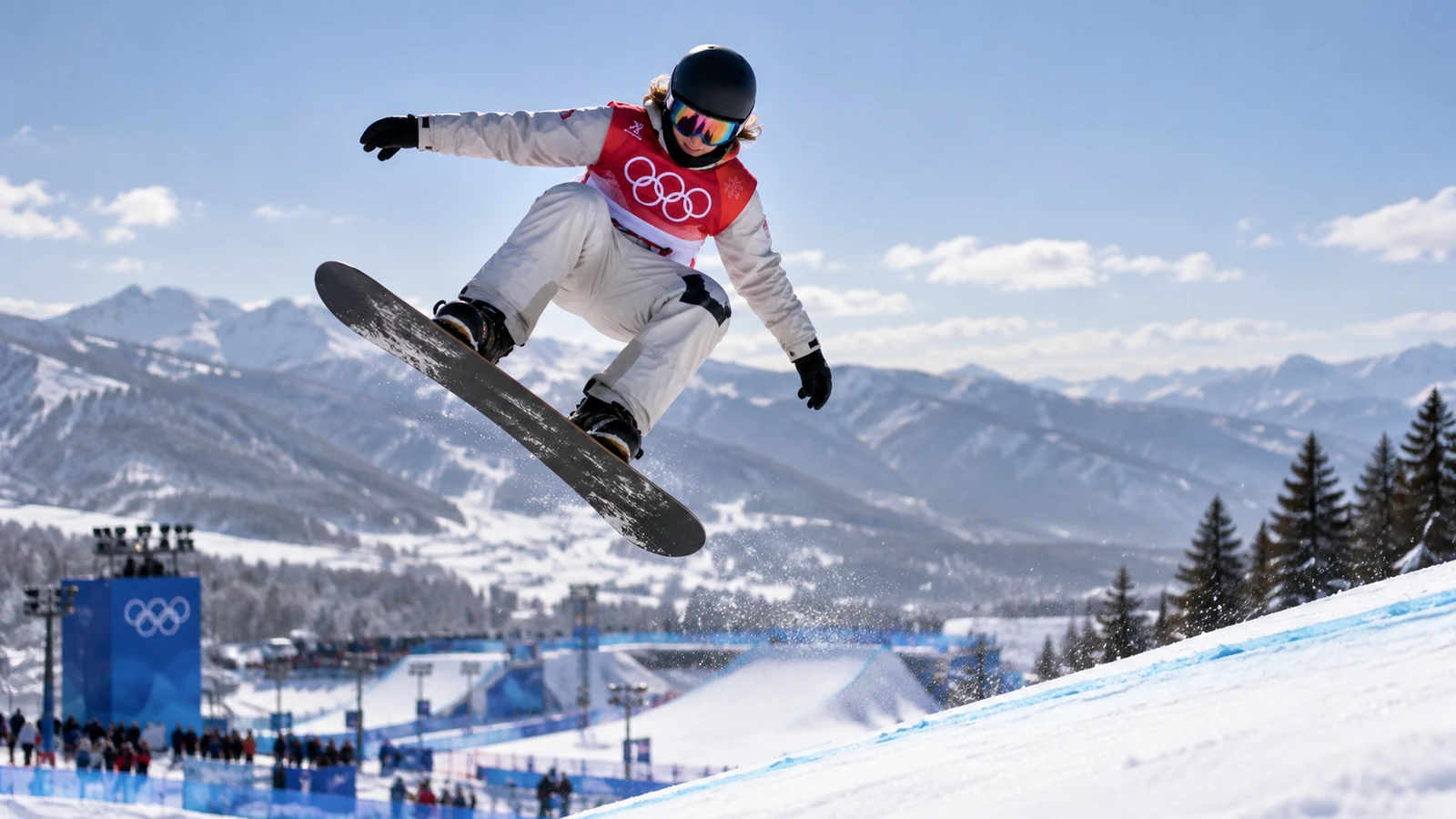
From a backyard Christmas novelty in Michigan to a multi-billion dollar Winter Olympic powerhouse, snowboarding has completely revolutionized modern action sports. The discipline made its official Olympic debut at the 1998 Nagano Games and has since produced iconic gold medalists, hair-raising controversies, and jaw-dropping aerial maneuvers. Behind the massive jumps and polished broadcasts lies a rich culture deeply rooted in skateboarding, surfing, and rebellious mountain subculture. Discover the secret training grounds, food cravings, and historic comebacks that define Olympic snowboarding.
1. The First Olympic Champion Almost Lost His Gold Over Cannabis
When snowboarding made its official debut at the 1998 Nagano Winter Games, Canadian rider Ross Rebagliati etched his name in history by winning the inaugural men's giant slalom gold medal. However, the victory quickly devolved into chaos when Rebagliati tested positive for small amounts of marijuana during a routine drug screen. International Olympic Committee officials initially stripped him of his medal, sparking worldwide headlines and intense public debate. Rebagliati maintained that the positive test resulted from second-hand smoke exposure at a send-off party in Whistler. Fortunately for the Canadian, cannabis was not actually on the Olympic Committee's explicitly banned substance list for snowboarding at the time. After an urgent legal appeal to the Court of Arbitration for Sport, his gold medal was officially restored just days later.
2. Lindsey Jacobellis Lost a Guaranteed Gold by Showing Off
At the 2006 Torino Winter Games, American snowboarder Lindsey Jacobellis held a massive, comfortable lead in the women's snowboard cross final. With the gold medal virtually assured, she decided to add some flair to her victory by performing an unnecessary method grab on the final jump. Tragically, she caught an edge upon landing, fell hard onto the snow, and watched helplessly as Switzerland's Tanja Frieden slid past her to claim gold. The heartbreaking mistake became one of the most famous blunders in Winter Olympic history, following Jacobellis for over a decade. Rather than letting the blunder define her career, Jacobellis persevered through four subsequent Olympic appearances without a solo podium. In a storybook twist of fate, she finally captured her individual gold medal at the 2022 Beijing Games, 16 years after her infamous fall.
3. Shaun White Built a Secret Private Halfpipe in the Wilderness
To prepare for the 2010 Vancouver Winter Games, American superstar Shaun White took extreme measures to keep his newest tricks secret from competitors. Sponsored by Red Bull, a custom $500,000 halfpipe was constructed high in the backwoods of Silverton, Colorado, accessible strictly by helicopter. Deep in the snowy wilderness, White spent weeks repeatedly practicing dangerous, complex tricks away from prying eyes and rival scouts. It was on this secret mountain wall that he perfected the revolutionary "Double McTwist 1260," a double cork flip with three and a half rotations. When White debuted the trick in Vancouver, he secured the gold medal and cemented his status as a legendary figure in action sports. The secretive project highlighted just how far elite athletes will go to secure a tactical advantage on the world stage.
4. Chloe Kim Live-Tweeted About Her Food Cravings During the Finals
Teenage phenom Chloe Kim captured the world's attention at the 2018 PyeongChang Winter Games with her astonishing high-flying halfpipe tricks. What made her performance even more endearing to fans worldwide was her completely casual social media behavior between competition runs. While leading the final round, Kim openly tweeted to her followers that she was upset about not finishing her morning breakfast burrito. Minutes before making her gold medal-winning run, she posted another viral update expressing a sudden craving for ice cream and churros. Her relatable honesty proved that even elite world-class athletes deal with ordinary distractions like being "hangry" under pressure. Kim went on to score a near-perfect 98.25 on her final run, walking away with both a gold medal and a legendary viral moment.
5. The Term "Goofy" Stance Originates from a Classic Disney Cartoon
In board sports like snowboarding, skateboarding, and surfing, riders are categorized by which foot leads forward on the board. A rider standing left foot forward is described as having a "regular" stance, whereas leading with the right foot is termed a "goofy" stance. This unique terminology traces its roots back to a 1937 Disney animated short film titled Hawaiian Holiday. In the cartoon, the lovable character Goofy attempts to learn how to surf, catching waves while standing with his right foot forward. Surfers in the mid-20th century adopted the moniker to describe anyone riding in that non-traditional orientation. When modern snowboarding emerged decades later, the snow sport inherited the playful surfing term to classify millions of right-foot-forward riders.
6. Snowboarding Started as a Simple Backyard Toy Called the Snurfer
Long before snowboarding achieved Olympic recognition, the entire sport traces back to a humble Christmas invention in 1965. Michigan engineer Sherman Poppen wanted to create a fun winter toy for his young daughters to play with on the local sledding hills. He bolted two snow skis together and tied a rope to the nose for balance, allowing riders to steer while standing upright. Poppen dubbed his creation the "Snurfer"—a clever portmanteau blending the words "snow" and "surfer." The backyard device became an instant commercial hit, selling over a million units across the United States throughout the late 1960s and 1970s. Pioneer builders like Jake Burton Carpenter later refined the Snurfer's design by adding foot bindings, ultimately birthing the modern snowboard.
7. Amplitude is a Crucial Scoring Metric in Halfpipe Competitions
Olympic halfpipe judging relies on a complex scoring system that evaluates execution, trick difficulty, variety, and overall progression. However, one of the most vital criteria that can make or break an athlete's score is a concept known as "amplitude." Amplitude refers to the height a rider achieves above the coping rim of the halfpipe wall during each jump. Judges award high marks to athletes who launch 15 to 20 feet into the air, as height requires tremendous speed, strength, and control. Conversely, if a rider executes highly technical spins while staying low inside the pipe, judges will heavily deduct points. Maintaining exceptional amplitude throughout an entire six-trick run is considered one of the hardest physical feats in the sport.
8. Snowboard Cross Earned the Fitting Nickname "NASCAR on Snow"
Unlike judged snowboarding events that focus on individual style, Snowboard Cross is a chaotic, high-speed head-to-head race. Four to six competitors launch simultaneously down a narrow, winding course filled with banked turns, rollers, gaps, and steep drops. Because athletes race side-by-side at speeds exceeding 40 miles per hour, physical contact and dramatic pileups occur regularly. This chaotic environment earned the event the popular nickname "NASCAR on snow" among winter sports commentators and fans. Strategic drafting, split-second course positioning, and staying on one's feet often matter far more than raw individual speed. The high-stakes event has delivered some of the most unpredictable and thrilling finishes in Winter Olympic history.
9. Modern Olympic Superpipes Feature Massive 22-Foot Tall Walls
When snowboarding made its Olympic debut in 1998, halfpipe walls measured a modest 12 feet high, limiting how high riders could launch. To allow athletes to perform increasingly complex multi-rotation flips, venue designers steadily raised the height of competition pipes. Today, official Olympic halfpipe events utilize a specialized "Superpipe" structure with sheer vertical walls standing 22 feet tall. The massive height and precisely carved transition walls allow athletes to build incredible momentum as they pump through the bottom. Generating that explosive speed enables top riders to soar up to 25 feet above the rim, providing ample airtime for triple corks. Maintaining such massive ice structures requires specialized, multimillion-dollar groomers called Zaugg pipe cutters.
10. Big Air Joined the Olympic Roster to Focus on a Single Massive Jump
The International Olympic Committee expanded the winter program at the 2018 PyeongChang Games by officially introducing Big Air snowboarding. Unlike Slopestyle or Halfpipe, which require athletes to navigate continuous series of features, Big Air isolates the sport to one massive jump. Competitors drop down a towering artificial ramp, launch off a single kicker, and perform their absolute hardest, highest-scoring trick. Judges score each attempt based on height, distance, trick difficulty, control, and clean landing execution. This focused format allows riders to throw their most extreme multi-axis spins without conserving energy for subsequent terrain features. The result is a high-octane spectator event that showcases the absolute outer limits of human aerial acrobatics.
11. Snowboarders Depend on Music to Maintain Their Competition Rhythm
If you pay close attention to Olympic riders in the start gate, you will notice nearly all of them wearing earbuds under their helmets. While team sports rely on constant verbal communication, competitive snowboarding is an intensely individual mental battle. Athletes curate specific playlists—ranging from heavy metal and hip-hop to lo-fi beats—to lock into a state of optimal athletic focus. Music helps suppress nerve-wracking crowd noise and prevents overthinking right before a high-pressure Olympic run. Furthermore, many elite riders time the rhythm of their maneuvers, grabs, and spins to match the tempo of their favorite tracks. For many gold medalists, a custom soundtrack is just as essential as their board and bindings.
12. Snowboard Boots are Specifically Engineered for Soft Flexibility
Although snowboards and alpine skis both slide across frozen mountain terrain, their accompanying footwear could not be more different. Ski boots consist of rigid plastic shells designed to lock the ankle into a firm forward-leaning position for maximum edge control. In contrast, snowboard boots are constructed from pliable, soft materials that allow fluid ankle movement and natural lateral flexion. This flexibility is essential for riders to shift weight seamlessly, absorb heavy landings, and perform style grabs in mid-air. Specialized inner liners and quick-lacing harness systems provide heel hold without compromising the boot's comfortable, flexible feel. This fundamental design difference reflects how snowboarding emphasizes fluid body expression compared to rigid ski mechanics.
13. Snowboarding Was Banned from Most Major Ski Resorts in the 1980s
It is difficult to imagine modern winter resorts without snowboards, but during the 1980s, the sport faced overwhelming institutional resistance. Resort management across North America and Europe outright banned snowboarders from loading chairlifts, viewing them as reckless delinquents. Traditional alpine skiers complained that riders ruined groomed snow, caused safety hazards on trails, and exhibited disruptive mountain behavior. Pioneers like Jake Burton tirelessly campaigned to convince resort operators that snowboards were legitimate sports equipment. By the early 1990s, declining ski ticket sales forced resorts to reconsider, slowly opening their slopes to eager young riders. Today, virtually every major ski area welcomes snowboarders, featuring custom terrain parks and halfpipes built specifically for them.
14. Max Parrot Won Olympic Gold Just Three Years After Beating Cancer
Canadian snowboarder Max Parrot delivered one of the most inspirational stories in modern Olympic history at the 2022 Beijing Winter Games. In December 2018, just months after winning a silver medal at the PyeongChang Games, Parrot was diagnosed with Hodgkin's lymphoma. He endured twelve rigorous rounds of chemotherapy over six agonizing months before officially being declared cancer-free in mid-2019. Rebuilding his muscular strength and stamina from scratch, Parrot miraculously returned to high-level competition within months of finishing treatment. At the 2022 Games, he executed a flawless slopestyle run filled with technical triple corks to secure the gold medal. His emotional victory stood as a testament to extraordinary human resilience, mental fortitude, and athletic determination.
15. The Famous McTwist Trick Originated on a Skateboard
Many signature maneuvers seen in Olympic snowboarding trace their direct ancestry to 1980s skateboarding ramp tricks. The iconic "McTwist"—an inverted 540-degree rotational flip with a backside grab—was invented in 1984 by legendary skateboarder Mike McGill. McGill first performed the groundbreaking aerial move on a wooden vert ramp during a competition in Sweden, astonishing the skate community. As early snowboarders began adapting skateboard maneuvers to snow-covered terrain, they adopted both the technique and its original name. Over time, Olympic snow athletes evolved the trick into double and triple cork variants that reach staggering heights. Giving credit to skateboard innovators remains a proud tradition that keeps snowboarding connected to its counterculture roots.
Sources & References
This AI-assisted post was rigorously curated and fact-checked for accuracy by:
 Martin Roháček
How fun was this article? 🤔
Tap a star to rate it
🧠 Quiz: How closely were you paying attention?
10 questions — all answers are in the article above!
Enjoyed these facts? There's more! 💌
Fresh fun facts in your inbox. No spam, ever.