The Purple Genius: 15 Fascinating Facts About Prince
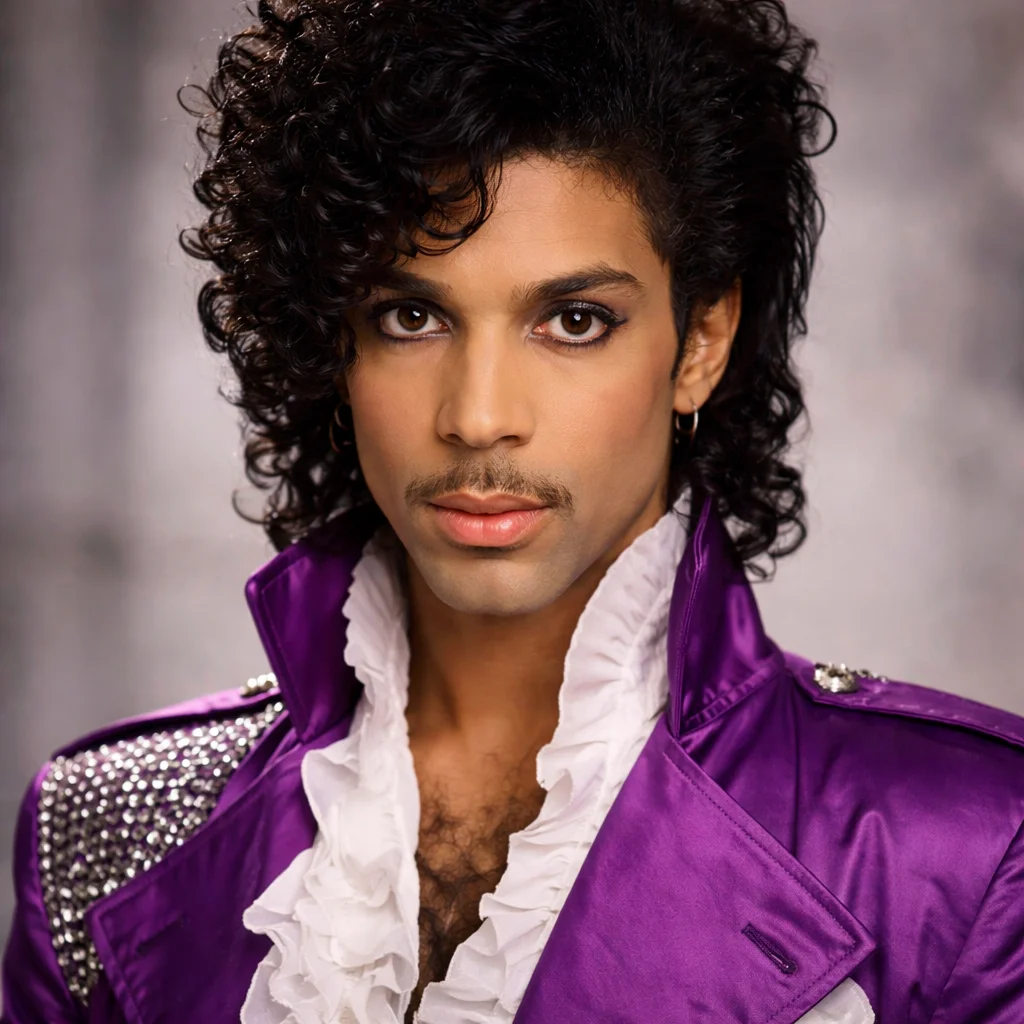
Prince Rogers Nelson was one of the most enigmatic, immensely talented, and revolutionary figures in modern music history. From playing every single instrument on his early albums to staging legendary battles with record labels, the Minneapolis icon redefined pop stardom on his own strict terms. Behind the lace outfits, high heels, and iconic purple aesthetic was a hyper-prolific musical genius who wrote hits for other artists, guarded a vault of unreleased tracks, and shattered industry norms. Here are 15 fascinating facts about the life, music, and eccentric brilliance of Prince.
1. He Played 27 Instruments on His Debut Album
When nineteen-year-old Prince Rogers Nelson recorded his debut album, For You, in 1978, he refused to hire a traditional studio backing band. Instead, the teenage prodigy spent months obsessively tracking every sound himself. According to the album sleeve notes, Prince played 27 different musical instruments across the tracklist, ranging from electric guitars and grand piano to acoustic drums, synth bass, and various percussion items. Warner Bros. executives were initially skeptical of granting complete creative control to a newcomer, but Prince proved his unmatched technical mastery. This early declaration of independence set the template for his entire legendary career.
2. He Secretly Wrote "Manic Monday" Under a Pseudonym
In 1986, pop group The Bangles scored one of their biggest hits with the catchy track "Manic Monday." Few fans realized at the time that the song was actually penned by Prince under the pseudonym "Christopher." He originally wrote the track for his side project, Apollonia 6, but ultimately decided to offer it to Susannah Hoffs and her bandmates. In an amusing twist of charts history, "Manic Monday" climbed all the way to number two on the Billboard Hot 100. The only song keeping it from the top spot was Prince's own megahit, "Kiss."
3. Prince Was His Actual Birth Name
Many casual listeners assumed that "Prince" was an elaborate stage name designed to evoke royalty and mystery. In reality, Prince Rogers Nelson was given the name on his birth certificate when he was born in Minneapolis in 1958. His father, John L. Nelson, was a jazz pianist who performed under the moniker Prince Rogers as part of the Prince Rogers Trio. The elder Nelson explained that he gave his son the name because he wanted him to achieve everything his father had dreamed of doing. Prince certainly lived up to his father's ambitious namesake and elevated the family legacy to global heights.
4. He Was a Devout Jehovah's Witness Who Went Door-to-Door
In 2001, following the death of his mother and after years of spiritual conversations with his friend Larry Graham of Sly and the Family Stone, Prince became a Jehovah’s Witness. His conversion transformed not only his personal life but also his public routine and stage antics. The global superstar began attending meetings at local Kingdom Halls in Minnesota and actively participated in door-to-door field ministry. Surprised suburban homeowners frequently opened their doors to find one of the world's most famous musicians standing on their porch with a Bible. Prince took his faith so seriously that he even removed explicit songs from his live concert setlists.
5. "Darling Nikki" Sparked the Parental Advisory Sticker
The ubiquitous "Parental Advisory: Explicit Content" sticker found on music albums owes its existence directly to a song on Prince's 1984 album Purple Rain. Tipper Gore, wife of then-Senator Al Gore, purchased the album for her 11-year-old daughter and was shocked by the explicit lyrics of "Darling Nikki." Outraged by the sexual references, Gore co-founded the Parents Music Resource Center (PMRC) in 1985 to lobby for a standardized rating system for recorded music. The PMRC drafted a list of provocative songs dubbed the "Filthy Fifteen," with "Darling Nikki" sitting right at the very top. Their Senate hearings led record labels to adopt the iconic black-and-white warning sticker.
6. He Banned the Kardashians from His Cameo on New Girl
When Prince expressed interest in guest-starring on the hit sitcom New Girl in 2014, showrunners were thrilled to build an entire episode around a party at his home. However, the pop icon maintained strict control over every detail, including the guest list for the filmed party scene. Script writers had initially arranged for Khloé Kardashian and Kris Jenner to film cameo appearances at the fictional bash. Upon arriving on set and learning of their inclusion, Prince reportedly insisted that the reality stars be removed immediately. Production staff had to scramble to delete their scenes and burn any physical call sheets referencing the Kardashians before Prince stepped in front of the camera.
7. His Paisley Park Vault Contains Thousands of Unreleased Songs
Deep beneath Prince's Paisley Park complex in Chanhassen, Minnesota, sits a climate-controlled, steel-door security vault that became legendary in the music industry. Because Prince was an extraordinarily prolific songwriter who recorded daily, he routinely stashed thousands of hour-long studio sessions, full completed albums, and unreleased concert footage inside. He frequently locked away master tapes simply because he had already moved on to his next creative phase. Following his death in 2016, archivists had to drill through the heavy vault door to catalog the massive trove. The estate continues to release unreleased studio projects from this seemingly bottomless archive.
8. Pantone Created an Official Custom Color for Him
Prince's signature color was so integral to his artistic identity that the official authority on color created a standardized shade just for him. In 2017, the Pantone Color Institute partnered with Prince's estate to create "Love Symbol #2," a custom purple hue inspired by his custom-made Yamaha piano. The deep purple shade honors the icon's visual aesthetics, which he famously established during his Purple Rain era. Pantone noted that the color served as a tribute to Prince's distinct contribution to music, art, fashion, and pop culture. Today, the shade stands as a permanent monument to his artistic footprint.
9. He Performed in a Real Downpour at the Super Bowl
During the halftime show of Super Bowl XLI in 2007, Prince delivered what is widely considered the greatest live television performance of all time. Just hours before kickoff in Miami, a torrential rainstorm hit the open-air stadium, creating severe safety concerns regarding wet electrical equipment. When production staff warned Prince about the downpour, he famously asked them if they could "make it rain harder." Stepping onto a slippery stage shaped like his unpronounceable symbol, Prince effortlessly ripped through guitar solos and belted out "Purple Rain" while water poured from the sky. The literal downpour turned his performance into an unforgettable pop culture spectacle.
10. He Changed His Name to an Unpronounceable Symbol
In 1993, Prince entered a bitter contract dispute with his record label, Warner Bros., over ownership of his master recordings and release schedules. Feeling enslaved by the corporate contract, he dropped his birth name and adopted a combination of the male and female astrological symbols known as the "Love Symbol." Because the graphic had no phonetic pronunciation, media outlets and fans were forced to refer to him as "The Artist Formerly Known as Prince." To further dramatize his frustration, he frequently appeared in public with the word "Slave" written in marker across his cheek. He reverted back to using his birth name in 2000 after his contract expired.
11. "Nothing Compares 2 U" Was Originally Written for a Side Project
The emotional power ballad "Nothing Compares 2 U" became a massive global hit in 1990 when Irish singer Sinéad O'Connor released her iconic cover. However, Prince originally wrote and recorded the song five years earlier in 1985 for his funk side project, The Family. The original version was tucked away on their self-titled album and received minimal commercial attention. After O'Connor's heart-wrenching rendition topped charts around the world, Prince began performing the song live in his own concerts. He later released live and duet versions, reclaiming ownership of one of the greatest heartbreak songs ever written.
12. He Stood 5 Feet 2 Inches Tall and Wore Custom Heels
Despite his colossal stage presence and larger-than-life persona, Prince was physically diminutive, standing just 5 feet 2 inches tall. To enhance his presence and command attention on stage, he famously wore custom high-heeled boots almost exclusively throughout his life. His wardrobe featured hundreds of tailored platform boots and stacked heels designed to match his elaborate stage outfits. Prince even played basketball, danced intensely, and performed acrobatic stage jumps while wearing three-inch heels. His striking style proved that physical height had nothing to do with commanding an arena.
13. He Wrote His First Song at Age Seven
Prince displayed extraordinary musical talent at an astonishingly young age, picking up instruments without formal lessons. He wrote his very first song at just seven years old on his father's piano in Minneapolis. Titled "Funk Machine," the instrumental piece demonstrated an early intuitive grasp of rhythm and groove that surprised his family. By the time he reached high school, he had already mastered guitar, bass, keyboards, and drums, forming his first local band, Grand Central. That early composition foreshadowed a lifetime of relentless musical innovation.
14. He Recorded for Days Straight Without Sleeping
Prince was notorious for maintaining a grueling work ethic that pushed the physical boundaries of human endurance. During recording sessions, he frequently stayed awake for two to three days straight, driven by an unyielding wave of creative energy. Studio engineers often had to work in rotating shifts just to keep up with his nonstop recording pace. Prince would record drum tracks, overdub guitars, cut vocals, and mix entire songs in single marathon sessions without taking breaks to eat or sleep. This relentless dedication resulted in thousands of completed songs throughout his career.
15. He Purposely Removed the Bassline from "When Doves Cry"
When Prince was putting the finishing touches on his hit single "When Doves Cry" in 1984, he made a radical production decision that shocked his sound engineers. After recording a traditional bassline for the track, he decided that the song felt far too conventional. He completely muted the bass track, leaving the song driven solely by an electronic drum pattern, synthesizer riffs, and a stark vocal delivery. Warner Bros. executives worried the unusual track would flop on pop radio without a driving bassline. Instead, "When Doves Cry" became the top-selling single of 1984 and a masterclass in minimalist pop production.
Sources & References
This AI-assisted post was rigorously curated and fact-checked for accuracy by:
 Martin Roháček
How fun was this article? 🤔
Tap a star to rate it
🧠 Quiz: How closely were you paying attention?
10 questions — all answers are in the article above!
Enjoyed these facts? There's more! 💌
Fresh fun facts in your inbox. No spam, ever.