
The High-Octane Skyway: 15 Fascinating Facts About the Red Bull Air Race
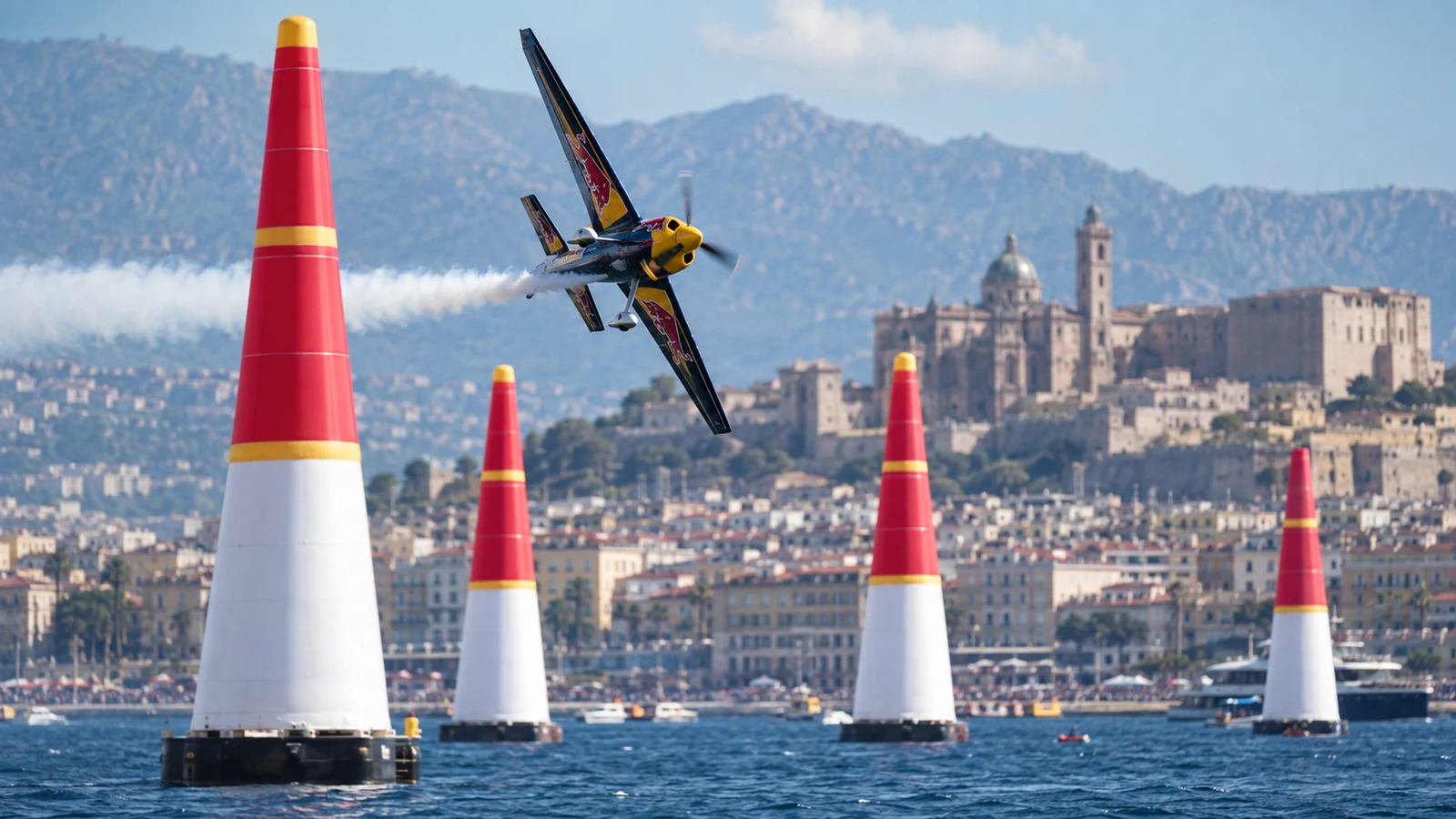
The Red Bull Air Race revolutionized modern aviation by turning high-speed, low-altitude aerobatic flying into a thrilling global motorsport. Navigating tight aerial slalom courses around 25-meter inflatable pylons at 230 miles per hour, pilots endured extreme physical stresses while flying just meters above land and water. From high-tech liquid G-suits and custom shark-skin aerodynamics to laser timing accurate to fractions of a millisecond, the championship pushed human reaction times and aerospace engineering to their absolute limits. Discover 15 fascinating facts about the ultimate sky-high racing series.
1. Pylons Are Made of Ultra-Fragile Sail Fabric
The iconic 25-meter tall inflatable pylons that mark the racecourse are crafted from ultra-lightweight spinnaker fabric originally engineered for high-performance boat sails. This delicate nylon material is specifically chosen because it tears instantly upon the slightest contact with an aircraft wing or propeller. If a plane accidentally strikes a pylon at 200 knots, the fabric shreds instantly without transferring force to the wings, guaranteeing the pilot and plane sustain zero structural damage. Heavy-duty electric blowers continuously pressurize the base of the pylons to keep them standing tall against coastal crosswinds while remaining fragile to physical impacts. This ingenious safety design allowed high-risk, low-altitude acrobatic flying to become a controllable, world-class motorsport.
2. The "Airgators" Repair Crew Fixes Collisions in Minutes
When a pilot clips a pylon during a high-speed maneuver, a specialized rapid-response ground crew known as the Airgators leaps into action. Operating from high-speed motorized boats on water tracks or quad bikes on land, this elite pit crew can replace a destroyed section in under two minutes. The 25-meter cones are modularly designed with heavy-duty zippers and industrial-strength Velcro strips, allowing seamless swaps of damaged segments. Because races are broadcast live worldwide and decided by fractions of a second, the Airgators train endlessly to ensure continuous action without long delays. Their swift interventions keep the competition flowing smoothly even after dramatic mid-air collisions with the inflatable gates.
3. Pilots Endure G-Forces far Greater Than F1 Drivers
While Formula 1 drivers endure impressive lateral forces of around 5G during high-speed cornering, Red Bull Air Race pilots routinely experience up to 12G during extreme vertical turns. At 12G, a pilot’s body effectively weighs twelve times its normal mass, pulling blood down from the brain toward the lower limbs with extreme force. Without proper physiological countermeasures, aviators would suffer from G-induced loss of consciousness, commonly known in aviation as G-LOC. To maintain vision and consciousness, pilots perform a violent muscle-straining maneuver, squeezing their calves, thighs, and abdomen to force blood back into their upper bodies. Flying through narrow gates at 230 miles per hour while enduring such intense physical pressure makes it one of the most demanding sports in the world.
4. Race Aircraft Weigh Less Than a Compact City Car
The specialized aircraft engineered for the Red Bull Air Race are hyper-lightweight machines that weigh significantly less than a small city car. A fully race-ready Zivko Edge 540 weighs a mere 530 kilograms, or roughly 1,168 pounds, excluding the pilot. Built using ultra-light carbon-fiber composite fuselages and titanium structural components, these planes achieve an astonishing power-to-weight ratio. Driven by modified Lycoming engines producing over 300 horsepower, the aircraft can climb vertically into the sky without losing speed. This extreme weight savings allows pilots to execute instantaneous roll rates exceeding 420 degrees per second through tight race maneuvers.
5. Mechanics Drill Holes in Components to Save Grams
Because victory in aviation racing comes down to hundredths of a second, race mechanics obsess over every single gram of mass. Engineering teams routinely drill precise arrays of tiny holes into non-structural components like washers, engine brackets, and interior trim pieces. Known in racing circles as "swiss-cheesing," this meticulous practice shaves off micro-ounces of dead weight without compromising safety or structural integrity. Every gram eliminated reduces the aircraft's moment of inertia, allowing for slightly faster roll initiation and sharper turns. This relentless pursuit of weight reduction underscores how extreme engineering decisions define the fine margin between winning and losing.
6. Wings Use Microscopic "Shark Skin" Film to Cut Drag
To gain an aerodynamic edge over rivals, many race teams apply a microscopic riblet film to the aircraft's wings and fuselage, commonly referred to as "shark skin" tape. Engineered to mimic the dermal denticles found on real sharks, this textured adhesive alters the fluid dynamics of air passing over the plane. The tiny microscopic grooves align the airflow, significantly reducing turbulent skin-friction drag across the aerodynamic surfaces. By smoothing out micro-turbulences at maximum operational speeds, the tape adds vital fractions of a knot to the aircraft's top velocity. This brilliant borrowing of biological evolution demonstrates how nature inspires cutting-edge aerospace engineering.
7. The "Smoke On" Rule Is an Essential Safety System
The distinct white smoke trailing behind racing planes is far more than a visual spectacle for spectators in the grandstands. Race officials strictly mandate that pilots engage their smoke systems using the "Smoke On" command immediately upon entering the racetrack perimeter. The thick smoke renders the invisible wake turbulence generated by the wings visible to following competitors, helping them avoid dangerous aerodynamic disruptions. Additionally, judges rely on the solid white line to precisely track flight trajectories through the inflatable pylon gates and judge altitude compliance. If a pilot fails to activate their smoke system before crossing the entry line, they face automatic time penalties or disqualification.
8. A 2010 Water Crash Proved the Strength of the Safety Cell
Despite the incredible risks of flying low-level maneuvers at extreme speeds, the sport's safety record is remarkably robust, highlighted by a famous 2010 crash in Australia. During a practice session over the Swan River in Perth, Brazilian pilot Adilson Kindlemann clipped the water with his wingtip and plummeted into the river. Thanks to the reinforced carbon-fiber safety capsule surrounding the cockpit, the airframe absorbed the immense impact and protected the aviator inside. Rescue divers stationed in nearby watercraft extracted Kindlemann from the submerged cockpit in seconds, and he escaped with only minor injuries. The incident proved the incredible structural strength of modern aerobatic fuselages under extreme emergency conditions.
9. Legend Paul Bonhomme Flew Commercial Airliners as a Day Job
The most decorated pilot in Red Bull Air Race history, three-time World Champion Paul Bonhomme, maintained a fascinating double life throughout his racing career. While spending weekends pulling high-G maneuvers at 200 knots, his full-time weekday job was flying massive Boeing 747 jumbo jets for British Airways. Bonhomme routinely transitioned from carrying hundreds of transatlantic passengers at 35,000 feet to flying a light aerobatic plane just meters above ocean waters. His extensive background in commercial airline operations brought a disciplined, methodical approach to safety and risk management that contributed to his unmatched success. Bonhomme earned 19 race victories and 46 podium finishes before retiring at the pinnacle of the sport.
10. Strict Entry Speed Limits Prevent Over-G Disqualifications
To prevent pilots from pushing their aircraft beyond safe aerodynamic limits, race regulations enforce a strict speed limit of 200 knots at the entry gate. Entering the timed course faster than 230 miles per hour creates an extreme risk of pulling excess G-forces during the very first turn. A sophisticated telemetry system monitors the exact velocity of each plane as it passes between the starting pylons. If a pilot exceeds the 200-knot threshold by even a tiny fraction, the automated timing computer issues an immediate disqualification for that heat. This strict entry speed limit ensures that pilots rely on technical handling and smooth cornering rather than pure straight-line momentum.
11. Laser Systems Measure Lap Times to 1/10,000th of a Second
In a high-speed aerial competition where races are won by microscopic margins, traditional human timing methods are entirely inadequate. The Red Bull Air Race utilizes an advanced laser-based timing array capable of recording flight times accurate to one-ten-thousandth of a second. Infrared laser beams cross between the pylons, triggering digital timers the instant the nose of the plane cuts through the light barrier. This sub-millisecond precision allows telemetry systems to accurately determine penalties, split times, and final standings in real time. Fans and teams can view instantaneous timing updates on giant screens, seeing victories determined by less than the blink of an eye.
12. Propeller Tips Travel Near the Speed of Sound
The signature sound of a Red Bull Air Race plane is a deafening, high-pitched buzz that echoes across the racing arena long before the plane comes into view. This distinct auditory roar is produced by custom three-bladed carbon propellers spinning at near-supersonic speeds. As the engine approaches maximum revolutions per minute, the tips of the propeller blades travel at velocities approaching Mach 1. The micro shockwaves created by the blade tips breaking through the air barrier generate the intense acoustic buzz characteristic of the sport. This aggressive sound serves as a constant reminder of the extreme mechanical forces operating at the edge of physics.
13. Pilots Wear Water-Filled Suits to Counter G-Forces
To combat extreme physiological stress, many pilots in the series abandoned traditional air-inflated military flight gear in favor of a specialized liquid-filled suit called the Libelle suit. Unlike traditional pneumatic suits that require mechanical pumps to inflate air bladders upon sensing G-forces, the Libelle suit uses fluid-filled channels. The liquid inside the suit reacts instantaneously to gravitational forces according to hydrostatic principles, matching the exact pressure changes occurring within the pilot’s vascular system. As G-forces increase, the fluid naturally exerts physical pressure against the pilot's body, preventing blood from pooling in the legs. Because it operates passively without external electronic triggers, the water suit offers faster, uninterrupted protection during rapid directional changes.
14. The Challenger Class Feeder Series Trained Future Champions
To develop safe, high-caliber aviators for the main competition, organizers established the Challenger Class as a dedicated feeder series in 2014. In this division, emerging international pilots compete using identical, standardized Extra 330LX aircraft to emphasize pilot skill over mechanical advantages. Master Class veterans mentor these up-and-coming pilots, coaching them in low-altitude track strategy, physical conditioning, and safety protocols. Pilots must earn points and demonstrate absolute precision over multiple seasons before being granted the prestigious Super License required for the top tier. This structured progression ensured that only the safest and most talented aviators in the world stepped up to the ultimate Master Class.
15. Races Were Hosted Inside the Famous Indianapolis Motor Speedway
Over its multi-decade history, the series transformed world-famous locations into aerial racetracks, culminating in a historic 2016 event at the Indianapolis Motor Speedway. Known worldwide as the "Brickyard" and the traditional home of auto racing, the iconic speedway hosted 14 air race pilots flying directly inside the massive oval. Inflatable pylons were anchored onto the infield grass, forcing pilots to maneuver between gates surrounded by historic grandstands and the famous start-finish brick line. Blending motor racing heritage with low-altitude aviation created one of the most visually stunning spectacles in modern motorsport history. It demonstrated how the sport bridged the gap between traditional land racing and high-speed aerial agility.
Sources & References
This AI-assisted post was rigorously curated and fact-checked for accuracy by:
 Martin Roháček
How fun was this article? 🤔
Tap a star to rate it
🧠 Quiz: How closely were you paying attention?
10 questions — all answers are in the article above!
Enjoyed these facts? There's more! 💌
Fresh fun facts in your inbox. No spam, ever.