
The Geothermal Marvel: 15 Fascinating Facts About Iceland's Blue Lagoon
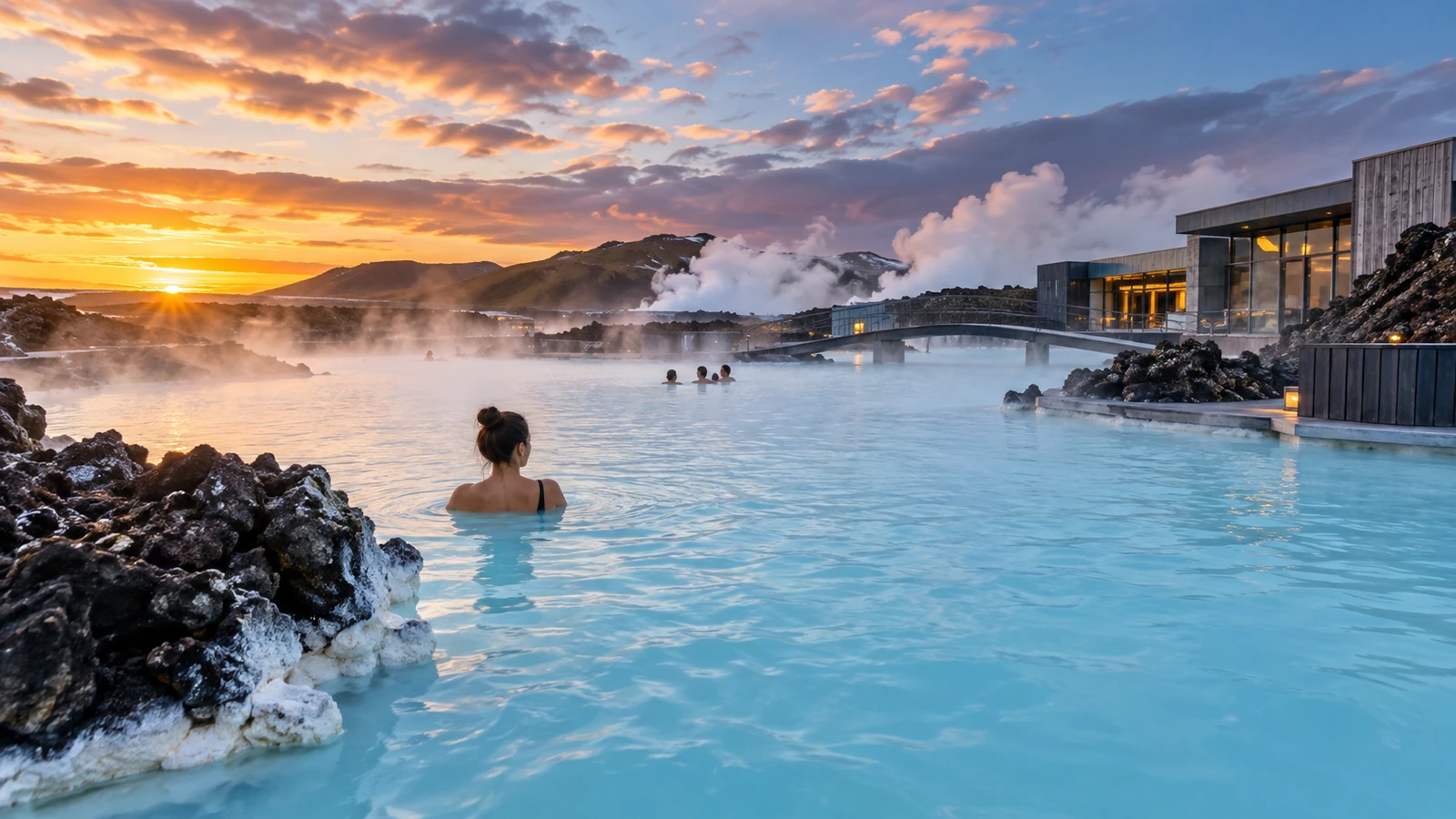
Nestled in a dark volcanic landscape on Iceland's Reykjanes Peninsula, the Blue Lagoon is world-famous for its luminous milky-turquoise waters and therapeutic mineral mud. Far from a purely natural thermal spring, this iconic destination is actually an extraordinary product of industrial engineering and unexpected environmental chemistry. From its accidental discovery to its battles against surrounding volcanic eruptions, discover the unbelievable history and science behind Iceland's ultimate spa destination.
1. It Was Created Entirely by Accident
The Blue Lagoon was not created as a natural spring or a planned resort, but as the unintended side effect of an industrial energy project. In 1976, the newly opened Svartsengi Geothermal Power Plant began releasing excess mineral-rich water into the surrounding lava field. Engineers assumed the water would seep back through the porous basaltic rock, but the high silica concentration quickly gelatinized and sealed the cracks. As a result, the runoff accumulated into a permanent, milky turquoise pool that eventually captivated the world. What began as an industrial wastewater pool quickly transformed into Iceland's most visited tourist attraction.
2. A Psoriasis Patient Was the First to Swim
When the pool first formed, locals viewed the steamy, industrial wastewater with great suspicion, fearing it might be toxic or radioactive. That perception changed dramatically in 1981 when Valur Margeirsson, a local man suffering from psoriasis, requested permission to bathe in the warm fluid. Despite warnings from skeptics, Margeirsson reported that the silica-heavy mud cured his skin lesions faster than any conventional treatment. He nicknamed the spot "Bláa Lónið" (the Blue Lagoon), effectively launching its reputation as a therapeutic spa. Doctors at the University of Iceland subsequently studied the water and officially validated its dermatological benefits.
3. The Water Is Not Actually Blue
Although the lagoon appears as a brilliant shade of electric blue or vivid turquoise, the water itself contains no blue pigment. If you scoop the liquid into a clear glass, it appears completely milky white due to its dense suspension of minerals. The stunning color is actually an optical illusion caused by Rayleigh scattering when sunlight hits the suspended silica particles. Because silica reflects visible light at short wavelengths, the human eye perceives a luminous blue hue across the expansive pool. On overcast days or during the dark winter months, the pool shifts toward a soft, milky green tone instead.
4. Silica Minerals Will Wreak Havoc on Your Hair
While the mineral composition of the lagoon works wonders for human skin, it poses a famous nightmare for human hair. Silica does not permanently damage hair, but it penetrates the outer cuticles and binds to the keratin proteins. This mineral buildup causes hair to become stiff, extremely dry, and unmanageable for days after a single soak. To combat this effect, spa staff advise all guests to apply generous amounts of leave-in conditioner before stepping into the water. Experienced visitors keep their hair dry entirely or wear tight swim caps to avoid the mineral encrustation.
5. The Pool Renews Its Entire Volume Every 40 Hours
Despite hosting hundreds of thousands of visitors each year, the Blue Lagoon maintains exceptional cleanliness through continuous natural turnover. A massive stream of fresh geothermal water flows into the basin at a rate of roughly 110 gallons per second. This relentless flow forces older water out through drainage channels, replacing the entire 9 million liters of water every 40 hours. Because of this high turnover rate, the pool does not rely on static water or artificial recirculation pumps. The continuous influx ensures that every bather experiences freshly discharged mineral water throughout their visit.
6. The Water Is Sourced 2,000 Meters Underground
The waters feeding the lagoon originate in a subterranean cauldron deep beneath the Earth's crust. Roughly 2,000 meters (6,500 feet) below the Reykjanes Peninsula, ocean water seeps through porous rock and collides with scalding freshwater aquifers. Heated by magma to temperatures exceeding 240 degrees Celsius (464 degrees Fahrenheit), the fluid becomes pressurized and dissolves minerals from the surrounding mantle. By the time it is pumped to the surface to drive steam turbines, the liquid cools to a soothing 37 to 40 degrees Celsius (98 to 104 degrees Fahrenheit). This precise balance creates an ideal temperature range for comfortable year-round outdoor bathing.
7. It Has a Self-Cleansing Micro-Ecosystem
The Blue Lagoon possesses a unique microbiological ecosystem that makes traditional pool sanitation largely unnecessary. Scientists studying the water discovered that common bacteria and pathogens, including E. coli, cannot survive in its high-silica environment. The unique mixture of oceanic salt, mineral silica, and specialized blue-green algae creates an inhospitable terrain for harmful micro-organisms. Consequently, the facility requires only minimal chemical treatment to meet international sanitary standards. The algae themselves produce a distinct bioactive compound that further promotes skin hydration and health.
8. Volcanic Eruptions Threaten the Facility
In late 2023 and early 2024, the spa faced its most serious existential threat when the nearby Svartsengi volcanic system erupted. Series of magma fissures opened up just miles from the facility, spilling rivers of molten rock across the Reykjanes Peninsula. Icelandic engineers launched a daring civil defense campaign, constructing massive earthen berms and gravel dikes over 15 meters tall to protect the spa and power plant. While temporary evacuations were enforced during intense eruption phases, the diversion walls successfully redirected lava flows away from the property. Today, guests can soak in the warm water while viewing freshly cooled black lava ridges created by these recent geological events.
9. It Sits Inside an 800-Year-Old Lava Field
The otherworldly backdrop surrounding the lagoon is known as the Illahraun lava field, which translates to "Evil Lava." This rugged landscape was created during the violent Reykjanes Fires, a series of volcanic eruptions that tore through the region in 1226 AD. The jagged basalt rock is blanketed by thick layers of gray-green woolly fringe-moss, creating a surreal landscape that feels like another planet. Visitors walking along the wooden boardwalks are stepping across an 800-year-old volcanic battlefield that remains geologically active. The contrast between the dark lava, bright green moss, and milky blue water makes it one of the most photographed spots in Iceland.
10. Naked Showering Is Strictly Mandatory
First-time international visitors are often caught off guard by Iceland's uncompromising pool hygiene policies. Before entering the lagoon, every guest is required to take a full naked shower with soap in communal shower facilities. Because the water uses minimal chlorine, maintaining strict personal hygiene is essential to prevent contamination. Shower attendants monitor the changing areas to ensure bathers comply with the rules before putting on their swimwear. While western tourists often feel initial anxiety, the practice is a deeply rooted aspect of Nordic bathing culture that ensures maximum water purity.
11. National Geographic Named It a World Wonder
The Blue Lagoon's unique blend of industrial recycling and natural luxury earned it elite international acclaim. In 2012, National Geographic named the spa one of the "25 Wonders of the World," putting it alongside global monuments like the Taj Mahal and the Great Wall of China. The publication praised the complex for converting geothermal power plant runoff into a sustainable wellness destination. This prestigious endorsement transformed the lagoon from a regional curiosity into an iconic bucket-list destination. Today, it stands as a global symbol of eco-friendly innovation and Nordic wellness.
12. Face Masks Are Served Straight From the Water
Submerged in the lagoon's mineral waters is an in-water silica mask bar where guests receive free skincare treatments. Visitors scoop fresh white silica mud directly onto their faces and bodies, allowing the mineral paste to dry into a smooth mask. The silica deep-cleanses pores, exfoliates dead skin cells, and strengthens the skin's moisture barrier. After fifteen minutes, bathers simply wash the mud off in the thermal water, leaving their skin remarkably soft. This signature ritual led to the creation of an international luxury skincare brand sold in boutique stores worldwide.
13. It Stays Warm Even During Arctic Blizzards
The Blue Lagoon remains open 365 days a year regardless of extreme North Atlantic weather conditions. Even when fierce Arctic blizzards howl across the lava field and air temperatures drop below freezing, the water temperature remains a cozy 37 to 40 degrees Celsius (98 to 104 degrees Fahrenheit). Swimmers often experience snowfall resting on their shoulders while their bodies remain completely submerged in warm water. During the dark winter months, bathers can gaze up from the steaming pool to watch the Northern Lights dance across the night sky. The contrast between freezing air and superheated thermal water creates an unforgettable sensory experience.
14. Underground Luxury Suites Are Carved Into Lava
For travelers seeking ultimate seclusion, the site features a luxury accommodation built directly into the volcanic landscape. Opened in 2018, The Retreat Hotel offers subterranean suites with floor-to-ceiling glass walls carved into the 800-year-old lava rock. Select suites provide direct private access to exclusive, crowd-free arms of the geothermal waters. The hotel also features a private underground spa offering specialized floating massages and mineral treatments. This architectural masterpiece seamlessly blends high-end hospitality with raw volcanic geology.
15. RFID Wristbands Keep the Spa High-Tech and Cashless
The spa seamlessly blends raw nature with modern convenience through clever eco-engineering and technology. Upon entry, every guest receives an electronic RFID wristband that serves as their digital wallet and locker key. This allows bathers to purchase drinks at the swim-up bar or book spa treatments without carrying cash or credit cards into the pool. Furthermore, the entire facility operates on 100 percent renewable geothermal energy supplied by the adjacent power plant. By turning industrial byproducts into a zero-waste luxury spa, the complex demonstrates how eco-friendly technology can harmonize with tourist indulgence.
Sources & References
This AI-assisted post was rigorously curated and fact-checked for accuracy by:
 Martin Roháček
How fun was this article? 🤔
Tap a star to rate it
🧠 Quiz: How closely were you paying attention?
10 questions — all answers are in the article above!
Enjoyed these facts? There's more! 💌
Fresh fun facts in your inbox. No spam, ever.