The Geothermal Capital: 15 Fascinating Facts About Reykjavík
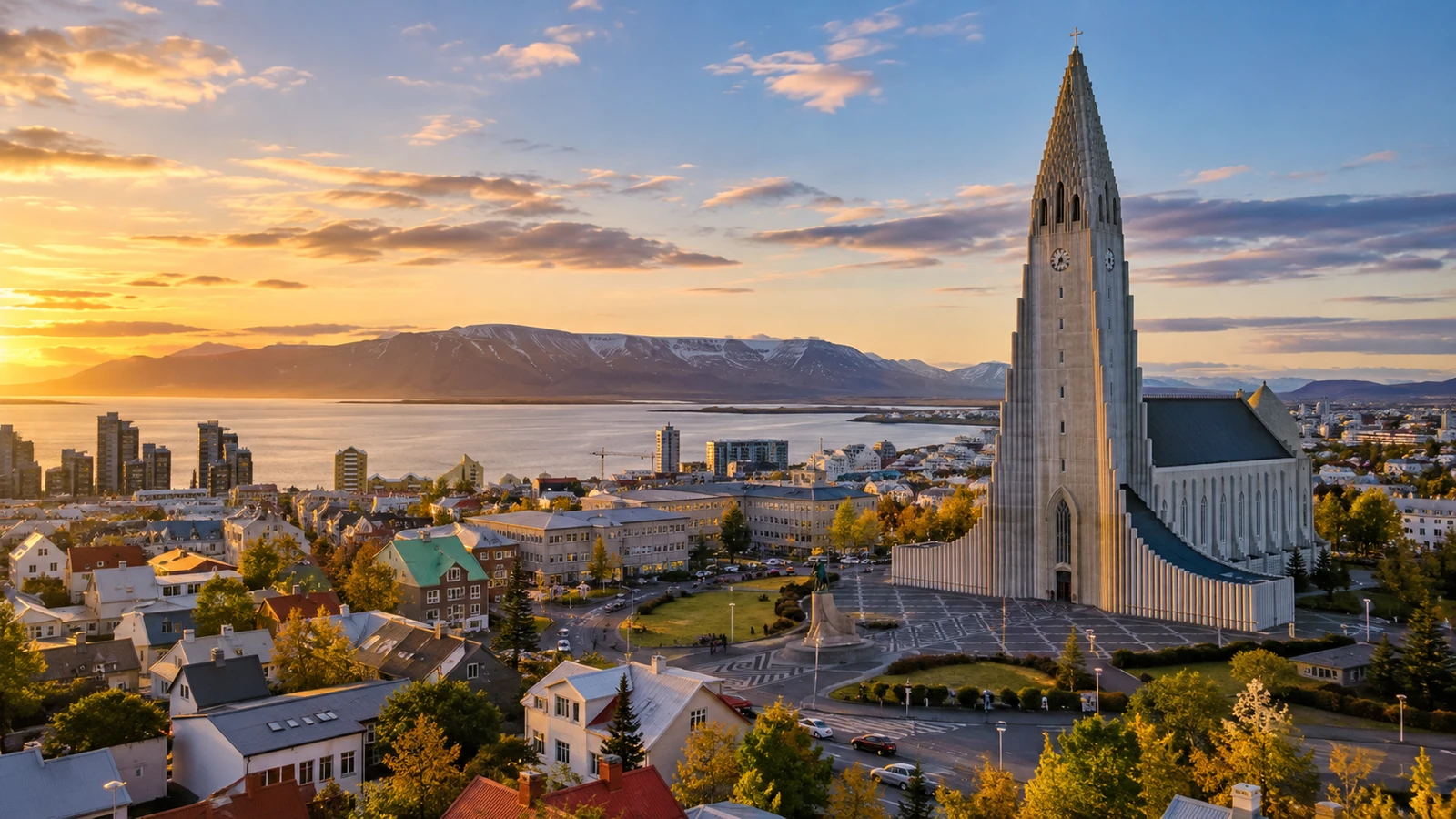
Nestled along the coastline of southwestern Iceland, Reykjavík is a vibrant capital where ancient Viking folklore meets cutting-edge green technology. Known for its colorful iron houses, thermal swimming pools, and dramatic mountain backdrops, this subarctic hub punches far above its weight on the global stage. From city streets warmed by volcanic energy beneath the snow to a holiday tradition centered entirely on gifting books, the city boasts a cultural landscape unlike anywhere else on Earth. Here are 15 fascinating facts about Reykjavík that reveal the quirky history, natural marvels, and creative spirit of the world's northernmost capital.
1. The Name "Smoky Bay" Dates Back to 874 AD
Ingólfur Arnarson, widely considered Iceland's first permanent Norse settler, named the location Reykjavík after seeing steam rise from thermal vents. In Old Norse, the name translates directly to "Smoky Bay," a poetic misnomer for the mineral-rich geothermal steam hovering over the coast. Arnarson had thrown his wooden high-seat pillars overboard, vowing to settle wherever they washed ashore, which happened to be this steam-filled inlet. Despite its ancient origin in 874 AD, the settlement remained a simple cluster of turf farmsteads for nearly a thousand years. Today, visitors can still explore remnants of early settlement structures at the Settlement Exhibition built directly over an excavated 10th-century longhouse.
2. It Holds the Title of the World's Northernmost Sovereign Capital
Sitting at latitude 64°08' North, Reykjavík is the northernmost capital of any sovereign nation in the world. Its high latitude creates extreme variations in sunlight throughout the year, ranging from roughly 21 hours of daylight in mid-June to barely four hours in late December. Despite its subarctic position, the city experiences surprisingly mild winter temperatures compared to places at similar latitudes in North America or Russia. This temperate anomaly is thanks to the warm waters of the Gulf Stream, which buffer the coastal climate year-round. As a result, winter temperatures in the capital rarely drop significantly below freezing for prolonged periods.
3. Geothermal Energy Heats Sidewalks and Entire Buildings
Reykjavík runs almost entirely on clean geothermal energy, making it one of the greenest capital cities on the planet. Deep beneath the surface, volcanic activity heats groundwater that is pumped directly into the city's heating system to warm homes and municipal buildings. Remarkably, excess hot water is channeled beneath city streets and pavements in downtown Reykjavík to melt snow and ice during winter months. This innovative engineering keeps major pedestrian shopping streets like Laugavegur clear without the need for chemical de-icers or heavy snowplows. Public outdoor swimming pools are also heated year-round by this volcanic grid, providing energy-efficient recreation to locals.
4. A UNESCO City of Literature Driven by the Christmas Book Flood
In 2011, Reykjavík became the very first non-English-speaking city to be designated a UNESCO City of Literature. Icelanders read more books per capita than almost any other population, a passion rooted in medieval literary traditions like the Icelandic Sagas. This literary culture culminates every December in an annual phenomenon known as Jólabókaflóð, or the "Christmas Book Flood." During this period, publishers release the majority of new titles, and books are traditional gifts exchanged on Christmas Eve. Families routinely spend Christmas night reading their newly gifted books while sipping hot chocolate, illustrating the city's profound commitment to storytelling.
5. Hallgrímskirkja Was Inspired by Volcanic Basalt Columns
Rising prominently above the city skyline, Hallgrímskirkja is one of Reykjavík’s most recognizable landmarks. Designed by state architect Guðjón Samúelsson in 1937, the church’s dramatic concrete facade pays homage to Iceland's natural geology. Its soaring stepped columns mimic the hexagonal basalt lava structures formed during volcanic eruptions, such as those seen at Svartifoss waterfall. Construction of the massive cathedral took over 41 years to complete, finally opening its doors in 1986. Inside, the church houses a massive mechanical pipe organ standing over 15 meters tall, adding musical grandeur to its monumental architecture.
6. It Hosted the Iconic 1972 "Cold War" World Chess Championship
In the summer of 1972, Reykjavík was thrust into the international political spotlight when it hosted the World Chess Championship. The match pitted American challenger Bobby Fischer against defending Soviet champion Boris Spassky at the Laugardalshöll arena. Dubbed the "Match of the Century," the showdown became a dramatic proxy battle for the geopolitical rivalries of the Cold War. Fischer's eventual victory ended 24 consecutive years of Soviet dominance in world chess and sparked a massive chess boom across Iceland. Today, chess remains deeply embedded in local school curricula and culture, partly due to the legacy of this historic event.
7. The City Features the World’s Only Phallological Museum
Reykjavík is home to the Icelandic Phallological Museum, a singular institution dedicated to the study of phallology. Founded by collector Sigurður Hjartarson, the museum contains over 200 male reproductive organs representing almost all land and marine mammals found in Iceland. Visitors can view preserved specimens ranging from tiny field mice to a massive 1.7-meter-long blue whale tip. The collection even includes human specimens donated by individuals who wished to contribute to the unique archive. While undoubtedly quirky, the museum is run as a serious scientific and cultural repository that draws curious tourists from around the globe.
8. Urban Planning Respects the Folklore of the "Hidden People"
In Reykjavík, modern infrastructure projects occasionally bow to ancient folklore regarding Huldufólk, or the "hidden people." According to Icelandic belief, invisible elves reside inside large natural rocks and rock formations scattered throughout the landscape. When road work or residential developments threaten these designated boulders, city planners have been known to alter road paths or delay construction to avoid disturbing the spirits. Survey polls show that while many modern residents are skeptical, a large portion of the population prefers not to rule out their existence entirely. This cultural caution reflects a broader environmental ethic of preserving natural landforms within urban zones.
9. There Are No McDonald’s Outlets Anywhere in the Capital
Unlike nearly every other European capital city, Reykjavík does not have a single McDonald’s fast-food restaurant. The global chain operated three locations in Iceland until the 2008 financial crash caused severe currency devaluation and sky-high import costs for foreign ingredients. In 2009, McDonald's shut down all Icelandic operations, and local owners rebranded the locations as an independent burger joint called Metro. The very last cheeseburger sold before the exit was preserved and kept on display inside a glass case, where it remains remarkably un-decayed to this day. Icelanders now satisfy their fast-food cravings with thriving local burger chains like Hamborgarabúlla Búllan.
10. Harpa Concert Hall Features Dynamic Glass Crystal Architecture
Harpa Concert Hall, opened on the Reykjavík waterfront in 2011, is a masterpiece of modern northern architecture. Designed by Danish firm Henning Larsen Architects in collaboration with Icelandic-Danish artist Ólafur Elíasson, the building features a striking three-dimensional glass facade. The exterior structure consists of thousands of quasi-brick glass prisms engineered to capture and reflect light like Icelandic basalt rock crystals. At night, integrated LED lights illuminate the glass facade with shifting colors that mimic the dance of the Northern Lights across the bay. The building served as a symbol of national resilience, completing construction despite economic turmoil during the financial crisis.
11. Geothermal Public Pools Serve as the City’s Social Hubs
In Reykjavík, public geothermal swimming pools function as vital communal living rooms rather than just sporting facilities. Citizens of all ages gather daily in open-air hot tubs to socialize, debate local politics, and unwind after work. The oldest public pool, Sundhöllin, opened in 1937 and features classic art deco architecture alongside modern outdoor thermal baths. Bathing culture comes with strict hygiene rules, including mandatory naked showering before entering the water, which ensures pools remain chemically clean with minimal chlorine. Communing in warm mineral waters remains an essential daily ritual for maintaining mental and physical wellness in the capital.
12. The Famous Sun Voyager Sculpture Is Not Actually a Viking Ship
Stretching along the waterfront promenade, the polished stainless steel Sun Voyager (Sólfar) is one of the city's most photographed public art pieces. Created by Icelandic sculptor Jón Gunnar Árnason, the artwork resembles the skeletal frame of a longship pointing out toward Mt. Esja across Faxaflói bay. Contrary to popular belief, the artist designed the piece not as a historical Viking ship, but as an abstract dream vessel symbolizing freedom, hope, and uncharted territories. Commissioned to mark the 200th anniversary of Reykjavík’s city charter, the sculpture evokes a journey toward the setting sun and untapped potential.
13. Two-Thirds of Iceland’s Entire Population Lives Here
Reykjavík presents a unique demographic concentration, with more than two-thirds of Iceland's entire nation residing in the capital region. While the city proper houses around 135,000 residents, the greater metropolitan area accounts for roughly 240,000 of the country's total 390,000 inhabitants. This concentrated urban hub leaves the vast majority of Iceland's interior volcanic wilderness almost completely uninhabited. Consequently, Reykjavík concentrates nearly all of the country’s major universities, artistic institutions, governmental bodies, and culinary hotspots into a compact, walkable area. Despite its small absolute population by global standards, it radiates the cultural energy of a major metropolis.
14. You Can Watch the Northern Lights from Within City Limits
While many arctic travelers head deep into rural wilderness to catch the Aurora Borealis, Reykjavík offers rare urban viewing opportunities. During clear winter nights from September to April, the Northern Lights often flare directly above the city skyline. The Grótta Lighthouse peninsula on the western tip of the city serves as a popular dark-sky sanctuary where light pollution is low enough to view vivid green ribbons across the sea. The city occasionally even douses its streetlights during exceptionally strong geomagnetic storms to give residents and visitors a clearer view of the spectacle.
15. The City Remained a Tiny Village Until the Late 18th Century
Despite its early founding in 874 AD, Reykjavík did not achieve official status as a town until 1786, when it was chartered as a trading station. At the time of its official incorporation, the settlement consisted of just 167 residents living in modest wooden and turf structures. The catalyst for growth arrived when royal treasurer Skúli Magnússon established wool workshops in the mid-18th century, pioneering modern industry in Iceland. This industrial spark transformed the sleepy agricultural outpost into the political, economic, and cultural center of the nation within a couple of centuries.
Sources & References
This AI-assisted post was rigorously curated and fact-checked for accuracy by:
 Martin Roháček
How fun was this article? 🤔
Tap a star to rate it
🧠 Quiz: How closely were you paying attention?
10 questions — all answers are in the article above!
Enjoyed these facts? There's more! 💌
Fresh fun facts in your inbox. No spam, ever.