
The Miraculous Cliffside Sanctuary: 15 Fascinating Facts About Santuario de Las Lajas
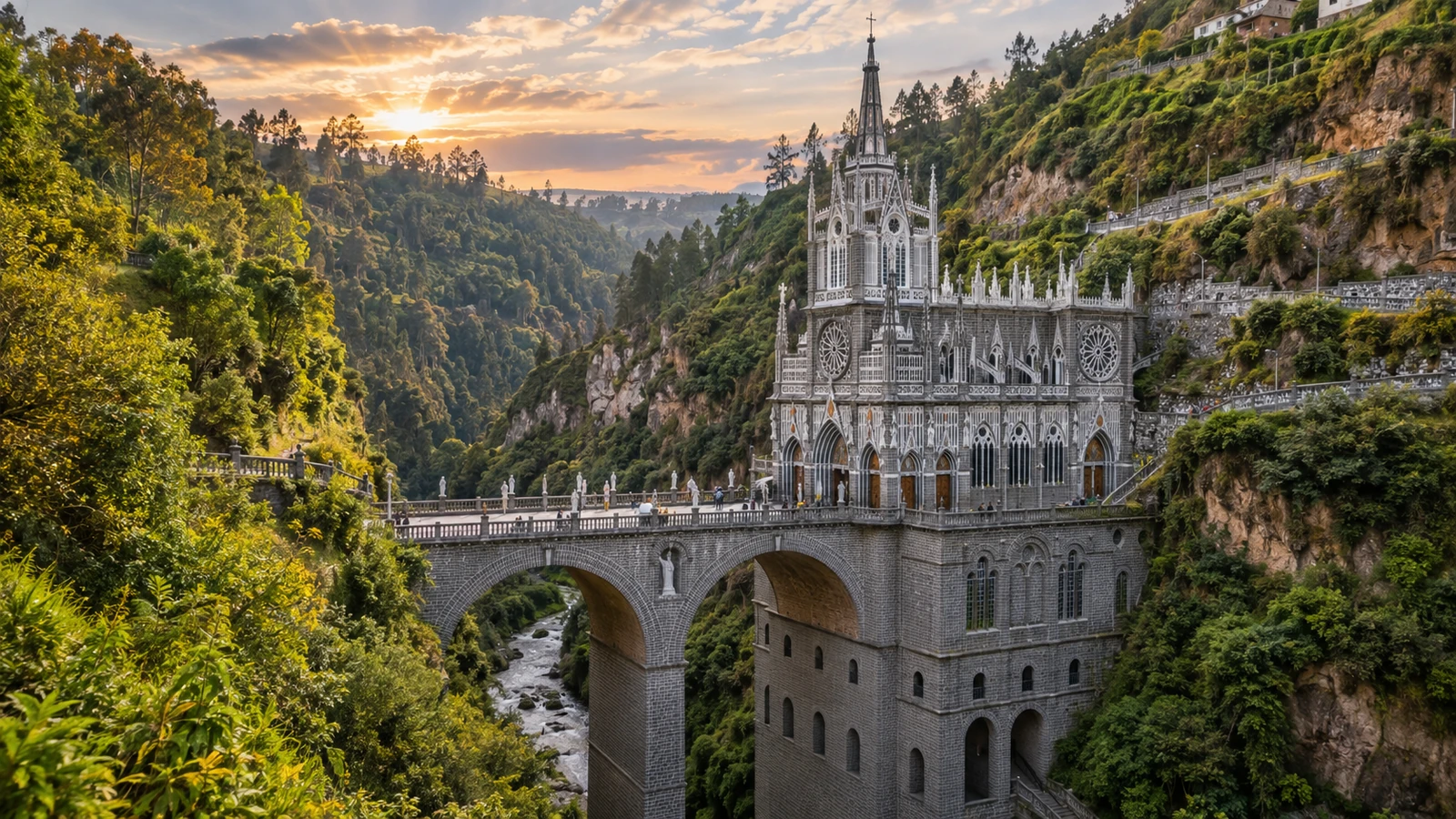
Perched dramatically inside a steep canyon along the border of Colombia and Ecuador, Santuario de Las Lajas is widely regarded as one of the most stunning architectural wonders on Earth. Built directly into the rock walls over a roaring river, this majestic shrine combines miraculous legends with unbelievable engineering. From mystery-shrouded geological pigments to a soaring bridge that doubles as a cathedral plaza, discover the incredible story behind South America's ultimate cliffside pilgrimage site.
1. The Sanctuary Was Born From a Miraculous Encounter in 1754
In 1754, an Indigenous woman named Maria Mueses de Quiñones and her young daughter Rosa were caught in a violent storm inside the Guáitara River canyon. Rosa, who was born deaf and mute, suddenly spoke her very first words, pointing to the cliffside rocks and claiming a radiant woman was calling to her. This astonishing event shocked her mother and marked the initial apparition of the Virgin Mary at the location. Word of the miracle quickly spread across southwestern Colombia, transforming the remote ravine into an instant pilgrimage destination.
2. The Sacred Image Penetrates Deep Inside Solid Stone
The centerpiece of the altar is an image of the Virgin Mary holding the infant Jesus, flanked by Saint Francis and Saint Dominic. Uniquely, this artwork was not painted onto a traditional canvas or painted over plaster. Geologists who studied the stone discovered that the rich colors actually penetrate several feet deep into the rock face itself. No surface paint, artificial glazes, or modern pigments appear on the exterior face of the cliff. To this day, scientific analysis has failed to explain how the rich pigments bonded so deeply inside the natural stone structure.
3. Local Legend Claims the Virgin Brought a Child Back to Life
According to regional folklore, the initial apparition to Rosa was not the only miracle connected to her story. Shortly after the first encounter in the canyon, young Rosa fell severely ill and tragically passed away. Devastated by the loss, her mother carried the child's body back into the steep ravine to pray at the rock face where they had seen the vision. Miraculously, the Virgin Mary appeared a second time and restored the young girl to life, cementing the canyon's reputation as a sanctuary of divine healing.
4. The Name "Las Lajas" Describes the Regional Andean Geology
The church's official name is Santuario de Nuestra Señora de las Lajas, which directly reflects the natural geology of the surrounding Andes mountains. In the regional Spanish dialect, the word laja refers to a flat, smooth sedimentary slab of rock, similar to slate or shale. These flat stone formations dominate the steep cliffs of the Guáitara River gorge. Therefore, the sanctuary's name translates literally to "Sanctuary of Our Lady of the Flat Rocks."
5. A 50-Meter-High Bridge Serves as the Main Entrance Plaza
Unlike traditional cathedrals built upon flat urban plazas, Santuario de Las Lajas features an ingenious structural response to its canyon location. Architects designed a massive two-arch bridge standing 50 meters (164 feet) tall to span the river gorge. This engineering feat connects the sanctuary directly to the opposite side of the steep ravine. Rather than a standard city square, the flat surface of the bridge functions as the main outdoor plaza where pilgrims gather before entering the basilica.
6. The Cathedral Soars 100 Meters Above the Canyon Floor
Measuring from the bed of the Guáitara River to the peak of its highest spire, the sanctuary stands an impressive 100 meters (330 feet) tall. The sheer vertical orientation creates a breathtaking visual illusion, making the heavy stone cathedral appear as if it is floating against the cliff face. Constructing such a heavy structure on steep canyon slopes required extraordinary engineering to anchor the foundations deep into bedrock. Visitors looking up from the riverbed below are treated to a view of a monumental stone castle clinging to the rock face.
7. Construction of the Neo-Gothic Basilica Took 33 Years
Long before the current cathedral stood, several smaller shrines and wooden chapels occupied the cliffside site. Construction on the current stone building, featuring magnificent architectural design, began in January 1916 under local architects Lucindo Espinosa and Ecuadorean engineer Mariano Aulestia. The daunting task of building across a treacherous mountain gorge meant work progressed slowly over decades. Laborers worked for 33 years until the grand basilica was officially completed in August 1949.
8. The Massive Project Was Funded Entirely by Local Devotees
Despite the enormous engineering challenges and expensive materials, the project received no state grants or foreign financial aid. Instead, the 33-year construction effort was financed entirely by local churchgoers, regional pilgrims, and humble devotees. Faithful citizens contributed small personal savings, modest donations, and volunteer labor over decades to realize the ambitious blueprint. This grassroots achievement remains a point of deep civic pride for communities throughout Nariño.
9. It Sits Minutes Away From the Border with Ecuador
The sanctuary is situated in the municipality of Ipiales, located in the Department of Nariño in southern Colombia. This location places the church just a few miles north of the international border crossing with Ecuador. Because Ipiales is a major transit city for land travel across South America, millions of international tourists stop to visit the church each year. It serves as a iconic shared heritage landmark for both Colombian and Ecuadorian travelers.
10. Thousands of Thanksgiving Tiles Line the Canyon Walkway
As visitors walk down the steep, winding footpaths that lead into the river canyon, they pass rock faces covered in thousands of small stone tablets. Known as ex-votos or thanksgiving plaques, these custom markers are left behind by pilgrims from around the world. The tiles express gratitude to the Virgin Mary for answered prayers, physical healings, and personal miracles. Together, these countless stone inscriptions form a physical timeline of gratitude spanning generations.
11. A Natural Waterfall Cascades Beside the Cathedral Walls
The stunning visual spectacle of Santuario de Las Lajas is heightened by the surrounding wilderness of the mountain ravine. Right beside the stone cathedral walls, a natural waterfall cascades down the sheer rock face into the river below. Depending on seasonal rainfall, the rushing cascade provides a thunderous acoustic backdrop to the serene grey spires. This seamless blend of natural cascades, rugged stone, and intricate Gothic arches makes it one of the most photographed places in South America.
12. Altarpiece Angels Play Violins and Cellos Instead of Harps
The artistic detail inside Santuario de Las Lajas contains subtle touches that diverge from typical religious design. Surrounding the miraculous cliff face artwork on the main altar are sculptured stone angels. Rather than holding traditional biblical instruments like harps or brass trumpets, these angels are depicted playing orchestral string instruments, including the violin and cello. This unique touch gives the high altar a distinct classical character.
13. The Vatican Granted It Canonical Coronation and Basilica Status
Recognition of the site's immense cultural and spiritual impact reached the highest levels of the Vatican during the 20th century. In 1952, Pope Pius XII granted a formal decree of canonical coronation for the venerated cliffside image of the Virgin Mary. Just two years later, in 1954, the Roman Catholic Church officially elevated the shrine to the status of a minor basilica. These recognitions solidified its standing as one of Latin America's primary spiritual monuments.
14. The Daily Telegraph Named It the World's Most Beautiful Church
While the sanctuary has been a famous destination in South America for centuries, global acclaim escalated dramatically in 2015. The prominent British newspaper The Daily Telegraph ranked Santuario de Las Lajas at the top of its global list of the world's 23 most beautiful churches. Travel writers praised its fairytale appearance, dramatic canyon setting, and gravity-defying architecture, putting it on the map for international globetrotters.
15. A Vibrant LED Lighting System Transforms the Church at Night
While the grey stone structure is impressive by day, it undergoes a luminous transformation after sunset. A sophisticated exterior lighting system illuminates the soaring spires, flying buttresses, and stone arches with vibrant colors every evening. Glowing brightly against the pitch-black canyon walls, the illuminated cathedral resembles an otherworldly beacon suspended in the darkness. This nightly light display draws evening photographers and nighttime visitors from across the region.
Sources & References
This AI-assisted post was rigorously curated and fact-checked for accuracy by:
 Martin Roháček
How fun was this article? 🤔
Tap a star to rate it
🧠 Quiz: How closely were you paying attention?
10 questions — all answers are in the article above!
Enjoyed these facts? There's more! 💌
Fresh fun facts in your inbox. No spam, ever.