The Fearless Liberator: 15 Fascinating Facts About Simón Bolívar
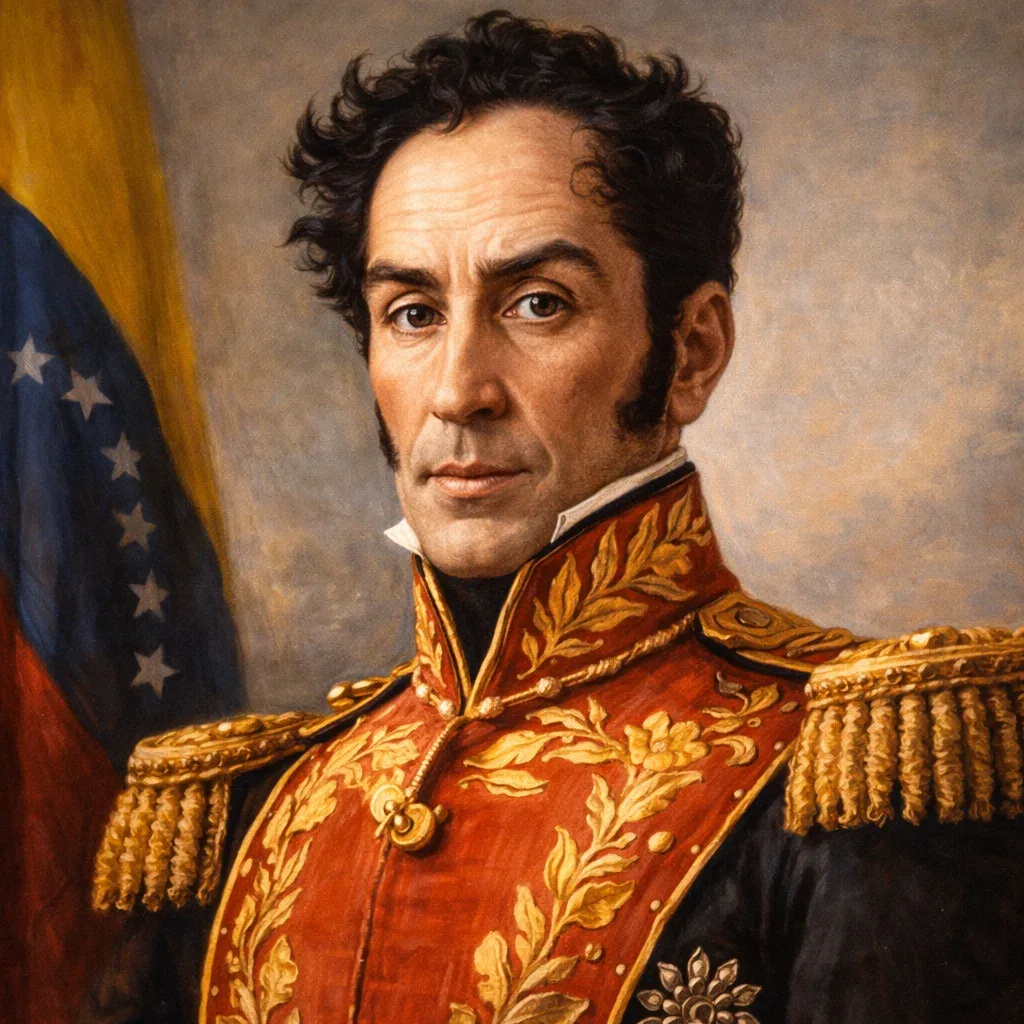
Simón Bolívar remains one of the most dynamic and consequential figures in world history, having spearheaded the independence of six South American nations from Spanish rule. Born into immense wealth in Caracas, he sacrificed his fortune, health, and personal life to liberate millions across rugged mountain ranges and treacherous plains. From swearing a dramatic oath on a Roman hill to surviving treacherous assassination attempts, his life was filled with extraordinary military feats and political paradoxes. Discover fifteen fascinating facts about the leader known simply across a continent as 'El Libertador'.
1. His Formal Name Was Remarkably Long and Devout
Simón Bolívar was born into an extremely wealthy Creole family in Caracas in 1783. At his christening, he was given the extensive name Simón José Antonio de la Santísima Trinidad Bolívar y Palacios. The heavy inclusion of religious titles reflected the deep Roman Catholic tradition of upper-class Spanish colonial society. Despite the grand moniker, most of his friends and contemporaries simply called him Simón. History, however, would ultimately know him across South America by the singular honorific title El Libertador.
2. An Entire Sovereign Nation Was Named in His Honor
Following the defeat of Spanish royalist forces in South America, the territory formerly known as Upper Peru declared independence in 1825. To show supreme gratitude to the revolutionary military commander, local leaders chose to name their newly established republic Bolivia after him. Bolívar initially expressed reservations about having a nation bear his surname, believing it might appear self-serving. However, he eventually accepted the honor, authoring the country's first constitution shortly thereafter. Today, Bolivia remains one of only a handful of nations named directly after a historical individual.
3. He Renounced Napoleon Bonaparte After He Crowned Himself Emperor
In his early twenties, Bolívar traveled extensively through Europe and deeply admired the military genius of Napoleon Bonaparte. He originally viewed the French leader as a brilliant champion of republican liberty against corrupt European monarchies. However, when Napoleon crowned himself Emperor of the French in 1804, Bolívar felt deeply betrayed by what he saw as imperial hypocrisy. Disillusioned, he deliberately boycotted Napoleon's grand coronation ceremony in Paris as a silent protest against autocracy. This pivotal experience strengthened Bolívar’s resolve to build democratic institutions rather than personal empires in South America.
4. His Life Was Saved by His Remarkable Lover, Manuela Sáenz
During a midnight assassination attempt in Bogotá in 1828, Bolívar was saved by his brilliant mistress and fellow revolutionary, Manuela Sáenz. When armed conspirators breached the presidential palace, Sáenz confronted the attackers armed only with a sword to buy him precious time. She instructed Bolívar to jump out of a bedroom window onto the street below, allowing him to hide under a city bridge. Following the terrifying ordeal, Bolívar affectionately bestowed upon her the title La Libertadora del Libertador ("The Liberator of the Liberator"). Sáenz had already served as a spy and combat leader, making her one of the most remarkable heroines of the South American independence movement.
5. He Died Penniless and Was Buried in a Borrowed Shirt
Despite being born into one of the richest aristocratic families in Venezuela, Bolívar sacrificed his entire personal fortune to finance the revolutionary wars. By 1830, broken in health and politically exiled, he journeyed toward the Caribbean coast planning to sail to Europe. He succumbed to tuberculosis at a private estate in Santa Marta, Colombia, at the young age of 47. At the time of his death, he was so completely impoverished that his physician had to supply a shirt for his burial. The man who had liberated six modern nations passed away without owning a home of his own.
6. He Issued a Brutal "War to the Death" Decree
In June 1813, Bolívar issued the controversial Decreto de Guerra a Muerte (Decree of War to the Death) in response to atrocities committed by Royalist forces. The decree declared that any Spaniard or Canary Islander who did not actively fight for American independence would be executed, regardless of whether they were soldiers or civilians. Conversely, any native South American who fought for Spain was promised amnesty if they switched allegiance. This uncompromising policy unleashed several years of total warfare and brutal violence on both sides of the conflict. While it succeeded in solidifying local support for the patriot cause, it remains one of the darkest chapters of his military career.
7. He Possessed an Imposing Command Despite His Slight Frame
Historical accounts indicate that Bolívar stood roughly five feet six inches tall and possessed a strikingly slender build. Despite his small physical stature, contemporary observers noted that he commanded extraordinary authority and possessed intense, burning dark eyes. He was a relentless horseback rider capable of enduring grueling military campaigns across the hostile Andes mountains. His tough soldiers and hardened cavalry officers followed him loyally due to his extraordinary charisma and physical endurance. Bolívar proved that commanding battlefield leadership relies far more on force of will than physical size.
8. His Favorite White Warhorse Became a Symbol of Freedom
Throughout his military campaigns, Bolívar was frequently pictured riding a legendary white horse named Palomo. Local tradition holds that an elderly peasant woman gifted the majestic animal to Bolívar after dreaming that he would free South America from foreign rule. Palomo carried the commander across thousands of hazardous miles through swampy plains and over freezing mountain passes. The horse reportedly took part in several pivotal battles, including the decisive Battle of Boyacá in 1819. Today, Palomo remains an iconic symbol in South American artwork commemorating the wars of liberation.
9. He Dreamed of Uniting South America into a Single Superstate
Bolívar envisioned a united pan-American republic capable of standing equal alongside global superpowers like the United States and European empires. This dream materialized as Gran Colombia, a grand nation spanning modern-day Colombia, Venezuela, Ecuador, and Panama. Bolívar served as its president, working tirelessly to craft central government institutions across vast geographical barriers. However, regional jealousies, civil strife, and political factionalism fractured the union within a single decade. Shortly before his death in 1830, Gran Colombia dissolved into independent nations, prompting Bolívar to famously despair that he had "plowed the sea."
10. He Cherished a Locket Containing George Washington’s Hair
Bolívar held George Washington in high esteem, viewing the first American president as a heroic pioneer of continental anti-colonial struggle. In 1825, Washington's step-grandson, George Washington Parke Custis, sent Bolívar a medal containing a lock of Washington's hair. The gift was presented through the Marquis de Lafayette, who wrote a glowing letter commending Bolívar’s military achievements. Bolívar treasured the locket for the rest of his life, calling it the most cherished gift he had ever received. He often wore it proudly, drawing inspiration from Washington's refusal to assume monarchical power.
11. His Remains Were Exhumed on Live Television in 2010
In July 2010, Venezuelan President Hugo Chávez ordered the exhumation of Bolívar’s remains from the National Pantheon in Caracas. The entire procedure was broadcast live on state television, sparking intense international interest and controversy. Chávez suspected that historical accounts were wrong and that Bolívar had been murdered by his political enemies using arsenic. However, subsequent forensic investigations and DNA testing proved inconclusive regarding foul play. Most medical historians continue to conclude that Bolívar died of chronic tuberculosis complicated by exhaustion.
12. He Spearheaded Hundreds of Battles Across a Continent
Over a military career spanning nearly two decades, Bolívar personally directed hundreds of strategic engagements across South America. Unlike many European commanders who directed operations safely behind the front lines, Bolívar routinely led cavalry charges himself. He crossed the frozen, high-altitude Andes mountain range with an ill-equipped army in 1819, catching royalist troops entirely off guard at Boyacá. His campaigns liberated territories stretching over three million square miles, an area larger than Western Europe. His dynamic tactical speed earned him a reputation as one of history's great military strategists.
13. He Swore a Sacred Revolutionary Oath on a Hill in Rome
In 1805, while visiting Italy as a young widower, Bolívar climbed the historic Monte Sacro hill in Rome alongside his mentor, Simón Rodríguez. Deeply moved by the ruins of the Roman Republic, the 22-year-old Bolívar fell to his knees and made a dramatic vow. He swore before God and his teacher that he would never allow his arms to rest or his soul to quiet until he broke the chains of Spanish colonial rule. Returning home to South America shortly after, he spent the remaining twenty-five years of his life systematically fulfilling that solemn promise.
14. Venezuelan Currency and Units of Value Bear His Name
The nation of Venezuela has enshrined Bolívar’s legacy directly into its economic and monetary framework. Since 1879, the official national currency of Venezuela has been named the bolívar in recognition of the independence hero. Over the decades, monetary reforms have introduced variations such as the bolívar fuerte and bolívar soberano, yet his name remains constant. Every day, millions of citizens handle paper notes and coins bearing his likeness. This institutional tribute ensures that his historical memory remains woven into the fabric of daily life.
15. Central Town Squares Across South America Feature His Statue
Throughout northern South America, particularly in Venezuela and Colombia, the main public square of nearly every major town is named Plaza Bolívar. These central squares traditionally house a bronze equestrian statue of Bolívar facing toward the civic center or local cathedral. Beyond South America, statues honoring the Liberator can be found in major world cities, including Washington D.C., London, Paris, and Madrid. These monuments serve as lasting global symbols of anti-imperial resistance and constitutional republicanism. The widespread presence of these statues underscores his enduring position as a titan of world history.
Sources & References
This AI-assisted post was rigorously curated and fact-checked for accuracy by:
 Martin Roháček
How fun was this article? 🤔
Tap a star to rate it
🧠 Quiz: How closely were you paying attention?
10 questions — all answers are in the article above!
Enjoyed these facts? There's more! 💌
Fresh fun facts in your inbox. No spam, ever.