
The Precision of Velocity: 15 Fascinating Facts About Speed Skating
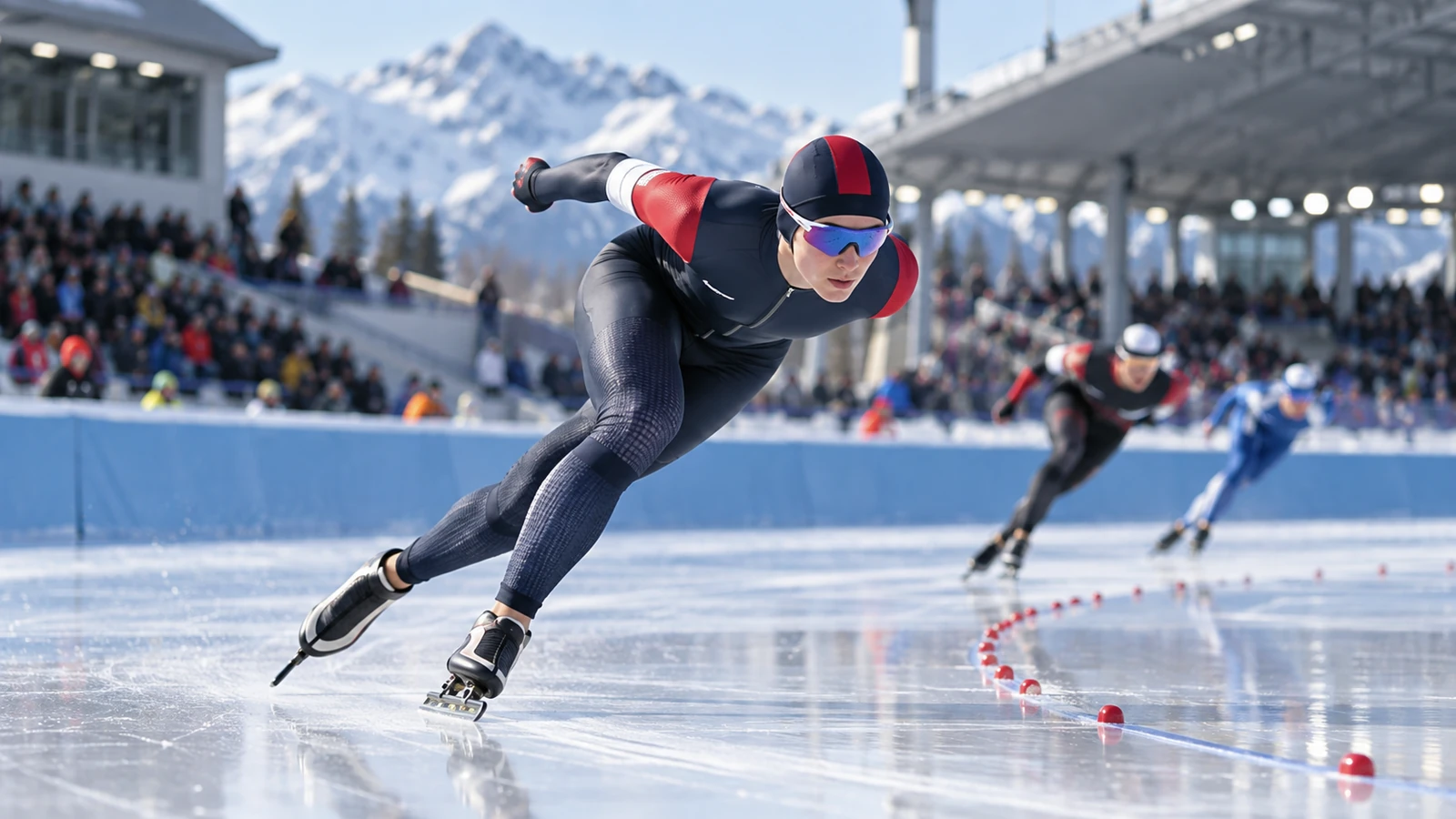
Speed skating is one of the oldest, fastest, and most technologically intricate events in the Winter Olympic Games. Behind the thrilling glides and high-speed turns lies a world of biomechanical engineering, extreme physical forces, and centuries-old traditions. From hinged blades that shattered world records overnight to suit fabrics borrowed from golf balls, athletes push human physiology to its absolute limit on ice. Here are 15 fascinating facts about the science, history, and extraordinary moments of speed skating.
1. The Mechanical Genius of the Clap Skate
Modern long-track speed skaters rely on a revolutionary hinged blade known as the clap skate. Unlike traditional ice skates where the blade is permanently fixed to the heel and toe of the boot, clap skates feature a spring-loaded hinge at the toe. This design allows the heel to detach from the blade during a stride, keeping the blade flat against the ice for crucial extra milliseconds. As a result, athletes can push off much longer and generate far greater power without digging their toes into the ice. When introduced to international competition in the late 1990s, the design triggered an astonishing wave of broken world records at the 1998 Nagano Games. Today, every competitive long-track skater in the world utilizes this game-changing engineering feat.
2. Why Elite Skaters Race Barefoot
Skaters operate at speeds where millimeter adjustments make the difference between a podium finish and a catastrophic spill. To achieve maximum responsiveness, many elite speed skaters choose to wear their rigid carbon-fiber boots without socks. Custom boots are heat-molded precisely to the shape of an athlete's bare feet, creating an extraordinarily snug fit. Eliminating socks removes tiny layers of fabric that could slip, offering direct tactile feedback from the ice to the feet. This intense direct contact allows skaters to feel microscopic changes in edge pressure as they navigate ice surfaces. While this practice frequently leads to painful blisters, top competitors consider it an indispensable edge.
3. Winning by a Blade's Edge: The "Hawk" Finish
Unlike track and field events where an athlete's torso crossing the finish line determines the winner, speed skating measures victory strictly by the tip of the skate blade. Because races are frequently decided by thousandths of a second, skaters have developed a specialized technique called the "hawk" maneuver. As they reach the finish line, athletes lungingly extend their front foot forward while throwing their torso back to thrust the blade tip across the line ahead of their body. Executing a successful hawk requires perfect timing and exceptional balance at speeds exceeding thirty miles per hour. Mastered properly, however, this dramatic kick has repeatedly stolen gold medals in split-second finishes.
4. Short-Track Skaters Endure Near-Space G-Forces
Short-track speed skating takes place on a compact oval track measuring just 111 meters in circumference with tight, sweeping turns. Rounding these sharp curves at speeds approaching thirty-five miles per hour generates immense centrifugal force on the human body. Athletes routinely experience up to four Gs of force in the turns, a physical load comparable to what astronauts feel during a space shuttle launch. To withstand this crushing pressure without flying off into the protective mats, skaters lean inward at extreme angles, often touching the ice with gloved fingertips for balance. Maintaining tactical awareness and position while fighting four times one's body weight requires extraordinary lower-body strength.
5. Ice Masters Manipulate Temperature for Different Distances
Not all ice is created equal, and dedicated venue ice masters carefully adjust track conditions based on the specific events being contested. For short sprint races like the 500-meter event, technicians keep the ice slightly warmer and softer around twenty-four degrees Fahrenheit. This softer ice provides greater grip, allowing sprinters to dig their blades in deeply for explosive accelerations out of the start. Conversely, for grueling long-distance races, the ice is chilled to a much colder, harder temperature. Hard ice minimizes blade penetration, reducing friction and allowing long-distance skaters to glide effortlessly while conserving vital energy.
6. The Aerodynamic Secret of the Tucked Arm
Spectators watching long-track speed skating often notice competitors holding one or both arms firmly behind their lower backs. Far from being a stylish pose, this distinct arm posture is backed by rigorous aerodynamic science. Wind tunnel testing demonstrates that swinging both arms back and forth like a runner creates turbulent drag that significantly degrades forward momentum. By resting an arm flush against the lower back, skaters create a streamlined profile that smoothly channels airflow over their bodies. This posture also helps stabilize the torso, enabling a lower, more efficient center of gravity throughout the stride.
7. Eric Heiden's Unbeatable 1980 Olympic Sweep
At the 1980 Winter Olympics in Lake Placid, American speed skater Eric Heiden accomplished what many experts consider the single greatest individual performance in Winter Olympics history. Heiden won gold medals in all five men's speed skating events, spanning distance categories from the explosive 500-meter sprint to the brutal 10,000-meter marathon. Even more remarkably, he set Olympic records in all five events and established a new world record in the 10,000-meter race. In modern speed skating, physical specialization makes such versatility virtually impossible, as sprinting requires fast-twitch muscle fibers while long distances demand extreme aerobic endurance. Heiden remains the only athlete ever to sweep every available event in a single Olympic speed skating program.
8. High-Tech Suits Borrow Principles from Golf Balls
Aerodynamic innovation in speed skating extends beyond posture and blade mechanics into the very fabric of an athlete's suit. During the late 1990s, sportswear engineers began integrating textured ceramic strips and dimpled materials into key high-drag zones of competition suits. Much like the dimples on a golf ball, these small surface irregularities disrupt air current layers to reduce aerodynamic turbulence around the athlete's body. By manipulating boundary air layers, the suits allow skaters to cut through the air with significantly less drag. World governing bodies strictly regulate suit materials today to maintain a fair balance between technological advantage and athletic capability.
9. The Netherlands' Legendary 200-Kilometer Canal Race
In the Netherlands, speed skating is deeply embedded in national culture, culminating in a legendary endurance event known as the Elfstedentocht, or Eleven Cities Tour. This grueling 200-kilometer natural ice race winds through canals, rivers, and lakes connecting eleven historic Frisian cities. However, because the race requires natural ice to freeze to a thickness of at least fifteen centimeters along the entire route, it is held only when weather permits. The event has occurred just fifteen times since its official inception in 1909, with the most recent race taking place in 1997. When conditions allow the race to happen, the entire nation stops working to celebrate and follow the heroic skaters.
10. Steven Bradbury's Miraculous "Last Man Standing" Gold
The 2002 Salt Lake City Winter Olympics produced one of the most famous and unlikely triumphs in sporting history during the men's 1,000-meter short-track final. Australian skater Steven Bradbury found himself severely outmatched against a star-studded field of top international competitors. Recognizing his inferior speed, Bradbury adopted a tactical strategy of trailing behind the main pack, hoping to capitalize on potential collisions. On the final turn of the race, his strategy paid off in shocking fashion when all four leading skaters tangled and crashed into the barrier. Bradbury calmly coasted across the finish line totally unimpeded to claim Australia's first-ever Winter Olympic gold medal.
11. Mandatory Crossover Rules Guarantee Equal Distances
Long-track speed skating tracks feature two distinct lanes—an inner lane and an outer lane—carved into a standard 400-meter oval. Because the inner lane has a smaller radius, skating exclusively inside would offer a significant distance advantage over a competitor on the outside. To ensure absolute fairness, competitors swap lanes on the back straightaway during every single lap of a race. The skater transitioning from the outer lane to the inner lane holds the official right-of-way during this crossover maneuver. If the inner-lane skater fails to yield space and impedes the outer skater during the lane change, they face immediate disqualification.
12. Short-Track Blades Are Purposefully Curved to the Left
Unlike figure skates or hockey skates which feature flat, straight blades, short-track speed skating blades are engineered with intentional structural asymmetries. Technicians bend the long steel blades into a slight curve that arcs to the left, matching the direction of the oval turns. Additionally, the blades are mounted slightly off-center on the bottom of the boot toward the left side. This custom bending and placement allow skaters to lean heavily into tight left turns at extreme angles without the boot sidewall scraping against the ice. The curved blade effectively pulls the athlete into the turn, providing extraordinary lateral stability while rounding corners at breakneck speeds.
13. Dan Jansen’s Emotional Record-Breaking Gold
American sprinter Dan Jansen experienced a decade of tragic near-misses before achieving one of the most emotional moments in Olympic history. At the 1988 Games, Jansen fell during his races after learning hours earlier that his sister had passed away from leukemia, and subsequent Olympic appearances brought further heartbreaking stumbles. Entering his final Olympic race—the 1,000-meter event at the 1994 Lillehammer Games—Jansen carried immense pressure to secure an elusive medal. Delivering a flawless performance, he not only won the gold medal but set a stunning world record time of 1:12.43. During his victory lap, Jansen carried his young daughter, named Jane after his late sister, creating an iconic symbol of athletic perseverance.
14. Protective Suits Shield Against Razor-Sharp Steel
While speed skating is celebrated for grace and velocity, short-track racing carries severe physical risks due to high speeds and closely packed packs of skaters. Speed skating blades are sharpened by hand using fine whetstones to achieve razor-thin edges capable of slicing cleanly into hard ice. In tight pack races where severe falls occur regularly, these razor-sharp blades pose a constant threat of deep lacerations to downed competitors. To mitigate this danger, international regulations require short-track skaters to wear cut-resistant suits woven with Kevlar or Dyneema fibers. Skaters must also wear cut-resistant neck protectors, specialized gloves, and padded helmets to safeguard vulnerable body areas during chaotic crashes.
15. Shani Davis Shattered Boundaries in Winter Sports
American speed skater Shani Davis carved his name into the history books at the 2006 Winter Olympics in Turin, Italy. By winning the men's 1,000-meter event, Davis became the first Black athlete from any nation to win an individual gold medal at the Winter Olympic Games. A master of pacing and technical precision, Davis proved that speed skating excellence could transcend traditional demographic boundaries. He successfully defended his 1,000-meter title at the 2010 Vancouver Games, solidifying his status as one of the greatest middle-distance skaters of all time. Davis also set multiple world records throughout his career, inspiring a new generation of diverse athletes to pursue winter sports disciplines.
Sources & References
This AI-assisted post was rigorously curated and fact-checked for accuracy by:
 Martin Roháček
How fun was this article? 🤔
Tap a star to rate it
🧠 Quiz: How closely were you paying attention?
10 questions — all answers are in the article above!
Enjoyed these facts? There's more! 💌
Fresh fun facts in your inbox. No spam, ever.