The Golden Champion: 15 Fascinating Facts About Steffi Graf
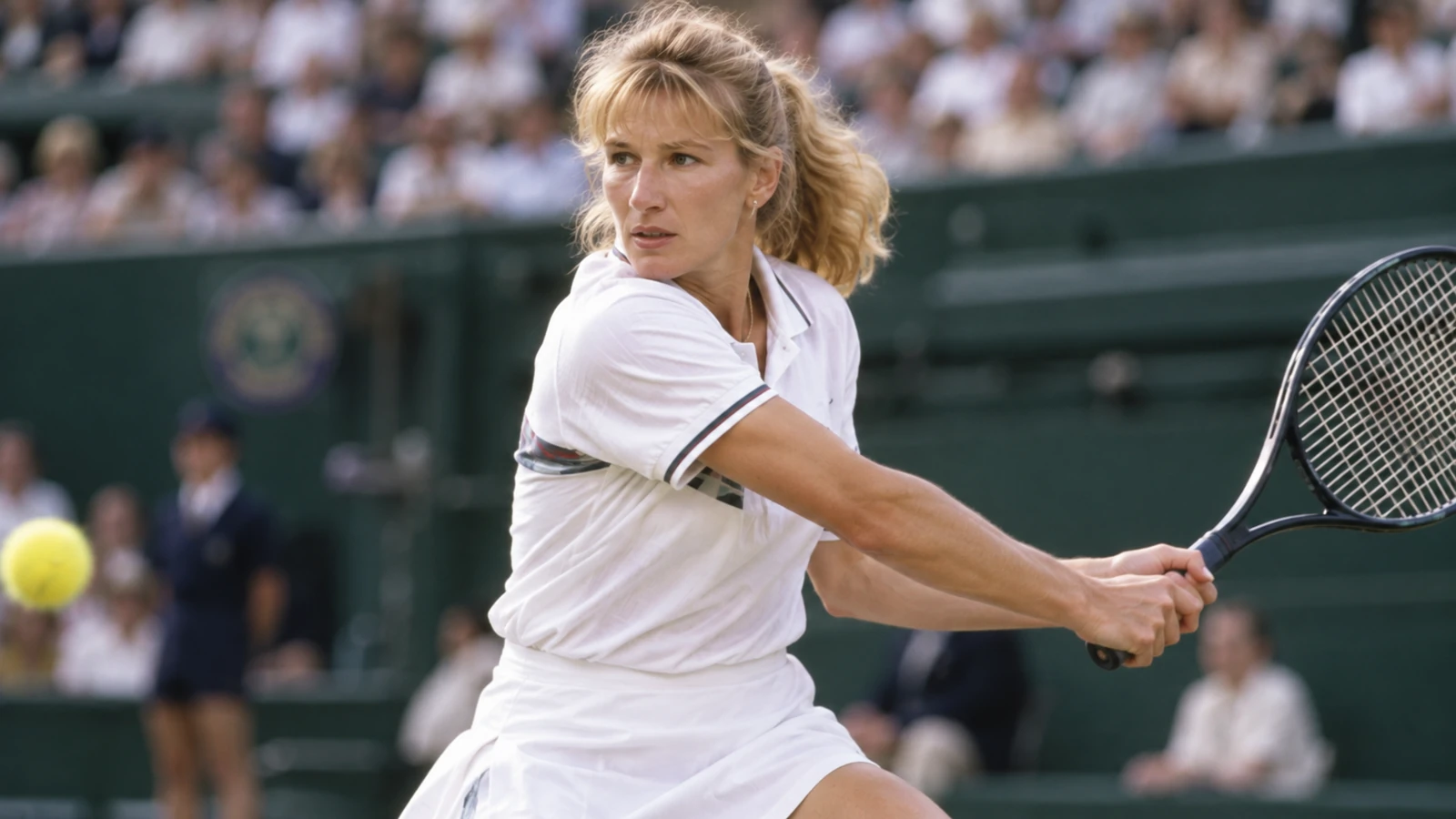
Steffi Graf stands as one of the most dominant and iconic figures in the history of modern athletics. Famous for her devastating forehand and unmatched consistency, she dominated women's tennis throughout the late 1980s and 1990s. From achieving tennis's only calendar-year Golden Slam to establishing long-standing ranking records, her career is packed with legendary milestones. Here are 15 fascinating facts about the life, career, and enduring legacy of Steffi Graf.
1. The Golden Slam Pioneer
In 1988, Steffi Graf accomplished a feat unprecedented in tennis history that remains unmatched to this day. She swept all four Grand Slam titles—the Australian Open, French Open, Wimbledon, and the US Open—and captured the Olympic gold medal in Seoul, South Korea. This extraordinary achievement in a single calendar year led commentators to coin the term "Golden Slam" specifically for her. During this dominant season, Graf won 72 of her 75 matches and established her supremacy across clay, grass, and hard courts. To this date, no other professional tennis player, male or female, has achieved a single-calendar-year Golden Slam.
2. 377 Weeks at World Number One
Graf dominated the women's professional tour for more than a decade, spending a total of 377 weeks ranked as the world number one by the Women's Tennis Association. This incredible reign stands as the longest total duration spent at number one by any female player in tennis history. In addition to her total weeks at the top, she held the number one spot for 186 consecutive weeks between August 1987 and March 1991. That streak ties her with Serena Williams for the longest unbroken stretch at number one in women's tennis history. Her remarkable consistency allowed her to finish as the year-end world number one player on eight separate occasions.
3. The Legendary "Fräulein Forehand"
Graf's primary weapon on the court was her explosive right-handed forehand, which delivered unprecedented pace, depth, and precision. Her ability to run around her backhand and hit heavy, angled forehand winners earned her the iconic German nickname "Fräulein Forehand." Tennis analysts and fellow players frequently cited her forehand as the most formidable single shot in the history of women's tennis. Combined with her world-class footwork and athletic movement, her forehand allowed her to dictate rallies from virtually anywhere on the court. Opponents often found themselves pinned deep behind the baseline, unable to neutralize her relentless forehand attacks.
4. The Ultimate Quadruple Career Grand Slam
While many tennis legends have dominated specific court surfaces, Graf proved equally supreme on all of them. She remains the only tennis player in history—male or female—to win each of the four Grand Slam tournaments at least four times. Her major singles record includes four Australian Opens, six French Opens, seven Wimbledons, and five US Opens. This unique balance highlights her incredible adaptability across slow red clay, fast grass, and hard courts. Her universal court mastery underscores why many historians view her as the most complete player in tennis history.
5. Wimbledon's Most Famous Heckle Reply
During a tense semifinal match at Wimbledon in 1995 against Kimiko Date, Graf experienced one of the most famous crowd interactions in sports history. As she prepared to serve, a bold fan called out loudly from the stands, "Steffi, will you marry me?" The stadium broke into laughter while Graf paused her toss and stepped back from the baseline. Smiling at the crowd, she quick-wittedly shouted back, "How much money do you have?" The sharp exchange drew roaring applause from the crowd, showcasing Graf's understated humor under intense competitive pressure.
6. Living Room Beginnings with Wooden Rackets
Graf's journey to tennis greatness began at an extraordinarily early age in her hometown of Brühl, West Germany. When she was just three years old, her father, Peter Graf, introduced her to the sport in their living room. He tied a string across two chairs to act as a net and trimmed down a wooden racket so she could swing it easily. Using sponge balls, Graf practiced hitting shots for hours while her father coached her footwork and swing mechanics. This unconventional living room training laid the foundation for the extraordinary coordination and discipline she displayed throughout her career.
7. Her First Major Triumph at Roland Garros
Graf announced herself on the world stage at the 1987 French Open, where she captured her first Grand Slam singles title at age 17. In a thrilling final, she defeated world number one Martina Navratilova 6-4, 4-6, 8-6 in a physical three-set battle. The victory officially ended Navratilova's dominant reign at the top of women's tennis and signaled a dramatic changing of the guard. Later that year, Graf officially took over the world number one ranking for the first time in her career. It served as the launching pad for her historic 1988 Golden Slam season.
8. The Signature Sliced Backhand
Unlike most of her contemporaries who hit heavy topspin off both wings, Graf utilized a unique low-skittering backhand slice. She hit her backhand with precise underspin, causing the ball to stay extremely low to the ground upon bouncing. This unusual tactic forced opponents to bend low, lifting the ball awkwardly and setting up Graf to crush her forehand. While commentators occasionally criticized her for lacking a heavy topspin backhand, Graf used her slice to dictate the tempo of rallies. Her slice backhand became a defensive shield and an offensive weapon all at once.
9. Retiring at the Pinnacle of Tennis
Graf shocked fans and commentators alike when she announced her retirement from professional tennis in August 1999 at just 30 years old. Unlike many stars who play past their prime, Graf stepped away while still at the peak of her capabilities. Just months prior to retiring, she won the 1999 French Open by beating Martina Hingis and reached the final at Wimbledon. At the time of her departure, she was officially ranked number three in the world. She explained that after achieving everything she set out to accomplish, she no longer felt the motivation required to compete at the highest level.
10. A Record-Setting 22 Grand Slam Titles
By the time Graf retired in 1999, she had collected 22 Grand Slam singles titles, establishing an Open Era record that stood for almost 20 years. Her total was only surpassed in 2017 when Serena Williams won her 23rd Grand Slam title at the Australian Open. Overall, Graf won 107 WTA singles titles during her career, placing her third on the all-time women's list behind Martina Navratilova and Chris Evert. Remarkably, Graf won over 88 percent of all professional singles matches she played throughout her career. Her incredible winning percentage remains one of the highest in modern sports history.
11. Marriage to Fellow Legend Andre Agassi
In October 2001, Graf married fellow tennis icon Andre Agassi in a private ceremony in Las Vegas. Their union created one of the most decorated athletic power couples in sports history. Between them, Graf and Agassi have won 30 Grand Slam singles titles and two Olympic gold medals. Both players are also among the rare few to have completed a career Golden Slam in tennis. The couple raised two children together and have engaged in various philanthropic endeavors, maintaining a strong presence in charitable works.
12. Dominant Head-to-Head Records
Graf built an extraordinary record against the strongest players of her generation, maintaining winning head-to-head records against almost every rival. She dominated her overall series against major opponents like Arantxa Sánchez Vicario (28 wins to 8 losses) and Gabriela Sabatini (29 wins to 11 losses). Against rival Monica Seles, Graf held a 10-5 winning advantage across their iconic career meetings. She also posted winning records against legendary predecessors like Chris Evert and younger prodigies like Martina Hingis. Her absolute superiority against top-ten opponents cemented her status as the defining player of her era.
13. AP Female Athlete of the Century
In late 1999, following her retirement, a panel of sports experts assembled by the Associated Press named Graf the Female Tennis Player of the Century. She finished ahead of legends like Martina Navratilova and Chris Evert to secure the prestigious honor. In 2004, Graf was inducted into the International Tennis Hall of Fame in Newport, Rhode Island, in recognition of her incredible career accomplishments. Her induction speech was delivered by her husband, Andre Agassi, who praised her humility and extraordinary athletic gifts. Today, she is widely considered one of the greatest athletes of the 20th century.
14. Founding "Children for Tomorrow"
In 1998, Graf founded "Children for Tomorrow," a non-profit foundation dedicated to helping children suffering from emotional trauma. The foundation works closely with the University Medical Center Hamburg-Eppendorf to assist refugee children affected by war, violence, and persecution. Rather than just offering short-term relief, the charity provides specialized psychological treatment and long-term therapeutic care. Graf has actively devoted significant personal time, resources, and fundraising efforts to expand the charity's global impact. The organization has established project centers in countries like Uganda, Eritrea, and Germany.
15. A Deliberately Private Life in Las Vegas
Since retiring from tennis, Graf has purposefully avoided high-profile media publicity and celebrity lifestyle coverage. She and Andre Agassi chose to reside in Las Vegas, Nevada, where they raised their two children away from the European media spotlight. Graf rarely gives interviews about her personal life, preferring to focus on her charity work and private business investments. Her decision to step away completely from the limelight contrasts with many former sports icons who remain active TV commentators. Graf's post-tennis life reflects the quiet focus and self-discipline that defined her playing career.
Sources & References
This AI-assisted post was rigorously curated and fact-checked for accuracy by:
 Martin Roháček
How fun was this article? 🤔
Tap a star to rate it
🧠 Quiz: How closely were you paying attention?
10 questions — all answers are in the article above!
Enjoyed these facts? There's more! 💌
Fresh fun facts in your inbox. No spam, ever.