The Lawgiver Sultan: 15 Fascinating Facts About Suleiman the Magnificent
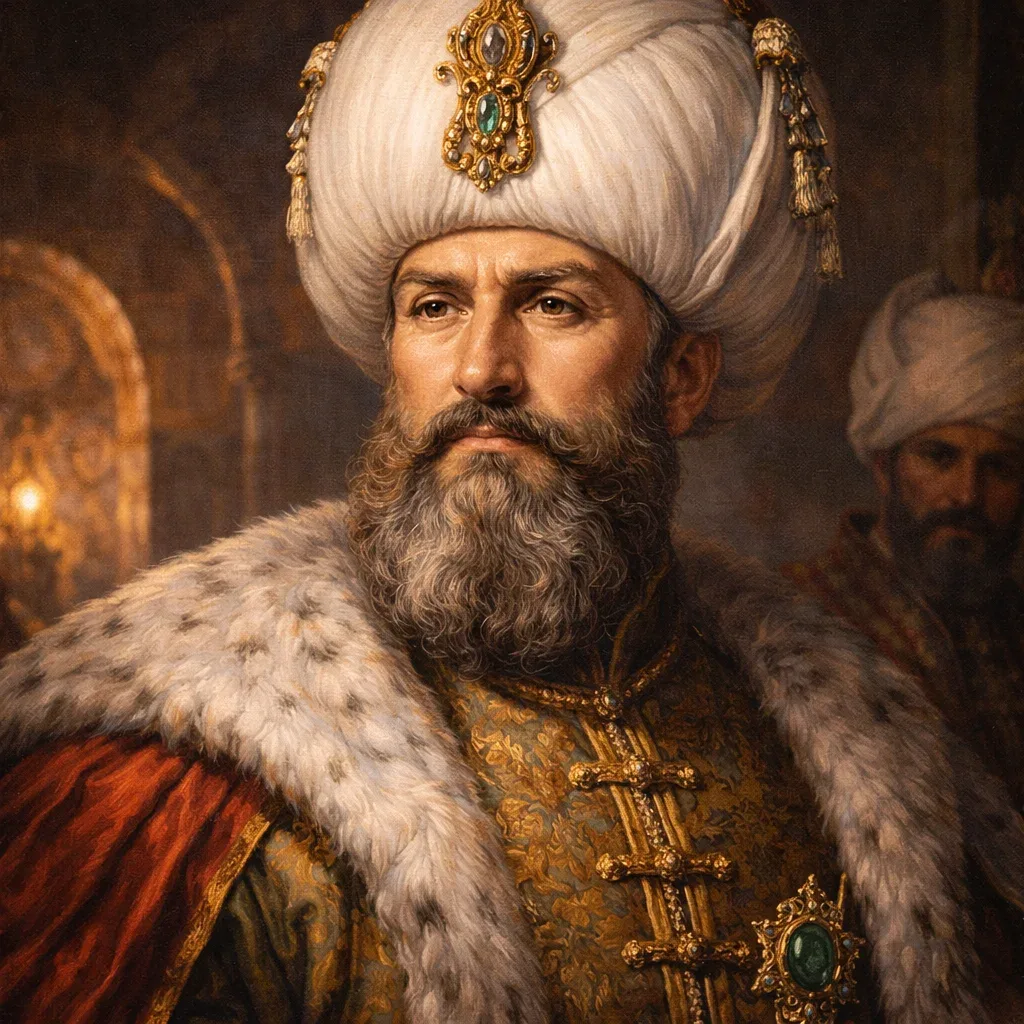
Suleiman the Magnificent presided over the golden age of the Ottoman Empire, expanding his domain from the gates of Vienna to the Persian Gulf. Known to Western Europeans for his imperial grandeur and to his subjects as Kanuni, or the Lawgiver, he was a complex monarch who codified legal systems, authored romantic poetry, and reshaped world commerce. From a secret death on the battlefield to his groundbreaking legal marriage to Hurrem Sultan, his reign redefined sixteenth-century geopolitics. Here are 15 fascinating facts about one of history's most powerful rulers.
1. His Own People Knew Him as "The Lawgiver"
While Western Europeans marveled at his court's opulence and dubbed him "The Magnificent," Ottoman subjects revered him as Kanuni, or "The Lawgiver." Suleiman spent early years of his reign harmonizing religious sharia law with dynastic civil laws known as the Kanun. He systematically eliminated legal contradictions and overhauled tax codes to protect peasantry from feudal exploitation. His legal synthesis remained the cornerstone of Ottoman jurisprudence for over three centuries. This comprehensive legal reform ensured that even imperial officials were subject to standardized statutory administrative rules.
2. He Was a Formally Trained Master Goldsmith
In accordance with Ottoman dynastic tradition, every prince was required to master a practical trade alongside statecraft and military arts. As a young prince stationed in the Black Sea port of Trabzon, Suleiman apprenticed under expert artisans to master metallurgy and gem setting. He became an exceptionally skilled goldsmith and jeweler who spent hours crafting intricate pieces in his imperial workshop. Fine metalwork provided the Sultan a quiet meditative release from administrative burdens throughout his life. Contemporary accounts note that he often designed personalized jewelry as gifts for his wife and foreign dignitaries.
3. He Spoke at Least Six Languages Fluently
Reigning over an empire bridging Europe, Asia, and Africa required extraordinary diplomatic and administrative breadth. Suleiman was a formidable polyglot who fluently spoke Ottoman Turkish, Arabic, Persian, and Chagatai, along with Slavic dialects such as Serbian. His mastery of Persian allowed him to absorb classical poetry, while Arabic enabled direct engagement with Islamic theological texts. Communicating with foreign envoys and provincial leaders in their native tongues allowed him to maintain tighter control over his diverse empire. This linguistic agility directly served his ambitious military planning and court diplomacy.
4. He Shattered Centuries of Imperial Marriage Traditions
Ottoman sultans had avoided formal marriages for centuries to prevent noble families from gaining excessive political leverage. Suleiman radically shattered this tradition by legally marrying his beloved concubine, a Ruthenian woman named Hurrem Sultan, known in Europe as Roxelana. He elevated her to the unprecedented position of Haseki Sultan, making her a powerful political advisor in imperial matters. Their union established the "Sultanate of Women," an era where imperial women wielded immense power in state policy. This deep romantic and political partnership altered the royal court's power dynamics forever.
5. He Authored Thousands of Poems Under a Pseudonym
Under the pen name Muhibbi, meaning "The Affectionate Friend" or "The Lover," Suleiman became one of the Ottoman era's most prolific poets. He composed over 3,000 lyrical poems in Turkish and Persian, reflecting on romance, mortality, and royal burdens. Many of his finest verses were tender love letters addressed directly to Hurrem Sultan during distant military campaigns. Other poems expressed philosophical introspection regarding the fleeting nature of earthly power and the weight of divine judgment. His poetic output remains a highly celebrated peak of classical Ottoman lyric literature today.
6. He Turned the Mediterranean into an "Ottoman Lake"
Suleiman vastly expanded Ottoman naval supremacy by appointing the legendary corsair Hayreddin Barbarossa as his Grand Admiral. Barbarossa's decisive victory over a combined European fleet at the Battle of Preveza in 1538 secured total Ottoman naval dominance. For several decades, the Mediterranean Sea operated effectively as an internal Ottoman lake, securing key maritime trade routes. This naval dominance allowed Suleiman to project military power to North Africa, the Red Sea, and even the Indian Ocean. Control over maritime commerce generated vast wealth that funded imperial building projects across his realm.
7. European Envoys Left Detailed Physical Descriptions of Him
Venetian ambassadors to Istanbul sent meticulous reports home describing the Sultan's distinct physical features and demeanor. Diplomat Bartolomeo Contarini described a young Suleiman as tall and wiry with a long neck, pale skin, and an aquiline nose. Foreign envoys noted that despite his slender frame, he possessed remarkable physical stamina on campaign. Observers described his gaze as intensely grave, reflecting a solemn demeanor that inspired awe among court attendants. These ambassadorial dispatches provided Western monarchs with vivid psychological and physical portraits of their formidable eastern rival.
8. He Revolutionized Imperial Education for Young Men
Recognizing that an expanding state required capable administrators, Suleiman restructured the empire's educational architecture. He funded primary religious schools while establishing specialized higher institutes that taught mathematics, medicine, astronomy, and law. Additionally, he expanded the elite Enderun School inside Topkapı Palace, which trained promising youth for top administrative roles. This meritocratic system selected talented students regardless of background and prepared them for civil service. His educational investments provided the empire with a highly professional bureaucracy that sustained imperial stability.
9. He Ordered the Execution of His Closest Friend
Pargalı Ibrahim Pasha rose from an enslaved Greek boy to become Suleiman's inseparable grand vizier and closest confidant. For over a decade, the two men ate, lived, and governed together in extraordinary brotherhood. However, Ibrahim's soaring ambition and self-titling as "Serasker Sultan" aroused the Sultan's deep suspicion of treason. In 1536, Suleiman made the agonizing decision to have his trusted friend strangled in Topkapı Palace while he slept nearby. This tragic downfall highlighted the absolute and unforgiving nature of imperial Ottoman power during its zenith.
10. He Issued Imperial Edicts Protecting Jewish Citizens
While religious persecution flared across Reformation-era Europe, Suleiman made the Ottoman Empire a sanctuary for religious minorities. In 1553, he issued a famous royal firman formally outlawing "blood libel" accusations against Jewish communities. He declared that false ritual murder charges were illegal and required any trials involving Jewish citizens to be held in imperial courts. Thousands of Sephardic Jews fleeing the Spanish Inquisition settled in cities like Thessaloniki and Istanbul under his imperial protection. This atmosphere of tolerance allowed Jewish merchants, physicians, and scholars to thrive throughout the realm.
11. His Empire Encompassed 25 Million Subjects
At the height of Suleiman's reign, his territorial holdings stretched across three continents, encompassing over 25 million people. His armies pushed deep into Central Europe, laying siege to Vienna in 1529 and conquering most of Hungary. To the east, he captured Baghdad from the Safavid Empire, securing control over crucial trade corridors to the Persian Gulf. The vast empire contained an incredible mosaic of ethnicities, including Greeks, Arabs, Hungarians, Serbs, and Armenians. Managing this sprawling population required sophisticated logistics, vast grain networks, and an army of dedicated provincial governors.
12. He Rebuilt the Ancient Walls Surrounding Jerusalem
Visitors to Jerusalem today still walk alongside the impressive stone fortifications constructed under Suleiman's direct order between 1537 and 1541. Hearing reports of potential Crusader incursions, he commissioned massive defensive walls stretching nearly two and a half miles around the Old City. The project included thirty-four watchtowers and seven majestic gates, including the famous Damascus Gate. Suleiman also funded extensive restorations of Islamic holy sites in the city, including the Dome of the Rock. These iconic limestone walls remain a dominant architectural landmark of the ancient city today.
13. He Executed His Own Popular Heir Prince Mustafa
One of the darkest tragedies of Suleiman's long reign was the execution of his eldest son, Crown Prince Mustafa, in 1553. Mustafa was immensely popular among the Janissaries and the populace, which fed intense palace intrigue regarding his rising power. Persuaded by rumors that Mustafa was plotting an armed coup with Persian support, Suleiman summoned his son to his military tent. There, imperial mutes strangled the young prince on his father's orders while Suleiman watched from behind a curtain. This fatal choice left the imperial succession to his less capable son Selim II, weakening future dynastic leadership.
14. He Spearheaded an Architectural Golden Age with Mimar Sinan
Suleiman's reign coincided with the career of Mimar Sinan, history's greatest Ottoman chief imperial architect. Together, they transformed the skylines of Istanbul, Damascus, and Mecca with magnificent mosques, bridges, aqueducts, and public baths. The masterpiece of this era, the Süleymaniye Mosque in Istanbul, was built to showcase the empire's supreme grandeur and spiritual devotion. Sinan engineered revolutionary acoustic systems and soaring domes that withstood centuries of major earthquakes. This imperial building boom created a distinct Ottoman architectural identity that defined the Mediterranean world.
15. His Death Was Kept Secret for 48 Days to Prevent Panic
Suleiman died in his royal tent at age 71 during the Siege of Szigetvár in Hungary in September 1566. Fearing a military retreat or troop mutiny before his successor arrived, Grand Vizier Sokollu Mehmed Pasha concealed his death. Physicians embalmed the Sultan's body, while his heart and internal organs were buried locally near Szigetvár. For 48 days, fake imperial orders were issued, and the Sultan's corpse was dressed in official robes seated in a carriage. The army only learned of his passing after successfully completing the siege and returning safely toward the capital.
Sources & References
This AI-assisted post was rigorously curated and fact-checked for accuracy by:
 Martin Roháček
How fun was this article? 🤔
Tap a star to rate it
🧠 Quiz: How closely were you paying attention?
10 questions — all answers are in the article above!
Enjoyed these facts? There's more! 💌
Fresh fun facts in your inbox. No spam, ever.