The Harbour City: 15 Fascinating Facts About Sydney
Sydney is famed for its shimmering harbor, sun-drenched beaches, and architectural wonders, but Australia's largest metropolis conceals a surprising history beneath its postcard exterior. From secret subterranean lakes and convict-carved tunnels to illegal underworld empire queens and abandoned floating forests, Sydney’s urban landscape is steeped in unexpected tales. Discover 15 fascinating facts about the Harbour City that showcase its rich heritage, engineering marvels, and colorful character.
1. The Secret Subterranean Lake Beneath St James Station
St James Station in central Sydney sits above an aborted underground railway tunnel that flooded to create a submerged, crystal-clear reservoir spanning roughly 190 meters. Excavated during the 1920s as part of John Bradfield’s ambitious railway scheme, construction on the section halted with the onset of the Great Depression. During World War II, the air force modified these abandoned tunnels into bomb-proof air-raid shelters and secret military communications centers. Today, access to this underground waterway is strictly prohibited to the public, though it remains legendary among local urban explorers. The still waters preserve historical graffiti carved by soldiers and construction workers nearly a century ago.
2. The Opera House Took 14 Years and Forced Its Architect into Exile
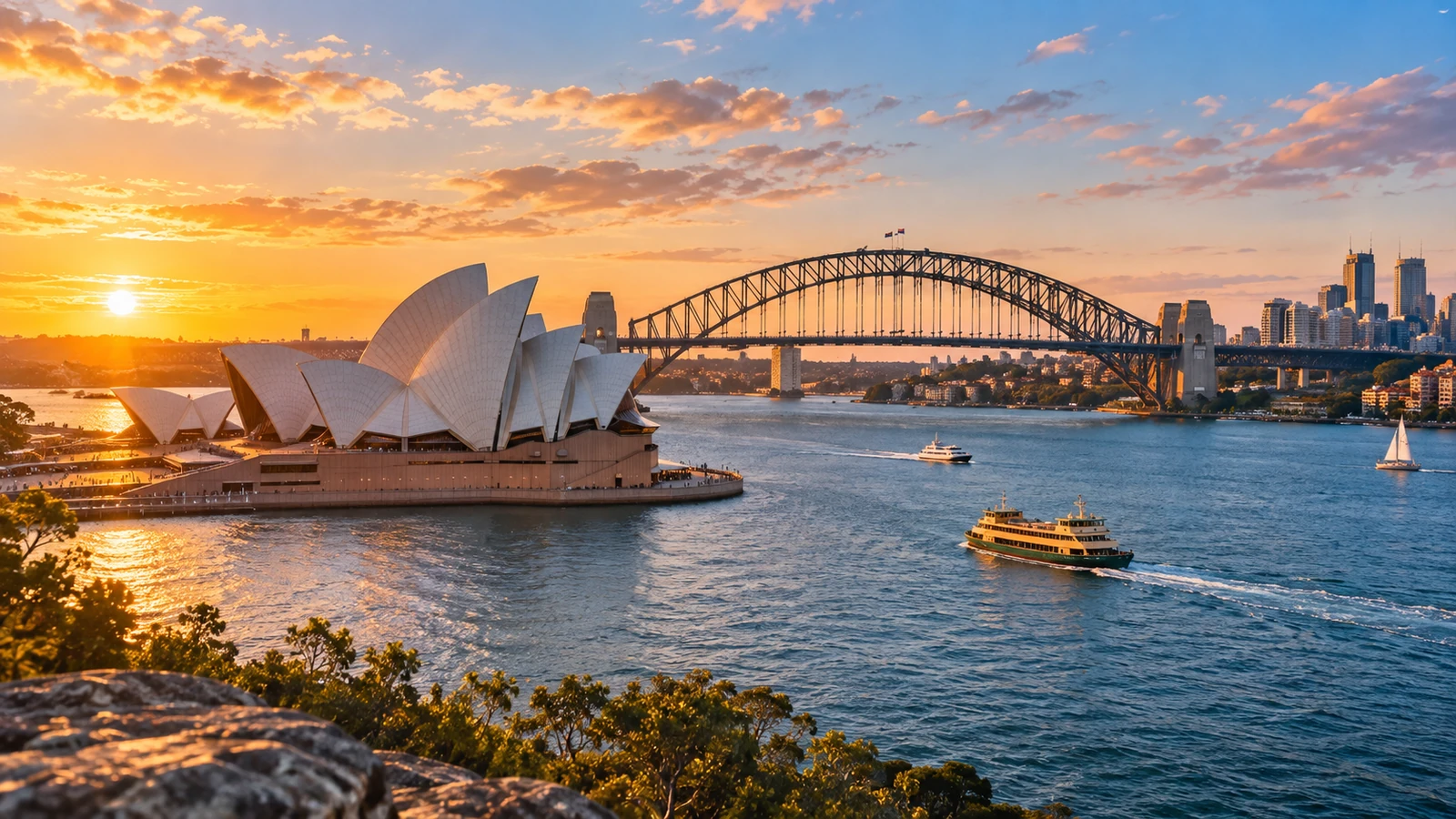
Danish architect Jørn Utzon won an international competition in 1957 to design the Sydney Opera House, estimating it would cost £3.5 million and take four years to build. Instead, engineering challenges, ballooning costs, and political hostility turned the project into a 14-year saga that ultimately cost $102 million. In 1966, amid bitter disputes with the New South Wales Minister for Works over payments and interior designs, Utzon resigned in protest. He left Australia shortly thereafter and never returned to see his completed masterpiece in person before his death in 2008. Despite the turmoil, the building was declared a UNESCO World Heritage site in 2007, recognizing Utzon’s visionary genius.
3. Over One Million Swedish Tiles Cover the Opera House Roof
The iconic white roof sails of the Sydney Opera House are lined with exactly 1,056,006 glazed ceramic tiles. Manufactured by the Swedish ceramic company Höganäs, these specialized tiles were developed over three years to withstand the harsh coastal salt air and bright Australian sunlight. Utzon designed two variations—glossy cream and matte buff—to create subtle texture and prevent glare when viewed from a distance or captured on camera. Thanks to their smooth, non-porous finish, the tiles possess self-cleaning properties, allowing rainwater to wash away dirt and salt residue. Maintenance crews still inspect them regularly, but the original tiles have held up remarkably well for over half a century.
4. Before Movie Fame, Paul Hogan Was a Rigger on the Harbour Bridge
Before starring as Michael "Crocodile" Dundee and becoming an international icon, comedian Paul Hogan worked as a rigger on the Sydney Harbour Bridge. During the late 1960s and early 1970s, Hogan's job involved setting up scaffolding and maintaining safety cables hundreds of feet above the harbor traffic. He often joked in later interviews that working at extreme heights in the blistering sun kept him in peak physical shape without ever paying for a gym membership. It was during his time on the bridge that he was discovered after making humorous comments on a television talent show, launching his broadcasting career. To this day, Sydney Harbour Bridge riggers consider Hogan their most famous alumnus.
5. The Granny Smith Apple Was Born by Accident in a Sydney Suburb
Every Granny Smith apple consumed today traces its lineage back to a single chance discovery in the Sydney suburb of Eastwood in 1868. Maria Ann Smith, an elderly orchardist affectionately known as "Granny Smith," dumped a wooden crate of discarded French crabapple cores onto her compost heap near a creek. A chance seedling sprouted, which she cultivated and noticed produced unique, crisp green apples ideal for both baking and eating fresh. Local orchardists recognized the variety's exceptional shelf life and commercial appeal, multiplying the trees across Australia and eventually the globe. Sydney still honors Smith's accidental agricultural breakthrough every October with the annual Granny Smith Festival.
6. The Harbour Bridge’s Four Granite Pylons Are Purely Decorative
The towering 89-meter-high granite-faced pylons at each end of the Sydney Harbour Bridge look like vital structural supports, but they actually carry no weight from the arch. Structural engineer John Bradfield designed the steel arch to be completely self-supporting, anchored directly into solid sandstone bedrocks. The massive concrete and granite towers were added solely to soothe public anxiety, as many citizens in the 1920s doubted that a single steel arch could safely span the harbor. Architect John Burnet designed the pylons to give the bridge a visual sense of balance and heavy-duty stability. Today, one of the southeastern pylons houses a museum and lookout, offering panoramic views of the city.
7. Arthur Phillip Almost Named Sydney "New Albion"
When Captain Arthur Phillip arrived with the First Fleet in January 1788 to establish a British penal colony, he initially planned to name the location "New Albion." "Albion" was an ancient poetic term for Great Britain, symbolizing a fresh start in the Southern Hemisphere. However, before finalizing the official paperwork, Phillip chose to honor Thomas Townshend, 1st Viscount Sydney, who was the British Home Secretary responsible for authorizing the fleet’s voyage. The name Sydney officially applied to the settlement at Sydney Cove on January 26, 1788. Had Phillip stuck with his first instinct, modern residents would be calling themselves "New Albioners" instead of Sydneysiders.
8. A 100-Year-Old Shipwreck Has Transformed into a Floating Forest
Lying half-submerged in Homebush Bay, the rusted hull of the SS Ayrfield has turned into a thriving, miniature ecosystem known as the "Floating Forest." Built in Britain in 1911 as a steam collier, the 1,140-ton ship transported coal and later served as a supply vessel during World War II before being decommissioned in 1972. Sent to Homebush Bay to be dismantled at a ship-breaking yard, operations ceased, leaving the vessel abandoned to nature. Decades of neglect allowed soil and seed spores to collect inside the decaying iron hull, sprouting dense mangrove foliage. Today, the dramatic contrast of lush green trees bursting from a corroded iron warship makes it a famous spot for photographers.
9. Convicts Spent Ten Years Hand-Digging Sydney’s First Aqueduct
Between 1827 and 1837, convict labor teams manually carved a two-mile subterranean tunnel through solid sandstone to solve Sydney's desperate water crisis. Known as Busby’s Bore after civil engineer John Busby who managed the project, the underground channel carried fresh water via gravity from the Lachlan Swamps to Hyde Park. Convicts worked in cramped, pitch-black conditions using only picks, chisels, and gunpowder, excavating over 250,000 cubic feet of rock. Despite technical delays and constant management squabbles, the bore successfully supplied the growing town with clean drinking water for over 50 years. Parts of this historic engineering feat still exist beneath the city streets today.
10. Port Jackson Is the Deepest Natural Harbor in the World
Sydney Harbour, officially named Port Jackson, is widely regarded as the deepest and largest natural harbor in the world by water volume. Spanning over 55 square kilometers and holding roughly 500,000 megaliters of water, its main channels reach depths of up to 45 meters. This extreme depth allows massive international naval vessels and deep-draft cruise liners to navigate right up to Circular Quay without needing artificial dredging. Formed thousands of years ago when rising sea levels flooded a carved river valley, the harbor features more than 240 kilometers of shoreline. Its deep waters made Sydney an ideal trade portal, driving early national development.
11. Sydney’s 1920s Underworld Was Ruled by Notorious Female Crime Bosses
During the 1920s and 1930s, Sydney’s violent organized crime scene was famously controlled not by men, but by two rival female crime bosses: Kate Leigh and Tilly Devine. Dominating the inner-city suburbs of Surry Hills and Darlinghurst, they operated lucrative networks of illegal sly-grog shops, brothels, and cocaine rings. Because state laws prohibited men from carrying handguns, mobsters switched to razor blades, triggering a brutal era known as the "Razor Gang Wars." Leigh, dubbed the "Worst Woman in Sydney," and Devine, the "Queen of the Nightclubs," engaged in decades of public feuds, street brawls, and legal battles. Their reign over Sydney's criminal underworld remains one of the most unusual chapters in urban Australian history.
12. Sydney’s City Coat of Arms Features a British Lion, Not an Emu
While Australia's national coat of arms famously features an emu alongside a red kangaroo, Sydney’s official city coat of arms replaces the emu with a British lion. Granted by the College of Arms in London in 1932, Sydney's armorial bearings depict a British lion on the left and a kangaroo on the right supporting a central shield. The lion represents the city's British settlement origins, while the kangaroo represents native Australian wildlife. The shield itself contains symbols honoring Captain James Cook, Captain Arthur Phillip, and Thomas Townshend, Viscount Sydney. Many people confuse the local municipal emblem with the national heraldry, leading to the common misconception that Sydney's coat of arms features an emu.
13. Fort Denison Was Once a Solitary Confinement Rock Called Pinchgut
Fort Denison, a rocky island outcrop in Sydney Harbour, originally served as a brutal solitary confinement site for troublesome convicts in the early penal colony. Known colloquially as "Pinchgut" because prisoners were left on the barren rock with little more than bread and water, the islet was feared by convicts. In the 1850s, amidst fears of a Russian naval invasion during the Crimean War, colonial authorities leveled the rock to build a stone martello tower and artillery battery. Completed in 1857, Fort Denison never fired a shot in anger, but its iconic gun site and daily 1:00 PM cannon fire remained a Sydney tradition for generations.
14. Thermal Expansion Causes the Harbour Bridge to Change Height by 18 Centimeters
Because the Sydney Harbour Bridge contains over 52,000 tonnes of steel, it is highly sensitive to ambient temperature changes throughout the year. On hot summer days when Sydney temperatures climb past 40°C, the thermal expansion of the steel causes the massive arch to expand and rise by up to 18 centimeters. Conversely, during cold winter nights, the steel contracts, lowering the height of the arch back down. Engineers specifically designed the bridge with giant steel hinges at each anchorage foot, allowing the structure to expand and contract freely without cracking its foundation or buckling the roadway.
15. Sydney’s General Post Office Tower Was Hidden from the Japanese Army in WWII
During World War II, city officials feared that Japanese bombers or submarines might use the prominent 73-meter clock tower of the General Post Office at Martin Place as a navigational target. In 1942, following enemy submarine raids inside Sydney Harbour, workers carefully dismantled the entire sandstone clock tower stone by stone. Every single stone block was numbered, cataloged, and transported to safe storage in Marulan, rural New South Wales, out of harm's way. After the war ended safely, specialists brought the blocks back to Martin Place and reconstructed the clock tower precisely as it stood originally, finishing the meticulous restoration in 1947.
Sources & References
This AI-assisted post was rigorously curated and fact-checked for accuracy by:
 Martin Roháček
How fun was this article? 🤔
Tap a star to rate it
🧠 Quiz: How closely were you paying attention?
10 questions — all answers are in the article above!
Enjoyed these facts? There's more! 💌
Fresh fun facts in your inbox. No spam, ever.