The Psychedelic Revolutionaries: 15 Fascinating Facts About The Doors
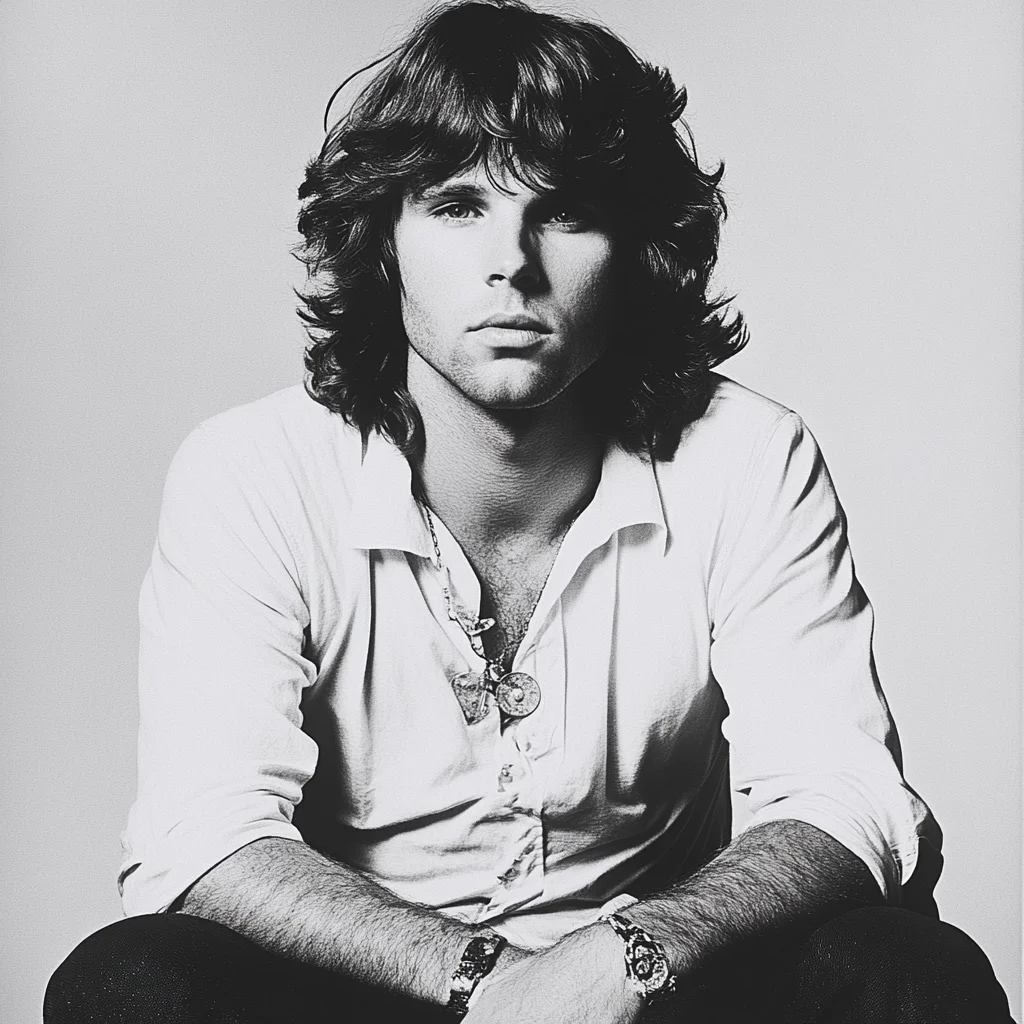
Emerging from the sun-drenched counterculture of 1960s Southern California, The Doors became one of the most hypnotic and provocative bands in rock history. Led by the enigmatic poet-frontman Jim Morrison and keyboard virtuoso Ray Manzarek, the group blended jazz, classical organ, blues, and dark literary themes. Beyond their chart-topping hits and wildly chaotic concert performances lies a legacy rich with artistic risks and unpredictable studio techniques. Here are 15 fascinating facts about the legendary band that redefined the possibilities of American rock music.
1. The Band Named Themselves After Aldous Huxley and William Blake
When forming the group in 1965, Jim Morrison suggested the name The Doors as an artistic statement. The moniker was inspired by Aldous Huxley’s 1954 book The Doors of Perception, which detailed the author's personal experiences with mescaline. Huxley had taken his book's title from a line in 18th-century poet William Blake’s work The Marriage of Heaven and Hell: "If the doors of perception were cleansed every thing would appear to man as it is, Infinite." Morrison viewed the band as a sonic portal between the known and the unknown world.
2. Morrison and Manzarek’s Venice Beach Reunion Sparked the Band
Although both had attended the UCLA School of Theater, Film and Television, Jim Morrison and Ray Manzarek were only casual acquaintances on campus. In July 1965, months after graduating, they had a serendipitous encounter on the beach in Venice, California. Morrison disclosed that he had been living on a nearby rooftop, filling notebooks with song lyrics. After he sang a capella lines from "Moonlight Drive" on the sand, Manzarek was so struck by the imagery that he immediately proposed forming a rock band to set the poetry to music.
3. Ray Manzarek Handled Bass Lines Simultaneously on a Keyboard
The Doors are famous for never recruiting an official, full-time bass guitarist for their live performances. Keyboardist Ray Manzarek solved this structural issue by playing a Fender Rhodes Piano Bass resting atop his Vox Continental organ. Using his left hand to hammer out baseline grooves while his right hand played lead keyboard melodies, Manzarek developed the band’s signature bottom-heavy sound. This unusual arrangement allowed the four-piece ensemble to maintain a lean texture on stage, leaving plenty of space for dramatic musical improvisation.
4. Robby Krieger Played Flamenco Before Picking Up an Electric Guitar
Guitarist Robby Krieger did not start out as a conventional blues or rock musician; his early background was in classical and flamenco guitar techniques. He only bought an electric guitar a few months before joining The Doors in late 1965, inspired by seeing blues icon Chuck Berry perform. Because he learned to play on nylon-string acoustic instruments, Krieger rarely used a plectrum, choosing instead to pluck electric strings with his fingers. Remarkably, "Light My Fire" was the very first song Krieger ever composed for the band.
5. The Infamous Ed Sullivan Show Ban Over a Single Lyric
In September 1967, The Doors were scheduled to perform live on The Ed Sullivan Show, America's top television showcase. Producers asked the band to substitute the word "higher" in "Light My Fire" with "flyer" to avoid drug connotations during the national broadcast. Although the group agreed to the change backstage to appease network executives, Morrison sang the original lyric live on air anyway. A furious Sullivan cancelled their multi-episode television contract, to which Morrison famously responded that they had already done the only show that mattered.
6. "Strange Days" Featured One of the Earliest Moog Synthesizer Tracks
Beyond their raw blues foundation, The Doors were enthusiastic pioneers of early electronic soundscapes in rock production. For the title track of their 1967 sophomore album Strange Days, the band utilized a Moog synthesizer, marking one of the earliest appearances of the modular instrument on a rock record. Synthesizer pioneer Paul Beaver operated the patch cords while Morrison fed his vocal track through the machine using an envelope follower. This studio experiment created an eerie, metallic pitch distortion that heightened the song’s apocalyptic tone.
7. The Miami Concert Incident Led to Morrison's Arrest and Trial
On March 1, 1969, at the Dinner Key Auditorium in Miami, Florida, an overcrowded venue combined with an intoxicated Jim Morrison resulted in public chaos. Morrison harangued the audience, used extreme profanity, and was alleged by local authorities to have exposed himself on stage, though no photographic proof was ever submitted. Days later, warrants were issued for his arrest, leading to a high-profile trial in 1970 where Morrison was convicted of indecent exposure. The surrounding controversy resulted in widespread radio bans and the cancellation of their national tour.
8. "L.A. Woman" Was Recorded in the Band's Rehearsal Workshop
When longtime producer Paul A. Rothchild walked away from the L.A. Woman sessions—calling the material "cocktail music"—the group decided to self-produce alongside sound engineer Bruce Botnick. Rather than renting an expensive studio, they transformed their two-story rehearsal workshop at 8512 Santa Monica Boulevard into a recording space. They tracked the entire album live in a few weeks, with Morrison singing his vocal takes inside a small upstairs bathroom that doubled as an echo chamber. The resulting record became an acclaimed masterpiece that captured a raw blues-rock energy.
9. Morrison Was a Published Author Who Saw Rock as Shamanic Ritual
Long before achieving pop stardom, Jim Morrison considered himself primarily a poet and student of classical theater, heavily influenced by Friedrich Nietzsche and Arthur Rimbaud. In 1969, he privately published two collections of verse, The Lords / Notes on Vision and The New Creatures, which were later picked up by major publishers. Morrison viewed rock concerts as modern shamanic rituals where he served as an intermediary, attempting to shock audiences out of societal compliance and into heightened psychological awareness.
10. Studio Bassists Were Quietly Employed on Every Single Album
Although Ray Manzarek held down bass lines during live concerts, producer Paul Rothchild insisted on hiring session bass guitarists for studio recordings to give the tracks a punchier low end. Elite studio musicians such as Larry Knechtel, Harvey Brooks, and Doug Lubahn contributed bass parts to early studio releases without receiving upfront band membership. For their final album with Morrison, L.A. Woman, Elvis Presley's touring bassist Jerry Scheff was hired, supplying the distinctive bassline on "Love Her Madly" and deepening their blues sound.
11. The Band’s Iconic Logo Was Designed by Elektra's Art Director
The distinctive geometric logo for The Doors—featuring bold, split-letter typography accented by a small serif "THE"—remains an iconic symbol in rock merchandise. It was created in 1966 by Bill Harvey, an art director working for the band's record label, Elektra Records. The design drew inspiration from Art Deco styles and modern art aesthetics, perfectly mirroring the band's avant-garde image. The geometric emblem debuted on their self-titled 1967 album and has appeared on virtually every official release since.
12. Florida Granted Jim Morrison a Full Posthumous Pardon in 2010
Jim Morrison died in Paris in July 1971 while appealing his 1970 Miami conviction for indecent exposure, leaving the legal case unresolved under Florida statute. Over the following decades, fans, lawyers, and historians argued that the legal proceedings had been a politically motivated trial lacking credible evidence. In December 2010, forty years after the conviction, Florida Governor Charlie Crist and the state clemency board unanimously granted Morrison a full posthumous pardon, officially clearing the late singer's record.
13. Drummer John Densmore Brought a Jazz and Marching Band Influence
Drummer John Densmore's fluid playing style was essential to the dynamic range of The Doors. Unlike many heavy-handed rock drummers of the late 1960s, Densmore had extensive prior training in jazz drumming and symphonic marching bands. His signature rimshots, Latin bossa nova beats, and sudden dynamic drops allowed the music to shift smoothly from spoken poetry to heavy psych-rock climaxes. His jazz sensibilities paired effortlessly with Ray Manzarek’s classical organ riffs to give the rhythm section its kinetic swing.
14. Morrison’s Final Resting Place in Paris Remains a Cultural Shrine
Following his sudden death at age 27 in July 1971, Jim Morrison was buried in the historic Père Lachaise Cemetery in Paris, France. Situated in the cemetery's Poets' Corner near Oscar Wilde and Marcel Proust, the grave quickly grew into one of the world's most visited funerary sites. For decades, music fans from around the globe have gathered at the grave to leave notes, flowers, and candles. In 1990, Morrison's family added a granite headstone carrying the Greek inscription "KATA TON DAIMONA EAYTOY," which translates to "True to his own spirit."
15. The Surviving Members Recorded Two Albums Without Morrison
After Morrison died in 1971, the remaining three members—Ray Manzarek, Robby Krieger, and John Densmore—decided to continue recording together rather than immediately disbanding. Splitting lead vocal duties between Manzarek and Krieger, the trio wrote and released two studio albums: Other Voices (1971) and Full Circle (1972). While both records demonstrated solid jazz-rock musicianship and charted decently on Billboard, they lacked Morrison's iconic poetic presence, leading the group to disband in 1973 before later reuniting for special retrospective projects.
Sources & References
This AI-assisted post was rigorously curated and fact-checked for accuracy by:
 Martin Roháček
How fun was this article? 🤔
Tap a star to rate it
🧠 Quiz: How closely were you paying attention?
10 questions — all answers are in the article above!
Enjoyed these facts? There's more! 💌
Fresh fun facts in your inbox. No spam, ever.