The Tormented Genius: 15 Fascinating Facts About Vincent van Gogh
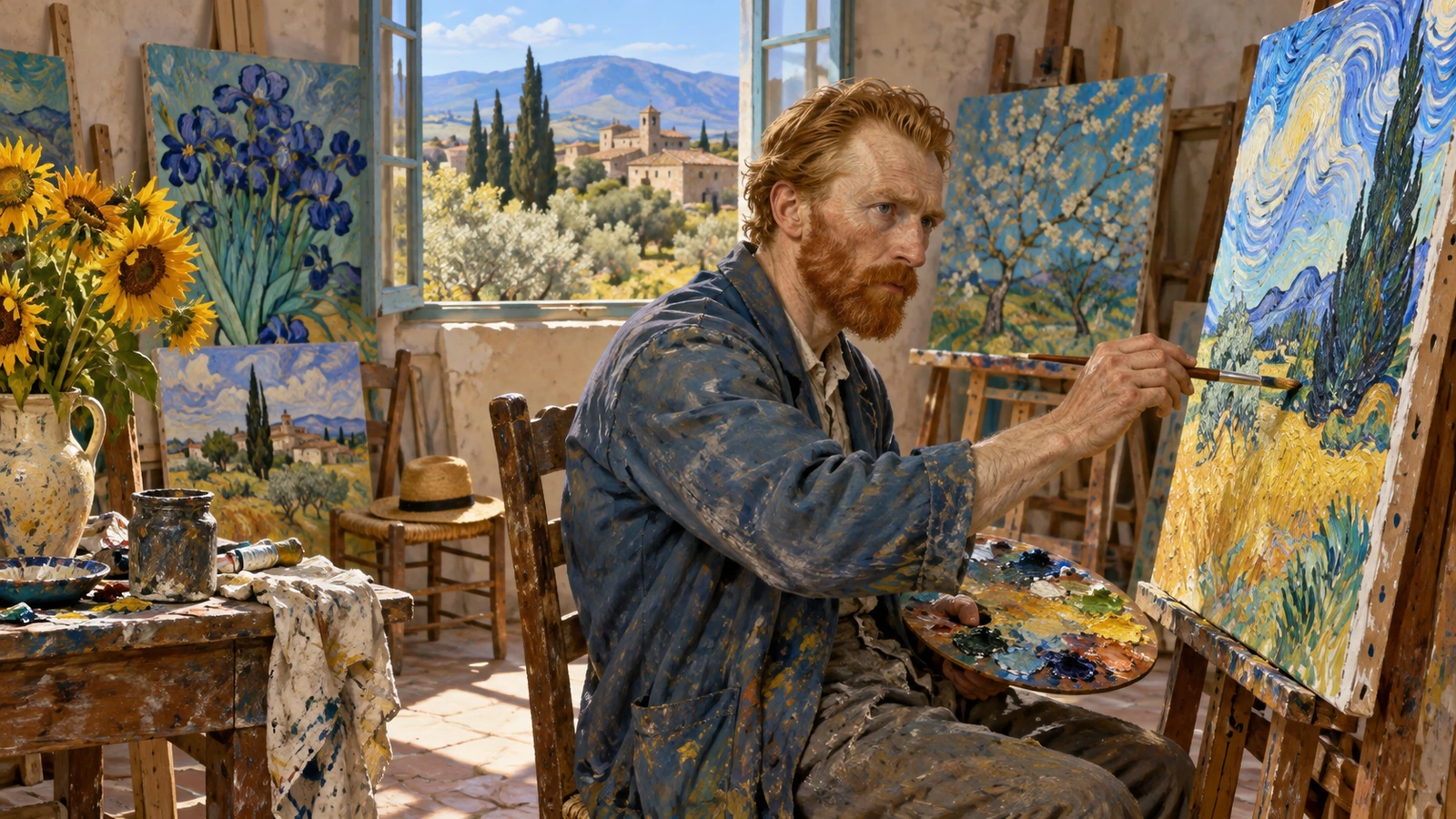
Vincent van Gogh remains one of the most celebrated figures in Western art history, yet his brief life was defined by tragic obscurity, poverty, and intense mental turmoil. Despite painting roughly 900 canvases in a single decade, the Dutch master sold only one official painting while alive and died believing his creative journey was a failure. From painting at night with lit candles attached to his straw hat to the shocking medical truth behind his severed ear, Van Gogh's story is far more complex than popular myth suggests. Delve into 15 compelling facts that uncover the real history behind art history's most famously misunderstood artist.
1. He Sold Only One Official Painting During His Lifetime
While Vincent van Gogh is recognized today as one of history's most celebrated painters, he experienced profound commercial rejection while alive. He managed to sell only a single official painting during his entire lifetime, titled The Red Vineyard. Belgian artist and heiress Anna Boch purchased the vibrant autumn landscape in 1890 for 400 French francs, which was equivalent to about $2,000 today. Tragically, this solitary commercial success occurred just months before his death, leaving him convinced that his career was a failure. Today, that historic canvas resides in the Pushkin Museum in Moscow and is considered priceless.
2. He Severed Almost His Entire Ear, Not Just the Earlobe
Popular culture long maintained that Van Gogh merely sliced off a tiny portion of his left earlobe during a severe mental breakdown in late 1888. However, a historical discovery featuring a diagram drawn by his attending physician, Dr. Félix Rey, shattered this long-standing myth. The medical sketch clearly demonstrates that the artist sliced off almost his entire left ear, leaving behind only a tiny fraction of the lower lobe. Van Gogh performed this extreme act of self-mutilation following a heated altercation with fellow painter Paul Gauguin. Bleeding profusely, he bandaged his head before staggering into the street to deliver the wrapped tissue.
3. His Severed Ear Was Given to a Brothel Cleaner
For decades, popular accounts claimed that Van Gogh handed his severed ear tissue to a prostitute named Rachel at a nearby brothel. Modern archival research conducted by historian Bernadette Murphy revealed that the actual recipient was a young local woman named Gabrielle Berlatier. Gabrielle was not a sex worker herself, but worked as a maid and cleaner at the establishment to pay off heavy medical bills after surviving a violent dog bite. When the disturbed painter presented her with the wrapped tissue and instructed her to guard it, she fainted on the spot. The terrifying incident caused an uproar across Arles, leading directly to Van Gogh's hospitalization.
4. He Painted The Starry Night From an Asylum Window
In May 1889, following a series of alarming mental health crises, Van Gogh voluntarily checked himself into the Saint-Paul-de-Mausole asylum in Saint-Rémy-de-Provence. It was from the iron-barred window of his bedroom on the second floor that he conceived his undisputed masterpiece, The Starry Night. Because asylum rules prohibited him from keeping oil paints in his sleeping quarters, he sketched the nocturnal view from memory and morning observations in a ground-floor studio space. He painted the swirling celestial sky during intense bursts of creative focus while battling deep depression. Today, this extraordinary canvas hangs as a crown jewel in New York's Museum of Modern Art.
5. He Produced Over 900 Paintings in Just Ten Years
Van Gogh did not begin painting until he was 27 years old, yet his artistic output over the following decade was breathtakingly intense. Before his death at age 37, he produced approximately 900 oil paintings along with more than 1,100 drawings and sketches. This astonishing productivity translates to an average of two completed paintings every single week for ten consecutive years. During his most frantic creative periods in the south of France, he would complete entire canvases in a single afternoon. Few visual artists in human history have ever matched such a ferocious work ethic or creative cadence.
6. He Failed at Three Distinct Careers Before Art
Before ever picking up a paintbrush, Van Gogh struggled bitterly to find his purpose and failed across three distinct professional endeavors. He worked as an art dealer for Goupil & Cie in London and Paris, but was fired after repeatedly arguing with clients over taste. He then tried teaching school in England, only to be dismissed due to his unmanageable eccentricity and erratic demeanor. Finally, he pursued a passionate calling as a lay preacher in a impoverished Belgian mining community, but religious authorities revoked his post because he took extreme poverty to fanatical lengths. Only after these humiliating setbacks did his brother Theo suggest he dedicate himself to art.
 Painters and Visual Artists
Explore the fascinating lives and enduring legacies of history's greatest visual artists. From Renaissance polymaths to modern revolutionaries, uncover the eccentricities, rivalries, and brilliance behind the world's most famous canvases.
See All Facts
Painters and Visual Artists
Explore the fascinating lives and enduring legacies of history's greatest visual artists. From Renaissance polymaths to modern revolutionaries, uncover the eccentricities, rivalries, and brilliance behind the world's most famous canvases.
See All Facts
7. Over 800 of His Personal Letters Survive Today
Nearly everything modern art historians know about Van Gogh's inner thoughts, personal struggles, and artistic philosophy comes from his prolific correspondence. Throughout his adult life, he penned over 800 detailed letters, more than 650 of which were written directly to his devoted younger brother, Theo. These extraordinary documents contain deeply intimate reflections, hand-drawn sketches of upcoming compositions, and precise technical descriptions of color pigments. Theo's widow, Jo van Gogh-Bonger, painstakingly preserved, organized, and published these letters after both brothers passed away. Her tireless dedication ensured that Vincent's intellectual voice was preserved for future generations.
8. He Ate Toxic Yellow Paint Directly From Tubes
During severe psychological episodes, Van Gogh exhibited alarming pica-like behavior, which included consuming his own art materials. Multiple eyewitness accounts and medical records from the asylum confirm that he repeatedly squeezed toxic paint directly into his mouth. Some historians theorize that he ingested bright yellow paint in a desperate attempt to bring light and happiness into his dark psychological state. However, oil paint pigments during the 19th century contained dangerous concentrations of lead and chrome, which were highly toxic compounds capable of inducing severe neurological damage. Asylum physicians were eventually forced to lock his paints away to prevent him from poisoning himself.
9. His Neighbors Petitioned to Have Him Banished
In early 1889, the local residents of Arles grew increasingly terrified of Van Gogh's erratic public behavior and volatile emotional outbursts. Eighty townspeople signed an official petition addressed to the mayor, demanding that the painter be locked away or permanently banished from their city. The document publicly condemned the struggling artist, referring to him as "le fou roux," which translates to "the redheaded madman." Local police subsequently forced the closure of his famous Yellow House and placed him under mandatory hospital confinement. Heartbroken and humiliated by the hostility of his neighbors, Van Gogh chose to leave Arles for an asylum shortly after.
10. He Painted at Night Wearing Candles on His Hat
Determined to capture natural nighttime lighting outdoors without relying on artificial studio conditions, Van Gogh devised an ingenious, if dangerous, solution. He fastened small lit candles along the wide brim of his straw hat and around the edges of his wooden easel. This improvised lighting apparatus illuminated his canvas and color palette in pitch-black surroundings without distorting his perception of tone. He utilized this risky method while painting masterpieces such as Starry Night Over the Rhône along the dark riverbanks. Local night passersby were often startled by the surreal sight of a glowing figure painting in the dark.
11. He Considered The Starry Night a Complete Failure
Although The Starry Night is celebrated worldwide as a monumental masterpiece of Post-Impressionism, Van Gogh personally considered the painting an absolute failure. In several letters sent to his brother Theo, he expressed deep dissatisfaction with the work, dismissing it as an overly romanticized abstraction that drifted too far from reality. He felt the stylized, exaggerated stars looked far too exaggerated compared to true natural observation. When shipping a batch of completed canvases to Theo for potential exhibition, Van Gogh deliberately refused to pay postage for The Starry Night, writing that it held no commercial value.
12. Local Villagers Used His Canvases for Target Practice
During his lifetime and immediately following his tragic death, local citizens viewed Van Gogh's artworks as completely worthless trash. In the village of Auvers-sur-Oise, the son of his attending physician, Dr. Paul Peyron, reportedly used several of Vincent's discarded oil paintings as physical targets for air-rifle practice. Other villagers used his thick, durable canvas paintings to patch up leaky roofs or insulate farm coops against the weather. Untold dozens of irreplaceable paintings were permanently lost or destroyed simply because contemporaries failed to comprehend their artistic significance.
13. He Walked 100 Miles to Visit a Prospective Art Mentor
Van Gogh's determination to master visual art was defined by a physical endurance that often bordered on extreme fanaticism. In 1880, while living in deep poverty in the coal-mining Borinage region of Belgium, he decided to seek artistic advice from established French painter Jules Breton. Lacking the money to purchase a train ticket, the 27-year-old artist walked roughly 100 miles (160 kilometers) on foot to Courrières, France. He wore out his boots and slept in muddy ditches along the roads, enduring cold weather and severe exhaustion. Upon finally arriving at Breton's studio, Van Gogh felt overwhelmingly intimidated, turned around without knocking, and walked all the way back.
14. He and His Brother Theo Died Just Six Months Apart
The emotional bond between Vincent and his younger brother Theo was deep, unconditional, and ultimately intertwined in death. Following Vincent's fatal gunshot wound in July 1890, Theo suffered a devastating emotional collapse compounded by advanced neurosyphilis. Theo's physical and mental health deteriorated rapidly over the following autumn, leading to his death in January 1891, just six months after Vincent's passing. In 1914, Theo's devoted widow had his body exhumed and reburied directly alongside Vincent in the cemetery of Auvers-sur-Oise. Today, matching gravestones covered in creeping ivy mark their side-by-side resting place.
15. He Painted Over 30 Self-Portraits Due to Extreme Poverty
Van Gogh created more than 30 self-portraits between 1886 and 1889, leaving behind an extraordinary visual record of his physical and emotional evolution. However, his reason for painting himself so frequently was rooted in financial hardship rather than self-fascination. Because he lacked the money required to hire professional art models or purchase expensive studio props, he bought a cheap mirror and relied on his own reflection as a free subject. He analyzed his facial expressions under various lighting conditions to experiment with bold brushwork and color contrast. Consequently, these portraits offer an unmatched, intimate chronicle of his tragic personal journey.
Sources & References
This AI-assisted post was rigorously curated and fact-checked for accuracy by:
 Martin Roháček
How fun was this article? 🤔
Tap a star to rate it
🧠 Quiz: How closely were you paying attention?
10 questions — all answers are in the article above!
Enjoyed these facts? There's more! 💌
Fresh fun facts in your inbox. No spam, ever.