The Sacred Grass: 15 Fascinating Facts About Wimbledon
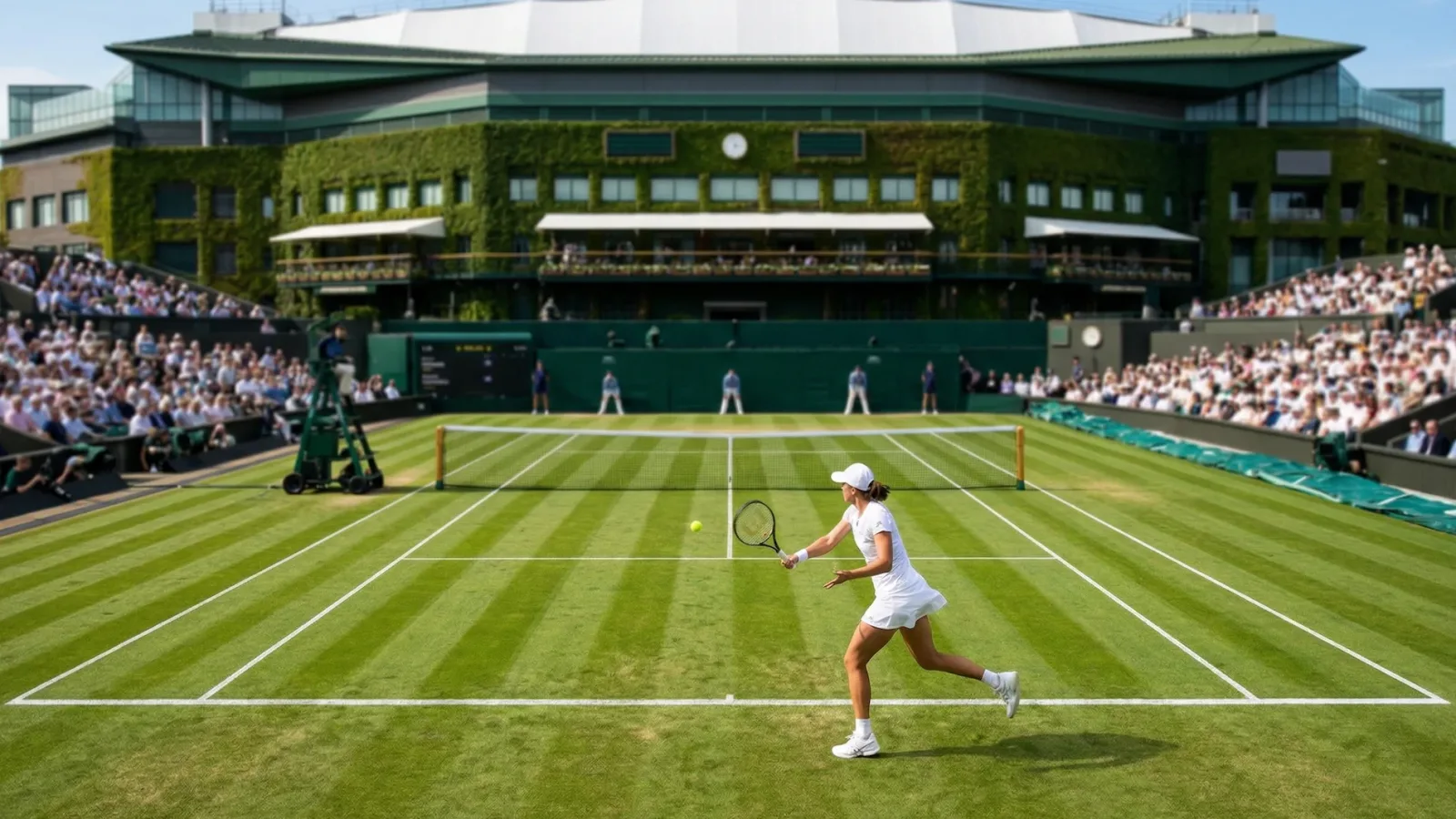
Wimbledon is the world's oldest and most prestigious tennis tournament, renowned far beyond the boundaries of sport for its deep-rooted traditions and extreme attention to detail. From strictly manicured eight-millimeter grass and military-grade ball retriever training to strict all-white dress codes enforced down to players' undergarments, the All England Club operates like no other venue on Earth. Beyond the iconic baseline action lies a captivating world of hidden rules, historical oddities, and astonishing logistical feats. Here are 15 fascinating facts about the legendary grass-court championship.
1. The Championship Grass Is Cut to Exactly Eight Millimeters
Every summer, the All England Lawn Tennis and Croquet Club maintains its championship courts with scientific precision. The grass—a pure 100% Perennial Ryegrass mix—is meticulously manicured to a height of precisely eight millimeters. Groundstaff use specialized equipment to roll, vacuum, and measure every blade daily to ensure consistent ball bounce and firm turf underfoot. During the tournament, groundskeepers even monitor soil moisture and court temperature to adjust irrigation by the millimeter. This extreme dedication creates the fastest and most iconic surface in professional tennis.
2. Strict Dress Rules Extend to Players' Underwear
Wimbledon enforces the strictest dress code in all of professional sports, mandating that competitors wear almost entirely white apparel from the moment they step onto the court. In 2014, the rules were tightened even further to explicitly cover undergarments, sweatbands, and the soles of players' shoes. Umpires and tournament officials actively check compliance, forcing athletes to return to locker rooms if even a tiny sliver of color is visible. Even high-profile champions like Roger Federer have faced scrutiny for wearing shoes with orange soles. This uncompromising tradition ensures that all players adhere to an unvarnished 19th-century aesthetic.
3. A Security Hawk Has Its Own Official Accreditation Pass
To keep unwanted pests from disrupting play, the tournament employs a specialized avian security officer. Rufus, a trained Harris's hawk, patrols the skies above the grounds to scare away local pigeons. He flies over Centre Court every morning before spectators arrive, creating an environment of natural intimidation. Rufus is so integral to the tournament's operations that he holds an official Wimbledon accreditation badge with the official job title "Bird Scarer." His presence ensures that high-stakes matches remain completely free from avian interruptions.
4. Spectators Devour Over Thirty-Eight Tons of Strawberries
The culinary hallmark of attending the tournament is indulging in fresh strawberries and cream. Over the course of the two-week event, spectators consume roughly 38 tons of strawberries alongside more than 7,000 liters of heavy cream. The fruit is exclusively Grade A Kentish strawberries, harvested at dawn every morning to ensure peak freshness upon arrival at the grounds. Every single berry is individually inspected and hulled before being served in standardized portions to hungry tennis fans. This delicious tradition dates back to the very first tournament held in 1877.
5. The Tournament Resisted Yellow Tennis Balls Until 1986
While yellow tennis balls became standard across international competition in 1972 to improve visibility on color television, Wimbledon held out for another fourteen years. The tournament stubbornly insisted on using traditional white balls to preserve its pristine aesthetic heritage. It was not until 1986 that officials finally relented and adopted optic yellow balls, acknowledging that TV viewers were struggling to track white balls against the light green grass. Despite the late switch, the tournament continues to maintain strict control over ball specifications. Today, the transition is remembered as one of the rare times modern broadcasting forced a major change on the traditional club.
6. A World War II Bomb Direct Hit Centre Court
During the Blitz in October 1940, the German Luftwaffe dropped five 500-pound bombs on the club grounds. One bomb struck the roof of Centre Court directly, shattering the structure and obliterating 1,200 spectator seats. Because steel and building materials were severely rationed after World War II, full repairs could not be completed immediately when play resumed in 1946. For six long years following the war, spectators sitting in that section were exposed to the elements or forced into temporary seating. It was not until 1952 that Centre Court was fully restored to its pre-war grandeur.
7. Digital Billboards and Sponsor Logos Are Strictly Banned
Walking onto a court at Wimbledon feels remarkably different from any other modern sporting arena due to the complete absence of intrusive commercial advertising. The tournament strictly forbids electronic hoardings, flashing digital sponsor boards, and prominent corporate banners surrounding the playing surface. Commercial partners are granted only subtle, dark green branding that blends seamlessly into the backdrop of the grass. This intentional lack of commercial clutter maintains a clean, timeless atmosphere focused purely on the sport. As a result, the pristine green courts remain visually uncluttered and instantly recognizable worldwide.
8. The Longest Match in Tennis History Lasted Over Eleven Hours
In 2010, American John Isner and Frenchman Nicolas Mahut engaged in a staggering marathon match on Court 18 that shattered all existing professional tennis records. The grueling contest spanned three calendar days and lasted a total of 11 hours and 5 minutes. The final set alone took eight hours and eleven minutes, ending in a incredible scoreline of 70–68 in Isner's favor. The sheer length of the contest overwhelmed the digital scoreboard, which had not been programmed to track scores beyond 47–47. This heroic battle ultimately led tennis authorities to introduce tiebreakers in deciding sets across all major tournaments.
9. Tens of Thousands Camp Overnight in "The Queue"
Wimbledon remains one of the only major global sporting events where fans can buy premium center court tickets on the day of the match by joining a famous line known simply as "The Queue." Thousands of spectators pitch tents overnight in nearby Wimbledon Park, waiting patiently for their chance to purchase ground passes. The Queue is governed by an extraordinarily detailed 30-page code of conduct that strictly regulates tent sizes, noise levels, and queue-jumping. Friendly stewards distribute numbered Queue Cards to ensure fairness and prevent line cutting throughout the night. This orderly camping ritual has become a cherished cultural festival in its own right.
10. A Golden Pineapple Sits Atop the Men's Championship Trophy
Look closely at the prestigious Gentlemen's Singles Trophy and you will spot a peculiar detail mounted at the very top: a solid silver-gilt pineapple. When the trophy was commissioned in 1887, pineapples were an exceedingly rare and luxurious commodity across Victorian Britain. Possessing or displaying the exotic fruit was seen as the ultimate symbol of high social standing, immense wealth, and royal hospitality. The club chose the motif to signify that the winner had achieved the highest honor in the sport. Today, the golden fruit remains one of the most unique and recognizable trophy details in world athletics.
11. The Official Ball Supplier Partnership Is the Longest in Sports History
The relationship between the All England Club and sporting equipment manufacturer Slazenger is unparalleled in professional athletics. Slazenger has supplied every single official tennis ball used at the tournament since 1902. This unbroken commercial arrangement spans over 120 years, making it the longest continuous sponsorship agreement in international sports history. Slazenger engineers work closely with tournament officials to ensure that every ball meets exact bounce and weight tolerances required for grass court play. Millions of balls have been produced under this historic union, solidifying Slazenger's permanent link to tennis heritage.
12. Ball Boys and Girls Undergo Months of Military-Style Training
The teenagers who retrieve balls at Wimbledon—known formally as Ball Boys and Girls, or BBGs—are selected through a notoriously competitive process. Hundreds of applicants from local schools undergo months of intense physical conditioning and drills starting every February. They are trained to stand completely motionless for long stretches, roll balls across the turf at precise speeds, and communicate using subtle hand signals. Every move is synchronized down to the second so that play flows without distraction or delay. Only the top performers are chosen to work matches on Centre Court and No. 1 Court.
13. Tens of Thousands of Tennis Balls Are Stored in Refrigerators
Maintaining exact playability across tens of thousands of tennis balls requires strict temperature management throughout the fortnight. Over 55,000 tennis balls are used during the tournament, and all of them are stored in specially designed, climate-controlled containers kept at precisely 68 degrees Fahrenheit (20 degrees Celsius). Temperature fluctuations can alter the internal air pressure of a tennis ball, drastically changing how high and fast it bounces on grass. Balls are only brought out to the courts immediately before play to ensure maximum consistency across every set. Used balls are later sold as souvenirs to raise money for charitable causes.
14. The Royal Bowing Tradition Was Modernized in 2003
For decades, center court protocol dictated that players bow or curtsy toward the Royal Box whenever entering or exiting the arena. In 2003, the Duke of Kent—then president of the club—officially updated the rule to modernize the tournament's image. Under current guidelines, players are only required to bow or curtsy if the reigning British Monarch or the Prince of Wales is present in the box. While some players still choose to perform the gesture out of personal respect, it is no longer mandatory for standard matches. This sensible update balanced historical reverence with modern sporting sensibilities.
15. A Dedicated Weather Team Protects the Grass from Sudden Rain
Because wet grass makes tennis courts dangerously slick, the tournament employs its own specialized meteorological team on-site. Forecasters use advanced radar equipment to track impending rain clouds down to the exact minute. When precipitation approaches, court covers weighing over half a ton are deployed by trained groundskeepers in under two minutes. These massive covers blow warm air beneath the canvas to keep the underlying grass dry and healthy while play is suspended. The introduction of retractable roofs over Centre Court and No. 1 Court has further modernized weather management without sacrificing traditional grass conditions.
Sources & References
This AI-assisted post was rigorously curated and fact-checked for accuracy by:
 Martin Roháček
How fun was this article? 🤔
Tap a star to rate it
🧠 Quiz: How closely were you paying attention?
10 questions — all answers are in the article above!
Enjoyed these facts? There's more! 💌
Fresh fun facts in your inbox. No spam, ever.