1. The Youngest US President in History
A common historical misconception is that John F. Kennedy was the youngest man to ever serve as President of the United States. In reality, that distinction belongs to Theodore Roosevelt, who ascended to the nation’s highest office at the age of 42 following the tragic assassination of President William McKinley in September 1901. While Kennedy remains the youngest person elected to the office at age 43, Roosevelt’s sudden ascension forever altered American history. He brought an unprecedented, youthful vigor to Washington, instantly modernizing the presidency for the 20th century.
2. The Origin of the “Teddy Bear”
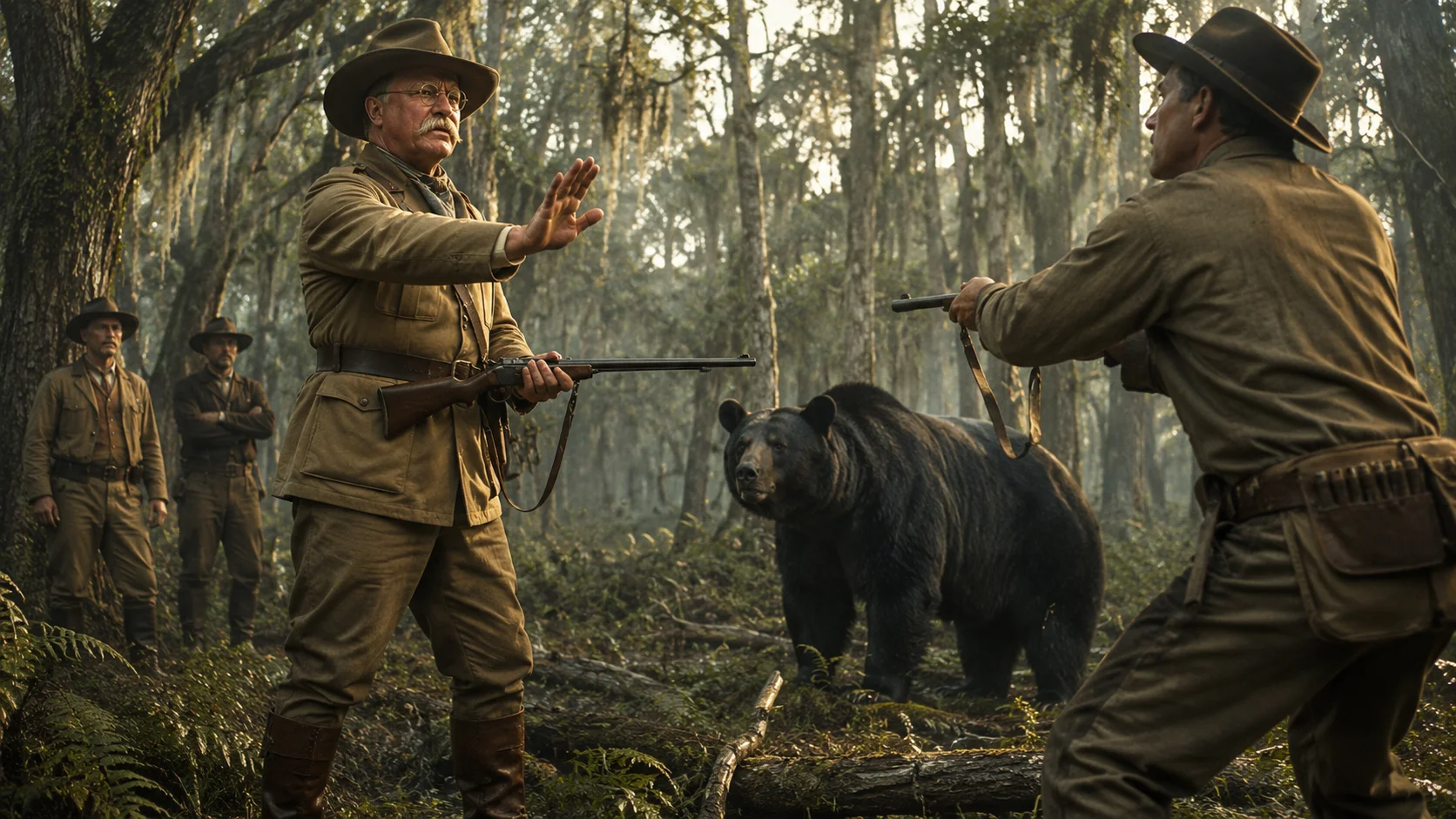
In November 1902, Roosevelt traveled to Mississippi to settle a boundary dispute and participate in a prominent bear hunt. After days of tracking, the guides trapped a black bear, tied it to a willow tree, and invited the President to shoot it for an easy trophy. Roosevelt famously refused, deeming the act completely unsportsmanlike, though he ordered the injured animal put out of its misery. Political cartoonist Clifford Berryman illustrated the incident, inspiring Brooklyn candy shop owners Morris and Rose Michtom to create a plush toy dedicated to him, forever immortalizing the “Teddy Bear.”
3. A Bullet-Deflecting Speech in Milwaukee
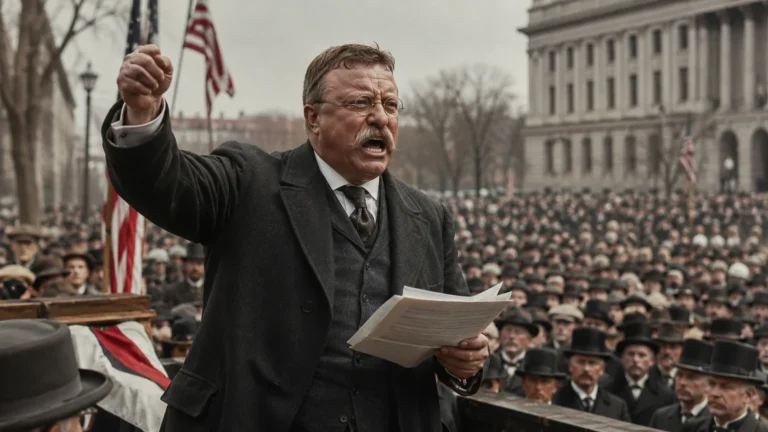
During the 1912 presidential campaign, while running as the Progressive “Bull Moose” candidate, Roosevelt was shot in the chest by an assassin named John Schrank outside a Milwaukee hotel. Remarkably, the bullet passed through his metal glasses case and a folded, 50-page copy of his speech, which significantly slowed its velocity. Realizing he wasn’t coughing blood, Roosevelt concluded his lung was intact and insisted on delivering his speech before going to the hospital. He famously spoke for 84 minutes, opening with the line, “It takes more than that to kill a Bull Moose.”
4. Blinded in a White House Boxing Match
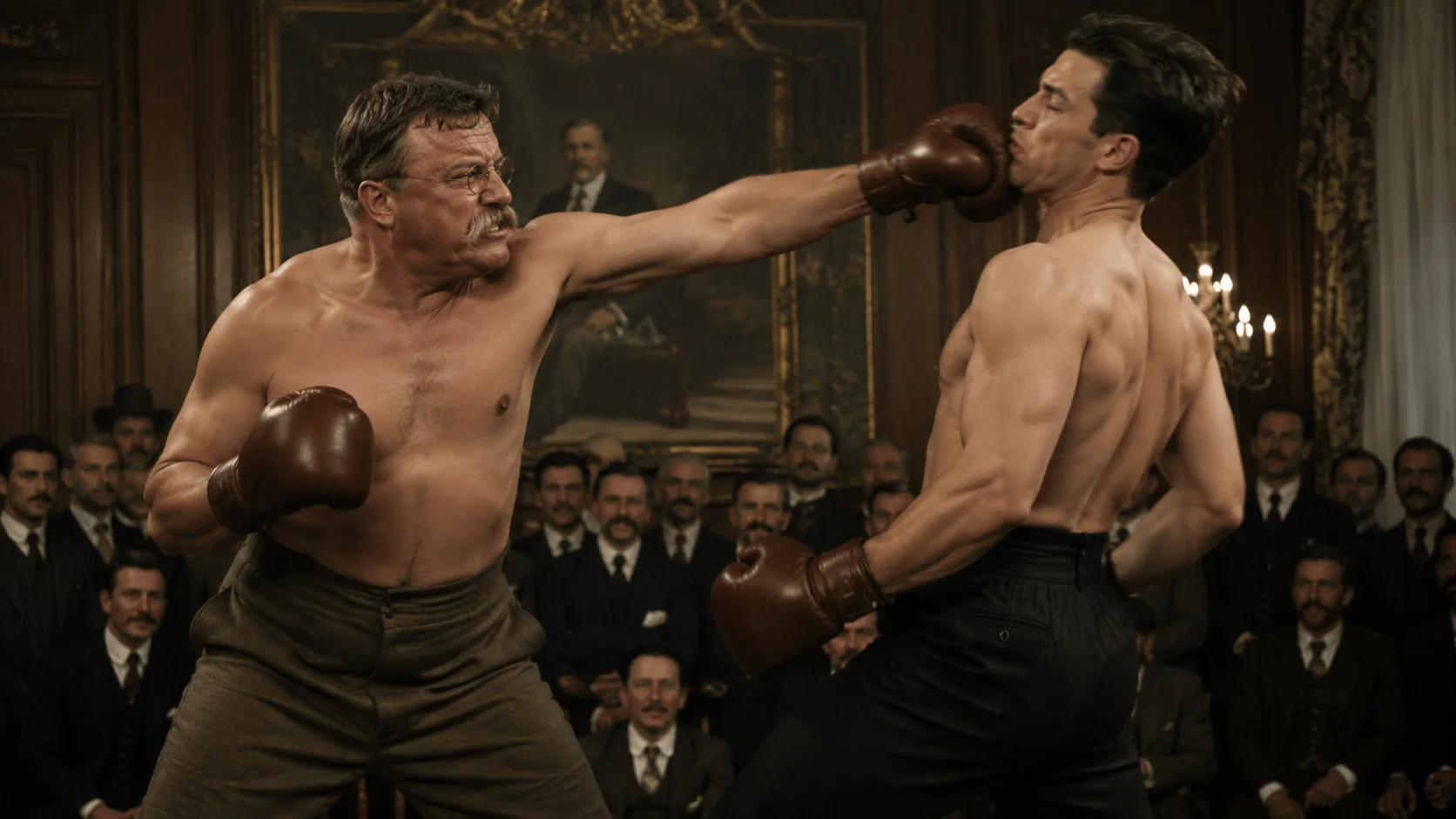
Roosevelt was a lifelong advocate of the “strenuous life” and regularly practiced various combat sports inside the Executive Mansion during his presidency. He frequently sparred with military aides, professional prize fighters, and young officers until a fateful bout in 1908. A powerful left hook from a sparring partner detached his left retina, eventually leaving him completely blind in that eye. To avoid public embarrassment for the officer who hit him, Roosevelt kept the injury a strict secret for years, quietly transitioning his athletic focus from boxing to Brazilian jiu-jitsu.
5. First American Nobel Peace Prize Laureate
Though widely remembered for his aggressive “Big Stick” diplomacy and military exploits, Roosevelt was also a remarkably skilled statesman. In 1905, he successfully mediated the Treaty of Portsmouth, officially bringing an end to the bloody Russo-Japanese War. His diplomatic finesse stunned European powers and earned him the prestigious Nobel Peace Prize in 1906, making him the first American to ever receive the honor. Roosevelt donated the entire prize money to a congressional trust designed to fund industrial peace research, cementing his legacy as a global peacemaker.
6. The Perilous Expedition Down the River of Doubt
After losing his 1912 presidential bid, Roosevelt sought solace in a grueling, scientific expedition to map an uncharted tributary of the Amazon River in 1913. Co-led by Brazilian explorer Cândido Rondon, the journey down the “River of Doubt” turned catastrophic as the team faced tropical diseases, hostile indigenous tribes, and capsized canoes. Roosevelt contracted a severe case of malaria and a serious leg infection, which nearly prompted him to take his own life to avoid burdening the group. He survived the ordeal, but lost a quarter of his body weight and permanently compromised his robust health.
7. Presidential Skinny-Dipping in the Potomac
Roosevelt’s unconventional approach to physical fitness often manifested in eccentric outdoor activities around Washington, D.C. He was notorious for taking grueling, cross-country hikes through Rock Creek Park, intentionally choosing the most difficult terrains to test his endurance. During the sweltering summer months, the President frequently stripped off his clothes to go skinny-dipping in the Potomac River. On several occasions, he convinced astonished foreign diplomats and cabinet members to join him in these nude swims, viewing it as an excellent exercise in character building and camaraderie.
8. Leading the Legendary “Rough Riders”
Before ascending to the presidency, Roosevelt served as the Assistant Secretary of the Navy but resigned his post to fight in the Spanish-American War in 1898. He helped organize the First U.S. Volunteer Cavalry, popularly known as the “Rough Riders,” a diverse mixture of Ivy League athletes, Texas Rangers, and Native Americans. Roosevelt famously led a daring, uphill charge during the Battle of San Juan Hill in Cuba, demonstrating extraordinary bravery under heavy fire. For his conspicuous gallantry, he was posthumously awarded the Medal of Honor in 2001, making him the only president to receive it.
9. A Pioneer of American Conservation
Perhaps Roosevelt’s most enduring legacy is his unparalleled commitment to preserving the American wilderness for future generations. As president, he utilized the Antiquities Act of 1906 to protect vast swathes of public land from commercial exploitation. During his administration, he established the United States Forest Service, signed five new national parks into law, and created 150 national forests. In total, Roosevelt placed approximately 230 million acres of public land under federal protection, earning him a permanent reputation as the nation’s foremost conservationist president.
10. An Avid Judo Practitioner in the Executive Mansion
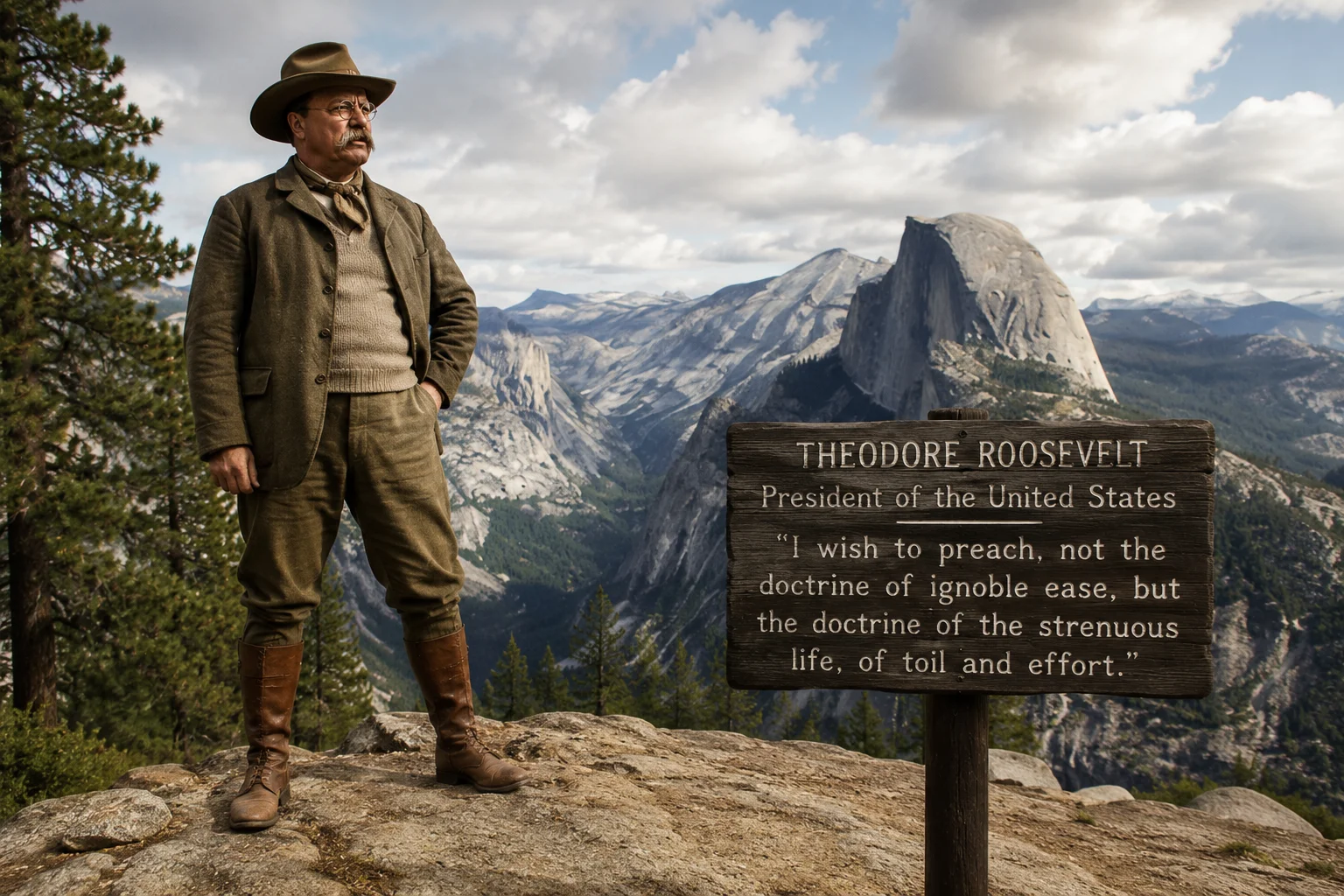
Long before martial arts became mainstream in the Western world, Roosevelt recognized their immense physical and mental benefits. He became fascinated by judo and hired Yoshiaki Yamashita, a master student of judo’s founder, Kanō Jigorō, to train him inside the White House. Roosevelt practiced diligently, eventually earning a brown belt, making him the first American to reach that rank. He frequently demonstrated judo techniques to guests, cabinet members, and even foreign dignitaries, using the martial art to stay fit and reinforce his philosophy of physical preparedness.
11. Breaking Bread: A Historic White House Invitation
In October 1901, just weeks after taking office, Roosevelt shattered long-standing social taboos by inviting prominent educator Booker T. Watson to dine at the White House. It marked the first time an African American was officially invited to a formal dinner with a sitting U.S. president. The event triggered severe, hostile backlash from Southern politicians and media outlets, causing a massive national controversy. Despite the intense political fallout, Roosevelt remained firm in his admiration for Watson, though the fierce resistance caused him to be more cautious with subsequent public invitations.
12. A Prolific Author and Insatiable Reader
Roosevelt possessed a towering intellect that easily matched his famous physical stamina. He was a speed-reader who routinely consumed up to three books a day, often reading in multiple languages, including French and German. Over the course of his lifetime, he channeled this vast knowledge into a highly successful literary career, authoring approximately 35 books and an estimated 150,000 letters. His published works covered an expansive range of topics, including naval history, Western exploration, biography, and natural science, earning him serious recognition as a legitimate historian.
13. The Foreign Policy of the “Big Stick”
Roosevelt completely revolutionized American foreign policy by introducing a doctrine that combined strong diplomatic negotiation with the explicit threat of military might. He popularized this approach with the West African proverb, “Speak softly and carry a big stick; you will go far.” This philosophy manifested in the Roosevelt Corollary to the Monroe Doctrine, which asserted the right of the United States to intervene militarily in Latin American nations to prevent European intervention. It established the United States as a dominant police power in the Western Hemisphere.
14. First Sitting President to Travel Internationally
To oversee one of his most ambitious engineering projects, Roosevelt made history in November 1906 by traveling to Panama. This trip marked the absolute first time a sitting United States president traveled outside the country while in office. Roosevelt wanted to personally inspect the construction of the Panama Canal, an engineering marvel that would permanently link the Atlantic and Pacific Oceans. His hands-on inspection tour included sitting in the cockpit of a massive steam shovel, signaling to the world his personal investment in reshaping global maritime trade.
15. Surviving a Childhood of Severe Asthma
Theodore Roosevelt’s famous adult vitality was actually forged in response to a childhood marked by debilitating physical weakness. As a young boy in New York, he suffered from severe, life-threatening asthma attacks that frequently left him bedridden and gasping for air. His wealthy father famously challenged him to conquer his physical limitations, telling him that he had the mind but must build his body. Taking this advice to heart, young Theodore embraced an intense regimen of weightlifting, gymnastics, and outdoor hiking, successfully building the rugged, indestructible frame that defined his later life.
Sources and References