The Real Norsemen: 15 Fascinating Facts About Vikings
Popular culture often depicts Vikings as horn-helmeted, unwashed raiders who left nothing but destruction in their wake. In reality, these medieval Scandinavian seafarers were sophisticated engineers, meticulous groomers, and daring global traders who established trade networks stretching from North America to the Middle East. From navigating foggy oceans with optical sunstones to establishing early democratic parliaments, the true history of the Norse is far more intriguing than the myths. Here are 15 fascinating facts that reveal the extraordinary world of the Vikings.
1. Horned Helmets Were a 19th-Century Operatic Myth
The iconic image of a horned Viking helmet was created entirely in the 19th century. German costume designer Carl Emil Doepler designed horned helmets for Richard Wagner’s famous opera cycle Der Ring des Nibelungen in 1876. In actual medieval combat, a horned helmet would have been horribly impractical, as enemy axes and swords could easily catch on the projections. Real Norse helmets were smooth, conical iron headpieces designed to deflect downward blows safely away from the wearer's head and neck. Archaeological excavations across Scandinavia have uncovered numerous combat helmets, yet not a single one features horns.
2. Longship Engineering Revolutionized Medieval Naval Warfare
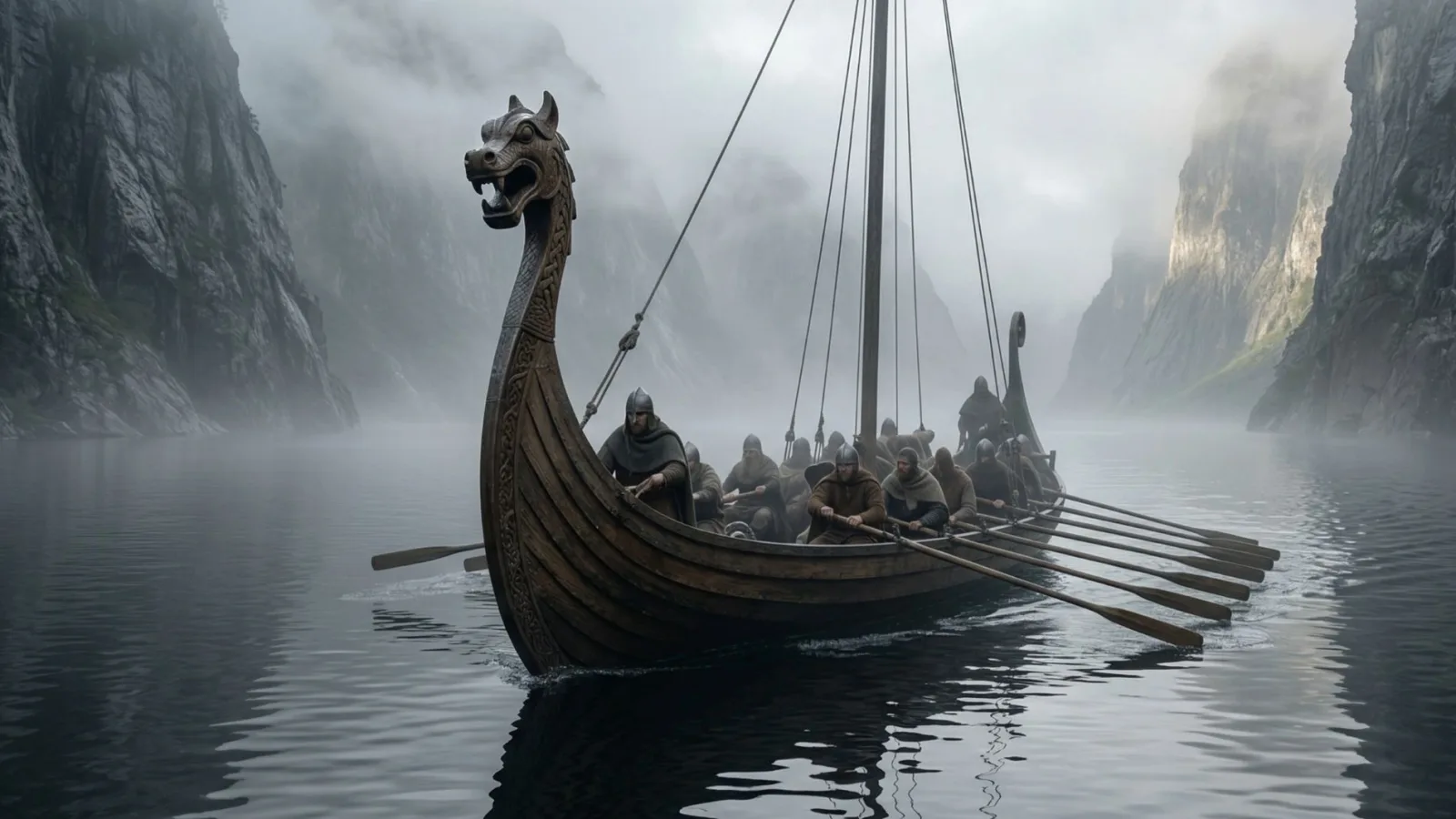
Norse longships were engineering marvels that dominated European waterways for centuries. Known for their shallow draft and clinker-built wooden hulls, these flexible vessels could absorb the shock of harsh ocean waves without snapping. Their unique design allowed warriors to navigate deep open seas as well as glide seamlessly up shallow riverbeds into inland territory. This incredible agility gave Norse raiders the element of total surprise, letting them launch quick beach landings and escape before local defenders could assemble. Without these advanced ships, the widespread expansion and colonization across Europe would have been impossible.
3. Navigators Used Polarizing Sunstones to Read the Sky
Sailing through the foggy North Atlantic required extraordinary navigation techniques when stars and the sun were hidden. To solve this problem, Norse navigators used Iceland spar, a type of polarizing calcite crystal commonly known as a sunstone. By holding the crystal up to the overcast sky, sailors could detect patterns of polarized light to determine the exact position of the sun hidden behind heavy cloud cover. Modern optical experiments have confirmed that these stones could successfully determine the sun's location with remarkable precision. This ingenious optical tool allowed crews to maintain accurate bearings across vast stretches of featureless ocean.
4. Ravens Served as Ancient Avian Land Finders
Before compasses were available, mariners relied on wild ravens as living navigation aids when exploring unknown waters. When far out at sea without landmarks, navigators would release captive ravens into the open sky. If the bird flew straight up and circled aimlessly before returning to the ship, no land was nearby. However, if the raven detected a distant coast, it would immediately fly in that direction, allowing the crew to follow it straight to safety. According to ancient sagas, famous explorers like Flóki Vilgerðarson successfully used this technique to locate Iceland.
5. Personal Grooming and Hygiene Were Sacred Priorities
Contrary to popular medieval tropes depicting them as filthy barbarians, Norse people maintained exceptionally high hygiene standards. Archaeological excavations routinely yield beautifully carved wooden and bone combs, tweezers, ear spoons, and grooming razors. Contemporary Anglo-Saxon chroniclers even complained that Norse men were too attractive to local women because they bathed regularly and groomed their hair. Keeping a neat beard and clean body was considered essential for social standing and personal honor. In fact, grooming items are among the most frequently discovered artifacts in Norse gravesites.
6. Saturday Was Officially Designated as Washing Day
Cleanliness was so deeply embedded in Norse culture that an entire day of the week was dedicated to bathing. The traditional Scandinavian word for Saturday, laugardagr, translates directly to "washing day" in Old Norse. Every Saturday, communities gathered to soak in natural hot springs or heated wooden tubs to scrub away the week's grime. They also thoroughly washed their garments and aired out bedding to maintain personal hygiene. This weekly ritual set them apart from many surrounding European societies of the period, where regular bathing was often viewed with suspicion or neglected altogether.
7. Norse Women Enjoyed Remarkable Legal Rights and Independence
Norse women possessed legal rights and autonomy that were virtually unheard of in most of contemporary Europe. Free women had the legal right to inherit land, manage massive estates, and retain full ownership of their property throughout marriage. If a husband mistreated his wife, proved lazy, or failed to provide financially, she could legally initiate a straightforward divorce and reclaim her dowry. While men were away on long trading voyages or military raids, women held total authority over household finances, farm operations, and local trade. This economic independence made women pivotal figures in sustaining Norse society.
8. DNA Proved a High-Ranking Warrior Chief Was Female
For over a century, a heavily armed 10th-century grave in Birka, Sweden, was assumed to belong to an elite male warrior commander. The site contained full military attire, high-status weapons, two horses, and a complete set of gaming pieces used for tactical battle planning. However, a groundbreaking 2017 DNA analysis conducted by researchers at Stockholm University revealed that the high-ranking officer was biologically female. This discovery provided compelling physical proof that high-status women held significant military authority and leadership roles in combat culture. The finding fundamentally shifted how historians understand gender dynamics in medieval Scandinavian warfare.
9. The Thing Represented an Early Form of Parliamentary Democracy
Norse society operated under a sophisticated, open-air parliamentary assembly system known as the Thing. Free citizens gathered periodically at designated assembly sites to negotiate treaties, enact community laws, and resolve civil disputes through debate. Rather than relying solely on the absolute decree of a single monarch, legal decisions were mediated by a Lawspeaker who memorized legal precedents. Even powerful local chieftains were subject to the rulings of the assembly and could be outlawed if they broke community laws. The Althing, established in Iceland in 930 AD, remains one of the oldest surviving parliamentary bodies in the world.
10. Trade Networks Stretched to Baghdad and the Middle East
While modern pop culture focuses heavily on raids in Western Europe, the vast majority of Norse activity was focused on vast trade networks. Enterprising merchants traveled down the major river systems of Eastern Europe, including the Volga and Dnieper rivers, to reach the wealthy centers of Eurasia. They traded valuable Scandinavian goods such as amber, furs, walrus ivory, and weapons in exchange for silver dirhams, silk, and spices. Archaeological digs in Scandinavia have uncovered hundreds of thousands of Middle Eastern silver coins and exotic goods, proving direct trade connections with the Abbasid Caliphate in Baghdad.
11. They Established Settlements in North America Long Before Columbus
Norse explorers established a permanent presence in North America nearly five centuries before Christopher Columbus arrived in the Caribbean. Led by Leif Eriksson around the year 1000 AD, expeditions sailed west from Greenland to explore lands they named Vinland. Archaeological excavations at L'Anse aux Meadows in Newfoundland, Canada, uncovered authentic timber-framed halls, iron smithies, and artifacts matching Scandinavian craftsmanship. This settlement served as a base camp for timber harvesting and resource gathering while engaging in trade and skirmishes with indigenous populations.
12. Berserkers May Have Consumed Psychoactive Mushrooms
The most feared shock troops in Norse warfare were the berserkers, warriors who fought in an uncontrollable, trance-like fury. Clad in bear or wolf skins, these fighters reportedly felt no pain, bit their shields, and charged into battle with terrifying intensity. Modern historians and ethnobotanists suggest that this extreme psychological state may have been chemically induced prior to combat. Many researchers believe berserkers consumed psychoactive plants or hallucinogenic mushrooms, such as Amanita muscaria, to induce temporary mania and numbness to injury. Others propose that intense group rituals and self-induced hypnosis triggered their battle rage.
13. Bored Mercenaries Left Runic Graffiti in Constantinople
Norse influence reached deep into the Byzantine Empire, where elite warriors served as the personal bodyguard of the emperor. Known as the Varangian Guard, these mercenary soldiers were renowned for their loyalty, giant battle axes, and formidable combat skills. During quiet shifts guarding the magnificent Hagia Sophia cathedral in Constantinople, at least one bored soldier carved runic inscriptions into the marble parapet. The runic graffiti, which roughly translates to the name "Halfdan," is still clearly visible to visitors inside the cathedral today.
14. They Founded the Strategic Settlement That Became Dublin
In the 9th century, Norse raiders established a fortified naval encampment along the River Liffey in Ireland to overwinter their ships. Known as Dubhlinn, which translates to "black pool," this strategic outpost rapidly grew into a bustling commercial hub and slave market. Over time, the settlement evolved into a major urban trading network that laid the foundation for the modern capital city of Dublin. Archaeological excavations throughout modern Dublin have unearthed extensive evidence of houses, workshops, and trade goods from this foundational period.
15. Skiing Was Essential for Survival and Honored by Gods
Skiing was far more than a fun winter pastime for northern communities; it was a critical tool for winter survival and warfare. Long wooden skis allowed hunters to travel silently across deep snow drifts to stalk game during harsh Scandinavian winters. Skiing was so deeply ingrained in their daily life and culture that they worshipped Ullr, the divine god of skiing and archery, along with Skaði, the goddess of winter hunting. Warriors routinely used skis to perform reconnaissance and execute fast tactical maneuvers across ice-covered mountain passes.
Sources & References
This AI-assisted post was rigorously curated and fact-checked for accuracy by:
 Martin Roháček
How fun was this article? 🤔
Tap a star to rate it
🧠 Quiz: How closely were you paying attention?
10 questions — all answers are in the article above!
Enjoyed these facts? There's more! 💌
Fresh fun facts in your inbox. No spam, ever.