1. He Was Born Far From the Ocean
It is highly unusual that one of history’s most famous sailors grew up completely landlocked. Zheng He was born around 1371 in Yunnan, a mountainous province in southwestern China located several months’ journey from the nearest seaport. He was born into a prosperous Muslim family and was originally named Ma He.
2. He Was Captured as a Child
When Ma He was around ten years old, the ruling Ming dynasty invaded his home province to overthrow the remaining Mongol forces stationed there. During the conflict, his father was killed, and the young boy was taken prisoner by the Ming army. Like many young male captives of that era, he was ritually castrated and sent to serve as a eunuch in the imperial court.
3. He Earned His Name in Battle
As a young man, Ma He was assigned to the household of Zhu Di, a powerful Ming prince. He quickly proved himself to be a brilliant military tactician and a fiercely loyal advisor. After helping Zhu Di successfully claim the imperial throne to become the Yongle Emperor, the new ruler rewarded his trusted servant by officially changing his name to Zheng He in honor of his battlefield victories.
4. He Was an Imposing Figure
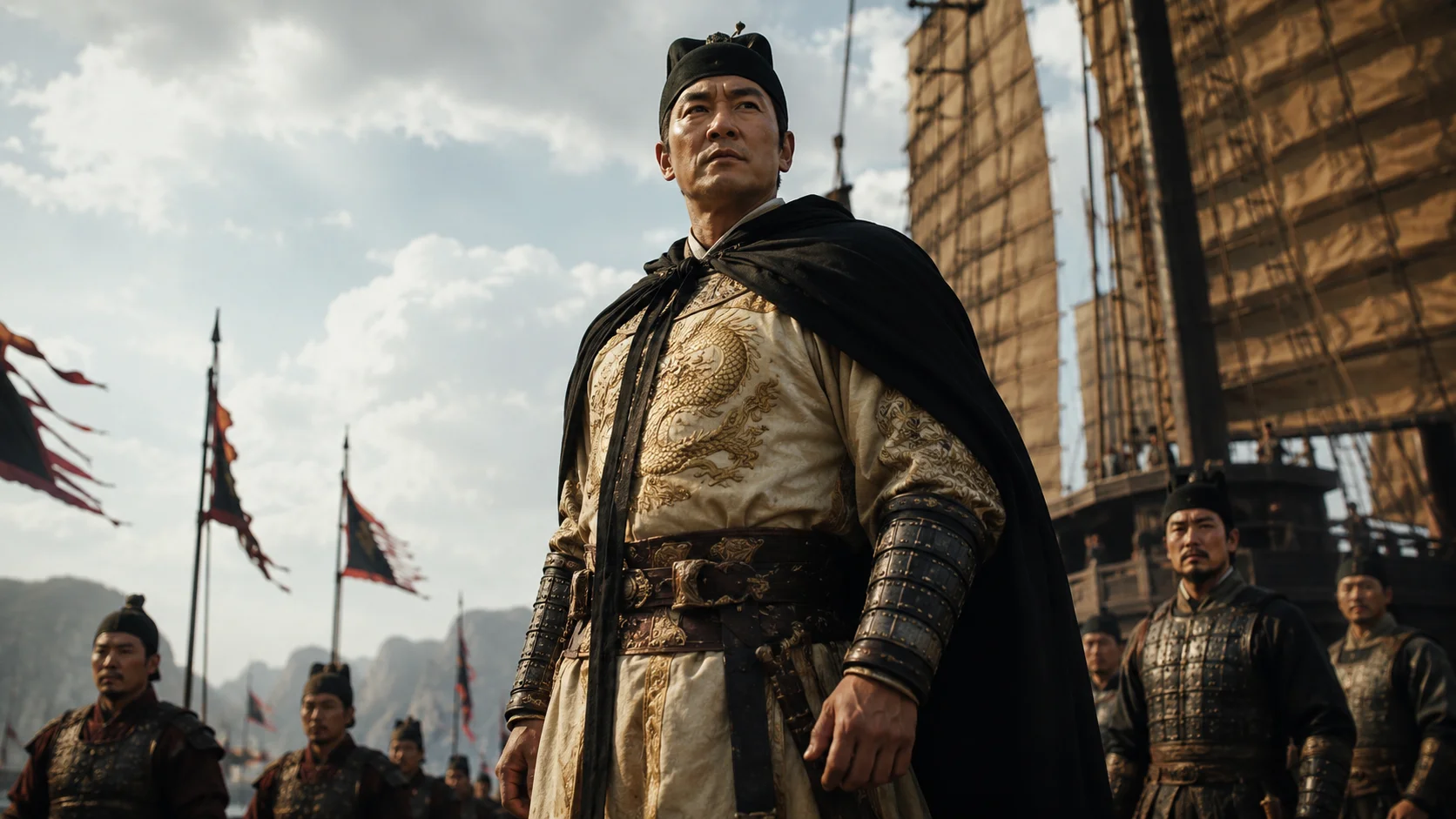
Historical accounts describe Zheng He as having a massive physical presence. According to contemporary descriptions, he stood roughly seven feet tall, possessed a broad chest, and had a deep, booming voice. This towering stature, combined with his extensive military experience, made him a highly intimidating and respected leader among his men and foreign dignitaries alike.
5. He Commanded the “Treasure Fleet”
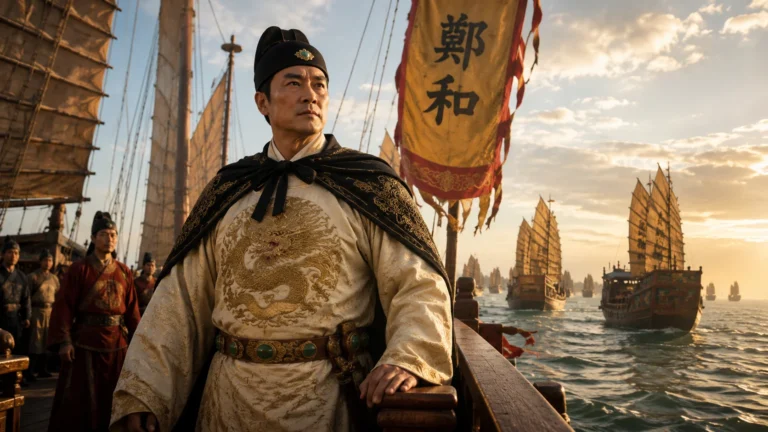
When the Yongle Emperor decided to project Chinese wealth and power across the seas, he appointed Zheng He as admiral. Zheng He oversaw the construction and command of the famous “Treasure Fleet.” The flagships of this armada, known as baochuan (treasure ships), were staggering pieces of engineering. They were multi-decked wooden ships featuring up to nine masts, dwarfing any vessels built in Europe at the time.
6. His Armadas Were Floating Cities
Zheng He did not sail with just a handful of ships. On his first major voyage, his fleet consisted of well over 250 vessels carrying an astonishing 28,000 people. This was not merely a military force; the fleet functioned as a mobile city. It included specialized ships for carrying fresh water and horses, as well as an entire staff of doctors, meteorologists, cartographers, translators, and merchants.
7. He Led Seven Epic Voyages
Between 1405 and 1433, Zheng He commanded seven distinct maritime expeditions. These voyages navigated through the South China Sea, across the Indian Ocean, and into the Persian Gulf and the Red Sea. He successfully established diplomatic and trade relations with over 30 different countries and territories, extending China’s sphere of influence further than ever before.
8. He Brought a Giraffe to China
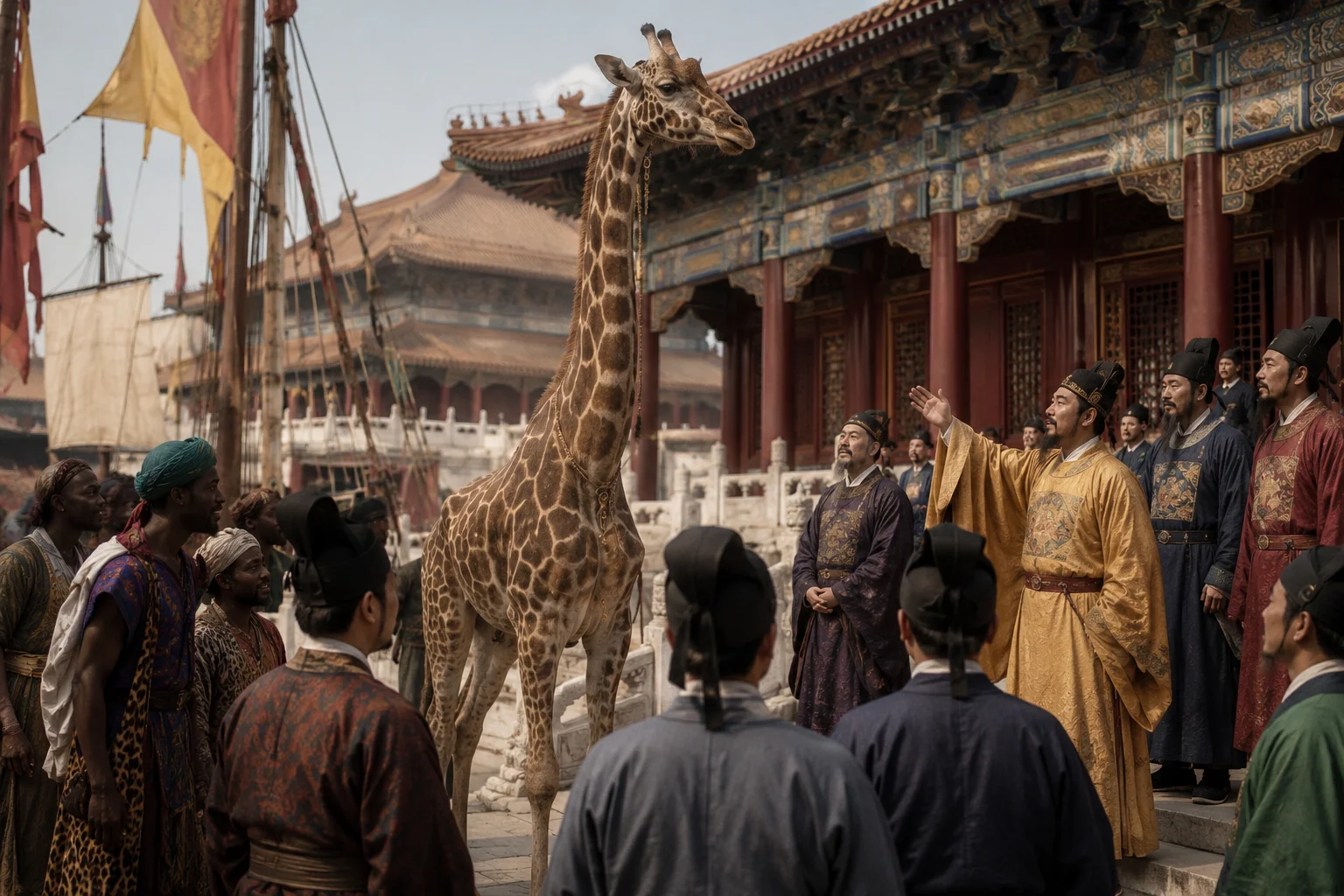
The primary goal of the Treasure Fleet was to distribute Chinese goods, such as fine silk and porcelain, and collect tribute from foreign nations. On his fourth voyage, Zheng He’s fleet met with envoys from Malindi (modern-day Kenya). The envoys gifted the Chinese a live giraffe. When the exotic animal arrived in Beijing, the court was astonished, mistaking it for a mythical, unicorn-like creature called a qilin, which was seen as a sign of divine favor.
9. He Was a Diplomat, Not a Discoverer
Unlike later European explorers who sailed into uncharted waters looking for new landmasses, Zheng He navigated established trade routes that Arab and Asian merchants had used for centuries. His mission was not to “discover” new worlds, but rather to show the known world the overwhelming might of the Ming dynasty, secure trade monopolies, and ensure foreign rulers recognized the Chinese emperor’s supremacy.
10. He Fought Pirates
While his missions were primarily diplomatic, Zheng He was a seasoned military commander who did not hesitate to use force to protect trade routes. During his voyages through Southeast Asia, the Strait of Malacca was heavily infested with pirate fleets. Zheng He aggressively hunted down these syndicates, famously defeating a massive pirate armada and capturing its leader to ensure safe passage for merchant vessels.
11. He Left Tangible Proof in Africa
For centuries, historians debated exactly how far Zheng He’s fleets traveled down the African coast. However, modern archaeology has provided concrete proof of his reach. In 2013, researchers digging on the Kenyan island of Manda unearthed a 600-year-old Chinese copper coin. The coin explicitly bore the name of the Yongle Emperor, directly tying the artifact to the era of Zheng He’s expeditions.
12. He Practiced Religious Tolerance
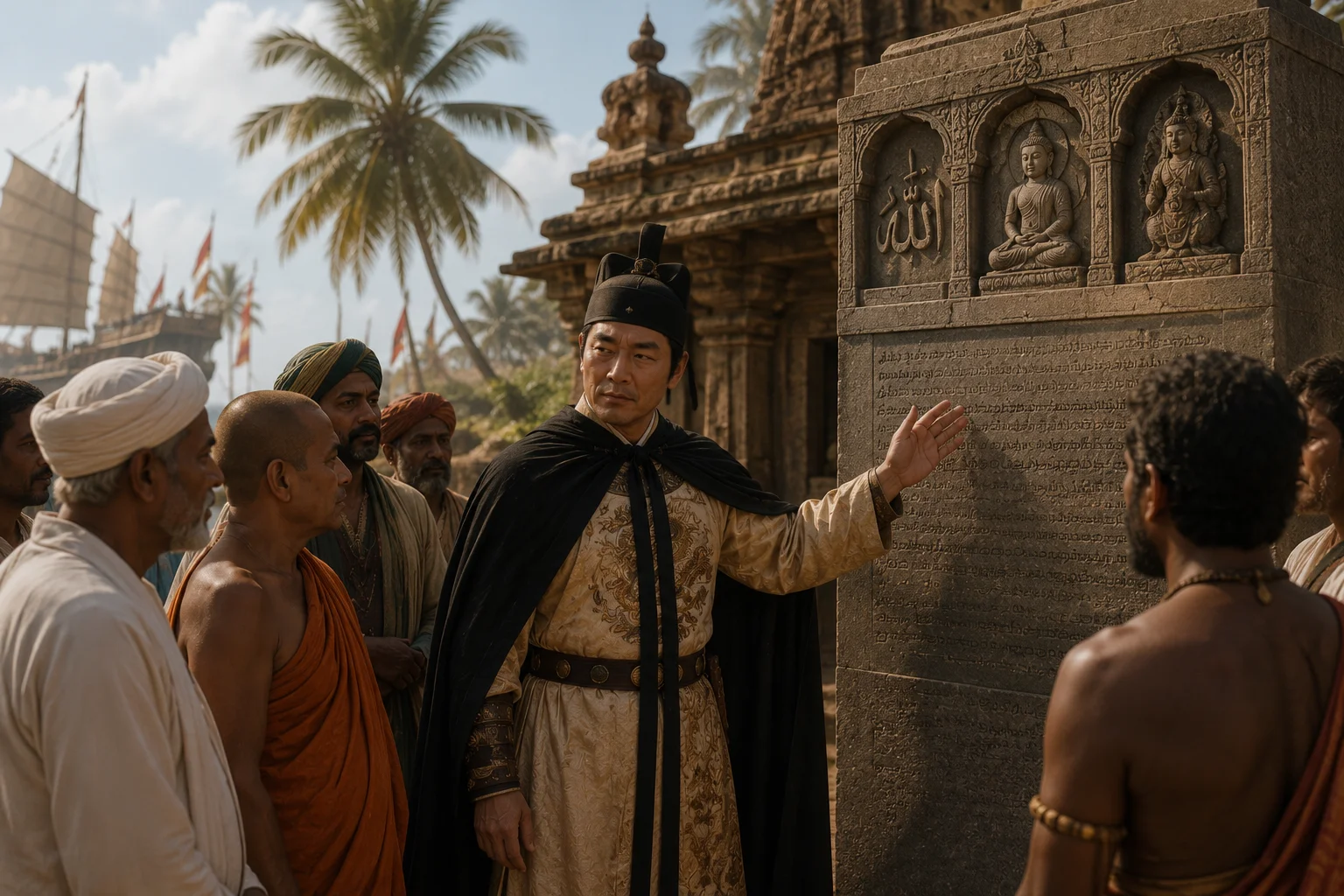
Despite being raised Muslim and serving a Confucian emperor, Zheng He was remarkably tolerant and respectful of other faiths. During his travels to places like Sri Lanka, he left behind inscribed stone tablets offering praises and gifts not only to Allah, but also to the Buddha and to local Hindu deities. This diplomatic respect helped him forge peaceful relationships across deeply diverse cultures.
13. He Used Advanced Navigation
Navigating tens of thousands of men across open oceans required high-level technology. Zheng He’s fleet utilized early magnetic compasses, sophisticated star charts for celestial navigation, and weighted sounding lines to measure ocean depth and analyze the composition of the sea floor. This allowed them to safely traverse dangerous reefs and shoals long before the invention of modern maritime instruments.
14. His Legacy Was Intentionally Erased
After Zheng He and his patron, the Yongle Emperor, died, the political winds in China shifted drastically. A new faction of conservative Confucian scholars took power. They viewed the massive naval expeditions as an extreme waste of money and a distraction from land-based threats. To ensure the voyages were never repeated, they burned the Treasure Fleet in its docks and destroyed almost all the official logs and blueprints from Zheng He’s travels.
15. He Is Revered as a Deity Today
Despite the Ming dynasty’s attempt to erase him from history, Zheng He’s impact on Southeast Asia was permanent. Because he helped establish strong Chinese trading communities in places like Indonesia and Malaysia, he passed into local legend. Today, he is widely respected and even worshipped; the Tay Kak Sie temple in Java features a large statue of Zheng He, where he is honored by both Taoist and Buddhist worshippers as a protective spirit.