
The Resonant Masterpieces: 15 Fascinating Facts About Stradivarius Violins
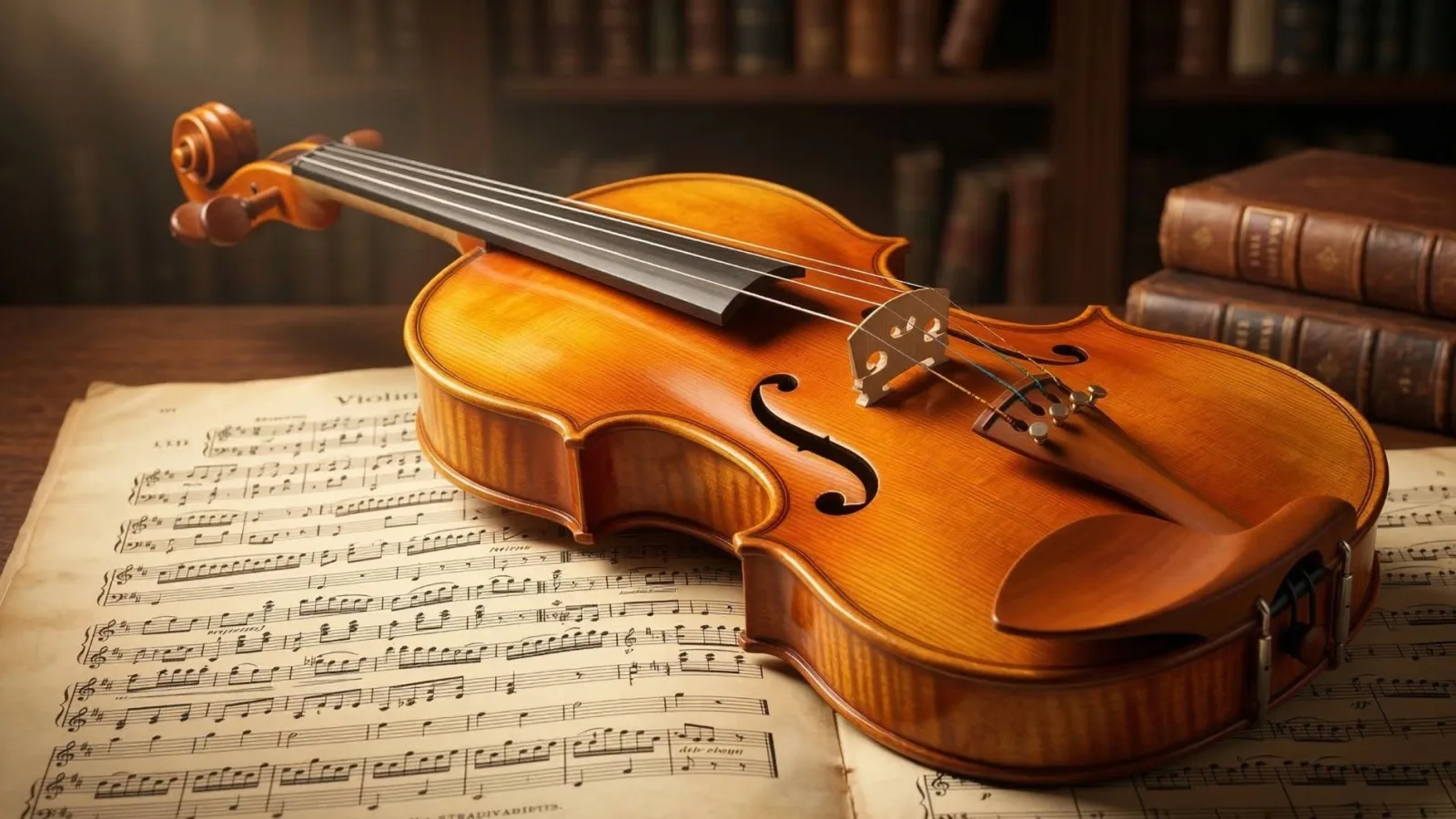
Crafted during the Golden Age of Italian lutherie, Stradivarius violins remain the most celebrated stringed instruments in human history. From the subtle climate shifts of the Little Ice Age that altered European timber to high-tech medical CT scans uncovering internal secrets, these multi-million-dollar masterpieces continue to intrigue scientists, historians, and virtuosos alike. Unravel the truth behind their legendary sound, mythic varnish, and extraordinary global legacy.
1. Cremona Was the Epicenter of String Lutherie
Antonio Stradivari lived and worked in Cremona, Italy, a Renaissance city already renowned for master luthiers like the Amati family. Rather than working in isolation, Stradivari inherited traditions from generations of skilled Italian woodworkers. He refined every step of the manufacturing process, from selecting timber to shaping structural ribs. His workshop produced violins, cellos, violas, and guitars that quickly became prized across European courts. Today, Cremona remains the world capital of traditional violin making, preserving the legacy Stradivari helped define.
2. The Little Ice Age Densified the Wood
Researchers believe that Europe's Little Ice Age, a period of abnormally cold weather between the 16th and 19th centuries, played a key role in the violins' sound. Unusually harsh winters slowed the growth of Alpine spruce trees used by Stradivari. This slow, steady growth resulted in remarkably tight and uniform tree rings, creating an extremely dense and stiff wood. Acousticians assert that this dense spruce provides an ideal structural foundation for acoustic resonance. Without those precise historical climate conditions, the wood might never have developed such unique tonal characteristics.
3. Chemical Baths Were Used for Pest Control
Microscopic analyses reveal that Stradivari treated his raw wood with complex chemical solutions long before carving began. These baths contained mixtures of aluminum, calcium, copper, and zinc salts intended to protect the timber against woodworm infestation. Surprisingly, this chemical treatment did far more than keep bugs away; it permanently altered the wood's cellular structure. The chemical bonding dried out organic resins and stiffened the cell walls, unintentionally enhancing the acoustic projection of the finished instruments.
4. Redesigned F-Holes Boosted Acoustic Projection
To adapt to larger performance venues, Antonio Stradivari fundamentally redesigned the traditional shape of the violin's sound holes. He elongated and narrowed the iconic f-shaped cuts on the instrument's top plate with extreme mathematical precision. This deliberate engineering tweak increased air movement within the violin's soundbox while strengthening the surrounding wood. As a result, the redesigned f-holes allowed sound to project dramatically farther into sprawling concert halls. The innovation gave performers unprecedented volume without sacrificing delicate tonal nuances.
5. Only Half of His Output Survives Today
Over a prolific career spanning more than seven decades, Stradivari crafted an estimated 1,200 stringed instruments. However, time, war, and accidental destruction have taken a heavy toll on his life's work. Today, historians estimate that only about 600 to 650 of these original instruments remain in existence worldwide. This surviving collection includes roughly 500 violins, alongside a smaller number of violas, cellos, and guitars. Because no new examples can ever be made, each remaining instrument is carefully cataloged and tracked by musical scholars.
6. The Golden Period Produced His Absolute Masterpieces
While Stradivari created remarkable instruments throughout his long career, experts consider the years between 1700 and 1720 to be his Golden Period. During these two decades, the master luthier achieved his absolute peak in terms of sound design, wood selection, and craftsmanship. Instruments crafted during this era, such as the famous Betts and Viotti violins, feature broader dimensions and bolder sound production. Musicians and collectors consider Golden Period violins to be the absolute pinnacle of acoustic string engineering.
7. Instruments Bear Names Instead of Serial Numbers
Unlike modern manufactured goods that carry sterile serial numbers, almost every surviving Stradivarius violin has its own distinct name. Instruments are traditionally named after famous virtuosos who played them, wealthy patrons who bought them, or distinctive physical traits. For instance, the Soil Stradivarius bears the name of a French collector, while the Lady Blunt was named after Lord Byron's granddaughter. These historical names give each surviving instrument a distinct identity that follows it across centuries of ownership.
8. The Messiah Remains in Pristine Condition
Crafted in 1716 during his Golden Period, the instrument known as the Messiah is considered the most perfectly preserved Stradivarius violin in the world. Unlike most historical violins that suffered centuries of wear, tear, and restoration, the Messiah was rarely played. It spent most of its life resting safely in private collections before finding a permanent home in Oxford's Ashmolean Museum. Because it remains in nearly factory-new condition, researchers can still examine Stradivari's original varnish and precise tool marks today.
9. Structural Asymmetry May Be a Hidden Acoustic Strength
Modern computer-guided lasers can craft instrument components with absolute symmetry, yet Stradivari's instruments contain subtle human variations. High-precision 3D scans reveal that the master luthier carved his wood plates with tiny asymmetrical differences between the left and right sides. Far from being mistakes, these slight variations are believed by many acousticians to be essential to their rich sound. The organic irregularities break up uniform acoustic reflections, generating a wider spectrum of complex harmonic overtones.
10. Modern Blind Tests Challenge the Stradivarius Myth
For decades, classical music enthusiasts believed no modern instrument could match the acoustic brilliance of an authentic Stradivarius. However, rigorous double-blind scientific tests have repeatedly challenged this long-held perception. In modern studies where concert violinists wore dark goggles and played in darkened rooms, many players could not reliably distinguish a Stradivarius from a modern masterpiece. In fact, several virtuosos actually preferred the playability and power of newly built high-end violins over the multi-million-dollar antiques.
11. Dendrochronology Unmasks Clever Counterfeits
Due to their immense financial value, Stradivarius violins have been heavily targeted by clever nineteenth- and twentieth-century counterfeiters. To verify an instrument's authenticity beyond doubt, modern experts rely on dendrochronology, the science of tree-ring dating. By measuring the unique pattern of ring widths in a violin's spruce top plate, scientists match the wood to historical climate databases. This scientific analysis confirms whether the wood was felled in the Alpine forests during Stradivari's exact lifetime, instantly exposing sophisticated fakes.
12. Master Instruments Must Be Played to Preserve Sound
Unlike standard museum artifacts that are preserved best behind glass, stringed instruments tend to degrade if they sit completely dormant. Over years of silence, the wood fibers settle and tighten, causing the instrument to lose its characteristic warmth and tonal resonance. To keep the historical wood vibrating and healthy, museum curators and foundations regularly loan these precious instruments to world-class musicians. Regular performance keeps the spruce and maple elastic, ensuring the sound remains vibrant for future generations.
13. Medical CT Scanners Map Their Internal Geometry
To uncover the secret internal dimensions of these multi-million-dollar instruments, researchers frequently turn to advanced medical imaging technology. Non-invasive hospital CT scanners send X-rays through the violins, generating detailed 3D digital cross-sections of the wood. These scans allow acousticians to measure varying wood thickness down to fractions of a millimeter without making a single mark on the antique surface. The resulting data enables contemporary luthiers to replicate Stradivari's structural geometry with unprecedented accuracy.
14. The Varnish Formula Was Common, Not Magic
For centuries, music historians speculated that Antonio Stradivari possessed a secret, mystical varnish recipe responsible for his violins' transcendent tone. Modern chemical spectroscopy, however, has dispelled much of this mysterious lore. Chemical analysis shows that his varnish consisted of standard 18th-century materials, including linseed oil, pine resin, and natural pigments. While his application technique was undoubtedly masterful, the varnish itself was a common protective coating rather than an alchemical secret weapon.
15. Record Values Make Them Targets for Theft
The extraordinary combination of historical rarity, unmatched provenance, and legendary reputation has driven Stradivarius prices into astronomical territories. In 2011, the Lady Blunt Stradivarius sold at auction for a record-breaking $15.9 million to benefit Japanese earthquake relief efforts. Their incredible market value has also made them prime targets for high-profile art thieves throughout modern history. Remarkably, several stolen Strads, such as the famous Gibson violin stolen twice over 50 years, have eventually been recovered intact.
Sources & References
This AI-assisted post was rigorously curated and fact-checked for accuracy by:
 Martin Roháček
How fun was this article? 🤔
Tap a star to rate it
🧠 Quiz: How closely were you paying attention?
10 questions — all answers are in the article above!
Enjoyed these facts? There's more! 💌
Fresh fun facts in your inbox. No spam, ever.