1. Congress Actually Voted for Independence on July 2
In one of the most surprising misconceptions in American history, the Continental Congress actually voted to declare independence on July 2, 1776, an event John Adams boldly predicted would become the most memorable epoch in American history. Ultimately, July 4 was simply the day the formal written text authored by Thomas Jefferson was approved by Congress and sent to the printers. Because that specific date was printed at the top of the distributed broadsides, it permanently became the recognized birthday of the United States.
2. Jefferson and Adams Died on the Exact 50th Anniversary
The primary author of the Declaration and its fiercest vocal defender shared a profound relationship that ended in a chilling historical coincidence when Thomas Jefferson and John Adams both passed away on July 4, 1826. Astoundingly, this shared date of death was precisely the 50th anniversary of the formal adoption of the Declaration of Independence. As the 90-year-old Adams lay dying in Massachusetts, his famous last words were allegedly that Thomas Jefferson survives, completely unaware his beloved rival had passed away five hours earlier.
3. The Document Was Not Signed by Everyone on July 4
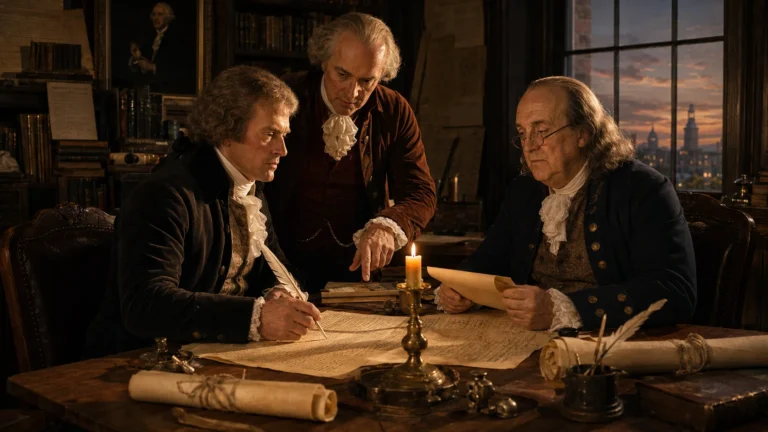
Contrary to iconic paintings depicting all the founding fathers signing the document together on the Fourth of July, the approved text was initially only signed by John Hancock and Charles Thomson to authorize its printing. It took weeks for an official parchment copy to be laboriously handwritten, meaning the vast majority of delegates did not actually sign the enrolled document until August 2, 1776. Because of travel difficulties during the Revolutionary War, several delegates like Elbridge Gerry added their signatures much later in the year.
4. A Mysterious Handprint Marks the Back of the Parchment
Beyond the fading ink on the front, the original parchment guards a highly mysterious, unexplained dark human handprint located directly at the bottom left corner of the reverse side. Because the document was frequently rolled up, transported, and handled without protective gloves throughout the 19th century, historians believe the print was accidentally left behind by a careless clerk or printer. Despite extensive modern chemical analysis, the National Archives has never been able to definitively identify exactly who left the ghostly mark.
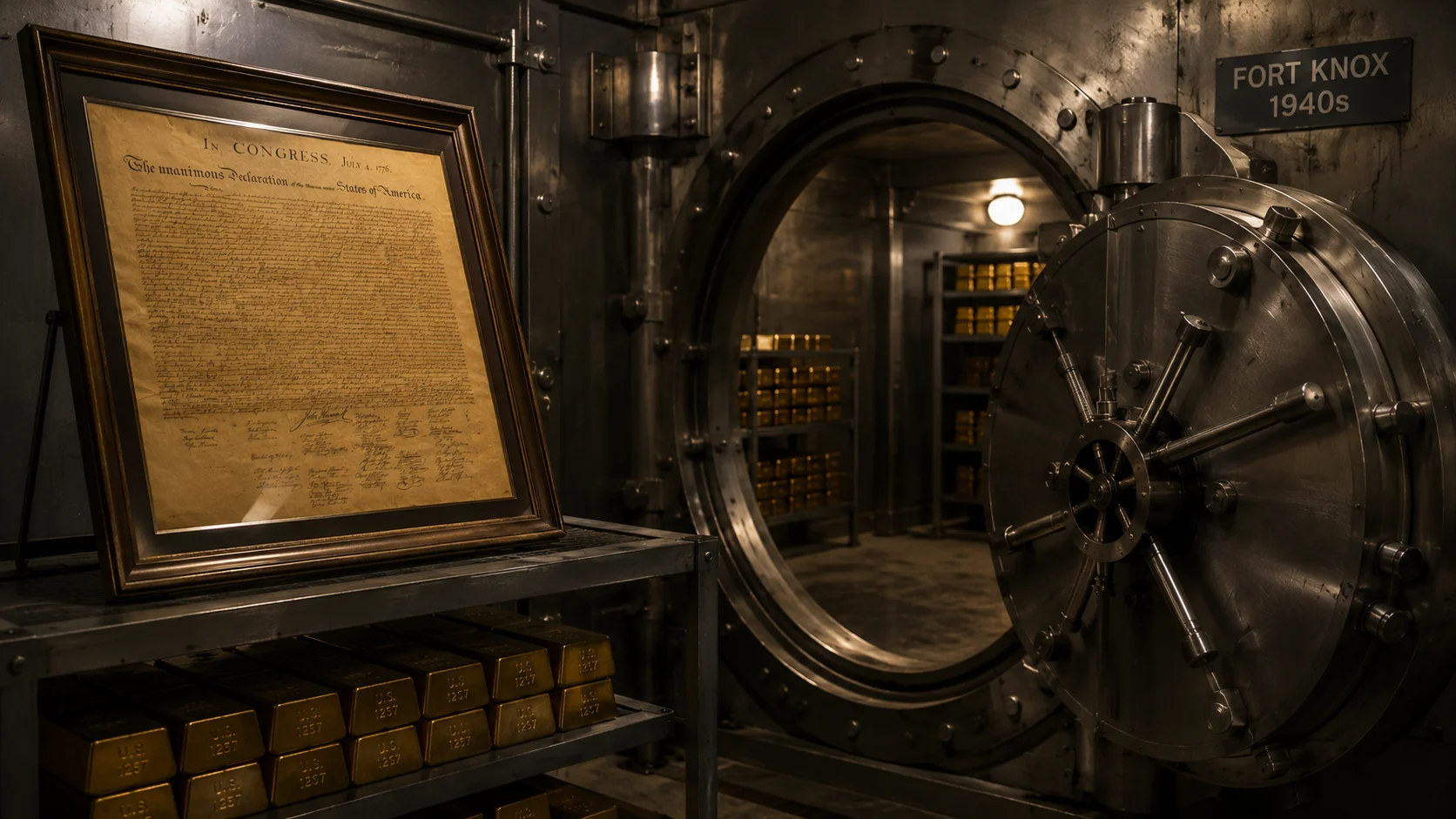
5. It Spent World War II Hidden Inside Fort Knox
Following the surprise attack on Pearl Harbor in 1941, the United States government grew incredibly concerned that enemy air raids could obliterate the nation’s foundational document. The priceless parchment was secretly packed into a specially designed bronze container and transported by train under heavy Secret Service guard to the ultra-secure subterranean vaults of Fort Knox. It rested safely alongside the nation’s massive gold reserves for the duration of the war, finally returning to Washington in 1944 once the immediate threat of aerial bombing subsided.
6. There Was a 44-Year Age Gap Among the Signers
The 56 men who committed high treason against King George III represented a remarkably diverse generational cross-section, featuring a massive 44-year age gap among the delegates. The absolute oldest delegate to sign the parchment was the legendary statesman Benjamin Franklin at 70 years old, while the youngest was an ambitious 26-year-old South Carolina lawyer named Edward Rutledge. Despite their vastly differing ages, every single signer understood the terrifying gravity of their actions, knowing that failure meant facing the British hangman’s noose.
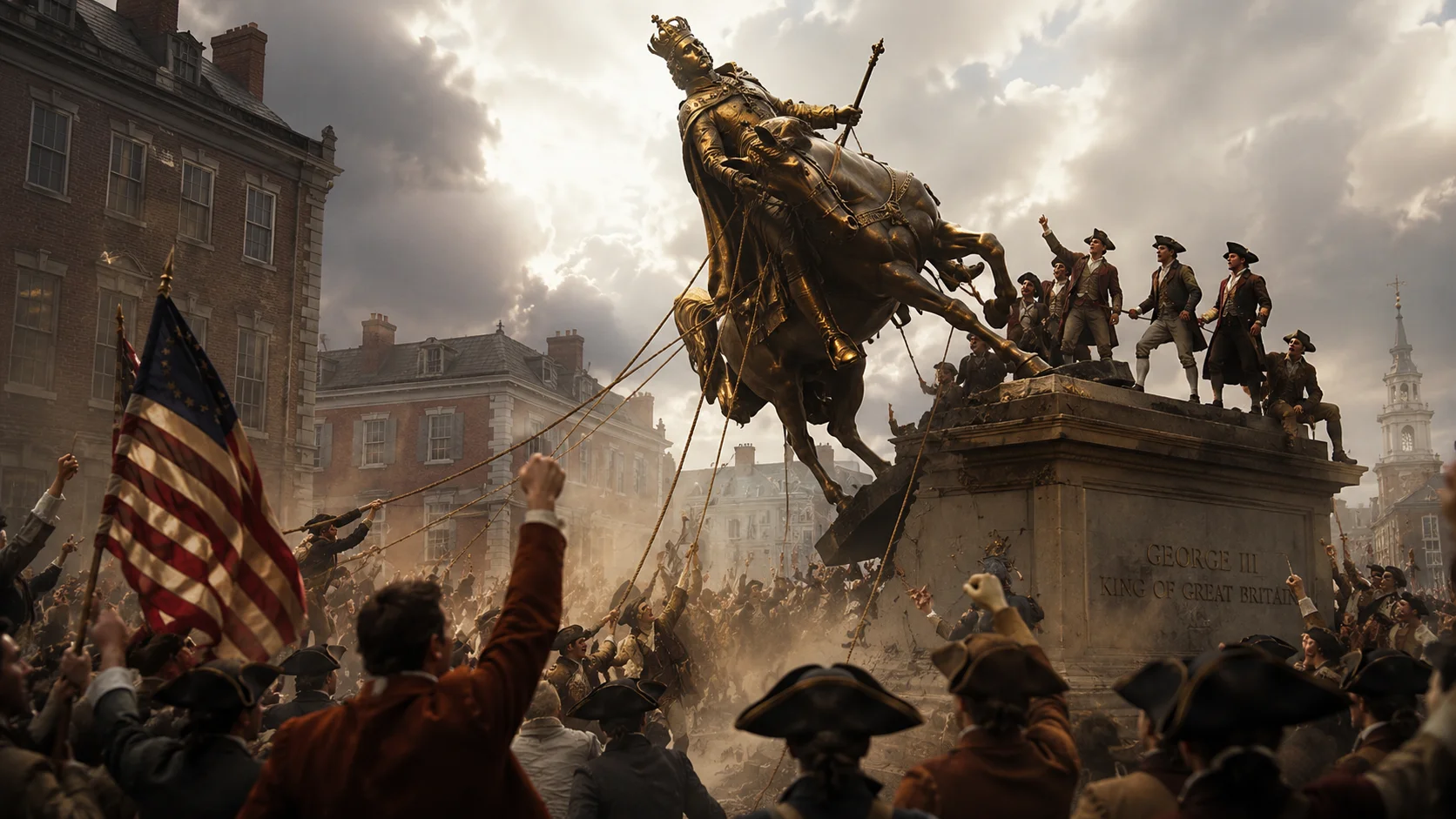
7. A Torn-Down Royal Statue Was Melted Into American Bullets
When General George Washington ordered the newly printed Declaration read aloud to his troops and civilian crowds in New York City on July 9, 1776, the fiery words ignited an overwhelming wave of anti-royalist fury. The energized mob marched down to Bowling Green, threw heavy ropes around a massive 4,000-pound gilded lead statue of King George III on horseback, and violently pulled it to the ground. Revolutionaries then transported the fragmented metal to Connecticut, where it was melted down into 42,000 musket balls and fired directly back at the advancing British army.
8. A Hidden Message is Written Upside Down on the Back
While moviegoers frequently recall the fictional treasure map hidden on the back of the document in Hollywood films, there is actually a real historical inscription written entirely upside down on the reverse side. The heavily faded handwritten text clearly reads that it is the original Declaration of Independence dated 4th July 1776, which historians confirm was not an encrypted code. Instead, because the large parchment was routinely rolled up for storage during the 18th century, the inscription functioned as a simple, highly practical filing label.
9. The Original Parchment Was Heavily Damaged by Sunlight
Modern visitors viewing the document frequently express surprise at just how faded and nearly illegible the original text has become, a degradation caused largely by improper display techniques during the 19th century. For over 35 years, the parchment hung proudly inside the Patent Office Building directly opposite a tall window, continuously bombarded by harsh sunlight and humidity that bleached the ink. Today, the document is heavily shielded behind specialized ballistic glass under deeply dimmed, calibrated lighting to halt any further decay.
10. One Signer Later Recanted His Signature Under Duress
Signing the parchment was an incredibly dangerous gamble, and New Jersey delegate Richard Stockton tragically buckled under the terrifying weight of British retribution after his estate was overrun. Stockton was captured, dragged to a freezing British military prison in New York, and subjected to brutal treatment and starvation that completely broke him physically and mentally. To secure his release and save his family, he accepted a royal amnesty offer and signed an oath of allegiance to King George III, becoming the only signer to recant under duress.
11. An Enslaved Woman Was the First to Print the Full Names
For six months, distributed copies only displayed the signatures of John Hancock and Charles Thomson to protect the other delegates, but Congress finally commissioned postmaster Mary Katherine Goddard to print the full list of names in January 1777. Goddard laboriously set the complex type for the broadside, boldly printing her own name at the bottom alongside the authentic founding fathers. Historical records indicate she operated her press with the assistance of an enslaved woman named Belinda, creating a profound historical paradox where an enslaved woman helped produce the first public document proclaiming all men are created equal.
12. The Famous Faded Ink Was Actually Chemically Extracted
While sunlight heavily faded the original document, a well-intentioned preservation attempt in 1820 actively stripped away a massive layer of the authentic founding ink. Secretary of State John Quincy Adams commissioned William J. Stone to create an exact copperplate facsimile using a wet-ink transfer process that pressed a damp sheet directly against the fragile 1776 parchment. This aggressively dissolved and lifted off a significant portion of the original ink, meaning almost all modern reproductions seen today are actually prints of the 1823 Stone engraving rather than the pale, stripped original.
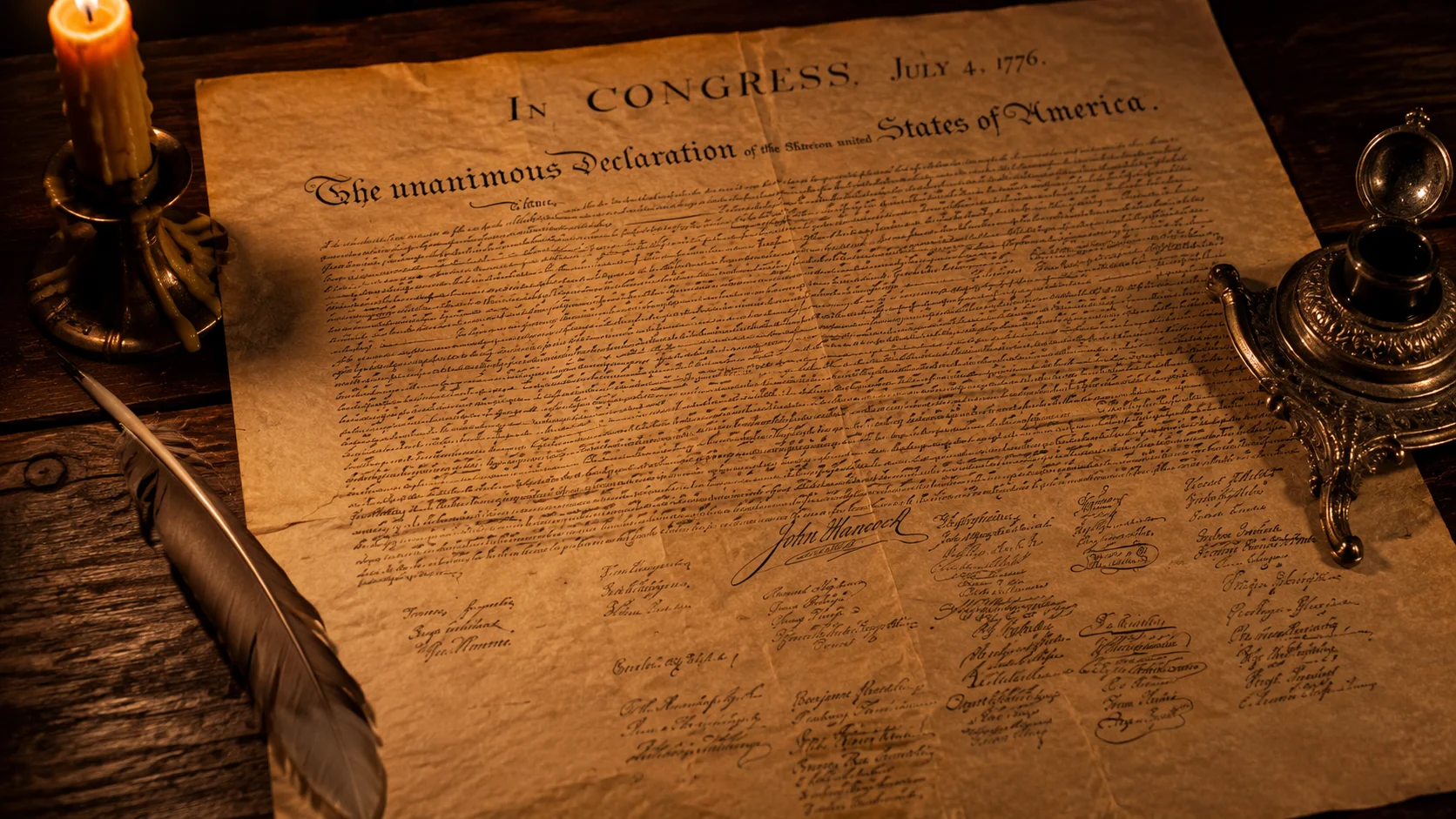
13. The Syllable Count Matches Highly Complex Musical Rhythms
Beyond its profound political philosophies, the text authored by Thomas Jefferson flows with a distinct, hypnotic metronomic rhythm because the accomplished violinist applied complex musical concepts to his prose. Linguistic historians have noted that Jefferson laboriously drafted the document to be read aloud, meticulously placing specific punctuation marks to dictate exactly where an orator should pause for breath. Researchers analyzing his original rough drafts even discovered faint accent marks placed over specific syllables, proving he composed the document using structural techniques reserved for classical music.
14. The State of New York Initially Abstained From the Vote
When the crucial vote for independence was called on the floor of Congress on July 2, the official tally recorded 12 colonies voting affirmatively because the highly strategic colony of New York was forced to abstain. The New York delegates were personally supportive of breaking away, but their outdated home instructions strictly forbade them from voting for independence while a massive British naval fleet was actively dropping anchor in New York Harbor. The provincial assembly finally endorsed the Declaration a week later, allowing New York to formally add its affirmative vote on July 15, 1776.
15. The Document Rests on a Custom Aluminum Frame
Ensuring the permanent physical survival of the parchment requires an absolute triumph of modern engineering, with the document currently sealed inside a custom titanium and aluminum encasement. To prevent organic oxidation or bacterial decay, all oxygen was vacuumed out of the secure frame, and the interior is heavily flooded with pure argon gas maintained at a constant relative humidity. Furthermore, the document rests entirely on a specialized perforated metal backing designed to absorb destructive microscopic vibrations, guaranteeing the fragile skin safely survives for centuries to come.
Sources and References
- National Archives: https://www.archives.gov/founding-docs/declaration-history
- Library of Congress: https://www.loc.gov/item/today-in-history/july-04/
- Smithsonian: https://www.si.edu/spotlight/american-revolutionary-war/signers-declaration-independence