The Explosive Legend: 15 Fascinating Facts About Alberto Tomba
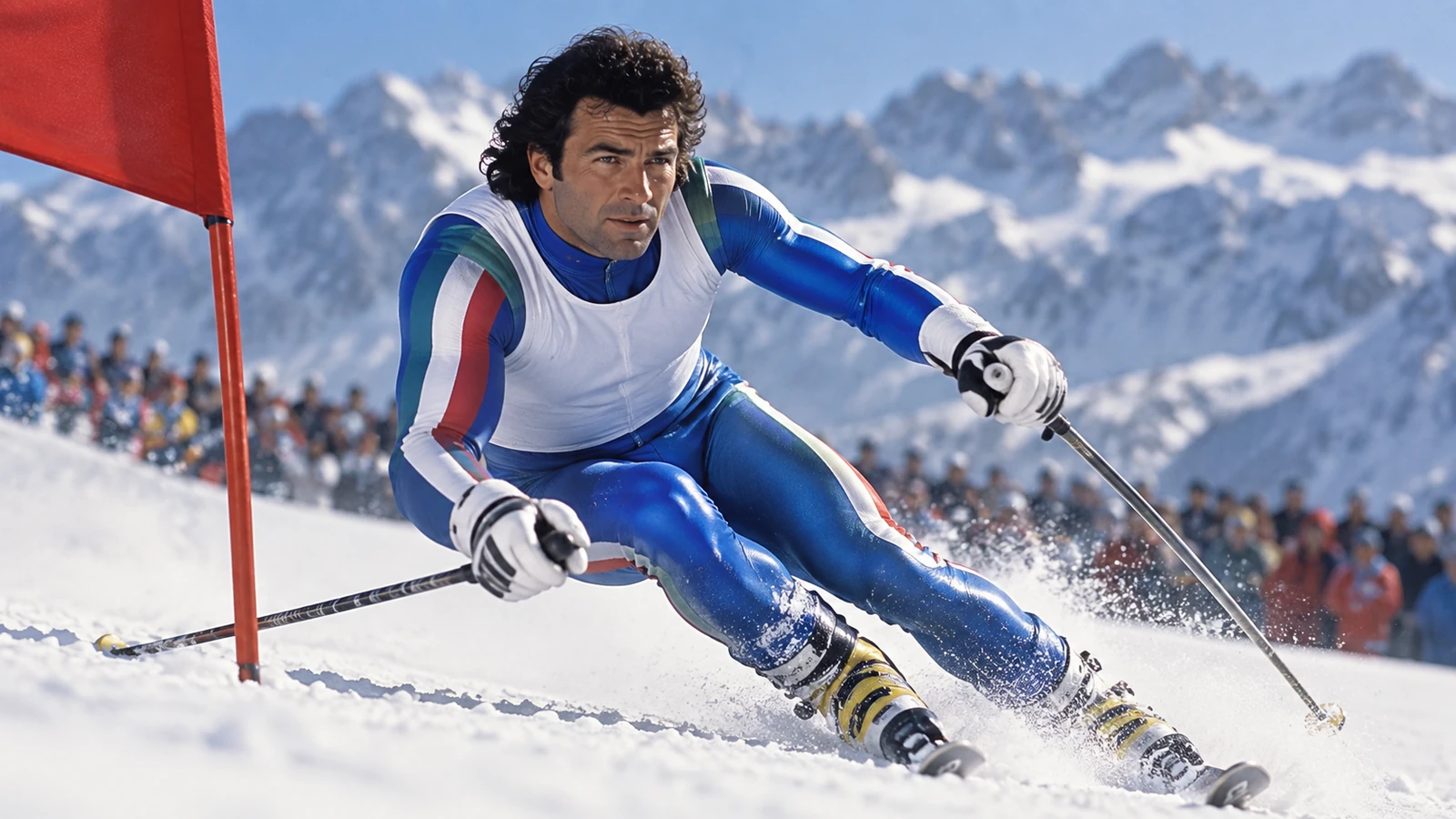
Few athletes in winter sports history have matched the explosive power, charismatic flair, and dominant technique of Italian alpine skiing superstar Alberto Tomba. Nicknamed 'Tomba la Bomba' for his aggressive style on the slopes and rockstar personality off them, he revolutionized slalom and giant slalom racing throughout the late 1980s and 1990s. With three Olympic gold medals, two World Championship titles, and 50 World Cup victories to his name, Tomba transformed alpine skiing into a worldwide spectator phenomenon. From his unconventional flatland upbringing to his storybook final victory, here are 15 fascinating facts about one of ski racing's greatest legends.
1. Born Far From the Alpine Peaks
Alberto Tomba was not raised in the rugged high mountains like most top European skiers. He was born on December 19, 1966, in San Lazzaro di Savena, a suburban town right outside Bologna in the flatlands of Emilia-Romagna. His wealthy father introduced him to skiing at a young age, driving him into the Apennines and South Tyrol for regular practice. This unusual geographic origin made Tomba an outsider to the traditional Alpine skiing culture of northern Italy. Despite lacking daily mountain access in his childhood, his raw athletic talent quickly elevated him to elite national competition.
2. The Origin of "Tomba la Bomba"
His famously explosive, aggressive racing style and charismatic personality earned him the electrifying nickname "Tomba la Bomba" (Tomba the Bomb). Standing over six feet tall and built like a powerhouse, Tomba brought an unheard-of combination of muscle and agility to technical skiing. Rather than gliding smoothly around slalom gates, he attacked them head-on with brute physical force and dramatic body angles. His vibrant public persona off the slope matched his explosive energy on it, turning him into a global sporting sensation. Fans around the world embraced the nickname, which became synonymous with 1990s Alpine skiing thrill.
3. Bursting onto the Olympic Stage in Calgary
At the 1988 Winter Olympics in Calgary, Alberta, a 21-year-old Tomba exploded onto the international stage in sensational fashion. Having won his first World Cup races just months earlier, he entered the Games brimming with confidence and proceeded to dominate both technical events. He captured gold in the giant slalom by a huge margin and followed it up with another gold medal in the slalom. His double gold performance instantly catapulted him into international stardom as the new face of alpine skiing. Overnight, the young Italian transformed from a promising contender into a world-famous sports phenomenon.
4. Historic Title Defense in Albertville
When the Winter Games took place in Albertville, France, in 1992, Tomba cemented his place in Olympic history. By winning the gold medal in the giant slalom, he became the first male alpine skier ever to successfully defend an Olympic title in the same event. He complemented this victory by taking home a silver medal in the slalom after a thrilling second run. His remarkable consistency on the highest stage proved that his success four years earlier in Calgary was no fluke. With three gold medals and a silver, he became Italy's most decorated Olympic winter athlete of his era.
5. The Unbelievable Comeback in Lillehammer
The 1994 Lillehammer Winter Olympics produced one of the most astonishing moments of Tomba's entire career. After a mistake on his first run in the slalom, he found himself sitting in a dismal 12th place, trailing the leader by 1.84 seconds. While most commentators wrote off his medal hopes, Tomba delivered an aggressive second run for the ages, carving down the icy course in record time. He rocketed past nearly the entire field to capture the silver medal, finishing just 0.15 seconds off the gold. The miraculous comeback highlighted his fearless mental toughness under extreme pressure.
6. Winning World Cup Races in 11 Straight Seasons
Tomba possessed an extraordinary level of top-tier consistency that few athletes in winter sports history have ever matched. From the 1987-1988 season through the 1997-1998 season, he won at least one FIS World Cup race every single year for 11 consecutive seasons. Maintaining elite performance across more than a decade in technical skiing is notoriously difficult due to changing course conditions and high injury risks. This unbroken 11-year winning streak underscored his remarkable longevity at the pinnacle of international competition. It remains one of the most respected records in the history of the Alpine Ski World Cup.
7. Capturing the Elusive Overall Crystal Globe
For years, the overall World Cup title eluded Tomba because he refused to compete in speed events like downhill and super-G, focusing strictly on slalom and giant slalom. However, during the 1994-1995 season, his technical dominance was so absolute that speed specialists could not keep up with his points tally. He won an astounding 11 World Cup races that season, securing the Slalom globe, Giant Slalom globe, and the prestigious Overall World Cup crystal globe. He became the first technical specialist in decades to claim the overall crown without competing in high-speed downhill events. That historic season crowned him as the undisputed king of alpine skiing.
8. Reaching the Milestone of 50 World Cup Wins
By the end of his competitive career, Tomba had accumulated an extraordinary total of 50 individual World Cup victories. His record included 35 slalom wins and 15 giant slalom wins, along with 88 total podium finishes. At the time of his retirement, only Sweden's legendary Ingemar Stenmark had won more men's World Cup races in history. Tomba's incredible win total demonstrated his absolute mastery of technical racing gates over a 12-year span. Today, he remains third on the all-time men's World Cup victory list behind Stenmark and Marcel Hirscher.
9. Conquering the World Championships in Sierra Nevada
Despite his remarkable success in the Olympics and World Cup circuit, World Championship gold had strangely eluded Tomba through the early part of his career. That changed dramatically at the 1996 World Championships in Sierra Nevada, Spain, where he put all doubts to rest. Showing consummate mastery on the Andalusian snow, Tomba swept both technical events to win double gold in giant slalom and slalom. Adding those world titles completed his ultimate resume, making him a champion at every major level of the sport. His emotional double victory in Spain solidified his legacy as a complete big-game performer.
10. A Perfect Storybook Retirement
Rather than watching his skills gradually decline, Tomba staged a fairytale farewell to competitive skiing in March 1998. Competing in the season finale at Crans-Montana, Switzerland, he charged down the slalom course to secure his 50th career World Cup victory. Immediately following the race, at the age of 31 and still at the peak of his powers, he announced his official retirement from international competition. Winning his very final race made him one of the rare sporting legends to exit at the absolute top of their game. It was a fitting finale for a champion who always thrived on dramatic timing.
11. Halting National Television to Air His Runs
Tomba's immense popularity in Italy transcended sport, turning his races into national events that paralyzed normal public life. His cultural impact was so massive that in February 1988, Italy's iconic Sanremo Music Festival—the nation's most watched entertainment show—was paused live on national television. The broadcast temporarily stopped so millions of viewers could watch Tomba compete live in the Olympic slalom. Entire towns across Italy would gather in bars and living rooms whenever "La Bomba" was on the slope. His charisma transformed alpine skiing from a regional sport into a beloved national obsession.
12. Surviving Overwhelming Paparazzi Mania
Off the snow, Tomba lived a flamboyant rockstar lifestyle that attracted intense media scrutiny and constant paparazzi pursuit. His handsome looks, romantic escapades, and outgoing nightlife made him a favorite target for tabloid photojournalists. The relentless media attention occasionally boiled over into dramatic confrontations between the skier and aggressive photographers. Despite the intense privacy invasions, Tomba leveraged his fame to build a lucrative personal brand with high-profile fashion and luxury endorsements. He navigated the wild chaos of international celebrity with the same flashy confidence he displayed on the ski slopes.
13. Representing the Italian Military Police
Throughout his professional skiing career, Tomba officially served as a member of the sports section of the Italian Carabinieri, Italy's national military police force. Italian elite athletes frequently belong to military or police sports groups, which provide state salary and training facilities. Tomba was granted the ceremonial rank of Maresciallo (Marshal) within the corps as he racked up international titles for his country. He frequently dedicated his victories to his fellow officers and proudly wore the Carabinieri uniform during official state receptions. This institutional support played a vital role in financing his early development as an elite racer.
14. Starring in a Cult Action Movie
Following his retirement from skiing, Tomba attempted to transition his fame into an entertainment career with a foray into acting. In 2000, he starred as the main protagonist in the Italian action film Alex l'ariete (Alex the Ram), playing a rogue police officer. The movie suffered from poor box office performance and received harsh reviews for its campy dialogue and wooden acting. However, over the years, the film achieved ironic cult status among Italian movie fans and sport enthusiasts alike. While his acting career was brief, the venture highlighted Tomba's eternal willingness to embrace bold, entertaining challenges.
15. Carrying the Flame for Turin 2006
When the Winter Olympic Games returned to Italy with the 2006 Winter Olympics in Turin, Tomba was given a place of honor as a national icon. He served as a principal ambassador for the Games, promoting northern Italy to sports fans across the globe. During the Opening Ceremony inside the Stadio Olimpico, Tomba carried the Olympic torch into the stadium to thunderous applause from the hometown crowd. He handed the flame off in the final relay sequence, symbolizing the transfer of Italy's winter sports legacy to a new generation. His presence underlined his standing as one of Italy's most cherished sporting legends.
Sources & References
This AI-assisted post was rigorously curated and fact-checked for accuracy by:
 Martin Roháček
How fun was this article? 🤔
Tap a star to rate it
🧠 Quiz: How closely were you paying attention?
10 questions — all answers are in the article above!
Enjoyed these facts? There's more! 💌
Fresh fun facts in your inbox. No spam, ever.