The Sovereign Soul: 15 Fascinating Facts About Aretha Franklin
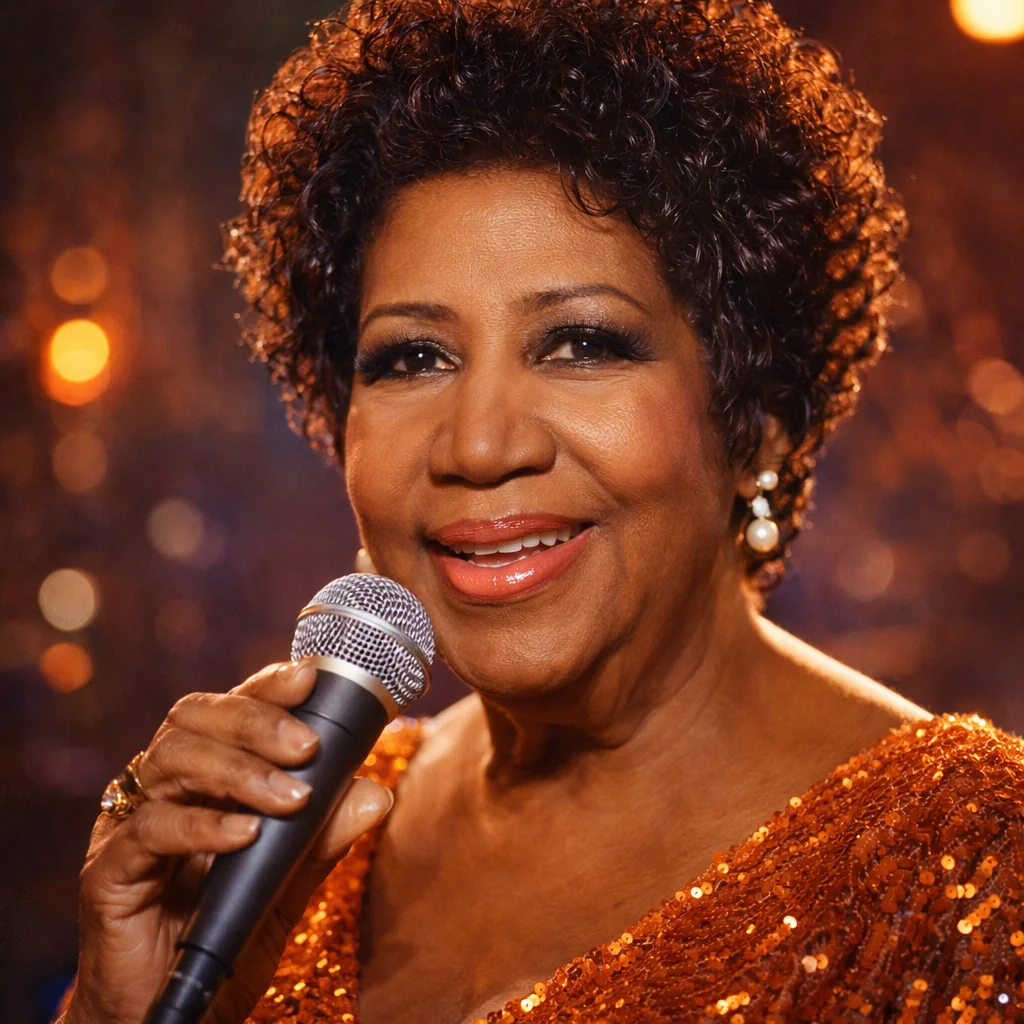
Aretha Franklin was not merely the undisputed Queen of Soul—she was an indelible cultural force whose unmatched vocal mastery reshaped American music. From stepping in for world-class opera stars on minutes' notice to having her vocal cords legally classified alongside natural landmarks, her life was as extraordinary as her range. Beyond the hit records and record-breaking Grammy wins lies a story filled with fierce independence, deep civil rights history, and surprising personal quirks. Dive into 15 fascinating facts about the legendary icon who demanded—and permanently achieved—unconditional respect.
1. She Stepped In for Luciano Pavarotti with 20 Minutes' Notice
When tenor Luciano Pavarotti suddenly pulled out of the 1998 Grammy Awards due to double pneumonia, producers needed a replacement instantly. Aretha Franklin, who was already at the venue to perform earlier in the broadcast, volunteered to sing Puccini's operatic aria "Nessun Dorma." With less than twenty minutes to prepare, she performed the challenging classical piece in Pavarotti's key, accompanied by a full orchestra. Her astounding performance captivated the global audience and became one of the most legendary television moments in music history. The rendition demonstrated not only her astounding vocal range, but also her incredible capacity to adapt across genres on impulse.
2. Her Voice Was Officially Declared a Michigan "Natural Resource"
In 1985, the State of Michigan officially designated Aretha Franklin's singing voice as one of its protected natural resources. Passed by the state legislature and supported by the Department of Natural Resources, the historic declaration legally elevated her vocal talent to the same cultural and environmental standing as the state's iconic lakes, forests, and mineral deposits. Franklin had spent much of her upbringing in Detroit, where her distinct sound became deeply interwoven with the city's musical identity. This unique legislative gesture remains one of the only times in American history that a living human voice received such official state recognition.
3. She Taught Herself Piano and Never Learned to Read Sheet Music
Despite being widely regarded as a brilliant pianist whose intricate playing anchored many of her hit records, Franklin never learned to read sheet music. As a child growing up in Detroit, she learned to play piano entirely by ear, carefully reproducing complex gospel arrangements she heard around her. She relied on absolute pitch, emotional intuition, and sharp musical memory to compose and execute intricate keyboard arrangements. Studio musicians often marveled at her ability to direct entire recording sessions simply by demonstrating parts on the keyboard without a single sheet of music. Her instinctual command of the instrument allowed her to create a timeless, soulful sound that proved impossible to replicate.
4. She Kept Her Handbag on Stage and Demanded Cash Upfront
Audiences often noticed that Franklin insisted on carrying a designer handbag onto the stage during her concert performances, placing it right on top of the piano. This was not a fashion statement, but rather a practical financial safeguard stemming from her early career. Having witnessed countless Black musicians get cheated out of their pay by unscrupulous promoters in the 1960s, she implemented a strict policy demanding payment in cash before stepping onstage. Once paid, she personally stored the cash inside her purse to ensure her money remained entirely within her physical possession. Even after earning millions and achieving world fame, she maintained this financial ritual throughout her career.
5. "Respect" Was Originally Written and Recorded by Otis Redding
While "Respect" became Franklin's ultimate signature anthem and a battle cry for civil rights and feminism, it was originally written and recorded by soul singer Otis Redding in 1965. When Franklin re-recorded the track two years later, she completely reimagined its structure, adding the iconic "R-E-S-P-E-C-T" spelling and the infectious "sock it to me" backing vocals provided by her sisters. Her version inverted the song's dynamic, transforming a husband's demand for respect into an empowering declaration of female independence. Otis Redding famously conceded defeat, good-naturedly remarking that the song no longer belonged to him, but to "that girl."
6. She Was the First Woman Inducted into the Rock and Roll Hall of Fame
In 1987, Franklin made history by becoming the very first woman inducted into the Rock and Roll Hall of Fame. Up until that point, the institution had solely inducted male artists during its initial years of establishment. Her historic inclusion paved the way for future generations of female artists to be recognized in what had long been a male-dominated industry archive. Although she was unable to attend the ceremony in person due to travel constraints, her induction speech was proudly delivered by rolling stones guitarist Keith Richards and music executive Clive Davis. The milestone permanently cemented her status as an undeniable pioneer of popular music.
7. A Turbulent Flight Bound Her to Travel Exclusively by Custom Bus
In 1984, Franklin experienced a severely turbulent flight in a small twin-engine aircraft while traveling from Atlanta to Detroit. The terrified singer made a firm vow never to board an airplane again, a promise she kept for the rest of her life. To maintain her rigorous touring schedule, she invested in a state-of-the-art, custom-built tour bus equipped with luxurious living quarters. Traveling by road severely restricted her ability to perform overseas, leading her to turn down lucrative international tour offers for decades. Nevertheless, the custom coach became her mobile sanctuary, allowing her to tour North America in comfort and safety.
8. She Launched Her Career as a Young Mother at Age 12
Franklin faced profound personal challenges early in life, giving birth to her first child at just twelve years old, followed by a second son at age fourteen. Supported by her extended family and grandmother, she managed to balance the demands of early motherhood with her blossoming musical ambitions. At age fourteen, she released her debut gospel album, Songs of Faith, recorded live at her father's church. Her extraordinary resilience allowed her to transform personal hardship into profound art, laying the groundwork for her eventual international stardom.
9. Her Father Was a Famous Minister with Direct Links to MLK Jr.
Franklin's father, Reverend C. L. Franklin, was a famous Detroit minister known as the man with the "million-dollar voice" due to his televised sermons and recorded gospel albums. His prominent position made the family home a vital hub for gospel icons, soul musicians, and key figures of the Civil Rights Movement. Dr. Martin Luther King Jr. was a close family friend who frequently stayed at the Franklin household during his travels. Growing up in this intellectually and spiritually charged environment deeply shaped Franklin's social consciousness, leading her to actively support the civil rights struggle throughout her life.
10. Her 2009 Inauguration Hat Triggered a Global Fashion Craze
During the 2009 presidential inauguration of Barack Obama, Franklin captured global attention with her emotional rendition of "My Country, 'Tis of Thee." Beyond her powerful vocal performance, her distinct grey felt hat, embellished with a large bow studded with Swarovski crystals, instantly became a viral cultural sensation. Designed by Detroit milliner Luke Song, the bold fashion statement prompted over 5,000 immediate orders for identical replicas. The iconic headpiece was later placed on display at the Smithsonian, confirming its status as a piece of American political and fashion history.
11. She Earned 18 Grammy Awards and Won 8 Times Consecutively
Over the course of her remarkable six-decade career, Franklin accumulated an astonishing 18 Grammy Awards out of 44 nominations. Most impressively, she won the Grammy Award for Best Female R&B Vocal Performance eight consecutive times between 1968 and 1975. This incredible streak earned the category the informal nickname "The Aretha Award" among industry insiders. In addition to her competitive wins, she was honored with the Grammy Lifetime Achievement Award in 1994 and the Grammy Legend Award in 1991.
12. She Collected 13 Honorary Doctorates from Ivy League Universities
Although Franklin never attended college due to her early start in the music industry, her profound intellectual and cultural contributions earned her widespread academic honors. She received 13 honorary doctorate degrees from elite institutions, including Harvard University, Princeton University, Yale University, and the Berklee College of Music. In 2014, Harvard presented her with an honorary Doctor of Arts degree, where she delighted the assembly by accompanying herself on piano during the commencement ceremony. These honors reflected the deep respect academia held for her unmatched musical intellect and social legacy.
13. She Defended Her Reputation with a $50 Million Libel Lawsuit
Fiercely protective of her personal image and private life, Franklin had zero tolerance for tabloid fabrication or false reporting. In 1990, she filed a massive $50 million libel lawsuit against the tabloid newspaper The Star after it published an inaccurate article claiming she suffered from severe alcoholism. She aggressively pursued legal action to defend her honor, asserting that the sensational story damaged her personal integrity and professional standing. The high-profile lawsuit demonstrated her unwavering willingness to take on powerful media entities to preserve her reputation.
14. Her Vocal Comfort Defined Historic National Funerals
Throughout her life, Franklin was repeatedly called upon to bring solace to the nation during its solemnest public moments. She performed moving musical tributes at the funerals of major civil rights figures, including Dr. Martin Luther King Jr. in 1968 and gospel star Mahalia Jackson in 1972. Decades later, she delivered a heartbreaking musical farewell at the 2012 funeral of pop star Whitney Houston, whom she had known since Houston was a young child. Her unique ability to channel collective grief made her America's definitive voice of national healing.
15. Handwritten Wills Were Discovered Beneath Her Sofa Cushions
When Franklin passed away from pancreatic cancer in 2018, it was initially believed that she had died intestate, leaving behind no formal written will for her multi-million dollar estate. However, months later, her family discovered several handwritten notebooks tucked under cushions inside her Detroit home sofa. One notebook, dated 2014, contained scribbled directions regarding the distribution of her assets, leading to a prolonged legal battle among her four sons. In 2023, a Michigan jury officially ruled that the handwritten sofa document was a legally valid Michigan will, bringing an end to years of complex family litigation.
Sources & References
This AI-assisted post was rigorously curated and fact-checked for accuracy by:
 Martin Roháček
How fun was this article? 🤔
Tap a star to rate it
🧠 Quiz: How closely were you paying attention?
10 questions — all answers are in the article above!
Enjoyed these facts? There's more! 💌
Fresh fun facts in your inbox. No spam, ever.