The Relentless Legend: 15 Fascinating Facts About Ayrton Senna
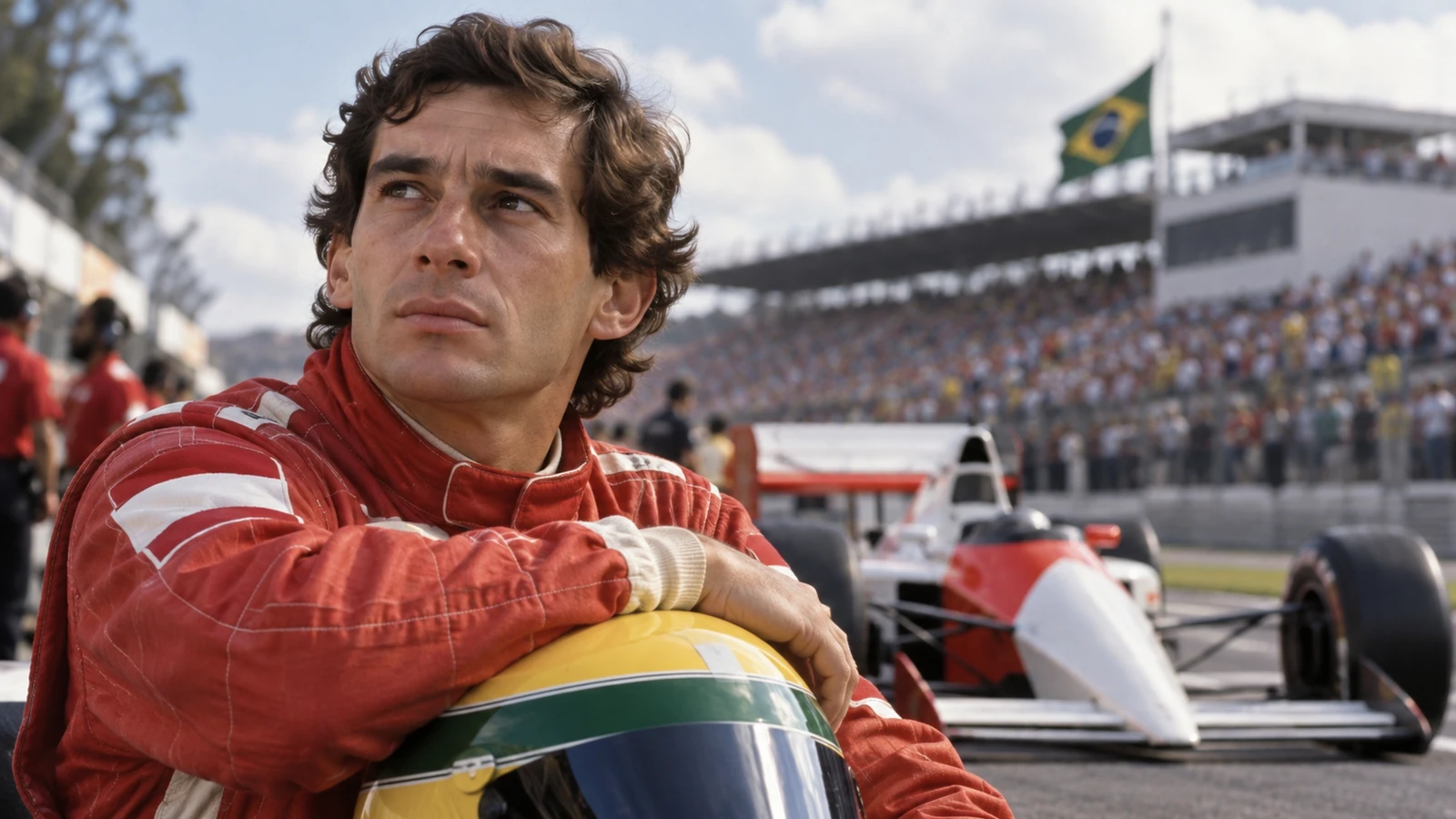
Ayrton Senna is widely regarded as one of the greatest and most charismatic drivers in the history of Formula 1. Known for his hypnotic speed, unmatched rain-mastery, and uncompromising driving style, the Brazilian icon captured three World Championships and 41 Grand Prix victories. Beyond his fierce competition on the track, Senna was a deeply spiritual man and covert philanthropist who devoted millions to supporting underprivileged children in Brazil. Discover 15 fascinating facts about the life, career, and enduring legacy of motorsport's ultimate legend.
1. He Saved a Rival's Life on the Racetrack
During qualifying for the 1992 Belgian Grand Prix at Spa-Francorchamps, French driver Érik Comas suffered a violent crash that left him unconscious inside his wrecked car. While other competitors sped past, Ayrton Senna immediately pulled his McLaren to the side of the track and sprinted across live traffic toward the smoking vehicle. Recognizing that Comas's foot remained wedged on the accelerator with the engine screaming at dangerous revs, Senna reached into the cockpit and switched off the ignition to prevent an explosion. He then held Comas's head in a stable position until medical personnel arrived at the scene. Comas later credited Senna's quick thinking with saving his life, highlighting a compassionate side that defined the Brazilian driver off the track.
2. His Transcendent Monaco 1988 Qualifying Lap
During the 1988 Monaco Grand Prix qualifying session, Senna produced what is widely considered the most astonishing single lap in Formula 1 history. Driving his McLaren MP4/4 around the tight street circuit, he qualified an astounding 1.427 seconds faster than his teammate Alain Prost in identical machinery. Senna later described entering an altered state of consciousness during the lap, feeling as though he was driving the car well beyond his physical limits from a perspective outside himself. He realized he was no longer driving consciously and suddenly backed off, terrified by the surreal experience. This famous moment cemented his reputation as a driver capable of reaching spiritual heights behind the wheel.
3. His Iconic Helmet Design Symbolized Brazilian Pride
Ayrton Senna’s distinctive helmet design became one of the most recognizable symbols in world sport. Painted by famous Brazilian helmet artist Sid Mosca, the design featured a vibrant yellow base accented with green and dark blue stripes representing the national colors of Brazil. Mosca intentionally chose the vivid yellow background to make Senna instantly identifiable to spectators and TV cameras, even in dense rain spray or at high speeds. For Senna, wearing the helmet was a source of immense pride, as he viewed himself as carrying the hopes and dreams of the Brazilian people every time he stepped into the cockpit. The iconic color scheme remains an enduring trademark of his racing legacy today.
4. Mastery in the Wet Earned Him the 'Rain Master' Title
Senna earned the moniker The Rain Master through an uncanny ability to find grip on slick, waterlogged tracks where other drivers struggled to survive. His extraordinary wet-weather skill began in his early karting days, when he deliberately went out to practice whenever it rained after losing a wet race. That dedication paid off in 1985 at the Portuguese Grand Prix in Estoril, where he claimed his very first Formula 1 victory in a torrential downpour, lapping almost the entire field. Throughout his career, wet track conditions transformed Senna from a mere competitor into an unbeatable force of nature. His precise throttle control and sensitive feel for traction set a standard that few drivers have ever matched.
5. The Unforgettable 1991 Victory in Sixth Gear
At the 1991 Brazilian Grand Prix at Interlagos, Senna fought a dramatic battle not just against his rivals, but against his own mechanical breakdown. As rain began to fall late in the race, Senna lost third, fourth, and fifth gears, leaving his McLaren stuck entirely in sixth gear for the final remaining laps. Maneuvering tight, slow corners in sixth gear required incredible physical exertion and delicate clutch control to keep the engine from stalling. He somehow maintained his lead and crossed the finish line to secure an emotional home victory after years of heartbreak at his native grand prix. Exhausted and suffering from severe muscle spasms, Senna had to be helped out of his car and could barely raise the trophy on the podium.
6. A Record-Breaking Qualifying Supremacy
Over his ten-season F1 career, Senna established himself as arguably the greatest single-lap qualifier the sport has ever seen. He racked up 65 pole positions in just 161 Grand Prix starts, achieving a staggering career pole rate of over 40 percent. His record of 65 poles stood unbroken for 17 years until Michael Schumacher surpassed it in 2006, albeit needing significantly more race starts to do so. Between 1988 and 1989 alone, Senna claimed 13 pole positions out of 16 races in a single season, setting a record that stood for over two decades. His relentless pursuit of absolute speed during qualifying sessions was legendary among engineers and fellow drivers alike.
7. The Fiery Rivalry with Alain Prost Redefined F1
The intense rivalry between Ayrton Senna and French champion Alain Prost remains the most famous intra-team feud in motorsport history. Partnered at McLaren in 1988 and 1989, the two brilliant drivers developed a bitter personal and professional animosity that divided fans around the world. Their rivalry reached its boiling point at the Japanese Grand Prix at Suzuka in two consecutive years, where championship-deciding collisions occurred between them in both 1989 and 1990. While the feud was characterized by fierce track battles and psychological warfare, both men harbored immense mutual respect for each other's talent. Following Prost’s retirement in 1993, the two reconciled, with Prost even serving as a pallbearer at Senna's funeral.
8. Six Victories Made Him the Undisputed 'King of Monaco'
The treacherous and narrow streets of Monte Carlo served as the ultimate canvas for Senna's unmatched driving precision and mental focus. He won the prestigious Monaco Grand Prix a record six times, including an extraordinary streak of five consecutive victories between 1989 and 1993. His first Monaco victory came in 1987 with Lotus, making him the first Brazilian driver to win in the Principality. Even when driving inferior machinery, Senna consistently outclassed the opposition around the tight, armco-lined street circuit. Decades after his final race, Senna still holds the record for the most total wins in Monaco Grand Prix history.
9. He Secretly Donated Millions to Help Brazilian Children
Beyond his fierce racing persona, Senna possessed a profound sense of social responsibility and quietly gave away millions of dollars to combat poverty in Brazil. Deeply troubled by the severe economic inequality and plight of underprivileged children in his homeland, he secretly funded numerous medical and educational programs. Senna rarely spoke publicly about his philanthropic endeavors, preferring to help vulnerable youth without seeking media attention or acclaim. Shortly before his tragic death in 1994, he discussed plans with his sister Viviane to create a formal organization dedicated to child education. That vision materialized as the Instituto Ayrton Senna, which has helped educate millions of Brazilian children over the past three decades.
10. His Deep Religious Faith Guided His Cockpit Mindset
Senna was openly devout and credited his deep Christian faith with providing him both inner peace and fearlessness on the racetrack. He regularly read the Bible before entering his car and often spoke of feeling God's presence during high-speed qualifying laps. This spiritual perspective was often misunderstood by competitors, including Alain Prost, who once suggested Senna believed he was invincible because of his faith. However, Senna clarified that his belief did not make him feel immortal, but rather gave him strength and purpose in a dangerous profession. Faith remained a central pillar of his life until his final days.
11. A Mind-Blowing Rookie Performance at Monaco in 1984
Senna announced his arrival on the world stage during the wet 1984 Monaco Grand Prix while driving for the modest Toleman team. Starting 13th on a rain-soaked track, the rookie sliced through the field past established World Champions like Niki Lauda and Keke Rosberg. Driving a vastly underpowered car, Senna was catching race leader Alain Prost by up to three seconds per lap in treacherous conditions. The race was controversially stopped on lap 31 due to torrential rain, freezing Senna in second place just as he was poised to overtake Prost for the lead. That brilliant drive proved to the entire paddock that a future superstar had arrived in Formula 1.
12. The First Lap at Donington 1993 Is 'The Lap of the Gods'
The opening lap of the 1993 European Grand Prix at Donington Park is widely hailed as the greatest single lap in Formula 1 history. Starting fifth in damp conditions, Senna lost a spot at the start to drop to sixth before launching a breathtaking recovery drive. Within just ten corners, he dramatically passed Michael Schumacher, Karl Wendlinger, Damon Hill, and Alain Prost to take the lead before the first lap was completed. In conditions so slippery that other drivers struggled just to stay on the road, Senna drove with surreal grip and agility. He went on to win the race by over a minute, cementing his reputation as an incomparable driving genius.
13. He Was Secretly Preparing to Lead F1 Safety Reforms
In the days leading up to his tragic crash at Imola in 1994, Senna was actively taking steps to improve safety standards across Formula 1. Shocked by the fatal accident of Austrian driver Roland Ratzenberger during qualifying, Senna had secretly packed an Austrian flag in his car to raise in victory after the race. He had also met with former rival Alain Prost and driver Gerhard Berger to discuss re-establishing the Grand Prix Drivers' Association to demand better track safety. Senna recognized that driver safety had fallen behind car performance and intended to use his immense influence to force changes. Tragically, his sudden death that same weekend catalyzed the safety revolution he was preparing to champion.
14. Over Three Million People Attended His State Funeral
Following his tragic passing at the 1994 San Marino Grand Prix, the Brazilian government declared three days of official national mourning. When his body arrived back in São Paulo, over three million grieving citizens lined the streets to pay their final respects during the procession. It was described as the largest gathering of mourners in modern Latin American history, reflecting his status as a national hero and symbol of hope. World leaders, sports figures, and his former racing rivals gathered to honor a man who represented the pride of a nation. Senna was buried at the Morumbi Cemetery in São Paulo with full military honors.
15. His Death Transformed Motorsport Safety Forever
Senna’s tragic passing at Imola marked a pivotal turning point that completely altered the safety landscape of modern motorsport. Shocked by the loss of its greatest icon, the FIA introduced sweeping regulations to improve driver survival rates, led by medical delegate Sid Watkins. Circuit layouts were redesigned to expand runoff areas, monocoques were reinforced, and head-and-neck protection systems like the HANS device were introduced. Due to these rigorous safety overhauls, Formula 1 went more than 20 years without another driver fatality during a Grand Prix weekend. Senna’s enduring legacy continues to protect every driver who steps into a modern race car today.
Sources & References
This AI-assisted post was rigorously curated and fact-checked for accuracy by:
 Martin Roháček
How fun was this article? 🤔
Tap a star to rate it
🧠 Quiz: How closely were you paying attention?
10 questions — all answers are in the article above!
Enjoyed these facts? There's more! 💌
Fresh fun facts in your inbox. No spam, ever.