The Fab Four: 15 Fascinating Facts About The Beatles
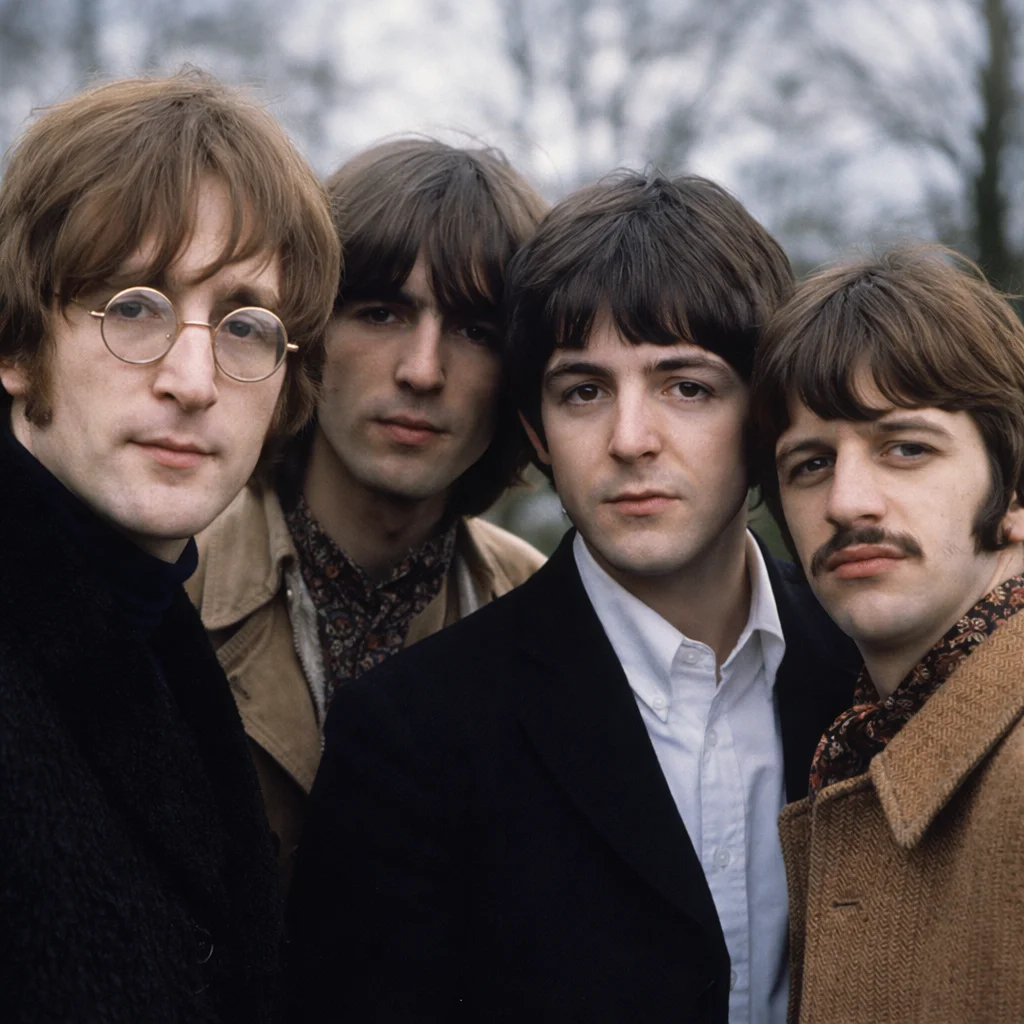
From humble beginnings in Liverpool to global superstardom, The Beatles fundamentally redefined popular music and modern culture. Behind their studio recordings and record-breaking tours lies a treasure trove of unusual studio accidents, bizarre pop culture run-ins, and clandestine Cold War history. Discover fifteen remarkable and surprising facts about John, Paul, George, and Ringo that illuminate the unbelievable story of the world's most legendary band.
1. Their Live Shows Had a Distinctly Unpleasant Smell
During the height of Beatlemania in the mid-1960s, the unbelievable excitement at live concerts often produced an unexpected sensory side effect. Venues routinely reeked of urine because thousands of overwhelmed teenage fans screamed so intensely and lost control of their bladders. Musicians Bob Geldof and John Lennon both recalled how the pungent odor dominated the atmosphere inside concert halls during their tours. The band members frequently complained about the overpowering smell, which added to their growing frustration with live performances. Ultimately, the deafening screams—which completely drowned out their instruments—along with the unpleasant arena conditions drove the Fab Four to permanently quit touring in 1966.
2. "Yesterday" Began as an Ode to Breakfast
When Paul McCartney woke up one morning with a fully formed melody ringing in his head, he initially worried he had accidentally plagiarized someone else's work. To preserve the tune while he searched for permanent lyrics, he used the temporary dummy title "Scrambled Eggs" and sang placeholder lines about scrambled eggs and loving legs. For months, McCartney played the melody for friends and music executives to verify its originality before finally writing the poignant lyrics about lost love. Released on the 1965 album Help!, the track went on to become one of the most covered songs in music history. Despite its tender and melancholic tone, the timeless ballad's working title remains a lighthearted piece of studio lore.
3. John Lennon Snubbed Walt Disney Over The Jungle Book
When Walt Disney Studios produced the 1967 animated classic The Jungle Book, the filmmakers designed a quartet of vultures with mop-top hairstyles and British accents specifically to be voiced by The Beatles. However, when manager Brian Epstein presented the idea to the band, John Lennon vehemently rejected the proposition and allegedly told Epstein to tell Disney to hire Elvis Presley instead. Disney animators kept the character designs intact, but hired voice actors with exaggerated accents to perform the birds' song "That's What Friends Are For." Lennon's refusal spared the band from appearing in a corporate cartoon during their transition toward avant-garde studio experimentation. Nevertheless, the physical resemblance between the iconic animated vultures and the band remains unmistakable.
4. Decca Records Made the Biggest Blunder in Music History
On New Year's Day in 1962, the aspiring quartet auditioned for Decca Records in London, performing fifteen tracks in hopes of securing a record deal. Senior executive Dick Rowe famously rejected the group, declaring that "guitar groups are on the way out" and that the boys had no future in show business. Instead, Decca chose to sign a local group called Brian Poole and the Tremeloes, missing out on the most commercially successful act in human history. Producer George Martin at EMI's Parlophone label took a chance on them shortly after, unleashing global Beatlemania. Rowe spent years attempting to undo his mistake, eventually signing The Rolling Stones on George Harrison's recommendation.
2.5. George Harrison's Bandmates Cheered His First Sexual Experience
During their early residency days performing endless grueling sets in Hamburg, Germany, the band members shared cramped, filthy living conditions behind a movie theater screen. In 1960, a 17-year-old George Harrison lost his virginity in a small bunk bed while John Lennon, Paul McCartney, and Pete Best lay quietly in the same dark room under thin blankets. Because privacy was nonexistent in their quarters, his bandmates were fully aware of what was happening nearby. Once Harrison finished, the rest of the band burst into enthusiastic applause and cheered for their youngest guitarist. Harrison later recalled with a laugh that they could not see anything, but they certainly could not miss the sound.
6. Soviet Fans Smuggled Their Music on Recycled X-Ray Sheets
During the Cold War, the Soviet government strictly banned Western pop and rock music, deeming it dangerous capitalist propaganda. To bypass state censors, resourceful Soviet music lovers pressed bootleg copies of Beatles records onto discarded hospital X-ray films retrieved from medical waste bins. Known as "bone music" or "ribs," these flimsy, playable vinyl discs featured skeletal ribcages, skulls, and broken bones etched beneath the grooves. Listeners used handmade turntables to spin the makeshift records, creating a secret underground music culture across Eastern Europe. Despite heavy criminal penalties for trading forbidden music, Beatles tracks spread rapidly through this perilous black-market network.
7. They Snuck "Frère Jacques" into a Hit Single
The Beatles were notorious for hiding subtle jokes and studio antics within their multi-layered vocal harmonies. While recording the 1966 hit single "Paperback Writer" at Abbey Road Studios, Paul McCartney and producer George Martin wanted to experiment with vocal arrangements. In the background behind McCartney's lead vocals, John Lennon and George Harrison repeatedly sang the traditional French nursery rhyme "Frère Jacques." The backing vocals blend so seamlessly into the track's driving beat that many casual listeners never notice the playful nursery rhyme lyrics. This humorous detail highlights the group's relaxed, inventive approach during their pioneering mid-1960s recording sessions.
8. J.R.R. Tolkien Blocked Their Lord of the Rings Movie
In the late 1960s, the band eagerly pursued an ambitious film adaptation of J.R.R. Tolkien's fantasy masterpiece The Lord of the Rings. The group envisioned a star-studded feature directed by legendary filmmaker Stanley Kubrick, with McCartney as Frodo, Lennon as Gollum, Harrison as Gandalf, and Ringo Starr as Samwise Gamgee. However, Tolkien held strict views on popular culture and strongly disliked loud rock music, promptly denying the cinematic rights to the band. Kubrick was also skeptical about adapting the massive fantasy epic into a single feature film, so the project dissolved before production ever began. Decades later, Peter Jackson finally brought the trilogy to the big screen without rock stars in the lead roles.
9. "Martha My Dear" Was Written About an Old English Sheepdog
When fans listened to the piano-driven track "Martha My Dear" on the 1968 self-titled double album (commonly known as the White Album), most assumed it was a passionate love song addressed to a secret romantic partner. In reality, Paul McCartney wrote the endearing song for his beloved Old English Sheepdog named Martha, whom he had adopted in 1966. McCartney described his relationship with the dog as purely affectionate, noting that she was his constant companion during quiet days at home. Although the lyrics sound like a heartfelt plea to a woman, McCartney confirmed that the charming composition was inspired entirely by his pet. Martha lived a long life at McCartney's Scottish farm until her passing in 1981.
10. A London Dentist Secretly Dosed Them with LSD
The band's initial encounter with LSD occurred in April 1965 during a dinner party hosted by a wealthy London dentist named John Riley. Without their knowledge or consent, Riley slipped the powerful psychedelic drug into the after-dinner coffee served to John Lennon, George Harrison, and their wives, Cynthia and Pattie. When the group tried to leave for a nightclub, Riley revealed what he had done and urged them to stay, but the frightened couples departed into the night. The resulting mind-altering trip lasted for hours, deeply impacting Lennon and Harrison's worldview and creative direction. This non-consensual introduction sparked the group's iconic psychedelic era, heavily influencing albums like Revolver and Sgt. Pepper's Lonely Hearts Club Band.
11. The Final Chord of "A Day in the Life" Took Three Pianos
The epic climax of "A Day in the Life," the closing track of the 1967 album Sgt. Pepper's Lonely Hearts Club Band, features one of the most famous musical endings in history. To achieve the massive, lingering E-major chord, John Lennon, Paul McCartney, Ringo Starr, and road manager Mal Evans struck three separate grand pianos simultaneously. Producer George Martin manually pushed up the recording faders as the piano strings gradually died down, capturing every ambient sound in the room. The dramatic chord rings out for over forty seconds, complete with the subtle squeak of a studio chair near the end of the decay. This painstaking recording technique created an indelible sonic masterpiece that caps off the legendary album.
12. They Popularized Intentionally Recorded Feedback in Pop Music
Before 1964, electric guitar feedback was universally treated by recording engineers as an unwanted mistake to be edited out. However, while rehearsing at Abbey Road, John Lennon leaned his Gibson acoustic-electric guitar against an amplifier, creating a vibrant, buzzing feedback note. Enchanted by the unexpected sound, the band decided to open their single "I Feel Fine" with the humming sustained resonance. Recorded in October 1964, this single marked the very first time feedback was deliberately incorporated into a mainstream pop record. Lennon proudly claimed ownership of the innovative idea, paving the way for future rock acts like Jimi Hendrix and The Who to embrace feedback as an artistic tool.
13. Corporate Red Tape Blocked "Here Comes the Sun" from Entering Deep Space
In 1977, renowned astronomer Carl Sagan assembled the Voyager Golden Record, a gold-plated phonograph record aboard the Voyager 1 and 2 space probes designed to carry Earth's culture across interstellar space. Sagan selected George Harrison's optimistic anthem "Here Comes the Sun" to represent human musical creativity to potential extraterrestrial civilizations. Although all four Beatles enthusiastically supported sending their iconic track into outer space, their record label, EMI, refused to release the copyright permissions unless paid exorbitantly. Sagan was forced to omit the track due to legal restrictions, replacing it with other global works. As a result, bureaucratic copyright laws prevented one of humanity's sweetest melodies from sailing beyond our solar system.
14. The Abbey Road Cover Car Had Its License Plate Stolen Repeatedly
The iconic cover of the 1969 album Abbey Road features the four band members walking across a zebra crossing outside EMI Studios. Parked along the curb in the background is a white Volkswagen Beetle bearing the registration plate "LMW 281F." After the album became a massive global hit, rabid fans frequently traveled to St John's Wood in London to take photos and steal the vehicle's plastic license plate as a souvenir. The car belonged to a local resident who regularly parked on the street without realizing it would become world-famous. In 1986, the famous Volkswagen Beetle was auctioned off at Sotheby's to a collector for $23,000.
15. Their Legal Dissolution Was Finalized at a Disney Hotel
Although the band publicly announced their split in 1970, the complex legal ties and financial partnerships between the four members took years of court battles to untangle. The final legal documents dissolving the formal business partnership were drawn up in late December 1974. While Paul McCartney, George Harrison, and Ringo Starr signed the papers in New York, John Lennon was vacationing with his family at Walt Disney World in Florida. A legal courier flew to Florida and tracked Lennon down at Disney's Polynesian Village Resort. On December 29, 1974, Lennon quietly signed the final dissolution papers overlooking palm trees, officially bringing the history of rock's greatest group to a close in a resort hotel.
Sources & References
This AI-assisted post was rigorously curated and fact-checked for accuracy by:
 Martin Roháček
How fun was this article? 🤔
Tap a star to rate it
🧠 Quiz: How closely were you paying attention?
10 questions — all answers are in the article above!
Enjoyed these facts? There's more! 💌
Fresh fun facts in your inbox. No spam, ever.