The Avant-Garde Icon: 15 Fascinating Facts About Björk
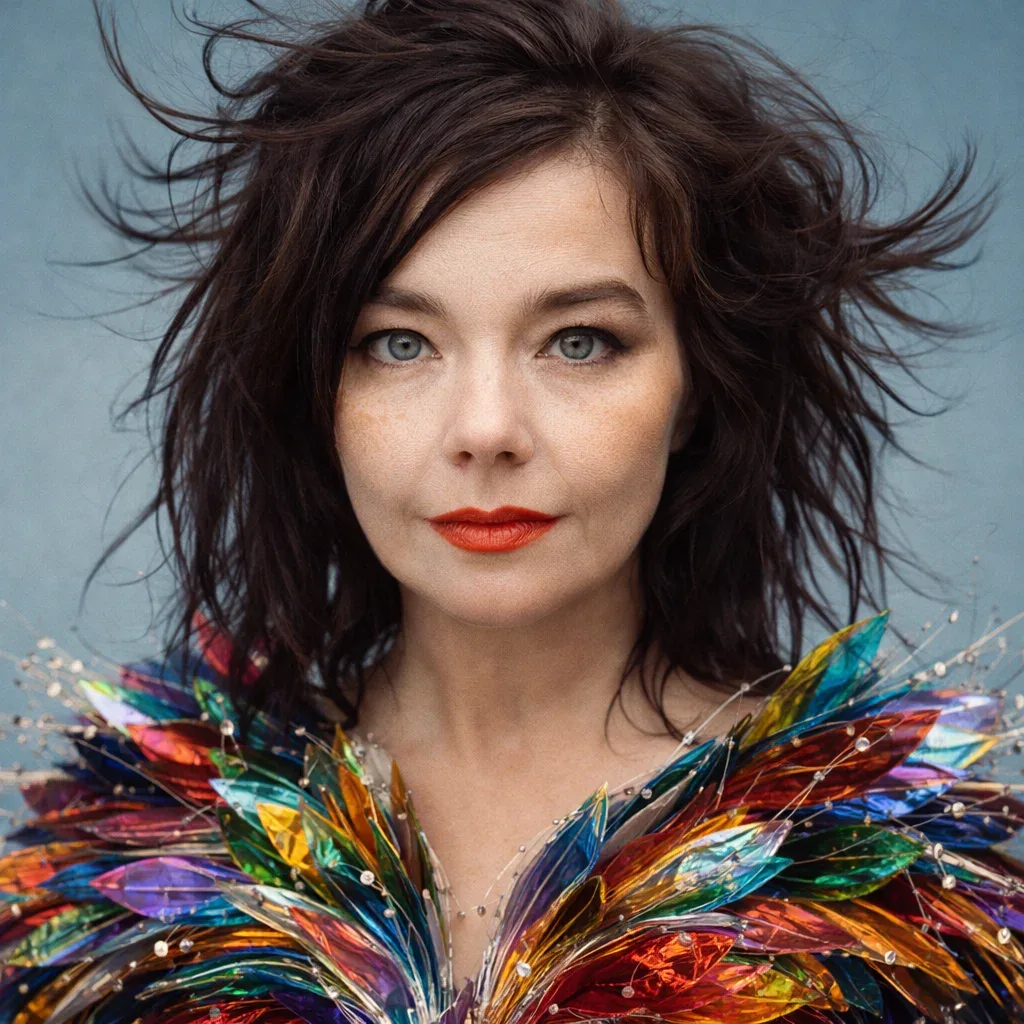
From fronting rebellious Icelandic punk bands as a teenager to pioneering the world's first interactive app album, Björk has continually redefined the boundaries of pop and avant-garde music. Known for her powerful vocal range, idiosyncratic fashion, and deep reverence for nature, the legendary artist remains one of music's most uncompromising visionaries. Beyond her groundbreaking albums, her life is filled with extraordinary moments—including a notorious confrontation with aggressive paparazzi, artistic collaborations with Sir David Attenborough, and eccentric studio recording rituals. Discover 15 fascinating facts about Björk, detailing the secret history, creative philosophy, and unique life of Iceland's greatest musical export.
1. She Released Her Gold-Certified Debut Album at Just Eleven Years Old
Long before becoming a global avant-garde sensation, Björk Guðmundsdóttir was a child prodigy in Iceland. After her music teachers submitted a recording of her singing Tina Charles’s "I Love to Love" to a national radio station, a local record label immediately offered her a recording contract. Her self-titled juvenile album, released in 1977, featured traditional Icelandic songs and pop covers, selling widely across her home country and earning a gold certification. Despite early fame and pressure from executives to record a quick follow-up, she refused to make another commercial pop album, choosing instead to save her earnings to buy her first synthesizer. This early insistence on artistic autonomy defined the trajectory of her legendary career.
2. Her Musical Roots Lie in Screaming and Angry Punk Rock
Long before mastering electronic soundscapes, Björk channeled her teenage angst into the raw, aggressive energy of Icelandic punk rock. At age fourteen, she formed an all-female punk group called Spit and Snot, where she played drums and refined an unfiltered, rebellious vocal style. She later fronted Tappi Tíkarrass—a band whose name translates coarsely to "Cork the Bitch's Ass"—and the gothic post-punk group KUKL. These early musical experiments prioritized chaos, political dissatisfaction, and raw noise over polished pop melodies. This fierce punk ethos remained a core element of her artistic identity, eventually infusing her solo work with an unpredictable edge.
3. She Physically Confronted a Reporter to Protect Her Son’s Privacy
In 1996, the extreme pressures of international celebrity boiled over during an infamous incident at Don Mueang International Airport in Bangkok. As Björk landed with her nine-year-old son, Sindri, a television reporter greeted her on the concourse and pushed a microphone directly toward the child. Instinctively protective, Björk physically attacked the reporter, knocking her to the floor before airport security personnel intervened. She later publicly apologized to the journalist, explaining that she snapped because her son had endured relentless harassment from aggressive paparazzi. The incident highlighted her fierce dedication to guarding her family's private life away from public scrutiny.
4. Her Acclaimed Acting Role in 'Dancer in the Dark' Caused Deep Emotional Trauma
Director Lars von Trier cast Björk as the tragic protagonist Selma in his 2000 musical drama Dancer in the Dark, resulting in a performance that won her Best Actress at the Cannes Film Festival. However, the arduous production and turbulent working dynamic with von Trier left her emotionally exhausted and psychologically bruised. Björk revealed that she became so immersed in the character's profound suffering that distinguishing fiction from reality became nearly impossible. Devastated by the intense experience, she vowed to abandon major acting roles to protect her artistic sanity. She maintained this dramatic acting hiatus for over two decades before finally returning to the big screen in Robert Eggers' 2022 film The Northman.
5. Her Name Translates Literally to 'Birch Tree'
In Icelandic, the name Björk translates directly to "birch tree," reflecting her deeply rooted connection to nature and natural systems. While Björk is a relatively common female given name in Iceland, international audiences often mistake it for an unusual stage mononym. Under traditional Icelandic patronymic naming customs, her full name is Björk Guðmundsdóttir, meaning "daughter of Guðmundur." She intentionally dropped her patronymic surname for international music releases to simplify her branding while retaining a sense of mysterious individuality. Her artistic output frequently returns to her namesake, drawing inspiration from botanical growth, geography, and natural phenomena.
6. Metropolitan Police Intercepted a Deadly Acid Bomb Sent by an Obsessed Fan
In September 1996, Björk faced a horrifying near-tragedy when an obsessed fan in Florida mailed a dangerous booby-trapped package to her London home. The package contained a device designed to spray lethal sulfuric acid upon opening, intended to disfigure or kill the singer over her personal life. Fortunately, London police intercepted the parcel at a local post office before it could reach her residence. The sender filmed a chilling video diary detailing his plan before taking his own life, prompting police to alert British authorities just in time. The traumatizing event forced Björk to hire extra security and relocate away from her home in London.
7. She Resents Her Most Commercially Successful Song
Despite becoming her biggest worldwide commercial hit, the big-band jazz cover "It's Oh So Quiet" is a track Björk actively dislikes and regrets releasing. Originally performed by Betty Hutton in 1951, the song was included on her 1995 album Post largely as a fun, lighthearted track to balance darker electronic compositions. To her dismay, the brassy cover and its whimsical Spike Jonze-directed music video overshadowed her original experimental songwriting in mainstream media. She felt the track failed to represent her true creative vision and quickly dropped it from her concert setlists altogether. Today, she rarely discusses the song, treating its massive global success as an ironic footnote in her career.
8. She Created the World’s First App-Based Interactive Music Album
Pushing the boundaries of digital technology, Björk released her eighth studio album, Biophilia, in 2011 as a groundbreaking multimedia suite. It was widely recognized as the world's first interactive app album, allowing listeners to explore music theory and natural science through customizable tablet games. Each track on the album corresponded to a specific natural phenomenon—such as crystal structures, DNA replication, or tectonic plates—paired with an interactive digital interface. The project was so scientifically and artistically innovative that the Museum of Modern Art in New York acquired the apps for its permanent collection. Furthermore, European educational systems integrated the project into primary school curriculums to teach children creative science and music theory.
9. She Took Apart a Television on Camera to Warn Viewers About Hypnotic Media
In a bizarre 1988 broadcast filmed for Swedish television, a young Björk sitting on a bedroom floor disassembled a television set with a screwdriver. As she carefully removed the outer casing and exposed the cathode ray tube, she delivered a poetic monologue explaining how the device functioned. She candidly warned viewers not to let the screen hypnotize them into accepting false realities or neglecting their independent thinking. Expressing awe and mild suspicion, she described television as a trick of light that creates miniature cities inside a box. The hypnotic video clip went viral decades later, celebrated as a classic piece of surreal electronic music lore.
10. Her Album 'Medúlla' Was Crafted Almost Entirely Out of Human Voices
For her 2004 studio album Medúlla, Björk set out to create an avant-garde masterpiece built almost exclusively without traditional musical instruments. Inspired by primal human instinct and vocal expression, she constructed intricate rhythmic beats, synthesizer-like textures, and lush harmonies entirely from human throats. The project featured an eclectic ensemble of international vocalists, including Japanese beatboxer Dokaka, throat singer Tanya Tagaq, and a 16-piece Icelandic choir. Aside from subtle piano touches on two tracks, every bassline, percussion hit, and sweeping melody was generated vocally. The result was a raw, visceral sonic experiment that pushed pop vocal arrangements into uncharted territory.
11. She Partnered with Sir David Attenborough to Explore Nature and Sound
Driven by a shared obsession with the intersecting patterns of nature and music, Björk collaborated with legendary naturalist Sir David Attenborough for the 2013 documentary When Björk Met Attenborough. The film explored how acoustic patterns in animal calls and natural structures mirror human musical composition and technological innovation. Attenborough narrated her ambitious multimedia app project, praising her visionary approach to merging biology with sonic art. Björk had long idolized Attenborough's nature documentaries, while Attenborough expressed admiration for her ability to translate natural phenomena into emotional music. Their intellectual partnership highlighted the deep ecological themes that underpin her entire discography.
12. She Wears Elaborate Sculptural Face Masks to Protect Her Private Identity
In her recent career, Björk has transformed her public image by wearing extraordinary, alien-like face coverings and sculptural masks for concerts and appearances. Collaborating closely with embroidery artist James Merry and digital designer Neri Oxman, her masks resemble surreal orchids, futuristic fungi, and organic growths. Beyond their striking aesthetic value, these elaborate pieces serve a vital psychological function by shielding her face from media cameras. She has explained that hiding her physical features allows her to step into character without sacrificing her personal self to public consumption. The masks effectively blur the line between fashion, sculpture, and protective biological armor.
13. She Pitched a Tent Inside a Recording Studio to Stay Immersed in Her Creative Process
During the creative sessions for her acclaimed 1995 album Post, Björk sought total immersion in her songwriting process by setting up a camping tent directly inside the recording studio. Rather than returning home or retreating to traditional hotels, she slept inside the tent to keep her subconscious mind immersed in the nocturnal atmosphere of the music. She believed that living among her synthesizers, recording gear, and cables kept her tapped into the urban rhythms of London. This eccentric ritual fostered an unbroken creative momentum, allowing her to capture spontaneous vocal ideas at any hour. The intense environment ultimately birthed iconic tracks like "Hyperballad" and "Possibly Maybe."
14. She Respects Traditional Icelandic Folklore Regarding Invisible Elves
Raised amidst Iceland's ancient storytelling traditions, Björk has frequently spoken about her respect for huldufólk, the "hidden people" or invisible elves of Icelandic folklore. In Icelandic culture, these mystical beings are believed to inhabit large rocks, lava fields, and remote wilderness areas across the island nation. When questioned by international media about whether she believes in elves, she maintains a nuanced stance rooted in environmental respect rather than literal superstition. She emphasizes that respecting these legends protects nature, as construction projects in Iceland are often diverted to avoid disturbing sacred elf rocks. For Björk, these myths represent a vital harmony between human life and the natural world.
15. She Boycotted Major Streaming Platforms to Protect the Artistic Value of Albums
When Björk released her deeply personal 2015 album Vulnicura, she made the bold decision to pull the record from Spotify and other free streaming services. She publicly criticized the business models of modern streaming platforms, arguing that streaming devalues months of grueling artistic labor into disposable digital background noise. She compared streaming culture to working tirelessly on a fine restaurant meal only to have it given away for free without compensation to the chef. Björk delayed the album's digital streaming availability for months, encouraging fans to purchase physical vinyl, CDs, or high-quality downloads. Her outspoken stance sparked widespread debate within the music industry regarding fair compensation for independent artists.
Sources & References
This AI-assisted post was rigorously curated and fact-checked for accuracy by:
 Martin Roháček
How fun was this article? 🤔
Tap a star to rate it
🧠 Quiz: How closely were you paying attention?
10 questions — all answers are in the article above!
Enjoyed these facts? There's more! 💌
Fresh fun facts in your inbox. No spam, ever.