The Flying Legend: 15 Fascinating Facts About Bobby Orr
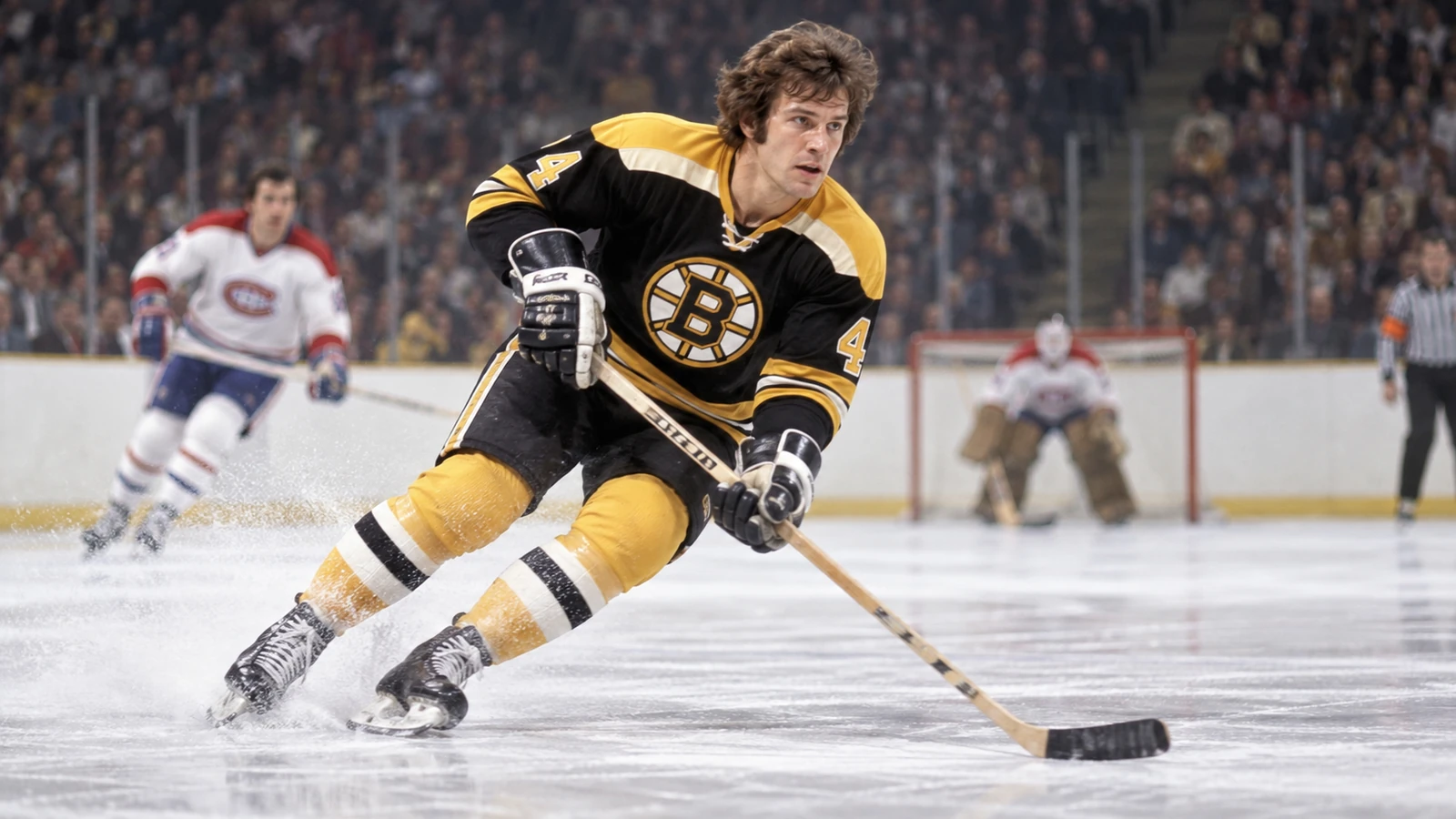
Bobby Orr is widely regarded as one of the greatest ice hockey players of all time, revolutionizing the sport from his position on defense. From signing a junior contract at age twelve to soaring through the air in one of sports history's most famous photographs, his career was as extraordinary as it was intense. Despite severe knee injuries that cut his career short at age thirty, Orr left behind unbreakable records and an unmatched legacy. Discover fifteen fascinating facts about the Boston Bruins legend, his ethical integrity, and his lasting impact on the game.
1. He Signed His First Junior Hockey Deal at Just 12 Years Old
Long before Bobby Orr became a household name in the National Hockey League, talent scouts were already competing for his signature. The Boston Bruins first spotted the young prodigy in 1960 during a bantam youth tournament in Gananoque, Ontario. Impressed by his unprecedented skating speed and hockey sense, team executives immediately pursued his family. They signed him to a junior contract with the Oshawa Generals when he was just twelve years old, effectively securing his rights before rival NHL franchises could even make an offer. Orr moved away from his hometown of Parry Sound to play junior hockey shortly thereafter, setting the stage for one of the most remarkable careers in sports history.
2. He Played His Entire Career Without Wearing Socks
Professional athletes are famously superstitious about their gear, but Bobby Orr’s most famous equipment habit started purely by accident. During a junior game with the Oshawa Generals, he opened his equipment bag only to realize he had forgotten to pack his hockey socks. With no spare pairs available, he stepped onto the ice with bare feet tucked directly into his leather skate boots. To his surprise, Orr loved the heightened tactile feedback and raw feel of the skate boot against his skin. From that cold evening onward, he never wore socks during a game for the rest of his junior or professional career.
3. He Remains the Only Defenseman to Win an NHL Scoring Title
In the history of the NHL, defensemen are primarily tasked with stopping opposing forwards, but Bobby Orr revolutionized the position by dominating the league offensively. During the 1969–70 season, Orr shocked the sports world by scoring 120 total points, becoming the first defenseman ever to win the Art Ross Trophy as the NHL's leading scorer. He proved this feat was no fluke five years later by capturing the scoring title a second time during the 1974–75 season with an astounding 135 points. To this day, no other defenseman in league history has ever managed to win the Art Ross Trophy even once. His offensive prowess completely redefined what blueliners could achieve on the ice.
4. The Famous "Flying Goal" Photo Was Captured by Accident
The image of Bobby Orr soaring through the air after scoring the Stanley Cup-winning goal in May 1970 is arguably the most famous photograph in hockey history. However, the legendary snapshot taken by photographer Ray Lussier happened entirely by chance. Lussier was not originally assigned to shoot from that prime corner position near the Saint Louis Blues' net at the Boston Garden. He managed to snag the coveted spot only because another photographer had temporarily abandoned his camera position to grab a beer. When Orr scored in overtime and was tripped by Noel Picard, Lussier snapped the immortal frame that captured hockey perfection.
5. He Holds the Highest Single-Season Plus-Minus Record
While modern analytics debate various defensive metrics, Bobby Orr set a plus-minus record that remains virtually untouched in professional sports. During the 1970–71 season, Orr posted an astonishing plus-minus rating of plus-124 over 78 games. This metric meant that his team scored 124 more even-strength goals than they conceded while he was on the ice. The second-highest single-season rating in NHL history belongs to Larry Robinson at plus-120, and no modern player has come anywhere close to these figures in decades. Orr’s record is widely considered one of the most unbreakable statistical achievements in all of hockey history.
6. His Own Agent Betrayed Him Out of Millions
Throughout much of his career, Bobby Orr placed absolute trust in his agent and legal advisor, Alan Eagleson, who was a powerful figure in hockey administration. When Orr was approaching free agency in 1976, the Boston Bruins offered him a contract that included an unprecedented 18.5 percent ownership stake in the franchise. However, Eagleson deliberately concealed this massive offer from Orr, pushing him instead to sign a contract with the Chicago Blackhawks. Eagleson hid the offer because of deep personal and financial conflicts of interest that later led to his legal downfall and conviction for fraud. Orr only discovered the truth years later, realizing he had lost financial security and his rightful place in Boston.
7. He Refused to Cash Paychecks from the Chicago Blackhawks
After leaving Boston to join the Chicago Blackhawks in 1976, Bobby Orr's devastating knee injuries severely restricted his ability to take the ice. Feeling immense guilt over receiving compensation without contributing to the team, Orr made an incredible gesture of personal integrity. He repeatedly refused to cash his salary paychecks during periods when he was sidelined by injury. Orr even returned money to the Blackhawks ownership, insisting that he would not accept a paycheck for games he did not actually play. His rare standard of personal ethics earned him profound respect across the sports landscape.
8. He Underwent Over a Dozen Knee Surgeries Before Age 30
Bobby Orr’s revolutionary, high-speed playing style placed incredible stress on his body, particularly his left knee. Opposing players routinely targeted him with heavy hits, leading to severe cartilage damage and structural collapse in his joints. Throughout his career, Orr underwent more than a dozen complex knee surgeries long before modern arthroscopic procedures were developed. Doctors were repeatedly forced to remove damaged bone and tissue, eventually leaving him with virtually no joint cushion in his left knee. The agonizing pain ultimately forced him into premature retirement in 1978 at just 30 years old.
9. He Was the First NHL Player to Sign a Million-Dollar Deal
Beyond his on-ice achievements, Bobby Orr fundamentally transformed the economic landscape of professional hockey. In 1971, Orr signed a historic contract extension with the Boston Bruins worth $200,000 per season over five years. This landmark deal made him the very first player in NHL history to earn a total of one million dollars under a single contract. Prior to this agreement, hockey salaries lagged far behind other major professional sports, but Orr's contract forced owners across the league to dramatically increase player compensation.
10. He Won Eight Consecutive Norris Trophies
The James Norris Memorial Trophy is awarded annually to the top defense attorney in the NHL, and Bobby Orr owned the award for nearly a decade. Starting in the 1967–68 season, Orr began an unprecedented streak of individual dominance that stunned league observers. He won the Norris Trophy for eight consecutive seasons, holding an absolute monopoly on the award through the 1974–75 campaign. No defensemen before or since has ever come close to matching eight straight Norris Trophies, showcasing his unmatched reign as hockey's supreme blueliner.
11. He Was the Youngest Living Inductee into the Hockey Hall of Fame
Under standard rules, retired NHL players are required to wait three full years after their final game before becoming eligible for induction into the Hockey Hall of Fame. However, the selection committee recognized Bobby Orr’s transcendent impact on the game and decided to bypass the waiting period entirely. In 1979, just months after his official retirement, Orr was inducted into the Hall of Fame at the age of 31. At the time, he was the youngest living inductee in the history of the institution, a testament to his extraordinary legacy.
12. He Swept All Four Major NHL Individual Awards in a Single Season
The 1969–70 NHL season remains the single most dominant individual campaign ever staged by a hockey player. During that historic year, Bobby Orr accomplished a clean sweep of the league's major hardware, winning the Art Ross Trophy as top scorer and the Norris Trophy as best defender. He was also awarded the Hart Memorial Trophy as the league’s Most Valuable Player, along with the Conn Smythe Trophy as playoff MVP. To date, Orr remains the only player in NHL history to win four major awards in a single season, establishing a standard of total dominance that has never been replicated.
13. He Is Honored With Statues in Two Different Cities
Bobby Orr’s immense legacy is immortalized in bronze across North America with dual permanent monuments. The most famous statue stands outside TD Garden in Boston, depicting his iconic airborne celebration following the 1970 Stanley Cup victory. Another prominent statue stands in his hometown of Parry Sound, Ontario, outside the Bobby Orr Hall Centre, celebrating his roots and early development. These statues serve as enduring gathering points for hockey fans eager to pay homage to a true icon of the game.
14. He Is an Avid Outdoorsman and World-Class Salmon Angler
When he was not breaking records on the rink, Bobby Orr found solace and excitement in nature, particularly through sport fishing. Over the decades, Orr developed into an accomplished angler who traveled to remote waters across Canada and Alaska in pursuit of giant game fish. On one famous Alaskan expedition, Orr landed a massive king salmon that weighed approximately 60 pounds after a grueling battle. Friends and teammates often noted that Orr brought the same intense focus and passion to fishing streams as he did to the ice rink.
15. He Quietly Funds Medical Care for Retired Hockey Players
In his post-retirement life, Bobby Orr has dedicated substantial resources toward protecting the welfare of former players who fell on hard times. Remembering the physical toll of the sport, Orr quietly stepped in to cover expensive surgeries, rehabilitation programs, and medical bills for aging alumni. He has specifically focused on supporting retired enforcers and lesser-known teammates who struggled financially after their playing days ended. Remarkably, Orr performs these philanthropic acts entirely out of the public eye, refusing publicity or praise for his generosity.
Sources & References
This AI-assisted post was rigorously curated and fact-checked for accuracy by:
 Martin Roháček
How fun was this article? 🤔
Tap a star to rate it
🧠 Quiz: How closely were you paying attention?
10 questions — all answers are in the article above!
Enjoyed these facts? There's more! 💌
Fresh fun facts in your inbox. No spam, ever.