The Philosophical Fighter: 15 Fascinating Facts About Bruce Lee
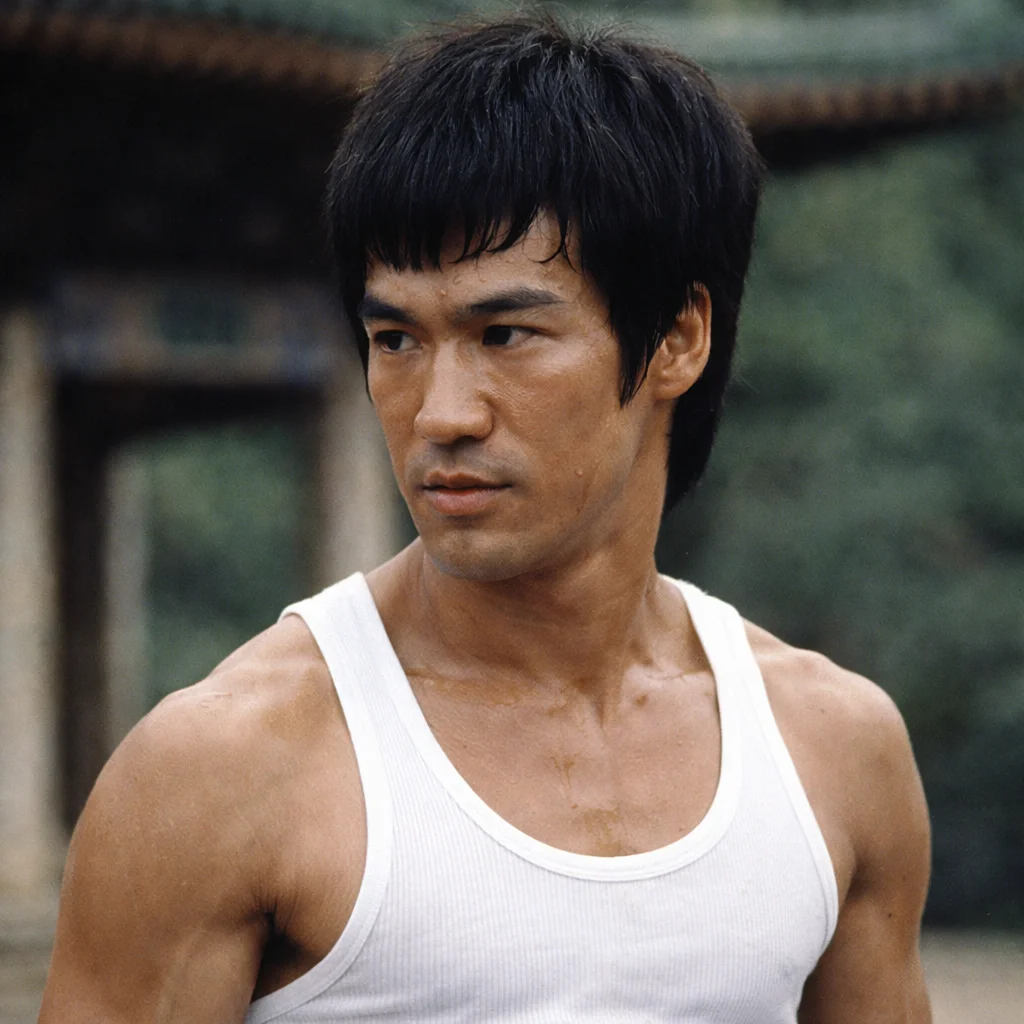
Bruce Lee transformed the landscape of martial arts and global cinema, leaving behind a legacy that transcended film, physical fitness, and philosophy. Beyond his iconic yellow jumpsuit and lightning-fast strikes lies a complex figure who was a championship dancer, a university philosophy scholar, and an obsessive note-keeper. From extraordinary anatomical modifications to revolutionary biomechanical feats, his short life was defined by extreme discipline and relentless innovation. Here are 15 fascinating facts about the legendary icon who changed action movies forever.
1. Crowned the Crown Colony’s Cha-Cha Champion
Before he revolutionized martial arts, Bruce Lee dominated the dance floor in Hong Kong. In 1958, at just eighteen years old, he won the Hong Kong Cha-Cha Championship, demonstrating incredible rhythm, balance, and agility. Lee did not view dancing as merely a social hobby; he carried a detailed pocket notebook containing descriptions of over 100 distinct dance steps. He realized that the fluid footwork, body mechanics, and weight shifting required in Latin dancing directly translated to martial combat. Throughout his life, he credited his signature footwork and sense of timing to those early years of competitive dancing.
2. Born in San Francisco During a Cantonese Opera Tour
Although widely associated with Hong Kong, Bruce Lee was actually born in San Francisco’s Chinatown on November 27, 1940. His father, Lee Hoi-chuen, was a famous Cantonese opera star touring the United States with his performance troupe at the time. Because he was born on American soil, the young infant automatically gained United States citizenship by birthright. His parents gave him the birth name Lee Jun-fan, but a hospital physician suggested the English name Bruce. This dual heritage eventually enabled him to move back to America as a young adult to pursue higher education and open martial arts academies.
3. Filming Cameras Had to Be Adjusted for His Speed
Bruce Lee possessed physical reaction times that tested the technical limits of mid-twentieth-century cinema technology. During the filming of combat sequences, standard motion picture cameras shooting at 24 frames per second captured his strikes as an unrecognizable motion blur. Directors frequently asked Lee to slow down his punches and kicks so moviegoers could actually witness the strikes landing on screen. In some productions, camera operators had to shoot his action scenes at 32 frames per second and play them back at regular speed to ensure clarity. This extraordinary speed demonstrated that his cinematic prowess required no special effects or deceptive trick editing.
4. Severe Nearsightedness and Reliance on Tactile Instinct
Despite his legendary reflexes and perceptual mastery, Bruce Lee suffered from severe nearsightedness, known clinically as high myopia. Off-camera, he wore thick eyeglasses and was one of the earliest high-profile adopters of soft contact lenses in the entertainment industry. His poor eyesight significantly influenced his combat strategy, forcing him to rely heavily on tactile feedback rather than visual cues alone. Through Wing Chun’s famous sticky-hands drill, known as Chi Sao, he trained his body to feel an opponent's subtle physical intentions upon contact. This emphasis on touch allowed him to react instantly to incoming attacks even if his vision was compromised.
5. Extraordinary Feats of Fingertip Strength
Bruce Lee was renowned for his extraordinary strength-to-weight ratio, performing physical feats that routinely astounded fitness experts of his era. Among his most famous public demonstrations were push-ups executed using only the thumb and index finger of a single hand. He could also perform single-arm chin-ups with absolute control and hold a 75-pound barbell extended straight out in front of his chest for several seconds. Lee achieved this exceptional digit and wrist strength through relentless daily conditioning exercises, including thrusting his fingers into buckets of coarse grain and gravel. These displays highlighted his core belief that dynamic power originates from complete neuromuscular control.
6. Majored in Philosophy at the University of Washington
In 1961, Bruce Lee enrolled at the University of Washington in Seattle, where he formally studied philosophy, psychology, and dramatic arts. His academic pursuits deeply shaped his approach to combat, moving martial arts away from rigid dogma toward a living self-expression. He absorbed concepts from Western thinkers such as Spinoza and Krishnamurti, integrating them seamlessly with Taoist and Zen principles. This rich intellectual background birthed his world-famous advice instructing practitioners to "be formless, shapeless, like water." For Lee, martial arts was not merely physical fighting, but an expressive medium for self-actualization and personal freedom.
7. Surgical Removal of Sweat Glands for the Camera
Driven by an intense desire for visual perfection on screen, Bruce Lee made a controversial medical decision near the height of his career. In 1972, he underwent a surgical procedure to completely remove the sweat glands located in his armpits. He felt that visible underarm perspiration looked unappealing under heavy studio lights during cinematic close-ups. While the surgery achieved his aesthetic goals for feature films, it impaired his body’s natural heat-regulation mechanism. Some medical historians speculate that this reduced ability to sweat may have contributed to the severe heatstroke he suffered shortly before his sudden death in 1973.
8. High-Profile Celebrity Coach Charging Premier Rates
Before gaining worldwide fame as an action movie hero, Bruce Lee earned his living as an elite personal instructor to Hollywood icons. His student roster included superstars like Steve McQueen, James Coburn, Roman Polanski, and Oscar-winning screenwriter Stirling Silliphant. To filter out non-serious applicants and preserve time for his own training, Lee charged up to $275 per hour—an enormous sum in the late 1960s equal to over $2,000 today. His celebrity students did not just learn self-defense; they fully embraced Lee’s physical conditioning regimens and life philosophy. McQueen and Coburn even served as pallbearers at Lee’s funeral, reflecting their deep personal connection.
9. The Iconic Clash with Kareem Abdul-Jabbar
One of the most visually striking match-ups in cinematic history is the battle between Bruce Lee and basketball legend Kareem Abdul-Jabbar in Game of Death. Standing at 7 feet 2 inches, Abdul-Jabbar provided a massive contrast to Lee, who measured roughly 5 feet 8 inches. The NBA center was actually one of Lee’s dedicated private martial arts students in Los Angeles during the late 1960s. Their choreographed fight sequence highlighted Lee’s core belief that mobility and technique could overcome severe disadvantages in reach and height. Abdul-Jabbar's character famously left a giant black footprint across Lee's chest during the iconic climax.
10. Peak Physical Conditioning at 135 Pounds
During the peak of his martial arts and film career, Bruce Lee weighed a mere 135 pounds (61 kilograms) distributed across a compact frame. Despite his lightweight stature, he developed extreme muscle density and striking mechanics that allowed him to strike with kinetic force comparable to much heavier athletes. Lee approached physical fitness scientifically, combining weight training, running, skipping rope, intense core work, and customized nutrition long before such practices became standard. He monitored his body fat constantly, maintaining an exceptionally low level estimated between three and five percent. His striking physique transformed global perceptions of athletic conditioning.
11. The Physics Behind the Famous One-Inch Punch
Bruce Lee astounded the international martial arts community at the 1964 Long Beach International Karate Championships with his demonstration of the One-Inch Punch. Positioned just one inch (2.54 centimeters) away from a volunteer's chest, Lee delivered an explosive blow that knocked his target backward into a chair. Modern biomechanical analysis shows that Lee generated this immense power not from arm muscles alone, but through a synchronized kinetic chain starting from his feet. By pivoting his hips and rapidly expanding his core, he transferred kinetic energy instantly through his shoulder and fist. The feat proved that maximum kinetic force does not require a long wind-up.
12. Production Realities of Hong Kong Cinema Audio
In Hong Kong cinema during the 1960s and 1970s, film sets rarely recorded live synchronized audio due to noisy locations and production constraints. As a result, every movie Bruce Lee filmed in Hong Kong had all dialogue, footsteps, and combat sound effects added entirely during post-production. For English-dubbed releases of classics like The Big Boss and Fist of Fury, voice actors were hired to dub character lines into English. Even in Enter the Dragon, extensive re-dubbing took place in post-production studios, where sound engineers layered Lee's iconic high-pitched battle cries onto the master audio track.
13. Obsessive Note-Taking and Personal Journaling
Bruce Lee was a compulsive writer who carried pocket-sized notebooks with him wherever he went throughout his daily life. He meticulously recorded his workout routines, caloric intake, reading lists, philosophical reflections, and combat technique diagrams. Over his lifetime, he filled thousands of journal pages with dense handwritten notes, illustrating kinetic principles and writing original poetry. His personal library contained over 2,500 volumes covering philosophy, physical training, fencing, boxing, and classical martial arts styles. These preserved writings were later compiled into groundbreaking instructional books like Tao of Jeet Kune Do.
14. Teenage Gang Leader Turned Martial Arts Prodigy
Long before becoming a global role model, Bruce Lee was a troubled teenager involved in street brawls on the crowded avenues of Hong Kong. As a youth in the mid-1950s, he joined a street gang known as the Tigers of Junction Street and engaged in violent rooftop matches against rival groups. After returning home bruised from a particularly fierce encounter, his parents decided he needed proper discipline and self-defense training. They enrolled him under Grandmaster Yip Man, the renowned master of Wing Chun kung fu. Training under Yip Man channeled Lee’s aggressive energy into disciplined practice, altering his trajectory forever.
15. The Creation of Jeet Kune Do
Frustrated by the rigid, ritualistic nature of classical fighting styles, Bruce Lee founded his own combat philosophy in 1967 named Jeet Kune Do, which translates to "The Way of the Intercepting Fist." Rather than adhering to fixed stances or traditional katas, Jeet Kune Do emphasized absolute economy of motion, directness, and tactical fluidity. Lee integrated elements of Western boxing, classical fencing footwork, and Wing Chun into a practical system. He famously advised martial artists to "absorb what is useful, reject what is useless, and add what is specifically your own." This revolutionary mindset laid the foundational principles for modern mixed martial arts.
Sources & References
This AI-assisted post was rigorously curated and fact-checked for accuracy by:
 Martin Roháček
How fun was this article? 🤔
Tap a star to rate it
🧠 Quiz: How closely were you paying attention?
10 questions — all answers are in the article above!
Enjoyed these facts? There's more! 💌
Fresh fun facts in your inbox. No spam, ever.