The German Powerhouse: 15 Fascinating Facts About the Bundesliga
From drunken referees and dog bites on the pitch to record-shattering goalscoring feats, the German Bundesliga is one of the most vibrant football leagues in world sport. Established in 1963, top-flight German football has forged a reputation for fan-focused ownership, astonishing terrace atmospheres, and iconic moments of chaos. Discover 15 unbelievable, verifiable facts about the history, records, and unique quirks of the Bundesliga.
1. The First Goal Was Never Captured on Camera
When the Bundesliga officially kicked off on August 24, 1963, Borussia Dortmund forward Timo Konietzka etched his name into history by scoring the league's very first goal against Werder Bremen. Remarkable as the moment was, it took place just 58 seconds after the opening whistle before photographers and television camera crews had fully positioned themselves. Because nobody was recording at that exact moment, no archival video footage or photographic evidence of this historical milestone exists today. Konietzka later recreated the goal for photographers years after the fact, but the original moment remains a mythic ghost in German sports history.
2. A Police Dog Bit a Player Mid-Match
During an intense Revierderby between Schalke 04 and Borussia Dortmund in September 1969, pitch-invading fans flooded onto the perimeter of the field after a goal. To regain order, local police brought out German Shepherds, but the chaos panicked one of the dogs named Rex. The dog broke free and bit Schalke defender Friedel Rausch on his upper thigh and backside while he was standing near the pitch. Rausch received a tetanus injection, finished playing the remainder of the match with a thick bandage, and Schalke later received a compensatory gesture of flowers and 500 Deutsche Marks from Dortmund.
3. The Championship Trophy Is Known as the "Salad Bowl"
Unlike most top European football competitions that award a tall trophy cup, the German champion receives an ornate, circular shield known as the Meisterschale or "Salad Bowl." Designed in 1949 by art professor Elisabeth Treskow, the silver shield was commissioned because the pre-war trophy, the Viktoria, had disappeared in East Germany following World War II. Decorated with precious tourmaline gems and intricate lettering, the heavy shield features the names of every German champion dating back to 1903. As space ran out over the decades, silversmiths enlarged the outer ring multiple times to accommodate future winners.
4. Robert Lewandowski Scored Five Goals in Nine Minutes
On September 22, 2015, Bayern Munich striker Robert Lewandowski delivered one of the most miraculous individual performances in modern sports history. Entering a match against VfL Wolfsburg as a halftime substitute with his team trailing 1-0, the Polish forward scored five consecutive goals between the 51st and 60th minutes. His nine-minute explosion obliterated defensive records, securing Bayern a 5-1 victory and setting four Guinness World Records. Lewandowski earned official honors for the fastest hat-trick, fastest four-goal haul, fastest five-goal haul, and most goals scored by a substitute in Bundesliga history.
5. A Tipsy Referee Blew Halftime After Only 32 Minutes
In November 1975, referee Wolf-Dieter Ahlenfelder created one of German football's most bizarre scandals while officiating a clash between Werder Bremen and Hannover 96. Having enjoyed a heavy pre-match lunch accompanied by several beers and shots of schnapps, Ahlenfelder lost track of time and blew the halftime whistle after just 32 minutes of play. When confused players and linesmen pointed out his blunder, he sheepishly restarted play, though he still called halftime early at 43 minutes. The German Football Association suspended him for part of the season, though Ahlenfelder's cheerful admission of his drunkenness turned him into a cult figure.
6. Germany Did Not Have a Unified League Until 1963
While major European nations like England, Spain, and Italy established centralized national leagues decades earlier, West Germany relied on regional amateur divisions called Oberligen well into the 20th century. Top regional teams competed in a post-season playoff tournament to decide the national champion, but this fragmented structure hindered tactical development. Following West Germany's disappointing quarterfinal exit at the 1962 World Cup, German Football Association officials realized that a professional national league was necessary to stay competitive. In August 1963, sixteen founding clubs kicked off the inaugural Bundesliga season, fundamentally modernizing German football.
7. The Largest Victory in History Failed to Win the Title
On the final matchday of the 1977–78 season, Borussia Mönchengladbach recorded a staggering 12-0 victory against Borussia Dortmund, marking the largest margin of victory in league history. Gladbach entered the match trailing league leaders FC Köln on goal difference and needed an extraordinary scoring margin to steal the championship title. Despite orchestrating the most ruthless attacking display ever seen in German football, Gladbach ultimately fell short of their championship dream. FC Köln won their final match 5-0 against FC St. Pauli, claiming the title by a narrow margin of just three goals on aggregate difference.
8. An Own Goal Once Won "Goal of the Month"
In August 1985, Bayern Munich defender Helmut Winklhofer earned an unintended spot in football history by winning the television network ARD's coveted "Goal of the Month" award for an own goal. Playing against Bayer Uerdingen, Winklhofer attempted a powerful clearance from roughly 35 yards out, only to miscalculate and slice the ball cleanly over his own goalkeeper into the top corner. Viewers across West Germany found the mistake so technically sublime and spectacular that they overwhelmingly voted it the best strike of the month. Winklhofer accepted the trophy with good humor, making it the only time an own goal has ever received the prestigious award.
9. A Broken Wooden Goalpost Changed League Regulations
A bizarre incident in April 1971 completely reshaped matchday safety mandates across German football during a clash between Borussia Mönchengladbach and Werder Bremen. With the score tied late in the game, Gladbach striker Herbert Laumen tumbled into the net after an aerial challenge, causing the left wooden goalpost to snap at the base and collapse. Because the home club had no spare goal on site and could not repair the broken wood, the referee was forced to abandon the match. Following the famous Pfostenbruch vom Bökelberg, the league awarded Werder Bremen a default win and made aluminum goals mandatory for all professional teams.
10. FC Köln Has Maintained a Live Goat Mascot Since 1950
FC Köln boasts one of the most distinctive traditions in world sport by keeping a living caprine mascot on the touchline during every home match. The unusual tradition began in 1950 when a local circus handed a live goat to the club as a joke during a carnival celebration, and the club named it Hennes in honor of player-manager Hennes Weisweiler. The animal quickly became a beloved symbol of good luck, and the club is currently represented by Hennes IX. Hennes resides comfortably at the Cologne Zoo, travels to the stadium in a specialized trailer, and wears a custom red shirt on matchdays.
11. The Fastest Goal Record Is Shared at Just Nine Seconds
The record for the fastest goal in Bundesliga history is shared by two separate players who managed to score after just nine seconds. Bayer Leverkusen winger Karim Bellarabi set the initial record in August 2014 by executing a quick series of passes right after kickoff against Borussia Dortmund. Remarkably, TSG Hoffenheim forward Kevin Volland equaled the nine-second mark in August 2015 against Bayern Munich following a defensive lapse by David Alaba. Both lightning-fast strikes caught opposition defenses completely unprepared before many fans had even settled into their seats.
12. The 50+1 Rule Keeps Football Fan-Centric and Affordable
To safeguard clubs from foreign oligarchs and financial speculation, German football enforces the famous "50+1 rule" regarding club ownership. This landmark regulation dictates that parent sports clubs must retain at least 50 percent plus one additional voting share in their football teams. Because commercial investors cannot hold majority voting power, decision-making remains in the hands of everyday club members and local supporters. As a result, German clubs consistently offer the lowest ticket prices among major European leagues and prioritize affordable standing sections for supporters.
13. A Torn Net Caused One of Football's Most Famous Phantom Goals
During an October 2013 fixture between TSG Hoffenheim and Bayer Leverkusen, striker Stefan Kießling became the center of a massive international controversy due to a net failure. Kießling directed a header wide of the post, but the ball unexpectedly rolled into the net through a subtle hole in the side netting. Unaware that the ball had entered from the outside, referee Felix Brych awarded the goal to Leverkusen, which ultimately proved to be the winning strike. The resulting outrage over the "phantom goal" led to official appeals and significantly accelerated the adoption of goal-line technology across German stadiums.
14. Borussia Dortmund Boasts the World's Highest Average Attendance
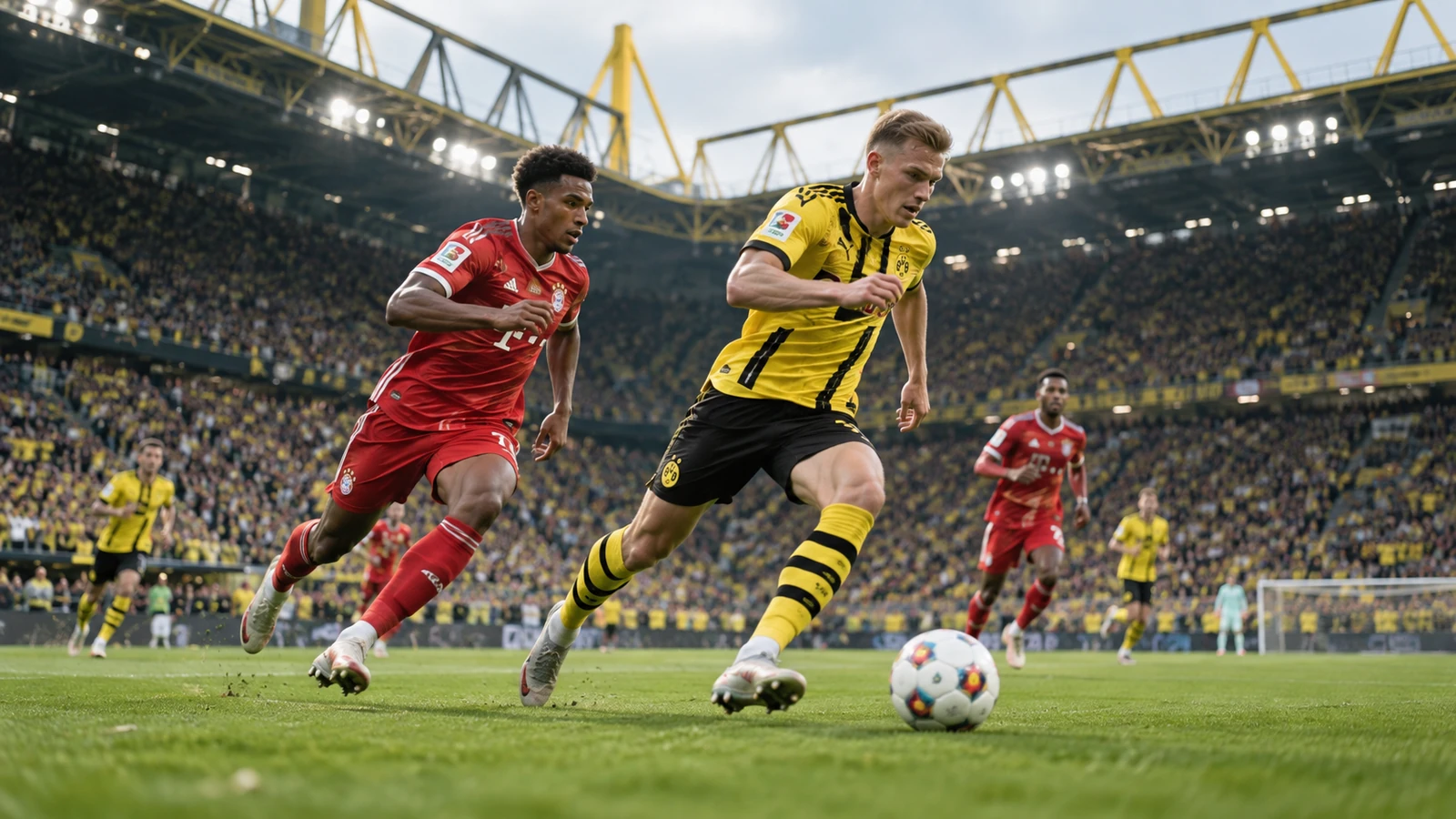
The Bundesliga consistently records the highest average stadium attendance of any professional football league in the world, headlined by Borussia Dortmund's home venue. Signal Iduna Park attracts over 81,000 spectators per match, largely due to its world-famous South Stand, known as the "Yellow Wall" (Gelbe Wand). Holding 25,000 standing fans, it ranks as the largest single free-standing terrace in European football. The wall of sound and vibrant yellow sea created by the supporters provides an overwhelming home advantage that intimidates visiting clubs.
15. Thomas Müller Holds the Record for Most League Titles
Midfield maestro Thomas Müller has established himself as the most decorated player in German domestic history by winning a stunning 12 Bundesliga titles. Emerging from Bayern Munich's youth academy to make his debut in 2008, Müller became the tactical heart of the team's historic dominant streak. He played an indispensable role during Bayern's 11 consecutive championship runs between 2013 and 2023, showcasing unmatched spatial awareness and durability. His remarkable trophy count stands as a testament to his longevity and status as a legend of German football.
Sources & References
This AI-assisted post was rigorously curated and fact-checked for accuracy by:
 Martin Roháček
How fun was this article? 🤔
Tap a star to rate it
🧠 Quiz: How closely were you paying attention?
10 questions — all answers are in the article above!
Enjoyed these facts? There's more! 💌
Fresh fun facts in your inbox. No spam, ever.